> Today, it is hard to open up a checking account, rent a car, get cable service or check a loved one into a nursing home without agreeing to mandatory arbitration.
This is the part that gives me ulcers, and it's no exaggeration. So many companies insist on us giving up our 7th Amendment rights that we either give in, or don't fly, buy a car, or get a job. We can't even go to the competition because they also have mandatory binding arbitration clauses in their contracts.
As bad as the Equifax breach is, IMO this is a greater danger to our freedoms.
This is certainly the most important point. You cannot function in society without internet, a cell phone and some sort of transportation, and most if not all force you to sign away rights that should be guaranteed to all US citizens.
Unless you are wealthy enough to do without or fine being homeless, this means you are living under a sub-government that the rules are set by corporations.
When I last purchased a car I used accepting the arbitration clause to extract $150 in accessories from the dealer. The sales agent was a bit confused, it’s usually the paperwork guy that deals with the arbitration and at point most people just want it over with..
I was offered over $1000 off to 'just sign the damned contract', but still ended up walking. I was fortunate to find a different dealer that didn't have an arbitration clause, though. I fear I wouldn't find that next time around, and was really hanging my hopes upon legislation like this.
I'm going to ask what might be a dumb question, because I don't know any better. But is there any statistical evidence that arbitration results in worse outcomes for the consumer, or is all the hate theoretical for now? People on HN and otherwise speak about arbitration like it's an auto-loss for the consumer, but it's not like our court systems are guaranteed to be much fairer.
EDIT:
It looks like the bottom of the article explains that the US Consumer Bureau studied arbitration and found it anti-consumer:
As arbitration clauses appeared in tens of millions of contracts, the consumer agency was specifically mandated to study arbitration under the Dodd-Frank financial law in 2010. That effort culminated in a 728-page report, released in March 2015, that challenged longstanding assumptions about arbitration.
The agency found that once blocked from suing, few people went to arbitration at all. And the results for those who did were dismal. During the two-year period studied, only 78 arbitration claims resulted in judgments in favor of consumers, who got $400,000 in total relief.
Per the article: "During the two-year period studied, only 78 arbitration claims resulted in judgments in favor of consumers, who got $400,000 in total relief."
It's not clear what the denominator on that sum is, though it is also stated that the rate of customers taking up arbitration was very low
You've found the data, but it's not surprising at all given the circumstances -- the arbiters are chosen by the company, so they know where their bread is buttered. What's more, class-action suits are just impossible under forced arbitration and who's going to go through a long process that will cost thousands because they got ripped off for a hundred bucks?
In my case it was a used car. It was, however, a manufacturer's dealership. On the other hand, the dealership without an arbitration clause was also a dealer for the same manufacturer.
I may be in the minority here, but I do not come to HN to get linked to a random person's blog. This is a concerning trend, and it's one thing when someone actually provides some level of insight in a few paragraphs and says they've written several pages on the same subject at [link].
But this is just bottom of the barrel "you said something vaguely similar to a blog post I wrote a few weeks ago, here's the link with the oh-so-edgy title."
Yeah, to be fair, half the stuff posted (and often voted up) on HN is blog posts that are thinly veiled content marketing.
Plus, it can get exhausting to write the same argument over and over again. Half the reason I write on my blog or on medium is because I find myself repeating a certain argument and I decide to just write it once and for all.
But of course, you could always copy and paste with some small edits rather than linking. And I agree that it would be better to at least summarize the content of the post for us rather than just dumping the link.
If you're actually replying to specific points in the comment to which you're replying, it's unlikely you'll be repeating things very much outside of the typical flame threads around politics or social issues. If you're not referencing specific points it's much more like a "okay you're done speaking now it's my turn" type of conversation. There's admittedly a lot of that anyway, though.
It is entirely superficial to cast this fight as one between good and evil. As much as anything, it was about proper process.
Legislative, executive, judicial - those are the three branches under the Constitution that are supposed to check and balance one another.
The legislature passed the federal arbitration act almost 100 years ago. It was signed into law by the president. And it has been consistently upheld by the U.S. Supreme Court in the face of many and varied court challenges.
In essence, the result of this century-old jostling is a body of duly enacted law that says that binding arbitration clauses are truly binding and therefore can be used in contracts to foreclose judicial proceedings by requiring that disputes covered by such clauses be resolved through arbitration. Moreover, a massive court challenge resulted in a holding of the Supreme Court saying that waivers of judicial class-action rights in favor of arbitration are also binding - meaning, it is neither unjust, unfair, nor against public policy (legally speaking) to say that consumers can be required to waive such rights and be required in all cases to arbitrate their disputes.
Now, one may believe that all of this is repugnant and grossly harmful to consumers. Others may disagree and may in particular believe that class-action lawsuits are primarily vehicles that help the trial bar and do little with their nickel-discount coupons to actually further the interests of consumers. Either way, the existing law is the existing law. The proper way to change it is to gain control of the legislative and executive branches and to repeal or amend the federal arbitration act. In that way, the law could easily and properly be shaped to forbid making arbitration mandatory and binding or limit the ability to use binding clauses in specific areas of law, etc.
The problem with CFPB is that it sought to carve out its own view of what is right and proper for consumers of financial services without regard to the intent of Congress in having enacted the existing arbitration laws. As established, CFPB is not accountable to Congress or any other form of traditional oversight of its bureaucratic functions (its structure was declared unconstitutional by the D.C. court of appeals). It is in that sense an organization that could be characterized as "rogue" based on traditional rules of governance and it is certainly seen as such by those who disagree with its particular actions in using its power to attempt to regulate arbitration clauses, payday loans, etc.
So CFPB essentially stuck its thumb in the eye of Congress in pushing forward with these measures.
Now Congress has struck back, saying, in effect (with its authority under the Congressional Review Act), "we don't like what this regulation does and this is our domain - therefore, we rescind it."
So, while one can try to say this is good versus evil, it is basically the legislature asserting itself on a matter of policy against a bureaucrat who it believes overstepped his proper role.
The result is to keep the status quo, nothing more. The rules in effect as a result of this action by Congress are the same ones that have governed arbitration clauses in every walk of life in American business for nearly a century.
For those who don't like it, that is fine. The ballot box is open as the prescribed means to effect a change. All this recent action amounts to is a declaration by Congress saying that this should not happen by bureaucratic edict. That may be bad policy, or it may be good policy, but it does uphold the rules of law favoring the electorally-accountable legislative branch over the authority of an unaccountable bureau chief.
>For those who don't like it, that is fine. The ballot box is open as the prescribed means to effect a change.
Every single sentence you wrote here is extremely ignorant of the political reality in which that usual proper process has been in the muck for years. You're not realizing the effect that gerrymandering, voter suppression, and money in politics has on the ability of the usual system to work to reflect the desires of people, and that redirecting people to traverse that maze is essentially sending them on a quest to square a circle that will effectively keep the status quo.
And the status quo isn't good enough. Remember, just a few years ago, someone would be denied healthcare due to pre-existing conditions and die. THAT was the status quo, and it was so toxic that the party in power now, controlling all parts of the three branches could not repeal it. Forced arbitration is similar to healthcare, most people don't realize how bad it is until they have to go to head with it.
It occurs to me that many current issues can be abstracted as follows:
When corporations have become powerful monopolies (or regional monopolies) that trample on individual rights and captured regulators, should the citizens still respect the procedural correctness to its literal meaning? Or should we acknowledge that we have a flawed constitution, because while it checks the power of the government, the U.S. visionaries did not foresee the emergence of multinational corporations, structured in highly authoritarian ways, being able to influence public policy to great extent?
I believe we can agree that public goods are typically not as efficient as a _competitive_ private provider. But what if the market is not competitive at all? When ISPs/health insurers/hospital conglomerates essentially monopolizes different regions of the country, should the government step up and provide community broadband, single payer insurance or single provider healthcare? Or should we expect the government somehow being able to restore market competitiveness?
Remember, just a few years ago, someone would be denied healthcare due to pre-existing conditions and die.
This is an open and shut issue if the only thing you're worried about is the end consumer. The gov't, on the other hand, needs to worry about the system including the insurance companies. Changing the rules so that a person can forgo health insurance until they are sick is a sure fire way to start a death spiral.
It wasn't until the law was changed to include the individual mandate was the pre-existing condition clause even viable. I'd argue the individual mandate is so weak, that we might end up with a death spiral anyways.
What's the popular saying on HN? "Don't tear down the fence until you know why it was put up in the first place."
Until we fix the collusion between the American Hospital Association[0] and insurance companies through the National Uniform Billing Committee[1] to opaquely set pricing, there will be no free market in the healthcare industry.
I mean that if the ban on denying coverage for pre-existing conditions causes the health insurance industry to collapse I'm sure the actual health care industry will figure something out.
Oddly, it already has, only it’s not for humans. Veterinarians are in a market that is considerably more free than doctors are, and insurance is not only not required, but rare by comparison.
Further, while the technology has advanced (eg cancer treatment for your dog), prices are much lower than what humans pay, and in some cases, declining.
The human health insurance market is quite different than the veterinary market, for some very obvious reasons.
Namely:
- Inelasticity: economic terms, human healthcare is extremely inelastic, you'll spend everything you have to save your own life. Not so much with a pet.
- Poor information: Because of so many middlemen, there is very little information for human healthcare, you rarely know how much something will cost before you owe it.
- Non-Fungible: doctors are not a commodity that you can trade out like cereal. There are human relationships involved, that make it difficult to compare apples to apples.
These are all factors that human healthcare lacks that are generally necessary to make for an efficient market.
Agreed. The biggest issue I have with the parent comment is that the current Congress is unabashedly selectively enforcing the legality of these regulatory agencies, with a suspicious emphasis on helping corporations.
This is a pretty one sided account. The CFPB didn't spring into existence because some unelected bureaucrat decided it should exist. The structure that the DC Circuit Court of Appeals found unconstitutional likewise wasn't the design of some unelected bureaucrat.
The Federal Arbitration Act is not the only piece of duly enacted legislation in question here. Another peice of legislation -- one that was passed by both Houses of Congress and signed by the President of the United States -- was the Dodd–Frank Wall Street Reform and Consumer Protection Act.
A lot of bankers and their lawyers fought against Dodd-Frank tooth and nail. They were very happy with how things worked up until that point, thank you very much. Normally the American public doesn't have the attention span to thwart the bankers' lobbyists -- they are in there 24/7 lobbying for narrow concentrated interests and public interests on the other side are too diffuse and abstract to mount an effective defense. But in this case the stars aligned and legislation was passed. So the lobbyists moved on from stopping the bill from being passed to killing it afterwords in the regulatory process.
Where were the impassioned speeches about separation of powers and the will of Congress when bank lobbyists were busy eviscerating the skin-in-the-game rule?
Sure, Congress has every right to pass a law, which is what they did here, and override a prior law. But by the same token the Dodd-Frank Congress had every right to override the Federal Arbitration Act. This isn't a question of separation of powers, it's a question of public policy. Congress didn't stand up for Congressional prerogatives, they stood up for banks.
A century ago, you and I would would hammer out the terms of a contract to our mutual and equitable interest and sign it. Both of us being bound.
Today, corporations want contractual "concepts" to only apply in one direction -- against the consumer. They expect to be able to strip away legal rights in their Terms of Service and End User Licensing Agreements, while also retaining the right to change ANYTHING at ANY time they please yet still have courts treat them like binding contracts.
What we need is a core set of consumer rights that are immutable.
> The problem with CFPB is that it sought to carve out its own view of what is right and proper for consumers of financial services without regard to the intent of Congress in having enacted the existing arbitration laws.
Dodd-Frank specifically required the CFPB to conduct a study on arbitration in financial agreements, and provided the CFPB authority to impose rules depending on the findings of that study. (12 U.S.C. § 5518, https://www.law.cornell.edu/uscode/text/12/5518)
This may be mostly correct, but the framing is nonsense.
Republicans, on issue after issue, don't give a shit about conforming to proper legislative processes. To pretend they have converted, on an issue that happens to benefit Wall St, and which all Democrats voted against, is willful blindness.
It's like saying there's something noble about an arsonist refusing to burn down the forest in his own backyard.
> The legislature passed the federal arbitration act almost 100 years ago. It was signed into law by the president. And it has been consistently upheld by the U.S. Supreme Court in the face of many and varied court challenges.
The Federal Arbitration Act was enacted to validate B2B arbitration agreements: before then, and also for a considerable time thereafter, many courts were hostile to arbitration agreements — because, it's thought, judges didn't want private arbitrators encroaching on the judges' turf [0]. Also, when the FAA was enacted, consumers and employees generally didn't enter into contracts. The "scope creep" of the FAA has been due largely to the Supreme Court's literal interpretation of the Act, giving it priority over all contrary state statutes and practically any other federal statute that doesn't expressly state otherwise.
Agreed. Unfortunately we find ourselves in an era of legislative stagnation. Obscure and popular policy alike have been unable to move through the legislative process for almost seven years. Compounding the problem is the rapid pace of change we live with. The legislature, unable to resolve many of the issues of the 20th century is building a heap of 21st century ones. And the growth rate of that heap is increasing, accelerating its increase in mass.
If history is any indicator, in political systems this broken, other institutions collect power and either that power is sustained and relieves legal pressure or that power is revoked and the pressure builds until the system comes apart.
> If history is any indicator, in political systems this broken, other institutions collect power and either that power is sustained and relieves legal pressure or that power is revoked and the pressure builds until the system comes apart.
Just curious if you can give a good Western example for similar things happening in history?
I found striking parallels between the United States and China's Tang Dynasty. The Tang Dynasty was the most prosperous and influential era of ancient China, in terms of both culture and military. It was marked with culture fusion and immigrants from across the sino-sphere settled in its capital. During the early times of this dynasty, a meritocratic higher education admission system was first instituted to provide an avenue for upward mobility. Life was prosperous and Tang people were fat.
All of that started falling apart after 200 years of reign, and the late stage of the empire was dysfunctionalized by highly partisan power struggles between two fractions (https://en.wikipedia.org/wiki/Niu–Li_factional_strife). The meritocracy also failed, as the rich could afford better education and examination preparation, and the examiners gave preference to the applicants from wealthy families. You can call it the Imperial Chinese Ivy League legacy. The power of the throne waned, and the emperors were stuck between or murdered by warlords and eunuchs.
Tang Dynasty lasted a total of 289 years. If the United States survives 2065, then it beats Tang’s record.
The late Roman Republic comes to mind. Problems regarding labor, citizenship and military service became significant after the third Punic War. The oligarchic Senate was opposed to really any major changes in these areas that would relieve the problems.
As things grew more dire a succssion of more and more radical populist leaders attempted to change the system from within by standing for election but most were assassinated.
Generals like Marius and Sulla began skirting the law to move the law ahead as they saw fit but leaving the system intact. Finally, Julius Caesar came along with a promise to fix everything but by destroying the republican system rather than by conforming to it. At this point it's no surprise that many Romans no longer cared.
> For those who don't like it, that is fine. The ballot box is open as the prescribed means to effect a change.
Actually, it's not the only way to effect a change. You can also spend millions on lobbying, smarty lawyering, slow but methodical creeping attack on consumer rights to effect change. In the 1940s, when the law was passed, arbitration agreements were not nearly as persuasive as they are today.
The companies enforcing these arbitration agreements aren't playing by the same rules everyone else is, they are changing the rules to their will, and then funding politicians to prevent and reversal.
> (its structure was declared unconstitutional by the D.C. court of appeals)
...which was promptly vacated by the full Circuit and is awaiting an en banc decision. Kavanaugh's opinion wasn't exactly a masterpiece of juris prudence, and there are ways for the full circuit (and scotus if necessary) to make a decision on the issues without touching the constitutional questions.
As another comment notes, the CFPB was required by law to study arbitration and encouraged to issue a rule in line with those findings. The arbitration rule was far from an overreach.
>For those who don't like it, that is fine. The ballot box is open as the prescribed means to effect a change.
Or for others to exploit those whose political protection only can guarantee very little actual security.
Such others who will now be even more emboldened, to levy attacks against those whose last line of defense now lies with words scribbled on a piece of paper… No prescription from the modern day effectively political skinner box needed.
Is this an opportunity for a new type of law firm that opens up to deal with one type of complaint for one company and offers extremely low fees to file? The idea would be that the paperwork is all the same for the X thousand/million people suing INDIVIDUALLY such that economies of scale take over and the cost of actually filing and pushing the suit through becomes cheap enough for almost anyone.
On the side of Giant Bank, they suddenly have 150,000 lawsuits filed against them and have to act in some way. Is that even allowed? Would a court just tell the law firm to go away and stop spamming it?
With (most) arbitration clauses, you can't actually sue at all. You have to go through a private arbitration firm, which can set pretty much whatever rules they want - including things like basing rulings on religious law [1]. Compared to that, I'm pretty sure there'd be nothing illegal about rules to defeat the hypothetical law firm, like requiring complainants to show up in person.
Except they have to get all of those millions of lawsuits dismissed individually by advancing that argument and failing in even a single of those cases through a novel argument on the part of plaintiff, sympathetic judge, etc could open an avalanche of lawsuits against the firms.
It also would force the courts dismissing the lawsuits to grapple with the sheer scale of criminality that the dismissals are being used to hide -- it's easy to hide it when you shut down a handful of lawsuits and the vast majority of your victims remain silent, but are judges going to be so accepting of mandatory arbitration when they've already, personally, dismissed thousands of suits because of arbitration clauses that are about the exact same kind of fraud perpetrated by the exact same people and have thousands more left on their docket? How many times do you believe that a judge can see the exact same crime happen from the same perpetrator and just go "Ho, hum, nothing to see here!" Sometimes, the key is just to be really noisy and annoying so they can't ignore the issue.
The act of filing the suits, particularly in a concerted bulk effort, and forcing the government to address and dismiss each individual suit is an effective form of speech and protest.
Your argument is shallow excuses for defeatism, which in turn excuses not actually trying.
Edit:
It also introduces a novel argument of "Uh, so this court has dismissed over 10,000 lawsuits about this exact issue -- clearly we're being abused by a corporation and petitioning the state for assistance. [Argument why the state is obligated to assist.]"
It forces the court to explicitly address the argument that the arbitration system is being coupled with a power imbalance to enable criminal action against entire states of people by documenting the scale via dismissals -- which are public record and can be used as evidence in subsequent cases.
> Except they have to get all of those millions of lawsuits dismissed individually by advancing that argument and failing in even a single of those cases through a novel argument on the part of plaintiff, sympathetic judge, etc could open an avalanche of lawsuits against the firms.
That could only work if people actually filed the lawsuit. However, filing a lawsuit isn't free (as the below random website attests [1]). If it's a near certainty that the lawsuit will be dismissed, few people are going to want to pay $320 (plus any other costs) to file it.
I'd like to hope people have the principle to bang their heads against the courts until they take (the proper) action, but I'm pessimistic.
Honestly, maybe novel political solutions are the answer? Could a state pass a heavy tax on binding arbitration, to be paid by the party that required it?
I mean, the judge is going to respond by sanctioning the attorney(s) for frivolous litigation. If your legal argument (for why the case shouldn't go to arbitration) has been rejected in court, initiating even one more case before the same court with the exact same argument could justifiably be considered a waste of the court's time. Initiate several of them and you're going to be fined; 10,000 and you're probably looking at things like contempt-of-court charges and disbarment. That's aside from the fee to initiate each case, as Chaebixi mentioned.
That said, if you're willing to risk all that to make a political statement - i.e. to pressure legislatures to change the law around arbitration - I can't rule out that it could be effective. But I suspect that other avenues for making a statement would be cheaper and more effective (and avoid the stigma of abusing the court system).
For example, how about just taking out TV ads? Find some maximally sympathetic victims of the arbitration system, and have them tell their stories. Less dramatic, but right now I think there isn't all that much public awareness of the issue - the New York Times' series notwithstanding. Arbitration is such a classic "big corp screwing over the little guy" story that I think a large number of even Republican-leaning voters would oppose it, especially the Trump camp (ew, but still), if they heard the full story. But most of them have probably never heard of it, or have only heard one-sided accounts that emphasize how class-action suits cost businesses and don't usually win plaintiffs all that much money. (Both of which are true, but ignore the fact that class actions are effective at holding defendants accountable for violating the law, and getting them to change their behavior - whereas a trickle of arbitration cases can just be dismissed as a cost of business.)
Your position is a reasonable one, and it's beyond debating it on the internet to decide which one would be more practical -- it would depend on the situation, how much money you had, and how damaged you thought the system was. People could certainly disagree on their assessment.
I tend to think that wrench throwing is more effective for systemic problems than discussing it. The assembly line is doing damage while you discuss the problem.
That said, I'm also biased here: the lawsuits idea hits two of my pet peeves, in that it also forces debate around the issue of the justice system being chronically understaffed and underfunded.
Filing that volume of lawsuits would effectively DDOS the courts (which is why they're going to hold you in contempt no matter how legal it was), but even doing due process on your contesting of that would likely drown the justice system to the point it forced a national debate over how it was operated.
That's a resonant issue with the arbitration one, since the forced arbitration is a symptom of that deeper funding issue -- we don't invest in efficient civic infrastructure, so corporations built their own.
tl;dr: Two birds, one stone; forcing instead of discussing; debating the underlying issue, not just a symptom.
>On the side of Giant Bank, they suddenly have 150,000 lawsuits filed against them and have to act in some way. Is that even allowed? Would a court just tell the law firm to go away and stop spamming it?
This sounds fairly similar to how the Church of Scientology blackmailed the US government into giving it tax exempt status. They filed millions of lawsuits against every IRS employee and drowned them in it until they gave in. It worked out extremely well for them, so it may work out the same in your example.
No. Yes. No. But it's not viable. Same-county Giant Bank will still cost anywhere from $55 to $300 to file a small claims action if in my state (FL). Add $40 to pay the sheriff to serve the statement of claim. Who's going to foot the initial $1.8M to file the 150K claims and how's the new type of law firm going to get paid?
If you want to have a small government without an effective consumer protection agency then you'll need to ditch mandatory arbitration and permit the class actions to flow.
There's no precedent or issue-preclusion with arbitration. So any win you get in one case will have to be re-fought 150,000 times. Hardly a time effective plan.
Yeah, eventually. And probably only a few of them. All the people filing pool resources and bankroll 100 people to actually show up with the same attourney in front of the same 2 or 3 judges.
I have an identical situation with Verizon Wireless. I pre-ordered the Pixel 2 and cancelled the order 4 days prior to the release date. I called AGAIN to verify the order was cancelled. I'm told yes. Verizon shipped the order, charged my card for it, and tells me "Sorry - our mistake. Please return the phone for a refund." Since it was 'cancelled', I don't have the ability to print my own return label. I'm told one is coming in the mail. Nothing arrives. I call and inquire: "It was sent. FYI, if you don't return the phone in a week, you'll be outside the return window."
If this was charged against a credit card, you can likely look at issuing a chargeback through your bank. Even if it wasn't a credit card, you should see if there is anything your bank can do.
While I don't typically support a liberal use of chargebacks, a situation where you actually didn't purchase the thing you were charged for, and the vendor is not cooperating, is kind of what they are meant for.
Is it our system of government though that is the problem? There are problems that allow the GOP to have a disproportionate level of control but overall they've been very consistent on consumer protections (being against them that is), they are doing exactly what anyone paying attention to what they do expects. People bicker over politics and make false equivalencies and compare the parties but then complain about this issues like this as if they have no choice. The democrats have their issues, but rather than becoming part of the solution we sit back and complain and generally do very little while the GOP eats your lunch. I'm not saying this describes you, but I think that we find ourselves too easily divided when its pretty clear (to me) which party actually cares more about my interests than the other.
You not mentioning the issues regarding voter suppression, gerrymandering, money in politics that keeps a party which has a minority of actual votes at time in power.
I want to echo this and also add that you should either have a ballot at home, or an opportunity to vote at a polling place coming up in a couple weeks. Vote. If you feel like your government doesn’t represent you, then start changing it.
More than that: make it your second job to persuade your friends and loved ones to pay attention to this stuff and vote, too.
The whole "never discuss politics or religion" trope is one of the things that gets society in a place where a few people have a disproportionate voice in how the place is run.
I don't know why you got downvoted, you aren't saying that people have to be ideologues or be obnoxious.
Politics is how problems get solved because politics is how society communicates on issues, it may not be working right but thats what it is, it is our sole way of governing our society.
You should file a complaint with https://www.consumerfinance.gov/ (CFPB.) It will get Citibank's attention and you will get to their escalated support team which will hopefully get a better result. They will take a CFPB complaint very seriously and respond. There are existing regulatory systems in place to push back against the shady practices you mentioned.
I've been in similar situations and I've resolved them by writing an old fashioned letter to the company. It feels like a chore but it's much less stressful than interacting with telephone support. And letter handling departments seem to have more clueful employees.
Elect a Democratic congress, like the first Obama administration, who incidentally did not allow class-action lawsuits either? At least this time a bill made it to a Senate vote.
I guess you're glossing over the fact that without the Obama administration creating this bureau, there never would have been a lawsuit in the first place.
> Statement Regarding Senate Passage of H.J. Res. 111
> President Donald J. Trump applauds the Congress for passing H.J. Res. 111, Disapproving of the Consumer Financial Protection Bureau's (CFPB) Arbitration Agreements Rule. According to a recent report by the Department of the Treasury, the evidence is clear that the CFPB's rule would neither protect consumers nor serve the public interest. Rather, under the rule, consumers would have fewer options for quickly and efficiently resolving financial disputes. Further, the rule would harm our community banks and credit unions by opening the door to frivolous lawsuits by special interest trial lawyers. By repealing this rule, Congress is standing up for everyday consumers and community banks and credit unions, instead of the trial lawyers, who would have benefited the most from the CFPB's uninformed and ineffective policy.
It seems that they're basing this on a report by the DOT (which is the parent body of the CFPB).
The CFPB's response (quoted all over the place): "rehashes industry arguments that were analyzed in depth and solidly refuted in the final rule."
I can't find a source for that response. It would be great if we could find a source for that response as well as the wording of the refutation in the "final rule."
> Rather, under the rule, consumers would have fewer options for quickly and efficiently resolving financial disputes.
This is actually retarded. How is arbitration OR trial less options than just arbitration? Last I checked, 2 > 1 but maybe I need to review my math skills. Just because a company can't force arbitration doesn't mean it isn't still an option.
The Whitehouse is just flipping words around to make it seem like a win for consumers, but their reasoning is just a blatant lie.
Translation:
Someone paid enough of us a good deal of money to make it so they can't be sued in court. Good luck, suckers.
This is false. The CFPB rule only prohibited mandatory arbitration. It still allowed for voluntary arbitration if an individual preferred that path in a dispute.
Not sure what you're talking about. In any case, I've found that its always best to go to the source documents. If there is any other official document worth reading, please link to it and the relevant page.
This is what that document from the DOT says.
>Against this background, in July 2017, the Bureau issued its final rule (the “Rule”) prohibiting consumers and providers of financial products and services from agreeing to resolve future disputes through arbitration rather than class-action litigation.
I haven't seen anyone in this thread talk about the DOT's report, i.e. what it seems the result of the vote is based on. Or even what the White House has said in statements regarding the reasoning to do it.
Neither have I seen where the simple statement "one option is less than two" is published by any media outlet.
1. They project 3,000 extra class actions will happen as a result of allowing class actions. The businesses receiving them will spend a lot of money on lawyers and settlements. They say the businesses probably won't absorb the damage for these claims. They might charge customers more. So, profit-hungry companies being hit with class actions will charge their customers more while benevolent ones won't and those not doing whatever actions cause class actions will be cheaper. Good companies, at least in court terms, will be cheaper.
2. Few (13%) of the class-actions result in relief to those affected and suing. They project four in five cases will provide no relief. This ignores a huge reason for class actions: making companies doing bad things lose enough money to change their practices. Class-actions have been far more successful at this than individual lawsuits or arbitrations due to the dollar amounts in No 1.
3. In class-actions that generate class-wide reliefs, few customers actually claim the funds they're offered. The report thinks this means the class-action was worthless. Again, ignores the value of getting justice and changing corporate activity in No 2 which might have been consumers' goal all along.
4. The plaintiffs' attorneys will make a lot of money doing the class-actions. Businesses being hit with class-actions will pay out an extra $330 million to their victims' attorneys. So what. It's a separate issue. The plaintiffs are still going for class actions so clearly they find this better than not doing the class action. The big companies are also fine with shelling out millions on attorneys and lobbyists to do what benefits them. Consumers will let those people make money to benefit them, too.
5. This report ignores the effect of meritless lawsuits. Defendents often settle just to avoid more damages. This is a general problem that. I'll also note that the kinds of companies often hit by class actions similarly push problems on people hoping most won't sue for extra damage. They're actually doing that right now by forcing arbitration. I feel little mercy for them.
6. The report claims the rule will not improve compliance by companies with rules or norms that benefit consumers. Claim there's been no improvement in class-actions over arbitration events. This is possible but not a disqualifier. The data I've seen shows class actions have changed corporate behavior before. I've also seen class actions or just big lawsuits that have had little effect. There's certainly no guarantees one method of justice and/or redress will accomplish its goals. That's also certainly not a reason to get rid of it.
In the analyses, the report also compared benefit of class actions versus arbitration supporting customers might want the benefits of arbitration. I may have skimmed over something but it seems they're ignoring the mandatory... no other option... part of arbitration status quo when consumers prefer to be able to do either option. If I didn't miss something, that would be misdirection in the report like how they ignored the punitive, market-changing effect of class action to focus entirely on money-making aspects.
Then, they do it again in the next report on cost-benefit analyses. They seem to just focus on money making and losing with no concern for consumers' right to essentially not be abused by collective industry behavior. The consumers didn't want mandatory arbitration to be deployed across the industry. The net benefit was companies kept their profits higher when they abused consumers. That's what the ban of mandatory arbitration is about. The cost-benefit analyses ignores this entirely.
So, this report seems to only look at money making, ignores what consumers wanted, ignores how the financial industry was shoving arbitration down consumers' throats to benefit at their expense, ignore consumer demand for justice against big companies being accused, and further argues against class-action on specific damages defendants will be hit with. This is definitely some kind of propaganda to support with little evidence the anti-consumer action of supporting mandatory arbitration clauses.
I have an alternative that addresses most of the financial damage in the report: the companies can stop doing financially-damaging or deceptive things to consumers that make such large numbers take action against them. There's lots of companies in most sectors that don't. They don't get hit with class actions. Instead, they get referrals from satisfied customers. Whoever wrote this report should look into that sort of thing. Might be worth drawing attention to.
This is probably a dumb question but I would appreciate a serious answer.
How am I considered a consumer of Equifax? Aren't the consumers the people that use Equifax to check my credit? When did I ever enter into an agreement with Equifax that binds me to arbitration?
Why would you? To get $10 and a year of free credit monitoring, and thus indemnify them for any further damage resulting from the breach? Better to opt out and wait until/if you actually suffer identity theft. Even if you're forced into arbitration you'll probably get more for your individual damages.
The problem with the snarky, knee jerk response to class actions that you have is that most class actions are instances where individuals aren't harmed for much, but together it's quite significant.
And I have absolutely no faith in private arbitration to do anything but find for the entity paying their fees.
That's the rumor floating around, but there is no evidence behind it. If I buy a license to of Windows, with an arbitration agreement, and then Satya Nadella hits me with his car, I don't have to go to arbitration for the car incident.
As to the article: I've already read it. I'd clicked through to the link (from my Reddit blog) to confirm it addressed what I'd remembered. And I'm sharing it here which may drive slightly more clicks to washpo's site. But, because I got smacked by the nagwall (and again, having already read the article), no.
NY Times has a similarly annoying practice of disabling copy/paste from articles (trivial to get around on various browsers, but not Chrome/Android), so I frequently point to Outline for that as well.
I sympathise with the problems of publishers. But I've also done a lot of research and thinking on this, and they're fundamentally fighting a losing war.
Either go fully behind a paywall (and suffer the consequences of that), go nonprofit (see ProPublica, ICIJ, NPR/PBS), find a patronage option, or ... well, I don't know.
But the system we've got (and which a great many HN folk are directly participating in, as I have myself) SIMPLY. IS. NOT. WORKING.
(It's one of a bunch of things that aren't working presently, though it ties in to many of the others in particularly distressing ways.)
Information and markets fundamentally do not work.
A topic I've addressed (and cited people who do not manifest on the Internet as Space Alien Cats, including Joseph Stiglitz) numerous times. And you can read for free!
A couple years ago I got a robocall. It was a recording urging me to call my Congressman and ask them to cut funding to the USCB. Specifically that, the USCB. They did not use its name, only its acronym. They claimed that it was an agency responsible for harming small business in vague terms. After hanging up, I was curious so looked up what the USCB was. I'd never heard of it previously but after reading their website it was pretty clear to me that some company or companies was trying to drum up people opposing the agency based on sheer ignorance and misinformation. I should mention, I live in West Virginia where they might think that such a tactic would work. I get lots of political robocalls trying to convince me person X or Y is an enemy of coal or whatever (odd considering what a tiny number of people that industry actually employs... but it still holds most in the state in thrall) but that's the first I can think of that was trying to drum up support for something like this.
Suppose for a moment that the Equifax hack was carried out by a nation-state (like, say, North Korea). This is not an issue of consumer trust and safety. It is an issue of national (US) security and safety.
To give another analogy, imagine that in 1920, the Canadian military marched over the border and robbed some banks. Does it make sense for the patrons of that bank to be able to sue the bank? Maybe. It seems like that's less of an issue than the fact that Canada has seized assets that belong to US citizens.
My point is not that Equifax is innocent, or that the situation is being handled appropriately, but rather that this whole thing looks weird enough that there it's probably a lot worse (and more complicated) than we think it is.
The way to get better security is to let the free market system work as its intended: Equifax should die a painful death by the masses, if necessary piecemeal one lawsuit at a time until the company coffers have been emptied (and preferably any directors, agents, vested entities, and anyone else within a legally-defensible stone's throw). It may sound harsh, but that's life and life ain't fair.
That's the only way to send a message strong enough that if you are going to operate an IT business, which is what Equifax is, and you have poor security, you will not be protected by the government.
In fact, protecting Equifax and other companies who fail to properly maintain adequate security will send a message to other corporations that this kind of behavior will be tolerated, and these companies may be incentivized to not invest in their security. I've seen situations exactly like this play out at companies before. If the rules of the market suddenly change, so will the industry.
And why should we risk the stability of an entire industry because of one company? The security problems aren't going away, even if we decide to create laws that say they don't matter -- they will still be there at the end of the day, and someone will be able to exploit them. It's bad for business, bad for consumers, and ultimately bad for whatever government is foolish enough to create such policy.
This is a good point, and it highlights where “corrupt and evil free-market economics“ diverges from the idealized Hayekian free-market economics that these politicians are pretending they adhere to.
If you have no choice of where to shop, and you have no recourse for making yourself whole when your only vendor abuses their monopoly power, that is not an “efficient“ free market.
Because that is ultimately the cover they use for all of this deregulation. “Deregulation hurts business“ is the only argument I have ever heard in favor of this kind of policy. But that is such an obvious lie at this point. That it seems they aren’t even trying t pretend policy has an economic basis anymore. But apparently the damage to the public’s ability to form an opinion has already been done.
>The way to get better security is to let the free market system work as its intended: Equifax should die a painful death by the masses, if necessary piecemeal one lawsuit at a time until the company coffers have been emptied (and preferably any directors, agents, vested entities, and anyone else within a legally-defensible stone's throw). It may sound harsh, but that's life and life ain't fair.
I'm not sure that's a good argument for the free-market. We just have to suffer security breach after security breach until companies clean up? It seems like a total willingness to admit security failures in the first place where regulation could help us here.
Your claim sounds good the way you put it, but less so when you consider that retributive justice seems ineffectual at deterring violent crime... unless you're also going to claim that shitty companies are generally smarter than felons.
The analogy does not work. People commit violent crimes for very different reasons than shitty companies commit economic crimes.
And at the end of the day, there is some amount of basic deterrence for people who are not in some kind of adverse mental state. How many more crimes of passion would there be if murder, or assault, were not so harshly penalized? The “deterrence does not work“ line as a matter of degrees, not absolutes, and only applies to a subset of the population. For the rest of us, it works just fine.
So to re-join the topic at hand, think of it this way: there will always be outright criminal corporate actors, and deterrence by corporate death will never stop them. These are the Bernie Madoffs and Jeffrey Skillings of the world. Their corporate actors, however, only act the way they do because they are simply are no consequences for doing otherwise, and upper management has evidently quashed their consciences entirely: AT&T (selling deanonymized data with token, non-retractable consent), BP (Gulf oil spill), Equifax (not caring about your security). Lest we forget that these businesses are in the business of making money, and they do so with terrifying efficiency, and their management is soullessly shrewd. If something is risky and expensive because it entails a high chance of a lawsuit or some other penalty, they will think twice about it.
Actually, no. A massive amount of crime is either primarily or secondarily driven by economics.
That is, the crime is conducted for direct financial gain (various black markets, theft, burglary, fraud), to defend a criminal enterprise (turf wars), to gain resources to feed some criminal activity (drugs and gambling addictions, especially), or as a consequence of economic marginalisation (people pushed into desperate situations, or engaging in activities on account of those).
(There's also a tremendous amount of white-collar and corporate crime which is never prosecuted, a whole 'nother story. The dumb criminals are the ones who get caught.)
Even various forms of tribalistic / hate crimes are often related (with varying levels of justification, having a floor of zero) to economic perceptions. As are crimes of passion or pride or reputation.
There's not a whole lot of crime that isn't at least arguably connected to some economic motive or dynamic.
Or to put it another way, the grandparent's analogy fails because tort law pivots on duty to others and negligence in carrying it out. Criminal law is about non-interference with others and intent in violating that non-interference, which is the polar opposite. Lawsuits (ignoring punitive damages) aren't about deterrence - they're about restoration to the plaintiff. There is no parallel in criminal law.
The resources of a nation state were not required to hack equifax.. a kid with a laptop could have done it.
This is a consumer trust and safety issue because basic care was not taken to protect the data that Equifax was trusted with guarding.
If it turns out that a nation state is the one that carried out the hack.. then that's a national security issue AND a consumer trust and safety issue. But that doesn't excuse gross incompetence.
Your example falls under the purview of negligence in tort law. Nevertheless an arbitration agreement may supersede a potential lawsuit.
The widespread use of forced arbitration seems ripe for examination by the SCOTUS. I'm no lawyer, but it seems like a fairly blatant violation of the 7th amendment.
> The widespread use of forced arbitration seems ripe for examination by the SCOTUS.
Given the current makeup of SCOTUS, I wouldn't hold your breath, sadly.
(Although I would like to hear Gorsuch claim that since the constitution didn't say anything about forced arbitration, it's out of the purview of SCOTUS. If only to hear him slapped down by RBG again.)
In your view is it ever permissible(enforceable) to forfeit the right to sue as part of a contract? Or are there just certain kinds of contracts or circumstances for which the right to sue is inalienable?
You can argue you were coerced into giving it to them. But at the end of the day, you signed bank and credit card and employment agreements that let your information be transmitted.
However, it would make some sense that politically connected individuals/companies would stand benefit from any claims of national security related to such incidences in order to protect them from liability, even if the exposure to severity of such incidences were preventable to some degree.
When national security claims protect your six, rational actors eventually will seek to exploit such…
Equifax knew they were running a vulnerable version of Apache tomcat. To not fix it is pure incompetence, like a bank leaving it's doors unlocked overnight. What did they expect to happen?
I think positing a nation-state is an unnecessary complication.
Let's imagine two different bank robberies, carried out by the same wicked bank robbers.
In the first, the bank robbers steal a bulldozer and a crate of dynamite, knock down half the bank in the middle of the night, blow the safe, and run away with the money.
In the second, the bank has left the safe and all the doors unlocked at the end of the day when everyone goes home. The robbers stroll in through the open door, take the money, and casually walk away.
In both situations, the robbers are fully culpable. They don't get a pass just because the money was left lying around where anyone could take it. They should be pursued and an appropriate punishment (or rehabilitation, if that's your thing) should be meted out in either case. But in the second scenario, the bank is also culpable - they failed to take reasonable precautions, they were negligent in their duties.
If someone is negligent in their duties and that negligence results in harm to others, they should be held responsible for it. The situation doesn't change if it was a nation-state that took advantage of the negligence; the hypothetical bank aren't being punished for being robbed, and it doesn't matter that a hypothetical determined robber could still have broken through nearly any security you could imagine, they were still negligent in their duties.
There should be such thing as "gross negligence" when it comes to security. If believe it applies to companies managing "critical infrastructure".
But, fortunately for Equifax, companies that manage social security numbers haven't been declared critical infrastructure. If they were, I'm sure Equifax could have been found guilty of gross negligence.
> imagine that in 1920, the Canadian military marched over the border and robbed some banks
The international law on this is rather complicated but I believe that those affected would have a case against the Canadian government, as well as being covered by the US bank insurance system.
However, in the case of Equifax, personal data isn't the property of the person (in the US system) and so you don't have a case. You'd need to have an EU-style data protection system rather than a US system which treats data as free speech.
Which is why military operations are conducted as an extension of policy, not as an isolated show of force.
It would be the mounties robbing the banks and then threatening to return with greater force if we show any attempt to recoup losses from canada, but then we steal their lumberjacks, then they strike out alaskan oil sites, oh boy are we at war?
National security advisors have long indicated civilian infrastructure to be the primary cyber vulnerability, not military assets.
Its the german ballbearing factory all over again.
So to not hold these companies liable is genuinely generating a national security threat, where threat is defined as a risk with a real probability of being realized.
Well if the FISA court decide(s|d) upon this (assuming that this would fall under some national security protocol), we (the public) would never hear of it… well anytime soon at least… outside of publicly visible aftershocks people would speculate upon.
The degree of fault is determined through investigation, and it's not all or none. If the banks had negligently lax security that should have resulted in only 75% of the actual robbed monies being lost, they'd be on the hook for the remainder.
There's no way to have meaningful freedoms of speech, assembly, and petition while the government decides what counts as "fair" speech, assembly, and petition.
Lobbying is literally talking to people in power. It involves money because advertising and marketing aren't free. A special interest group is literally a group of people who want to talk about a particular set of issues.
So to return a question, what are some plans for limiting lobbying and money that don't violate the rights to petition, assembly, and speech? Minus points if the new rules help incumbent powers erect new barriers to talking to elected officials.
I read about an interesting proposal, it goes like this: American law has a distinction for items you can own but not buy or sell, for example a kidney. You can have a kidney, you just can't sell it and if you're lacking one, you just can't buy it. Similarly, lobbying should be classified like kidneys. You or I or anyone else has the ability to talk to our congressperson or assemble outside their office or petition them, we just can't sell that ability to anyone else. Nor can some CEO buy a 'lobbyist' or anyone else to go speak for them. The first amendment stays preserved that way.
>It would do the most harm to interests that pool resources from large groups of regular folks, like unions or environmental groups.
It harms oil lobbyists and big ag and tobacco and all those industries in exactly the same way it's going to hurt the Sierra Club. I'd still call that a win for the little guy.
>That would bias the process in favor of rich people who can afford to spend a week hanging out in DC meeting with members of Congress.
The process is already biased in favor of rich people and I don't see a reasonable way to make it not favor rich people - I'm just saying that this would favor rich people less than our current system. I prefer a system where some CEO has to actually go talk to Senators for a week than a system where a few slick-haired individuals run around the hill year round.
> It harms oil lobbyists and big ag and tobacco and all those industries in exactly the same way it's going to hurt the Sierra Club.
It would not, because under your rules an industry executive could draw a salary while talking to government officials because they would be pursuing their own self-interest in doing so. But a Sierra Club employee could not because the sole purpose of the Sierra Club is to represent the interests of other people (their members).
A rule that prohibits a person from getting paid to represent other people would hurt representative organizations (nonprofits) more than rich individuals and for-profit companies.
>A rule that prohibits a person from getting paid to represent other people
That's not the rule. The rule is you can't get paid to lobby. An executive drawing a salary when his job is primarily talking to congress people is obviously lobbying. To put a finer point on it you're making a distinction between (1) a corporate executive who receives compensation from his corporation speaking to a congress person because it is in his personal interest to advance the interests of his corporation and (2) a Sierra Club executive who receives compensation from the Sierra Club speaking to a congress person because it is in his personal interest to advance the interests of the Sierra Club. They're the same thing, if one is affected so is the other.
The business person is not getting paid to lobby. They are getting paid because they are a salaried employee with paid time off, so they get paid regardless of what they do.
Meanwhile the entire purpose of advocacy organizations like the Sierra Club is to lobby. So if they can't pay people to lobby, they have no reason to raise money, and no way to spend money if they do raise any. Under a rule that prohibits getting paid to lobby, orgs like the Sierra Club simply cannot exist at all. There's no business model.
Anyway, the law is crystal clear that such a rule would be unconstitutional. People don't give up their rights just because they pool resources or get paid. Paul Krugman and David Brooks still have free speech rights even when they're getting paid to write columns.
>Meanwhile the entire purpose of advocacy organizations like the Sierra Club is to lobby. So if they can't pay people to lobby, they have no reason to raise money, and no way to spend money if they do raise any. Under a rule that prohibits getting paid to lobby, orgs like the Sierra Club simply cannot exist at all. There's no business model.
Then they do the same thing and go do it on their vacation. To me it seems obvious that the money for lobbying exchange that happens in our society benefits the wealthy more than anyone else so ending it is good. It moves the power dynamic from one where lobbying power is determined by money to one where lobbying power is determined by manpower. Now obviously it doesn't completely shift that dynamic by itself but it seems like a vital reform among others.
>Anyway, the law is crystal clear that such a rule would be unconstitutional. People don't give up their rights just because they pool resources or get paid. Paul Krugman and David Brooks still have free speech rights even when they're getting paid to write columns.
No it's not because it's not limiting your speech, it's limiting your ability to get paid for speaking. Like with the kidney example - our laws against buying/selling a kidney don't make having a kidney illegal - you can walk around all day with a kidney - you just can't sell it. Same thing with my rule - you can speak to congresspeople all day, you just can't get paid for it.
So the people who are the most articulate, beautiful, connected, and who have the free time will be successful lobbying for their own interests, but won't be able to rent out their time to lobby for others.
Well it's not a total fix for our broken system - there's a lot more fixes I could list here to help remove money from the political system - publically funded elections, ranked choice voting, total PAC transparency, etc. - but it would be better than what we have now which is the people with the most $$$ being successful in lobbying for their interests.
I think making more issues local instead of national would help. As long as a few people sling around big piles of money, there will be incentives to lobby and buy influence.
I think messing around with campaign spending has similar issues to getting rid of lobbying. But making campaigns smaller and cheaper (by making local campaigns more important) could do the trick.
(1) If you have wealth in a society, you have more to lose from its downfall than the average Joe. Counterpoint: you can now afford to hedge your bets, financially, and flee.
(2) It takes skill and savvy to make money. Overweighting their influence will produce a fitter society. (Interesting aside: British university graduates and property owners got double, sometimes triple, votes through 1948 [1].) Counterpoint: this requires high intergenerational income mobility. A lack of mobility from the lower classes up is a problem in the long run, but a lack of mobility from the upper classes down is toxic in the short: you'll have idiots with tuborcharged influence.
As to lobbying, that's unavoidable in a democracy. You will need insiders to explain the system to legislators. Banning lobbying means forcing the legislature to make decisions in the dark.
But we're supposed to be a democratic country where everyone's vote is "equal". The money is speech thing completely bypasses and greatly skews that rule. It's like a parallel voting system where a wealthy person's "vote" is quantified in the amount of dollars he or she spends to buy politicians.
Also, wealthy people will almost always prefer pro-small taxes politicians, on either party. So they will fund either Republicans or Democrats that think that way (especially with Democrats that have a "public position and a private one").
Allowing money to decide rank in society is what we normally call corruption, because it also bypasses laws, like when rich people get away with crimes, because they have money and influence. That's not how it should work, right? Similarly, I very much doubt that having mostly rich people buying politicians is how a democracy should work, too.
...what? You think a society where some votes count more than others is better? That seems to only be possible if you presume that you/people-who-think-like-you-do would be the ones with more votes.
>...what? You think a society where some votes count more than others is better? That seems to only be possible if you presume that you/people-who-think-like-you-do would be the ones with more votes.
I'm sure if we gave felons a vote that counted as 1/2 a non-felon plenty of them would vote.
I think a system where your vote starts at 3/4 value in state elections and increases to 1 after you've been a resident for 10yr. Weighting the opinion of a newcomer less is pretty standard in pretty much every group decision other than voting.
> You think a society where some votes count more than others is better?
2.5% of voting age Americans cannot vote, because of felony sentences. In some states (Florida) it can be as high as 10% of the population. Is some states (e.g. Florida, Alabama, Virginia, Mississippi) over 25% of voting age black male population cannot vote.
In most European countries, also felons and prisoners are allowed to vote.
Ask it on another level: what is money in politics? In-kind services? Donating your employees' time? Allowing use of facilities during off-hours? Selling someone something way below market value so they can turn it around for a profit?
I can't possibly see how. Limit every American to $500 of political donations a year. Everyone has the right to speech, but no one has the right to more speech than another.
I see a lot of hate here for lawyers who pursue Class-Action suits. I think it's pretty easy to see them as syphoning money off of problems that don't personally affect them and are often minor.
They do have one very strong value though. They act as a solution to the concentrated benefit diffuse cost problem.
The large take of a class action is essentially a honey pot that draws action when most of us would just put up with the problem because it represents a personal cost too small to care about.
Ah, yeah, the old Republican trick of creating rules that clearly benefit giant corporations and pass it on the basis that it'd hurt "small corporations." I'm sorry, but if your tiny community bank fucked up badly enough to be on the receiving end of a class-action, maybe they deserve to be affected. Same for bigger banks.
Six of one, half-a-dozen of the other. The end goal is the same: consumer rights get restricted in the name of "poor small businesses". That's been their rallying cry for everything, from tax cuts to trying to write homophobia/misogyny into law (the many "freedom of religion" laws that certain states pass at least once a year at great cost to the tax-payer, only to be struck down by the Supreme Court as unconstitutional.)
So I googled that phrase to see what the context was and what else she said in the briefing.
It looks to come from a statement from the White House:
> Statement Regarding Senate Passage of H.J. Res. 111
> President Donald J. Trump applauds the Congress for passing H.J. Res. 111, Disapproving of the Consumer Financial Protection Bureau's (CFPB) Arbitration Agreements Rule. According to a recent report by the Department of the Treasury, the evidence is clear that the CFPB's rule would neither protect consumers nor serve the public interest. Rather, under the rule, consumers would have fewer options for quickly and efficiently resolving financial disputes. Further, the rule would harm our community banks and credit unions by opening the door to frivolous lawsuits by special interest trial lawyers. By repealing this rule, Congress is standing up for everyday consumers and community banks and credit unions, instead of the trial lawyers, who would have benefited the most from the CFPB's uninformed and ineffective policy.
And it seems that the DOT report is more important the the "Further" part. At least that is what "Further" implies in their statement.
What did the DOT report say? I'm reading through it I suggest you (and others) do as well.
The vote was extremely partisan, with no Dems voting for it. Remember that next time someone tries to discourage you by saying both parties are the same.
Could as a consumer not add an arbitration clause to every contract you are handed with the same requirements except you get to pick the arbitrator? It seems strange to me that legally only one side of a contract gets to pick all the niceties. I suppose they would have you arrested for impersonating a lawyer to even ask for this.
> I suppose they would have you arrested for impersonating a lawyer to even ask for this.
No, in theory anyone can negotiate the terms of their own contracts.
> It seems strange to me that legally only one side of a contract gets to pick all the niceties.
These are called "contracts of adhesion" (i.e. take it or leave it terms) and are subject to slightly stricter interpretive standards than fully negotiated contracts. It would be impossible for a very large company selling consumer products to have lawyers reviewing every consumer contract because the cost would likely exceed the revenue for each contract, never mind the profits. So it makes sense that it's allowed, though in theory we should be using regulators to ensure that they aren't abused. We don't do that, though, hence the current case.
>Could as a consumer not add an arbitration clause to every contract you are handed with the same requirements except you get to pick the arbitrator?
Not really. You could manually modify a contract by crossing out terms in pen, but that's only enforceable in cases where the other party also signs the contract. As opposed to most consumer contracts where you sign the boilerplate you are given but the company doesn't then cosign that same copy. In some jurisdictions, even if they sign the same copy, they have to initial the changes for them to be enforceable to stop people from sliding things into a large contract on the sly. But you could certainly try this with a larger personal contract like a car purchase or home rental agreement. I personally do not recommend trying to slide things in without the other party noticing, but it's always worth negotiating if you think they are willing and the modification is worth pursuing.
I'd like to think it would be possible to create a platform where blocs of consumers could negotiate, examine, modify these contracts of adhesion as a class action.
“Tonight’s vote is a giant setback for every consumer in this country,” Richard Cordray, the director of the consumer bureau, said in a statement. “As a result, companies like Wells Fargo and Equifax remain free to break the law without fear of legal blowback from their customers.”
This only highlights the moral emptiness and naked corruption of the modern GOP.
Deregulation is fine if you strengthen the ability of citizens to obtain redress through the judicial system. If you weaken that ability, or it is weakened, you increase regulation.
But they're both deregulating and restricting judicial redress, which only increases power of those who don't need it.
Companies either are liable or not; these clauses preventing class action lawsuits seem baseless to me.
What's crazy is that since Reagan the GOP is also fine with increased gov spending, among a host of other increasingly authoritarian policies.*
So no longer can they even claim to be anti government corruption & spending, and pro business & 'freedom.' They just appear to be 'anti people.'
But please don't pretend the Dems are a whole lot better on most of these issues... I really hope our generation can work together and do something about this failing two-party system.
*a short list: domestic surveillance, police militarization, civil forfeiture, anti net netruality, military expansion, pro Wall St, hand outs to healthcare lobbysits, etc..
> But please don't pretend the Dems are a whole lot better on most of these issues... I really hope our generation can work together and do something about this failing two-party system.
Paying attention and voting accordingly is a pretty good solution. Unfortunately, almost no one does that (and it tends to be even worse at the local level).
Don't forget about using collection agencies to collect local government fines. Like, how a $30 parking ticket eventually turns into $1000 and ruined credit.
Oh for sure. That’s where the intersection with the court system comes in. Harsh laws and court minutiae are extremely harmful to the poor and help keep people in the cycle of poverty.
You are both right. They exploit the poor by extracting from the middle. Meanwhile, the rich have moved their assets offshore or into anonymous properties.
> these clauses preventing class action lawsuits seem baseless to me.
I'd go even further and say corrupt and evil. Yet these baseless clauses have been around long before the modern GOP, so while I agree with your sentiment, I'd broaden it from "GOP" to "greedy corporates and their government puppets from any political party."
While you're right, Dems recieve a lot of Wall Street cash and do their bidding often, here all D's voted against it.[0] Both are "corrupted" to use your words but I'd say one is "worse" at least on this one issue.
[0] And yes, most did it for political reasons I imagine.
To expound on your [0], remember that Republicans voted on repealing Obamacare when they knew it was going to be vetoed, but once they were actually in control, suddenly they didn't have enough votes.
… and that’s true on almost every issue of importance (climate change, healthcare, etc.). The main exception is deference to national security agencies on things like encryption or detention.
This easily could have been an issue raised during a Democratic majority congress and passed with the same story. After all, everybody hates lawyers that get rich while class members get a coupon.
You may complain that class-action lawyers get much more money than the plaintiffs, but that's the nature of class actions. They are meant for situations where many indiviuals are harmed, but each harm is too small to justify the cost of a court case. So naturally the plaintiffs get small payouts: each of them suffered a small damage. And the lawyers get big payouts: they handled the paperwork of thousands of clients.
> They are meant for situations where many indiviuals are harmed, but each harm is too small to justify the cost of a court case.
Don't they also get used for cases where (spitballing here) half a town gets cancer because the chemical plant in the area has been illegal dumping their effluents next door?
And yet, this particular law was opposed by all Democrats in the Senate and was supported by every Republican except two. It passed due to Mike Pence's tie-breaking vote.
You missed the point. It's a GOP problem because of the legislation. Companies will do what they can to strengthen their bottom line, and no one is claiming they are morally bankrupt because of it.
I've argued before, though, that I can't fault companies for using them. When someone hands you a get-out-of-jail-free card, you take that thing and hold on to it. It would be a special kind of lunatic who wouldn't.
The logic is this: "Look, you just need to add this handful of lines to your agreement, and you've instantly got protection against money-grubbing, ambulance-chasing lawyers who would come after you because you misplaced a parenthesis. The cost is nearly zero, because nobody reads those contracts anyway, and anybody who makes a stink about it is probably one of those money-grubbing, sue-happy customers you don't want, anyway."
So, yeah. I get it. I hate it, but I get it. To change it is going to require a consumer backlash large enough to impact congress -- not just the CFPB. But consumers aren't making enough noise, because of course, nobody reads those contracts anyway...
You're a customer, then, and as a customer I completely agree with you.
But as an investor in the same company, I would fault them for not taking a simple step to protect their profits. Just because you include the clause doesn't mean that you're going to do evil and exercise it. Again, I can't fault you for taking the get-out-of-jail-free card that's offered. But I fault you mightily for doing something that would require flashing that card.
The fact that the card exists at all seems like the root problem to be fixed.
Again, I'm not buying it. Investors are also people, who are also capable of knowing right from wrong. I absolutely will fault them for taking evil steps to make profit at the expense of others.
And I disagree. Including the clause indicates your willingness to be evil in exercising it.
The fact that the card exists is absolutely a problem that exists and needs to be fixed. But you had the option to take it or not, and you chose to take it. That in itself is an evil step.
> I've argued before, though, that I can't fault companies for using them.
You can and should. So should I. If consumers refused to sign they wouldn't put them in.
Unfortunately we don't live in a world that allows us to easily do that (unless you want to live without a phone, internet, a car, etc...). So that's why the government needs to step in. It doesn't make these companies any less scummy for using the clause.
Even if you argue that both sides are bad, the GOP is still seems clearly worse given that the they are rolling back the (little) things the democrats did.
>This only highlights the moral emptiness and naked corruption of the modern GOP.
So surely you're just as angry about the Democrats deregulating the telecoms in 1996 and allowing companies to own entire vertical chains. (Comcast owns everything from the News, to the pipe you get it from. Ever notice how they never mention "big corporations are killing America" anymore?)
The GOP hates you. The Democrats _pretend_ not to. If that weren't the case, you'd think 8 years under Obama and near-universal public support behind him... things would have actually you know... gotten better.
Too bad they were too busy letting Wall Street destroy the economy without jailtime, giving guns to Mexican cartels, spying on and threatening journalists, drone strikes on US citizens, unprecedented exponential growth in classified documents (cover my ass, anyone?), using the IRS as a political wing, and hunting down and smearing both Snowden and Julian Assange. (Props for the ACA, though. Except that also had no provision to stop healthcare insurance companies rapidly increasing, insane prices that make even ACA plans unaffordable to poor people--I would know. Minimum of $350 a month isn't a viable healthcare plan, as it continues to rise ~10% a year. But fixing pre-existing conditions was About Damn Time(TM), so again, props to them.)
p.s. I voted for Obama, so yeah, I do get to bitch about the disparity between what he said, and what he did.
The attempt to equivocate the two parties - particularly Obama and the modern GOP - is so unreasonable that it's barely worth rebutting. The fact that Democrats take actions that are inappropriate or sponsored by lobbyists doesn't automatically make them the same.
Things did get better under Obama, in many ways. To pretend otherwise by focusing on areas that didn't get better is again unreasonable. Things are getting dramatically, markedly worse under a president who is essentially pushing standard-issue GOP agenda items. This article alone is evidence of that. Little effort need be expended for more examples.
And, for what it's worth, I'm not a straight-ticket voter.
> So surely you're just as angry about the Democrats deregulating the telecoms in 1996 and allowing companies to own entire vertical chains.
Looks like that was a bi-partisan effort, but with more Democrats opposing it than Republicans. Senators who voted for the act: 51 Republicans, 30 Democrats. Senators opposed: 2 Republicans, 16 Democrats (one Republican senator didn't vote).[1]
House members who voted for the act: 236 Republicans, 178 Democrats. House members opposed: 0 Republicans, 15 Democrats (four Democratic house members didn't vote).[2]
Well, to be fair, "neo-nazi" is less by his own words and more by the people he pals around with and supports. But "misogynist" is a trivial proof if you look at his Twitter output.
As usual, use a character attack when you don't have the logic to win.
You can really tell when someone's ego is on the line when they refuse to even check your facts before attempting to refute them with "I haven't seen it, so it must be wrong."
>p.s. I voted for Obama, so yeah, I do get to bitch about the disparity between what he said, and what he did.
While I understand this sentiment, you have to understand that it is also necessary to try and inspire people even if you know that you probably won't get everything you want to get done. You can hope that people will act intelligently in their own self-interest and know that you are the best candidate for them, but in reality I don't think that is enough, you have to inspire people and work their emotions. It is manipulative but also, unfortunately, necessary. Given what Obama had on his plate and a totally oppositional congress for the most part, we can't really complain. He tried to be bipartisan and it was a waste of effort for the most part, yeah he could have been better in theory but in reality I'm not so sure.
This should be on (e.g., researched) Thom Hartmann and Democracy now. It would also be good if Warren were to weigh in if this appears to provide cover for this oligopoly club member instead of allowing redress by consumers (e.g., every person with credit in America).
Like they say in the article it looks like Equifax was only stopping clients from joining a class action against TrustedID. It also doesn't say anything about people suing individually. I suppose we can expect to see every company now put this into their terms and conditions, which is certainly a step back in consumer rights.
> It also doesn't say anything about people suing individually.
Lawsuits are very expensive and time-consuming. Few individuals have the resources to sue companies like Equifax. Also, if Equifax defrauds 10 million people of $1,000 each, that's $10 billion in fraud but zero penalty, because $1,000 isn't worth a lawsuit for any individual.
this was not about protecting consumers but instead about protecting the interest of trial lawyers who saw their money slush fund about to dry up. this is a group that notoriously donates to one party over another and exerts incredible control over that party. this rule would have done far more than just smack financial institutions as it was only a first move by the bureau which operates too far outside of what should have been permitted.
This was a law masquerading as a regulation and it needs to a law passed by Congress and not some out of control government agency who reports to no one. Go read up on this construct, it was an attempt to prevent normal government checks and balances from affecting it. Its chief is not subject to anyone, there are strict rules to prevent their removal, their funding is not from Congress but instead the Federal Reserve. Even the Fed cannot control the spending of this agency which can reach 12% of the Fed's budget; meaning nearly half a billion dollars to an unaccountable agency.
So while the law was good it is the agency affecting it that is the true issue and this agency needs to be put back into an accountable structure like all Federal Agencies. This was a pure partisan attempt to create an agency and staff it in a particular way to prevent debate and review.
So instead of an unaccountable government agency, your only option for redress is an arbiter that the company you're complaining against hired. "Unaccountable" is another word for "provably uninfluenced". Arbitration is provably influenced.
(For your other points: "rich" trial lawyers that make, on average, less than software developers? "partisan" isn't the dirty word you think it is, ideas should be judged on merits regardless of source. Funding from the fed reserve is actually fairly brilliant, considering the continual issues with passing a budget in congress.)
Yes, that is the literal meaning of the word. However, when a government holds an agency "accountable", it is exerting influence over it. "Accountable" agencies have their effectiveness swing wildly depending on the current governing party's whims. "Unaccountable" agencies, like the Federal Reserve and the United States Supreme Court, carry on doing what they do regardless of whatever nonsense Congress is doing this week.
Considering that congress has shown that they care more about campaigning and raising money than passing legislation that protects average citizens, I love having an independent CFPB watching (or at least trying to watch) out for me.


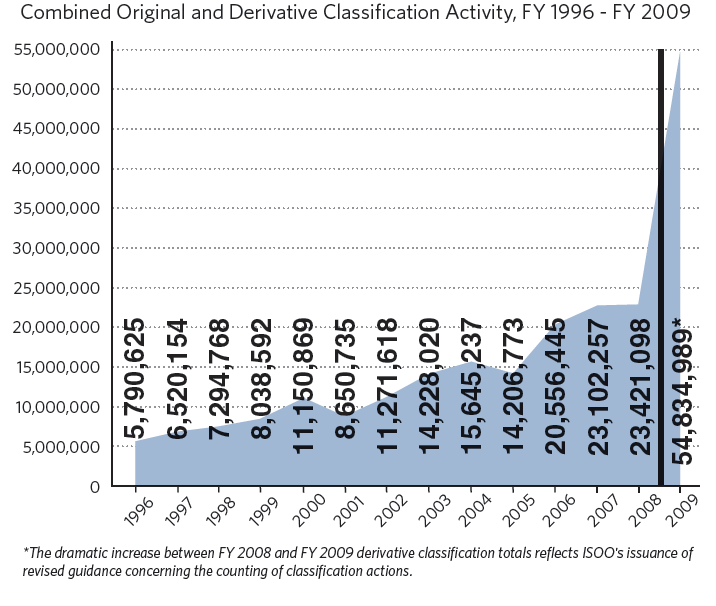
This is the part that gives me ulcers, and it's no exaggeration. So many companies insist on us giving up our 7th Amendment rights that we either give in, or don't fly, buy a car, or get a job. We can't even go to the competition because they also have mandatory binding arbitration clauses in their contracts.
As bad as the Equifax breach is, IMO this is a greater danger to our freedoms.