I bought a MakerBot Replicator 2 for my family, Chirstmas 2012. It doesn't see a lot of use. Typically the things that get printed are pretty much cereal-box-toy quality and importance. The most useful thing I've printed was a toothbrush holder that I designed myself, and the most fun thing was when my daughter needed to bring in "a shape" for her kindergarten class, so we printed up a set of platonic solids. She's an aspie (yea, really) and proceeded to lecture her class...
For the first few months I had a lot of trouble with it failing to print the filament wouldn't advance so it would skip a slice, and then when it would catch it would end up creating a mass of goo on the end of the print head. Turns out that there was an upgrade made available where instead of a set screw, there was an active lever holding the filiment in place to ensure contact with the feed motor. Once I had that in place, it printed far more reliably. The biggest problems I have right now are the PLA curling on large flat pieces.
I would say that I do enjoy using openscad to design things. I've tried the online "move blocks around and drag and drop your way to 3d success" apps, but I just can't think that way and invariably I end up with a frustrating mess. Openscad lets you iterate with a simple declarative language. Its like turtle graphics for 3d printing...
I'm not the world's biggest JavaScript fan but having the modelling in a "real" language is pretty neat. Also it is, somewhat sadly for OpenSCAD (CGAL really, though ultimately it doesn't matter), often quite a bit faster at rendering output.
Thanks for the link - I've used OpenSCAD previously and enjoyed how easy it was to do parametric modelling but grew frustrated with its interface and a bunch of other annoyances. I'd been wondering about making an online version that uses a real language but it's nice to see someone has beaten me to it.
I do not own one. 6-12 months ago, I was doing a bunch of research on them but couldn't justify the investment as I wasn't sure I'd get enough use out of one. My first thought when I saw this question on HN was, "wow, I haven't thought about 3D printers in 6 months. I'm glad I didn't buy one." I'm sure if I had bought one, I would have used it. But given how little I've thought about it in the past 6 months, I'm glad I didn't. But that is likely mostly because my job doesn't require that type of technology and my personal projects tend to be software oriented.
I know I didn't quite answer the intent of the question, but I thought the $0.02 might still be useful.
Same boat here, I've looked into them and like the idea of buying one, but I don't feel I'd get much use out of it. I guess I should think of them as a toy and something to play around with in the evenings, instead of a useful tool.
If I had a son like the other poster, I'd be all over these, I think they'd be a lot of fun with kids. I'd like the technology aspect and problem solving, and a kid would love being able to print their own toys and parts.
Also, 3D printers seem early for me to buy in. The technology is changing rapidly, and it's difficult to tell who's going to come out on top. I'm in no rush, so maybe in a couple of years when I have a little more time, and 3D printers mature, I'll pick one up.
Aluminatus A1. Bad investment from a "ready to print" perspective, since out of the box I had a blown FET which making the frame and USB +24V to my computer. Narrowly avoided blowing up my USB port when I saw sparks when the ground shields touched.
It's definitely still a labor intensive hobby at the low end - buy a RepRap kit and put it together yourself, since you'll save a bunch of money and learn how all the bits work (which you will need to when tuning things and/or when you just have to modify it somehow).
Also get a cartridge heater rather then a 7 watt resistor for the hotend. The resistors blow up too easily, the cartridge heaters are designed for heating. Also pay attention to safety mechanisms - way too many designs don't seem to have adequate interlocks in acknowledging that the fundamental purpose of the machine is to create heat, which is inherently a fire danger.
1) First printer: emaker huxley indiegogo kit. Terrible.
2) Second printer: printrbot plus kickstarter kit. Mostly good, and a good starting point.
3) Third printer: Graber i3, laser cut myself and parts sourced myself. Excellent, and the cheapest of the three.
I've found it to be fun, useful, and educational. I'm using math I've not used in over a decade. SOHCAHTOA FTW!
Depending on what kind of printer you get, you may want to join a local 3d printing group. It's very very helpful to have people with experience help you. Also, it pays to know someone that can print spare parts for you.
1) The first one was horrible, so I eventually ended up scrapping it and using it for parts.
2) The second one (Printrbot+) is/was fine, but is _extremely_ awkward to move around: The printer, power supply, and print spool are three separate pieces, and it had some serious design flaws, so I build my third, which I can carry the entire assembly with one hand. I used the second to print parts for the third, then (once I had the third working correctly) I rebuilt the Printrbot+ addressing some of its flaws.
3) It's fun to design and make 3d printers.
I might sell the Printrbot but I'm not sure what kind of market there is for used hobbyist 3d printers.
I'll probably build more, too. It's my first adult hobby that is unrelated to my work, so it's a nice break. A corexy printer is next up (http://corexy.com/)
My school's CS department just invested in a MakerBot Replicator(not sure if 2, or newest one) for a robotics class that just started this semester. So while I don't own it myself, I have some experience with it. For those curious we are building the InMoov robot(http://www.inmoov.fr/).
We have had a few issues such as air printing, the software printing rafts but then printing the object off the actual raft, and prints that get to 99% and then just completely fuck up. These issue's should be expected hurdles for a hobbyist, but it shows that there is still plenty of work to do until 3D printers are consumer ready.
With that said I am still incredibly impressed with the printer and the actual prints. The detail in the finished prints surprises me every time. Also the few support tickets we have had to submit seemed to have been handled pretty quickly by the makerbot team.
I built a RepRap Prusa i3 a few months ago from a kit with my son. I shopped around and found a good source. The kit had an aluminum frame (there are also wood frames which are a little less expensive) and was sourced from a person who runs workshops, so I had confidence that it would have most of the parts I would need. I bought it on eBay for $680, though you can find them cheaper.
There are probably better printers out there. I've heard good things about the Printrbot. A friend has one of the earlier wood framed ones. He likes it. We saw the new metal ones at MS Build a couple of weeks ago and the prints were excellent. The reason I chose the RepRap is that it's open source end-to-end: hardware, electronics (Arduino Mega), firmware, and software. We've had good results with Repetier Host and Slicer. I like the ethos of the community and the idea that it is (at least somewhat) a self-replicating machine.
The main thing about 3D printing is that it's a constant effort to fiddle and tune. It took us a couple of weeks to get it printing well. We printed some replacement parts and printed enhanced parts--for example, a pulley tensioner.
One of our early challenges was getting the right surface for the initial layer. The printing bed is glass, with a heating element underneath. The heating is optional and is mainly used with ABS plastic (petroleum based). We use PLA (vegetable based), which doesn't release the noxious fumes. It's probably the most common plastic used in consumer 3D printing. Many people use blue painters tape on the glass. The plastic tends to adhere pretty well. We tried that and moved to PET tape. There are lots of resources for tweaking your recipe here.
For filament, we use 3mm diameter, because that's the type of hot end that came with our kit. Most printers are now using 1.2mm, which is thus more readily available. The MakerBots use that, so you can even find it in some retail stores. We might print out a new extruder and get a 1.2mm head, but our extruder is working well, we have a good source for consistent spools (MatterHackers--great service from them) and so I don't have a good reason to change right now.
So it's a constant effort to calibrate, tweak, and tune, but it's been worth it. My son has it running all the time. We've gone through several pounds of plastic. We download most of our stuff from Thingiverse, but have also designed and printed our own custom items. I'm very busy, but it's a very manageable hobby. In our case, the big time investment was two long weekend days to assemble it. I can highly recommend it if you have some technical aptitude, patience, and a little extra time. It really does feel like we're seeing the future. Being part of it is pretty fun.
As a kid I used to build RC car model kits but they were very expensive so I only ever got to make one a year. If I could have downloaded one every few weeks (about the time it took me to construct one) I'd have built and learnt so much more. So I see 3D printers as having an amazing application as a learning tool/toy for kids.
Beyond that I could see it taking a secondary role as a support tool around the house allowing you to print out odds and ends.
But I don't see the big problems that 3D printing will hit the ground solving that will change the world? I can see them doing so in a latent way - by having an enormous impact on our children - but I don't see the immediate active applications?
Like any disruptive technology, I think it can be hard to predict. Right now, it's mostly a novelty for us. In some environments, I could see it being much more useful. It's still somewhat limited in terms of print quality, but it's good enough that it mostly rivals the option of making something similar using other means (out of wood, for example). I imagine as it is consumerized, as the ability to use other materials, as the color capability is expanded, and similar improvements happen, there will be unexpected applications. To me, it's like seeing the first Star Trek replicator. I know it's not great, but it's the first in a long line of iterations, and that's exciting.
I'm surprised by how mesmerizing it is to watch a print. The software will tell you how long a print will take. When we first started it, a print would take, say, 20 minutes. I expected to go get a coffee or whatever. Instead, I sat there and just watched the print head move around--layer after layer. I still love watching it. I just don't sit there for whole prints anymore.
> In some environments, I could see it being much more useful
It is very useful in laboratories. On demand printing of labware with custom geometry is wonderful. Also, it enables certain geometries and properties that would be very difficult (for an unskilled operator) or impossible to produce via subtractive means, like CNC mills. For example: custom reaction chambers with complex internal geometry. Iterative, "in-lab" design cycles are also pretty nice.
> I imagine as it is consumerized, as the ability to use other materials, as the color capability is expanded, and similar improvements happen, there will be unexpected applications.
I definitely think if 3D printers can find their way to printing other materials it will open many more opportunities. But right now I'm struggling to find what I need that could be made entirely of plastic. Hope someone will delight me one day.
Acetone and ABS slurry make the parts stick almost too well. I usually have to pry with an exacto knife to remove prints. You pour a thin layer on to the glass, and its like liquid plastic at room temperature. As long as you can properly ventilate the room, it's by far the best method to make prints adhere.
He's 14. I was surprised at how quickly he took over. He runs the whole thing now, calibration, looking for optimization tips, etc. The software that we use (Repetier Host) takes some ramp up and he has no problem with it.
No, I don't currently own one. I bought a MakerBot Cupcake in 2010. I had fun assembling it, and was happy that my first print (a Darth Vader head) was flawless...it would be the only one. All subsequent prints suffered from lifting rafts, or air printing, or just stopping for who knows why. I fought daily with the machine for a good month before recognizing that I wanted prints, not to be a tinkerer of 3d printers. So I handed it over to my local makerspace, and started using Shapeways. The results were very satisfying, even though it was expensive.
Each of the last two generations of MakerBot Replicators were released with promises that they just work. While much has improved, threads on their mailing list show that some of the same frustrations that I experienced 4 years ago have persisted...specifically the air printing. I'm not going to buy another one yet.
One on my business partners bought a Formlabs Form 1. When it worked it was great, but it just wasn't reliable enough to depend on at the volume of work it was bringing in. For high volumes you need to by an expensive machine, but prices clients are willing to pay is dropping, and the technology is changing fast. He couldn't make a business case for owning a 3D printer, so he sold it. Shapeways is cheap & fast enough.
I built a RepRap Prusa Mendel last year, and boy was I ever in over my head. I was totally green to everything, and it was quite a challenge. The initial kit cost about $800 with shipping, and 16 months later I am approaching the $2000 dollar mark in replacement parts, electronics, and tools. Don't get me wrong, the thing has been a great long term hobby and I have learned an enormous amount about electronics, arduino, and particularly how tedious it is to keep a precision machine like this in tune. But that is what the printer was to me - a project in robotics. It has not improved my day to day experience in any meaningful way outside of that, for a very particular reason.
I found myself in a curious place about 12 months in. I had taught myself basic electronics, taken courses at a local hackerspace, and finally got everything working like a charm. I printed non-stop for a few weeks, and then found that my hobby had dried up. The printer was done, and I lacked the very most important skill for operating one: the ability to make my own accurate and printable 3d models.
I have been learning, but I wish I had gone about this in the opposite order. Hackerspaces, Makerbot stores, online services like Shapeways, and even some libraries now have properly configured 3D printers available. If you are thinking about getting/making one, I strongly recommend learning the modeling first and testing your prints with these services, and if you get good (and fast) enough that this becomes a hassle, then you will find your printer truly satisfying.
Followed the original RepRap project as a college student. A bunch of us students tried to do a group build of the RepRap Huxleys. It was way too much work to try off the bat in order to get a working printer.
After a run-in with a RepRap Mondo (it's big but it has a lot of issues, the design ended up not being that popular) bits-for-bytes RapMan printers (purchased by the industrial engineering department) and MakerBots (some folks at a local TechShop had them), we eventually got an Ultimaker kit.
It was amazing. Fast prints, cheap (compared to some), good-quality software, the assembly was straightforward and fast, instructions were thorough (compared to many other printers we've worked with), and print quality was good with almost no tuning.
Now graduated, I own an Ultimaker and whole-heartedly recommend it. Not only is it a good printer by itself, it has quite a clever community of inventors around it, and 3D-printed parts and improvements to Ultimakers appear with shocking regularity. (As opposed to makerbot, which is more of a professional printer in that less folks tend to modify them).
Cura, the software used to control ultimaker, has come leaps and bounds farther than what it started as. It's now easily mistaken for professional paid software, and it's easy enough that even someone with no experience can hop on and start printing.
Also shout-out to octoprint, which uses a Raspberry Pi to control the printer (3-hours of printing an awesome part rock, but not having your laptop tied to the printer for that long).
Its been a learning experience to say the least. In terms of things that I've done with it, I stopped going out and buying moderate-sized containers for things and opted to print, I used it to fill in miscellaneously broken / worn down things (refrigerator door handle) and it spurred off designing stuff from scratch
I purchased Solidoodle 2 last year (or 2 years ago?). The very first time I used it (after installation), the filament got stuck inside the nozzle. I emailed their support, they told me to "keep pushing":
"You can try to use a sharp bit or wire or other similar implement to break through the clog. If the clog is small, or easily broken this will be very easy, but it easy to imagine how this might not work every time."
(http://wiki.solidoodle.com/unclogging-procedures)
I did that but no avail. I didn't dare to push too hard worrying it might break the machine and (obviously) break the warranty.
It's now sitting in my room. I can't return it for refund (if they accept) since the shipping fee is >$100. I feel like a total idiot spending almost $800 (including import duty) for a very expensive toy that doesn't work.
Read the Soliforums, disassemble the hot end and clean it with acetone and/or a torch. Worked for me.
Or consider ordering another hot end like the E3D one. Solidoodle support is famous for not giving proper advice out of fear of liability.
If you don't intend to keep it, don't forget that because of shipping costs and time delays, a solidoodle will still fetch a decent amount of money on the second hand market. Just contact your local hacker space and you will probably find someone to take it off your hands.
So you're not willing to push harder because you don't want to break the warranty, but you're not going to claim on the warranty either? Huh? What do you have to lose by trying something that might break the machine compared to what you've done now?
Replicator 2, first few weeks I didn't have any good prints from thingiverse (their built in ones worked fine) until I realized that the print temp was too low 185C vs 230C. I had followed what the reviews said for my third party filament. After fixing that I got a third party glass build plate and it has rocked ever since. It's become a standard part of my design/prototyping process and was a big upgrade from foam core and hot glue. I don't get a lot of value from printing models off of thingiverse though (I had originally expected I would), most of what I use it for is custom and that makes it well worth the price.
I've owned the first gen Replicator 2 for a year with a couple thousand hours of print done. It was honestly a pain in the ass to maintain as it constantly needed cleaning and readjustment. The worst part is the built in extruder was horrible so we'd have to print our own parts for it and build it with bearings and spring - and this would have to be reprinted after every hundred or so hours since the fans would sometimes fail and it'd just overheat and warp it useless. It printed well when it worked but was too much of a hassle to upkeep.
I built a Huxley Reprap Pro two years ago. The building experience was interesting, but fiddly. I needed a few spare parts along the way and getting them was slow. It feels very much like a prototype / proof of concept rather than working tool but getting it working was rewarding.
I printed a few things, including a centrifugal pump, from thingiverse as well as a few of my own designs. They usually come out reasonably well, but the finish is not attractive and it usually takes a lot of fiddling up front and more than one attempt. Comparing the quality to stuff I've had made by Shapeways / Materialise there is no comparison - they are infinitely superior.
Keeping the machine operational requires constant vigilance! If there's a kink in the filament, or the extruder loses heat the machine has a habit of self destructing.
It's been an altogether more rewarding experience. It feels like a real machine and the results are really impressive. I've not really had anything go wrong with it after assembly. It is quite a bit scarier though having a diamond bit spinning at 20,000 rpm!
Like a few other people here I've got a RepRap Prusa i3.
I use it mostly to complement my photography hobby. Need to adapt lens XYZ to my Sony A7? (Even in situations where I might have no idea what kind of screwball mount lens XYZ is using?) No problem, I'll just calculate the flange focal distance differential (may involve some eyeballing/fudge-factoring on unknown mounts), measure the bayonet screws and print something up. I print primary in ABS, though I've messed around with some other materials.
I don't think I would recommend one yet for people who aren't keen on the idea of having to fiddle with it constantly; my experience is fairly limited to user-built Mendel-style cartesian reprap designs but from what I understand even the retail versions of these types of printers (like the Solidoodle, Replicator, et al) require just about as much tinkering as my RepRap to keep in working order as they are basically the same innards just with some fancy enclosures and such.
Also you should really consider how much you enjoy doing 3D design before buying one; I've heard of quite a few people who got 3D printers, never really got into 3D modelling and ended up just printing some trinkets from thingiverse until they got bored.
I work for a small mechanical engineering firm with an HP Designjet. It may be of interest because our experience seems somewhat different to the home users posting here, in that:
1. It has 'just worked' for over a year without maintenance and with little downtime. Note that the name and styling of the machine seem meant to be reminiscent of inkjet printers, which for all their faults tend to be 'plug and play': the 3D printer has lived up to that. We have used consumables as directed in the manuals, disposing of the print beds after each use.
2. 3D CAD software (Autodesk Inventor) is already in use and there are plenty of people very comfortable using it, so the design is a breeze. I'm curious how people are managing since CAD is expensive and there aren't many open-source options. Once the parts are designed they are exported as STEP files, brought into HP's print layout software and the print bed arrangement is set out manually by dragging-and-dropping.
The printer has mainly been used for promotional goods and, after an initial flush of enthusiasm, not much for general prototyping. My prediction that an actual product would be sent out within the year with 3D-printed parts in it proved false. There were some cool attempts to 3D-print moulds for dispensing plastics into, which is vastly quicker than using the services of a toolmaker, but sadly the surface finish was unacceptably poor due to the printing being in layers.
To summarise, the low-end professional market seems to be fulfilling the promise that 3D printing can be accessible (to companies where it isn't their core expertise), but it doesn't seem to be causing a revolution yet.
Built a Prusa i2 from a kit with a colleage at work. It took us a while but we have it printing beautifully and consistently. The problems we had building it had to do mainly with the hot-end that came with the kit, which eventually we switched out for a new one we got cheap off ebay. I'd say the build phase was at times frustrating, but you start to build up experience and after a while you can diagnose a problem almost intuitively.
As for getting good prints, the trick is to keep fiddling with Slic3r settings until you get it just right for the filament you are using, and then just keep using those settings. Also, make sure you calibrate your z-axis properly, this will get rid of a lot of problems.
Currently printing parts for a second one because I want to have one at home. I use it mainly for prototyping parts/enclosures when building things like small plotters or other robotics. I strongly recommend learning openscad or another modelling tool. Printing is fun, but designing a part and then seeing it turn into reality before your eyes is just magical :)
I own a PrintrBot, 1st generation laser cut edition. I was just reminiscing about spending most of Memorial Day Weekend in 2012 building it. But, I never got a decent print from it.
A bunch of reasons:
- When the PrintrBot first came out, despite its marketing as being newbie-friendly, it required mechanical engineering experience and familiarity with RepRaps. The build instructions weren't bad but it took about 20 hours to work through them and they assumed familiarity with tuning things like the tension on the extruder assembly that a newbie like me didn't have. Lots of terms were used ("hobbed bolt") that aren't garden variety Home Depot things.
- The kit I got had crappy parts. PrintrBot's Kickstarter was wildly successful, so much so that the strategy of printing pieces for rewards using PrintrBots took too much time. Half of the plastic pieces I received were resin-cast and not cured for long enough so they cracked. The other pieces weren't QCed - my main gear had major flaws in the teeth which several hours of shaving with an xacto haven't fixed. The control board wires were designed for the smaller all-plastic model, so my z-axis wires rub against the print bed and strain for high (x, y) coords. I've grown grey hairs leveling the print bed and calibrating the z axis but the unit jerks during operation so much that it's impossible to print anything requiring more than 4 passes of the print head before the head starts dragging through the already printed material. Some of the provided bolts weren't the right type, which I exchanged at an industrial lab where I worked but which would not have been sourcable for a hobbyist. My kit came with incorrectly sized linear bearings, too - my local maker space had just enough stashed in the back, thankfully.
Overall a negative experience for me. That being said, the PrintrBot community is supremely kind and helpful. I just don't have the time, experience or materials to replace the bad parts, calibrate the printer and keep it calibrated.
What I've seen of newer and higher end hobbyist units, even the Makerbot 2, is that you need to really grok the mechanics to keep it tuned and running. Even some of the low-mid range industrial printers require horse-whispering to keep them happy. It's nowhere near print-and-forget.
I look at what it's possible to produce on even the high-end consumer units: you can make pixelated toys, but how much will you use them?
I built a Prusa i3, with most parts 3D-printed on another Prusa i3. I mainly use it for university projects, printing actuators and cases.
Last semester we printed a model boat, about half a meter long, outfitted it with a printed a linear actuator to control the rudder angle, and - as our semester project - built an autopilot for it. Great fun :-)
Using a selfmade (of 'Mendel90' design by Nophead) printer for quite some time now, it turns out extremely useful. The printer isn't even perfectly finished at all, but used in everyday work since it's first successful run. It is used for mostly mechanical parts for prototypes or small series production. As those parts are hidden inside devices, we don't care for their crude look. On the other hand, the usual plastics like ABS give perfectly robust and reliable mechanical parts like customized chassis holding other parts together, or customized levers or gears.
So for me, a 500€ and one week of work device turns out to be one of our most useful and most used tools in daily work. It saved several thousand € of external services and hundreds hours of communication tied to that. This way, the device can be called a professional tool.
I built a Prusa I3 REPrap opensource printer in a workshop.
It was a fun super time consuming ride. I printed tons of stuff and spent hours tuning it and fixing it once it would break.
Then I sold it at 40% loss and focused on webdev! I gained lots of hands on experience and familiarity with software and hardware that I did not have before.
I have a Solidoodle 3. After a problem with a clogged nozzle and trying different build surfaces (glass plate + hairspray for adhesive) I've had a long run of successful prints (ABS only). I've printed a set of Prusa i3 parts for a friend, for instance, and some other pretty big objects. The printer does need recalibration from time to time, especially after moving it, but it doesn't take too much time. You do have to get used to the various "quirks", play around with different temperatures for different plastic colors etc, and not be afraid to take things apart.
Luckily, at least for the Solidoodle and I would assume most of the other popular designs like the Prusa or Makerbots, there's a good support community out there with tons of illustrated guides to help you with almost any problem.
I bought a MakerGear M2 in kit form back in August. Because of the complexities of owning and operating a home 3D printer, I actually recommend building from a kit. It will give you a level of familiarity with your hardware that will come in handy when you have to tweak or repair it (and you WILL have to). All in all, the MakerGear has been a solid printer that produces relatively high-quality prints consistently. Support from MakerGear is absolutely top-shelf, they are very quick to address and fix any issues you may have. Some things I have learned:
1) Not all plastic is created equal. Even plastic from a "good" supplier is sometimes suspect when your printer jams. You have to check filament diameter consistency. Melt temperatures will also vary even on the same "type" of plastic from different manufacturers.
2) Careful calibration and leveling is a must. Prints will fail frequently if you skimp on this step. It is imperative to check belts, drives, etc. frequently to make sure everything will run smoothly. There are also parts that must be kept lubricated.
I guess you could say that owning a 3D printer is more akin to owning a machine lathe than a traditional "printer".
From the software side of things, I use FreeCad for designing, Slic3r for slicing, and Pronterface for printer control with pretty good success. I have even been able to sell some products I have produced locally, and have a patent application in the works for one of them!
All has not been a bed of roses, though. One major problem I had took me weeks to track down. I kept having extruder jams during prints. None of the usual fixes seemed to help. I finally noticed that melted plastic was coming out from under the hot-end insulation! It turns out that the hot end assembly was unscrewing itself during the printing process. I had to disassemble it, clean it out, wrap the threads with several layers of teflon tape, and start again. It has been OK since then. I could replace the hot end with a new design MakerGear has now (they seem to iterate rather quickly), but don't want to shell out for it yet.
I've seen a lot of friends have a lot of trouble with hobbyists 3d printer but I had a Stratasys Dimension Elite (on the higher end of filament based 3D printers) and it was significantly easier to use. At like 20x the cost of a MakerBot it's only justifiable if you consistently use it for prototyping and proprietary printers are tuned to a specific plastic so using their cartridges with cheaper plastic usually yields worse results (so, hack a cartridge eeprom + onboard computer and deal with shitty prints or pay $200+ per spool on top of the up front cost).
With a double print head, it extruded a support filament which made it very easy to print complex shapes (with everything cleaned and carefully set up even a good mobius net is possible) with any plastic. The support filament dissolved afterward in an ultrasonic bath filled with some basic chemical that also smoothed out the parts after printing. The cartridges made it much easier to work with spools but was very wasteful since any time you switched you'd lose a bit.
If you're going to build a 3d printer however, the stuff that Stratasys does seems to really help: the print envelope is sealed and uses a bunch of fans and heating elements to keep the temperature well above ambient (I don't remember the exact number but it was easily 110+ F) as well as heat the printing platform. The z-axis is on a ball screw independent of the XY axes which, although expensive (as usual, look to ebay), helps with the reliability. The print head would print several layers (dozens usually) and then go over to a metal wire brush to wipe off any remaining plastic from the extruder.
All in all it was a well built machine but way too expensive with several large electronic boards (including an Intel mobo running Fedora or something) and a lot of wasted space and metal. The heated envelope, ball screw, and support material made a huge difference but in the end the results were only so useful due to material limitations and terrible tolerances (I would usually print the same part half a dozen times or more in order to get one with the right dimensions to fit in a more precise metal part if they mated in several places or in an irregular way)
I have been using one for the last 2+ years. I first built Mendel i2, and got upset with it rather quickly. Then I rebuilt it into Mendel90 which is my daily printer up until this point.
Many others have already pointed that out but I will re-hash it- the most time consuming point was between the time printer started to work, and time I could hit print, and come back a few hours later with the part ready. I believe it took me a few months (not fulltime, but fiddling with it in spare time).
It has been an invaluable tool for me, and I really don't mind tinkering with it. I'm now building a larger, over the top FFF printer and UV-resin curing one is on my roadmap too.
That's a great video thanks. A relevant part for this thread is where he says:
> We're really lucky that the first and second-generation users haven't broken their silence but at one point they will ... [they'll] say "well actually it's been pretty tough going, actually I had to wait another three weeks for this part thing and my extruder jammed up and ... I'm spending more time on the machine than making stuff." [0]
Seems to be what's coming up here; personally I had no idea they were this far from consumer-ready.
I purchased a Formlabs Form1 from the Kickstarter a year and a half ago. Received it about a year ago and have made some pretty cool practical parts (replacement parts for a pinball machine, custom brackets, etc.) Being a resin printer, the objects come out with far better accuracy than any of the FDM (filament) printers I've seen thus far (at least without extra finishing.)
Originally the software and documentation was pretty sparse, but it has gotten drastically better over time. Biggest complaint about the printer is the cleanup of the parts, but once you have it down it's not a bad process.
Own tree printers: Printrbot LC, Printrbot simple and Prusa i3 Steel, made some delta printers for others.
My advice is :If you are in the creative industries (architect, engineer, artist, jeweler) you NEED it and you are loosing time not buying this thing.
If you are not, you can wait until they become easier to use(auto-leveling bed), and the "controlled temperature" patent(enclosing the printer) expires in one or two years.
I have a good friend whose wife works for 3D systems. I asked about their 20% employee discount, but he cautioned me against getting one at this point in time because they were not consumer-ready yet. He said they work but they're not really that easy to use, not super reliable, etc, and he recommended that I not get one yet.
I'm waiting for my Buccaneer to be delivered by Pirate3D.
It was very cheap - I got the early bird. Their early online demos of creating 3D objects called "SmartObjects" was pretty impressive and intuitive. It seemed to have a lot of features that are now being baked in to MakerBot printers.
Ultimaker Original. I think its one of the best. Also very hackable. But I discovered 3d printing is hard. Sometimes you have to make a lot of test prints to get the right settings for a piece. But overall its a lot of fun and very nice for prototyping.
After a couple years of fantasizing about owning one, I finally took action month before last.
I built a Prusa i3 from parts, single-sourced everything as a kit from RepRapWorld.com; that's more expensive, but much more convenient when you don't know what you're doing.
I didn't count the hours but it probably amounted to a couple weekend's worth of full-time days, all told, most of which consisted of tearing down and rebuilding something I'd already done which didn't quite work. Even so, the mechanical assembly was less trouble than the electronics - I plugged something in the wrong way and ended up blowing a fuse on my electronics, then blew a power supply while trying to "fix" that. Fortunately RRW were extremely helpful, I shipped the board back to them, they fixed the fuse and sent it back to me.
If you're not already well equipped for shop type work, remember to budget for tools.
Next time, if there is a next time, I might try the other popular approach, scavenging parts from discarded printers etc. to keep the costs down - and make the project even more challenging and time consuming!
I wanted to interest my kids (12, 15 and 18) in the project but that part didn't turn out as well as I'd hoped.
Once you've built the thing, there's still lots to do: fine-tuning, upgrading (for instance leveling the print bed is a pain in the ass, so I'm considering buying parts for an automatic leveling add-on), trying fancy plastics, and so on.
One unexpected difficulty was calibration. It's one thing to get the various parts working, to have the extruder actually extrude plastic and move around in the X,Y,Z axes - but to print objects you also need to choreograph all these motions just right: to move the right amount of X and Y while the extruder spits just the right amount of plastic. This requires repeatedly fiddling with the source code for the firmware and uploading that to the Arduino compatible board.
I'm still at this "tuning" stage right now. The first few days were heady as I went from "printing" a blobby mess of plastic thread, to a few decent-looking pieces. It's more of a grind now, as fine-tuning involves lots of guessing what could lead to an improvement, doing a print, and starting over; and these machines are SLOW.
Whether I can do something "actually useful" with it is still an open question. Even printing replacement parts still looks like it could be a challenge, there are so many things to get just right if you want parts that don't break, that print at the exact X,Y,Z dimensions, and so on.
I'll be honest, I'm now past the "honeymoon" stage where these difficulties were delightful, and experiencing some frustration, in particular at the slow speed of iteration. I'm a coder, I like being able to test tweaks in a matter of milliseconds. But that was the point - to get out of my software comfort zone and do something substantial involving hardware.
I've backed the Peachy from Kickstarter and hope to receive that in the next few months, it's a totally different principle (stereolithography like the FormLabs, but with many tweaks that keep the cost way down).
Building your own is a great experience, and whether I keep at it or not, I'm glad that I invested the time and money; now I know exactly what these machines can and cannot do, which gives me a great perspective on the hype from mainstream media and evangelists.
I have a solidoodle 3 at home and a makerbot replicator 2x at work. I used the SD daily for a couple of months, but then ran out of ideas. Just like every other tool, without a problem to solve, its not very useful. Ive done a few upgrades, like a glass bed, a new hotend, carriage bearings. Its a fun hobby, but thats it.
I don't see fdm printers ever becoming ubiqutous. Too much maintainance, too many moving parts. This will always be the domain of tinkerers.
Thought about. Decided to model the two parts i was planning to print in openScad first.
Uploaded them to thingverse and paid a company to print one... The other i never printed because i didn't want to pay over $20 for something i wouldn't be sure won't break...


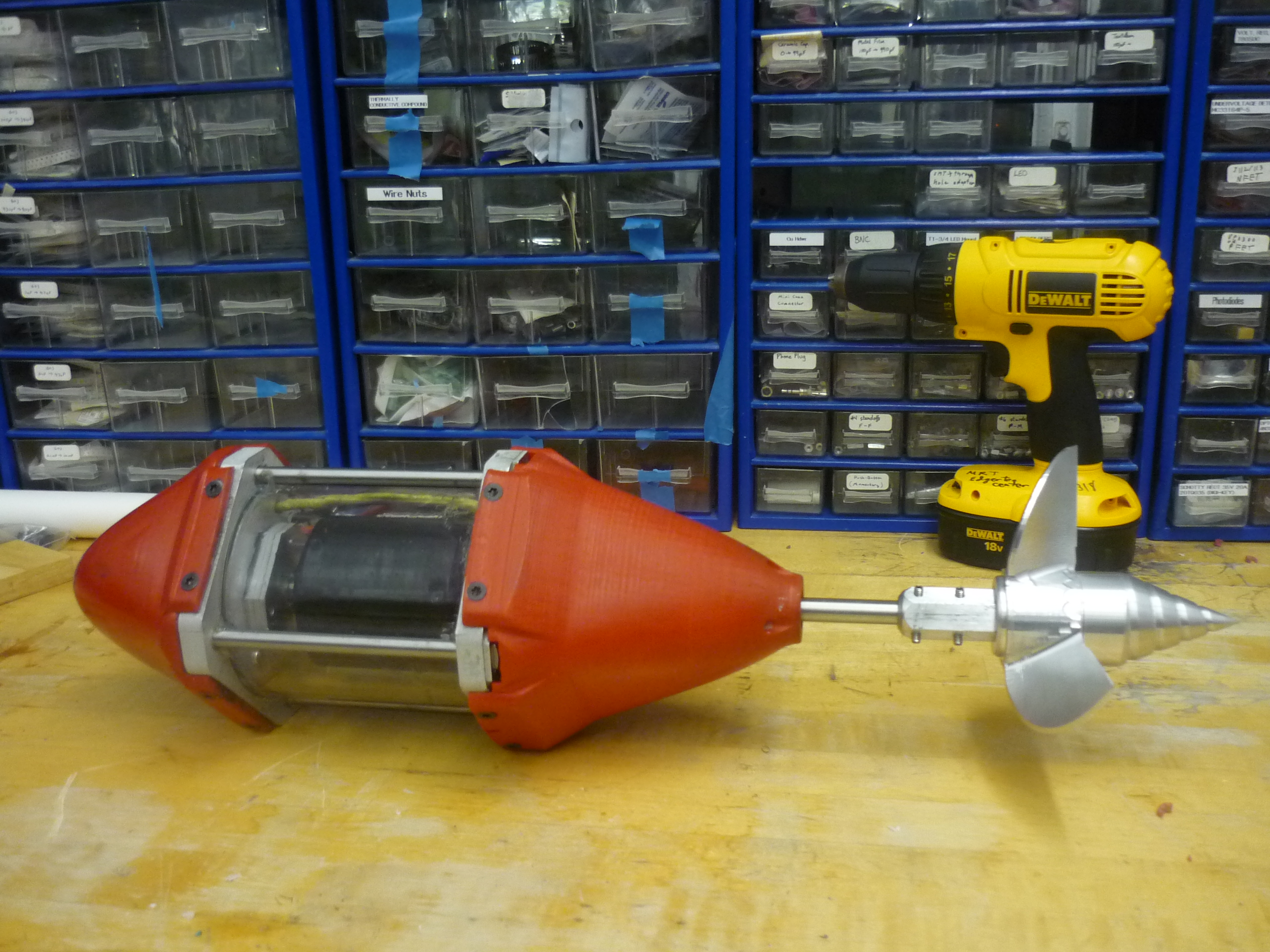
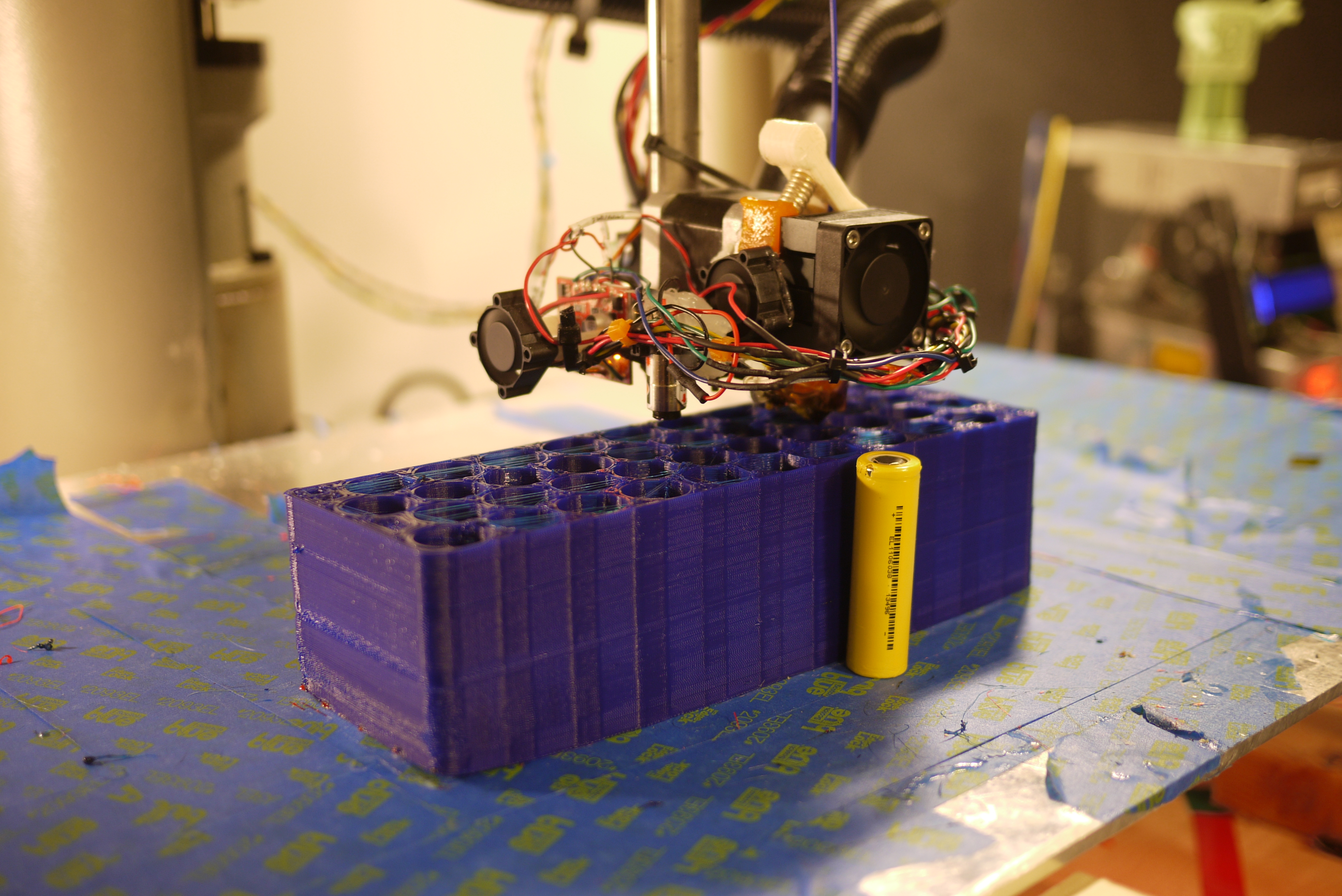
For the first few months I had a lot of trouble with it failing to print the filament wouldn't advance so it would skip a slice, and then when it would catch it would end up creating a mass of goo on the end of the print head. Turns out that there was an upgrade made available where instead of a set screw, there was an active lever holding the filiment in place to ensure contact with the feed motor. Once I had that in place, it printed far more reliably. The biggest problems I have right now are the PLA curling on large flat pieces.
I would say that I do enjoy using openscad to design things. I've tried the online "move blocks around and drag and drop your way to 3d success" apps, but I just can't think that way and invariably I end up with a frustrating mess. Openscad lets you iterate with a simple declarative language. Its like turtle graphics for 3d printing...