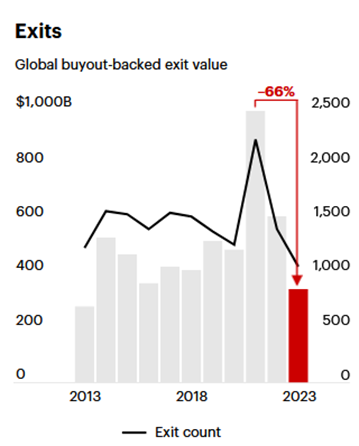
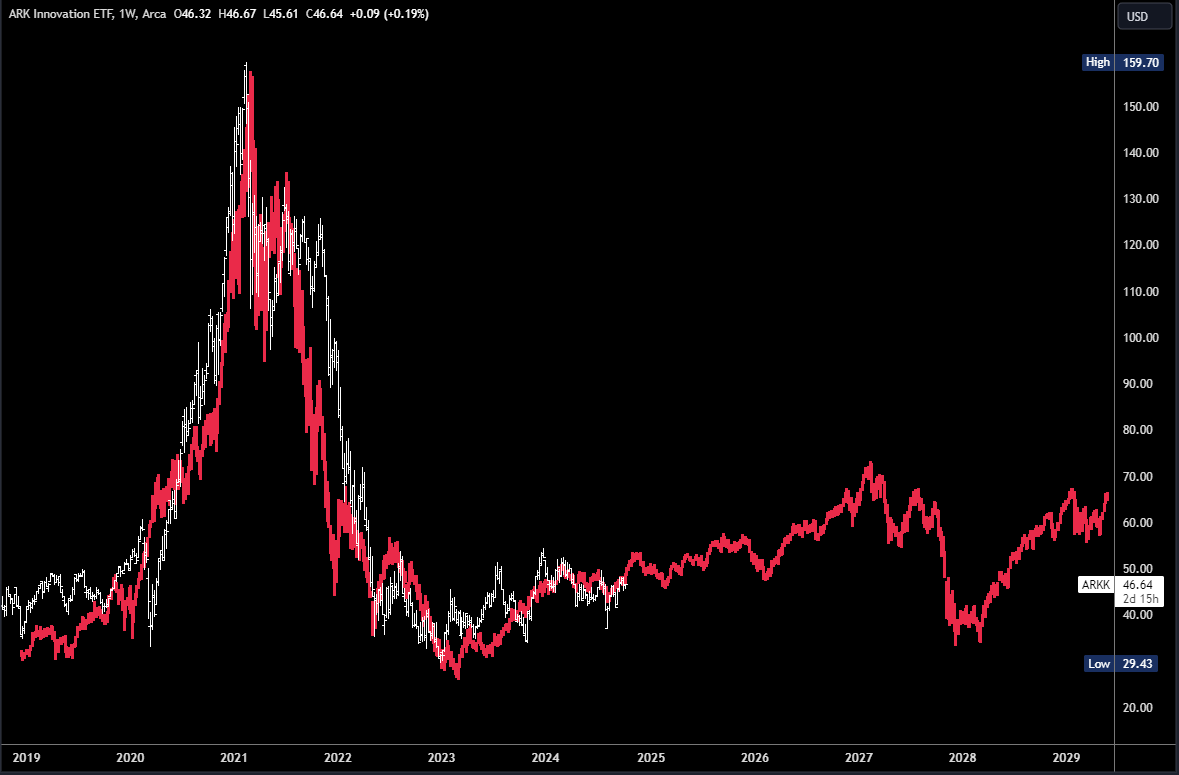
Having lived through both ... the job market was INSANE during dot-com. Getting a job was like falling off a tree. If this is 17 times bigger, where are the jobs (serious question)?
That's the entire economic premise of AI: labor automation. The end game is more returns to financial capital and less (or no) returns to human capital.
Or in slightly more Marxist analysis: a complete power grab by the capitalist class, who sees AI as the great liberator from its pesky dependence on the working class - who could keep the worst excesses in check so far through collective action.
The bubble is a gamble from the bourgeois class. Even though they are taking huge risks and burning an insane amount of money on Sam Altman’s empty promises the possibility that they could stop paying out payroll is tantalizing enough to keep going for quite a while.
Marxist analysis is essentially nonsense, though it sure feels good. Makes you tap your toes and really feel like "one of the People." But it's been bunk from the day it was penned.
Jonathan Blow took this notion to task when said that the means of production are a $200 laptop you can buy at Walmart.
What's really going on is industrial grade existential angst. "If my competitor trains a robot to do this job, they can run their factory 24x7, dramatically lowering their costs. If they do it and I don't, I can't compete. Therefore, I've got to do it or die." Rinse and repeat for call centers, web shops with "assistants," or software feature mills.
Those CEOs and CTOs are convinced that the other guy is doing it, and their business will fail if they don't. There are a few that know better.
This isn't a class struggle. It's cold-sweats-at-night fear of the future.
> Jonathan Blow took this notion to task when said that the means of production are a $200 laptop you can buy at Walmart.
That is bunk, in the current age. The means of production is a $200 laptop and a $1B nvidia cluster.
> What's really going on is industrial grade existential angst. "If my competitor trains a robot to do this job, they can run their factory 24x7, dramatically lowering their costs
This is not exclusive to what I said. All this "lowering of costs" is archieved by a reduced dependence on the working class.
No, see, there are other struggles. The reason Marxism is fundamentally totalitarian and always devolves into a single party dictatorship is EXPLICITLY because it attempts to explain all suffering as caused by class conflict. Thus: if class is destroyed, utopia is achieved.
This is of course farcical.
"no struggle but x struggle" is the very the definition of a totalitarian ideology. You really think there's no struggle but class struggle? When you are suffering because a loved one has died of old age, is that struggle the class struggle?
Marxism isn’t about utopia. Marxism isn’t only about class you are referring to. The people who usually say that sort of thing are white westerners. Marxism is difficult to understand for westerners who center themselves too much like you are doing.
This is not exclusive to what I said. All this "lowering of costs" is archieved by a reduced dependence on the working class. No struggle but the class struggle.
Well, to the extent you're right, the capitalists are behaving rationally. What would Marx say about that?
He woulds say that when capital can no longer reproduce itself through productive labor that system must collapse or end in revolutionary transformation(aka probably a lot of killing).
But you seem to be looking for some sort of political argument on top of corrupt and twisted logic, so I don't know exactly what you're looking for here.
> Could Jonathan Blow host his streams off his $200 laptop?
You may be right on the other parts, but, theoretically, yes? We've had the capabilities since BitTorrent to build p2p streaming tools: our main limitation for such situations is not capital, but the ability to coordinate making such tools simple and resilient enough for everyone to use.
Someone else downthread said "No struggle but class struggle", which it really does require a Marxist outlook. My take is "No problems but coordination problems" -- we have enough capital, labor, and raw resources now to solve most of our remaining problem set, we just need ways to coordinate better. Some of that is about aligning incentives. Marxists try to do this too! I just haven't seen them succeed very well without having to fall back on other, more general methods.
Digital technology, the domain of people here, is the main engine of better coordination in the modern era. We need to keep working on it to make it work better for everyone trying to solve problems.
You saying "he could theoretically stream off his laptop" is no different than saying a luddite could "theoretically sew clothes with needle and thread". It really comes across like a lack of respect for the argument Marxists make. I'm not asking you to be a Marxist but if you aren't willing to engage the argument seriously, I'm not sure what I can say.
Even your "solution", is exactly what the early Marxists thought. They needed to coordindate to overcome the sole power of factory owners and they did that through striking. What is striking, if not coordinated market power? The rest of your post comes off as Marxism, but in a different font. It's as wishy-washy as the solutions proposed by the Marxists on Bluesky. "if only we would come together and coordinate, the revolution will be here soon!".
The issue with "No problems but coordination problems", is that today, in our society, capital solves coordination problems. And before that was monarchy, and before that was religion. The entirety of human civilization can be distilled with "how do we get n-million people to do x?"
I don't consider myself as a Marxist but the actual problems he highlights are very salient even if his followers have failed to solve them. Just because there's no found solution for P=NP, doesn't mean the entire field of computational complexity is a wash.
Well, yes. Marxists also try to identify and solve these coordination problems, and their analysis is fundamentally one of class analysis. My claim isn't that they aren't pursuing the answers to these problems: it's that there attempts to do so have notoriously failed. Which is fine: these are not easy problems. The best models for successful coordination, as you've described, all have negative externalities.
The point though, is that you really can stream off a laptop: we had BitTorrent; we have WebTorrent. We've built peer-to-peer infrastructure that works. In the last 25 years we have built great collective works with minimal capital outlay -- so minimal that we saw an explosion of capital investments because the returns to low capital were so high. Heck, you're using one of those low-capital, capital-adjacent artifacts right now.
In the class of problems, scaling up peer-to-peer collective action is (I would suggest) difficult, but not as difficult as it would have been to coordinate peer production in the 19th century. We've just barely begun to explore their potential.
Did Jonathan Blow really compare a datacenter and a laptop as comparable means or production?
The guy is smart, but many of his opinions are those of a man who doesn't get much pushback on what he says. It's a common curse of success that you get surrounded by yay men.
It seems like Marx had some good noticings of problems with capitalism, and probably some silly ones, and what he noticed probably wasn’t the first time such things were noticed, but some were valid. But then people go “ah, these noticings are valid, we should listen to this guy”. But noticing a problem does not mean you can design a solution, and Marx’s solutions generally were not good, despite his problem noticing being good. Also other people basically hijacked his ideas and I imagine probably twisted them somewhat, as they offered a way to seize power and people doing that are typically not ideological purists in practice.
There’s a surprisingly long (to me) analysis of Marx in Karl Popper’s The Open Society and its Enemies though much of the book might be dated by the conditions of 1950-1960. He writes that Marx correctly saw problems with England’s capitalism in 19th century but never adjusted his views as conditions in England changed during his lifetime(labor reform).
So all those CEOs and CTOs are wrong, and you along with the skeptic camp see the true nature of AI.
But let's assume for the sake of argument that you are wrong. What are the logical implications? Can your worldview allow for the possibility that you might be wrong?
> So all those CEOs and CTOs are wrong, and you along with the skeptic camp see the true nature of AI.
This kind of a statement assumes that all those CEOs did exhaustive, detailed, independent research to arrive at the conclusion that AI is the next big thing.
IME more often than not, they're just following the herd in a way that ends up being a circle.
Sure, but the herd can still be right from time to time. While it's impossible to accurately predict the future course of AI progress, we can at least agree that the rapid take-off scenario is at least plausible, and that, if it happens, it logically leads to dramatic social and political changes unprecedented in the last centuries; in that scenario, AI-empowered human political operators will quickly become dangerous to humanity and they pose a far greater and earlier threat than the comic book scenario where unaligned AI takes over. We had unaligned HI from the very beginning.
What I'm hearing is that if you're wealthy and powerful, you want as little to do with the so-called "working class" as you can possibly manage. If you expect powerful people to act in a manner that favors your interests over theirs, I don't know what to tell you.
I mean, you come on here and rave about how everybody should unionize and grab their pitchforks and struggle against the machine and what-not, and then you wonder why everybody is rushing to replace you with a robot.
> I mean, you come on here and rave about how everybody should unionize and grab their pitchforks and struggle against the machine and what-not, and then you wonder why everybody is rushing to replace you with a robot.
That has nothing to do with it. Really.
Anyone in the powerful position you describe who "earned" it, that is got themselves there somehow, is fully aware of the basis of their power and of the risk represented by it resting on workers. They will try to replace them, regardless of whether or not they are currently at that moment agitating for unionization.
Surely we can all see the difference between a whole bunch of websites being paid for (lots of ethereal bits) and lots of actual computing hardware? Even if AI dies off, I imagine there are tons of uses for those same farms. Computing power might get cheap for a while, but I'd be pretty shocked if this resulted in another pets.com
Definitely interested to see where my thinking is off here, if anyone can help. This just doesn't seem much like a bubble to me.
> Even if AI dies off, I imagine there are tons of uses for those same farms
Are there tons of uses for 2023 crypto farm hardware?
A trillion dollars of GPUs in various stages of obsolescence and/or shagged-outness in data centres might be useful to the right people but it's a depreciating asset.
Everything in tech is a depreciating asset. If you're talking about GPUs used for mining crypto, yeah - most people run them well below max load, keep temps stable, and pay close attention to their crypto farm. Buying a used crypto farm GPU is great.
If you're talking about purpose-built ASICs, probably still yes? It's not like it's performing some incredibly unique action when farming for crypto.
The secondhand electronics market is fairly strong.
I'm not in the market myself; a number of friends buy them on eBay, but I don't know how to differentiate between good and bunk. I would assume that if they're selling 50 of them, though, that it's a good guess.
Still, I think it's always something of a gamble. Maybe look for reputable dealers on there.
It's like building a condo skyscraper just as the market crash of 2008 hits.
The property will still be worth something but nowhere near the expected value pre-crash. For those still liquid when the dust settles, they'll be able to get great bargains on compute or even whole data centers.
Maybe the land will be dotted with half-finished data centers that sit for years, like unfinished condo high-rises post 2008 crash
Same here, kids that barely knew HTML getting hired no questions asked, no letcode, no mission statement about changing the world, no repos on source sourceforge required,....
Not old enough for the dotCom (36) but my educated guess is that because the internet was new and exciting, companies were prepared to train and take risks.
Training for AI now requires specialist skills which can be syphoned from within an existing organisation or from those with existing skill sets.
Unlike the latter where anyone can pick up a programming language. Not everyone can do quantum algebra mechanics or whatever AI/ML uses.
Plus the cost of running AI is expensive. SME's don't have the resources to hire those for new jobs; AI kit and training. So it's easier to hire from within then outside.
it's Tensor Calculus, mostly... but it's also a fair amount of systems engineering. The proportion of each depends a lot on whether the task is research or application.
My friend owns a metal stamping company. One of the things they make are the heat dissipation fins for radiators. That portion of their business has grown 20x in the last few years.
During the dot-com era, a much larger share of the money could be spent on engineers. Today, a lot of the money goes into data centers and not salaries.
To build a dot-com you needed an army of geeks who knew how to use computers. To build an AI company you need a small team of PHDs and a huge GPU budget.
i've hung on for 35 years in this profession by reskilling every 5 years or so. but going through the gauntlet of learning the AI theory/tech sufficiently to be able to contribute meaningfully, and then compete for one of these tiny number of jobs seems unwise particularly at my age.
Fortunately I'm employed but I have limited ideas on how to gain an edge for the next jobsearch, whenever that is.
1. Living in a tech hub like the Bay Area or Seattle. There may be tech hubs in RTP, Austin, Boston, etc but these tend to be inshoring offices and are oftentimes the first on the chopping block when offshoring is considered, because they never built the internal gravity needed to own P/L and roadmap, and those offices that did are few and far between.
2. Concentrate on doing a reputable online or part-time MSCS (eg. GATech, UIUC, UT Austin) and concentrating on fundamental courses. Coding is commodified, but programming isn't. Just understanding how to glue together Python, C/C++, or whatever language and associated libraries is not enough. Technical complexity is rising, and skills like understanding OS internals, understanding the fundamentals of SGD, or truly understanding how to derive a path tracing algorithm matters.
3. Hyper-specialize in a specific industry. "AI" is broad, just like "Mobile" was broad. What matters is how these platforms are applied to a specific industry subdomain. If I'm a cybersecurity company working on building an AI SOC, I'd rather hire Engineers who understand both core fundamentals of AI and Cybersecurity. If you are an engineer who can understand how to communicate both the business incentives as well as the engineering incentives you are worth your weight in gold.
The thing is, this isn't 2000 anymore. Eastern Europe, China, India, ASEAN, LATAM, and other regions of the world have fairly large and robust dev and tech scenes, and async+remote work has been proven out during COVID, thus removing one of the biggest barriers to offshoring. Additionally, there has been a reverse brain drain since the mid-2010s from the US to those countries that is making it easier to find talent to open an office following American norms.
I think as a mid-career engineer, you have the tools to survive this kind of a change. Any American SWE who graduated in the last 10 years is in a worse position because their universities failed them by watering down curricula to compete with bootcamps, reducing the business justification for building a domestic new grad pipeline aside from a couple top target programs.
thank you, those are great ideas - but mostly out of reach for me. I simply lack the time (and brain, maybe). Need to find something I already have that will be valuable on the job market with a little primping ... as other responder proposed, for me this will probably involve something on the softer side of the industry - design, product etc.
> as other responder proposed, for me this will probably involve something on the softer side of the industry - design, product etc.
As a former SWE-turned-PM, you won't survive as a PM or Designer if this is the reason you became one. This is how bad PMs become PMs.
The PM and Designer market is very competitive, and PMs are expected to be domain experts of their entire market category and have engineering chops to not get BSed by engineers and have showmanship to successfully manage sales.
> I simply lack the time (and brain, maybe)
I'd try to find the time if possible. Maybe take a single course a semester to ramp up. Despite the negativity on HN, there is a lot of interesting innovation in the AI/ML world - both on the math/algos side as well as the infra/platform side.
Alternatively, as mentioned by others, really leverage your network and friendships to get jobs. It's a superpower you have as an old-timer in the industry - leverage it.
i've booped in and out of PM roles throughout my career - don't care to go back. thinking of something that combines left/right brain ... this stuff lives in my side projects but I'm thinking of ways of making one of them vibe into career energy, it's happened before ...
I mean, in that case it sounds like you have enough understanding of business needs then to be a valuable Staff or Principal Engineer, and enough engineering experience to back your decisions up.
Assuming you are located in a major tech hub, I don't see a reason that you should be too worried about chronic underemployment - especially in an AI-driven world which has made domain experience even more critical.
Honestly, just working on your side projects like you mentioned, and finding companies that are aligned with what your side projects aim to do puts you ahead of 95-97% of candidates.
The job hunt has been hard for people, but most candidates (especially the noisiest ones) don't really have your profile or background, but demand principal or staff level salaries and roles.
> thinking of something that combines left/right brain
Staff/Sr Staff/Principal Engineer or Architect type roles might fit the bill for you. And with your YoE, I think if you were to job hunt you could leverage your network to land that kind of role with ease.
Honestly, you are not the type of persona that has difficulty landing jobs (holding for geography ofc).
An AI/Vibe Coding market only makes domain experience more critical because hallucinations can cause significant monetary damage, so people who can act as the voice of reason for both the technical and business needs are extremely valuable.
Same boat. Just know enough to be able to pitch feedback, understand the terminology, and break it down to layman terms without fear of embrace.
If you can bridge the gap between nerd and corporate, you should be able to sail fine on to the next. You won't get any of that sweet prompt engineering money but pushing your skill set with a hint of AI should settle something.
Hardware doesn't just pop out of the thin air. Data centers need to be built, GPUs need to be produced, and storage, and other compute, and networking, etc etc. All this needs people. Shouldn't there be boom in construction? Hardware manufacturing?
I've read that the US have almost a million skilled worker shortage in construction (especially commercial and industrial that demand more specific skills), and that since a quarter of the demand is for federal/state/county projects that cannot decide as fast as a company to accept rising prices, it also mean the already decaying public infrastructure risk to never be repaired in time (constructing new stuff is more expensive than repairing expensive stuff. More GDP growth i guess, but :/)
And you have a boom in hardware manufacturing, in Asia mostly, but even in europe you see new companies popping up (before Covid we had like 2 comapnies that could print custom pcbs, both german, now i found like 5 in France (2 of them are the german who expended but still))
The big difference is that the dot-com bubble coincided with low interest rates, whereas interest rates increased sharply after COVID ended, which was right when AI was taking off.
My guess would be infrastructure. Like brick and mortar, buildings, laying down fiber, installing and setting up servers, and then maintenance. Construction is booming... Or should be. Any day now :)
>Garran then calculates the Wicksellian deficit, which to be clear includes not only artificial-intelligence spending but also housing and office real estate, NFTs and venture capital...think of it as the misallocated portion of gross domestic product fueled by artificially low interest rates
In other words, this is a statement on current US interest rates, not AI. The analyst just chose to single out the AI industry because they believe it has no ability to return on investment. But the actual numbers are not AI-specific.
I don't understand these claims from an interest rate perspective either. 2022 was a huge unwind of the interest rate bubble, and a mass extinction of ZIRP-driven business models (including the state of banking itself to an extent, which necessitated a Fed intervention). And remember, the 2022 duration bubble unwind came immediately after the DotCom Bubble 2.0, with ten billion dollar treadmill/space tourism/vaporware EV/dog walking companies.
Yet it doesn't show on the chart of misallocated capital. There was a huge amount of misallocated capital destroyed then:
- Search summarization (top of DuckDuckGo, Google, etc)
- Chat (eg ChatGPT. Better Search, Q&A)
It's not on my TV, barely on my iPhone, not in my smart home, just generally not much of a presence for me outside of work. Why isn't it changing my life yet? Or perhaps the average persons?
As of the time of this comment, it's a whopping 247. There is no possible justification for that kind of valuation. Even if Robotaxi is a huge success, they sell more rides than Uber, Lyft, and traditional taxis services combined, it wouldn't justify it.
In my years, I've noticed bubbles tend to burst after we move past the phase of bubble skepticism being the dominant voice.
When the dominant voices begin to claim, "This time it's different!!" that's usually a sign we're nearing the end.
Look this up. During the dot-com bubble, the popular notion emerged that the business cycle might have ended. "The end of the business cycle!!" Many media outlets pushed the narrative that humanity would experience endless growth thanks to technological advancements.
During the housing bubble, towards the end, multiple media outlets suddenly started repeating the idea that housing prices, in real terms, have never fallen.
When I heard that farcical argument gain steam, I got out of housing immediately—before the bubble burst.
So, for me, that AI-bubble skepticism is still the dominant opinion suggests that this bubble is far from over.
I think we're closer to the Netscape IPO
than we are to the .com crash.
Maybe we're at the halfway point.
Just one person's opinion.
Not a bad theory. Throwing caution to the wind and going all in usually follows abandonment of skepticism, which accelerates the bubble’s progression quickly landing it in its end phase.
The parallel doesn't hold, because the AI-bubble skepticism was near zero even six months ago. Yes, I was a skeptic, and I know where I was getting my info from, so I know it was not zero, but it was not a significant market force and nobody in the mainstream was issuing any cautionary notes on it.
It has now progressed to what you might call a "mainstream contrarian" position. The relevant Overton window has shifted to where it is just barely in the acceptable discourse window.
It's been a while, but if I remember my dotcom bubble, that never happened from the zero-skepticism position. It was all RAH RAH RAH and then blammo it blew apart. Skepticism was always around... again, I know because I was a skeptic and I arranged my career, with modest but far from total success, around the bubble not being sustainable, but everyone around me had no idea what I was talking about (although since my alternative was "go to grad school" I didn't get much flak since they figured the market would still be as hot years later). The skeptical position was never in the Overton window, so I don't think the comparison is useful on this particular metric.
Personally I'm watching, intrigued, to see how far the general awareness that this is a bubble can go while the bubble refuses to pop. At some point that awareness needs to translate into ceasing to feed the bubble the feedstock capital it is so rapaciously consuming, but "I can always find a bigger idiot to unload on" can run quite a ways, it seems. (I don't find that an appealing investment thesis personally but I seem to be in the minority.)
> It was all RAH RAH RAH and then blammo it blew apart. Skepticism was always around... again, I know because I was a skeptic and I arranged my career, with modest but far from total success, around the bubble not being sustainable, but everyone around me had no idea what I was talking about
There were some very prominent skeptics. Warren Buffett was regularly quoted as saying he didn't get what was going on and speculated that maybe it was time to retire.
Where I worked, people had seen tech boom and bust cycles before but what was different was the irrational exuberance wasn't just confined to a handful of stocks. Many people really did believe it was a new era and old rules didn't apply, and they were only too happy to check in on their rising Schwab and E-trade balances.
If I understand correctly, the cost of training each next model is the biggest cost - and much of why so much capex has been required. I have also seen it stated that e.g. OpenAI could be profitable right now if they stopped spending on the next model (not sure I'm convinced of that though).
Given that a half (or 80% or whatever) trained model is worthless, there is a threshold for each new model cycle to continue. As soon as the anticipated ROI fails to justify that cost, new model production stops. Dead.
Old models will still be used, but will become more and more out of date, and less and less useful. This will be the end of AI.
(sorry, paraphrasing/developing my comment on an earlier thread)
If it turns out to be a complete waste of time and money there will be a bunch of companies that will go belly up and some that will just see less revenue but still go on.
I don't believe this to be the case.
Worst case it's mostly a bolt-on for most companies not a "core" money maker. It will be mostly be the hardware vendors like Nvidia and the AI as platform that will get hit.
If the bubble pops, the blast radius seems extremely small. Most of the money is coming from companys' excess cash. Even the loans that default will be backed some amount of useful capital. It just doesn't seem likely at all to cause the same pain as the dot-com bubble.
For dot-com's it became clear that just having a web site wouldn't move customers. You could expect strong negative signal within a year of putting up the site, prompting broad pull-back.
For AI now, the question is (a) how well one can monetize a LLM (size of the market); and (b) how much better one LLM can be than another (enduring competitive advantage). Both of these are generation-long questions.
The other factor is who's investing. A lot of money now is from (mostly foreign) non-players who are paying to play, and who have a vested interest in managing their online and business ecosystems. They're not really subject to uncertainty about (a) or (b). Any good LLM will likely be good enough for them, and they already know what they're using it for. So when turbulence hits, those in it for profit will drop out, ceding control to those in it to control society.
I'll be the "this time it's different" guy. 1) the bubble burst hit telecom spend, which was overbuilt relative to the use. 2) the dot com companies were mostly not profitable with small revenues, while the big players here are either profitable (google, Facebook), backed by big players, and/or have massive revenues and user bases. And growing. 3) people actually use LLMs, a lot. 4) even if the data centers are overbuilt because the big guys get diminishing returns, they're still useful, with immediate demand. Search, ads, content are all going to use some sort of LLM crap, and thus need GPUs.
So I don't think there will be as big of a fallout. My bet is there will/should be a healthy winnowing, but not a crash (at least not one due solely to AI hype).
> 2) the dot com companies were mostly not profitable with small revenues, while the big players here are either profitable (google, Facebook), backed by big players, and/or have massive revenues and user bases. And growing. 3)
OpenAI is losing 4x its income from operating expenses.
Facebook is pouring tens of billions into it
Google, fuck knows.
These are all loss leaders, looking to make the others fold, rather than say a geared company that is profitable but geared to expand.
better AI costs much much more to make and run, and there isn't much brand loyalty.
bubble bursting data point: I am about to throw away my side project's vibe coded front end (~5000loc) and rewrite it by hand. At the scale it's gotten to, its become too difficult to change. i try to tweak it and it doesn't quite get it right, and then breaks some other thing, ad infinitum. maybe this is the "AI developer" skill - to somehow do it so you dont get to this point - but I ENJOY programming, so i'm going back to doing it by hand. It will have less (probably unnecessary) features but i will be able to craft it to my needs and achieve the daily flow my mental health requires ...
Another data point: I recently encountered my first vibe coded website on the wild. Everything looked great, but some fields didn't work, it displayed my data incorrectly and could not process my order. In the end a person had to process my order and they confirmed that their new web site had issues..
This happened to me at or near a similar size project. I tried the same project again with Vibe coding but used some very different approaches. Far from a home run on the second try, but it was a much more manageable and maintenable project than my first attempt. I'm still skeptical and presently subscribe to the opinion that AI is a multiplier for skilled, competent engineers but a potential detriment to inexperienced.
The bubble bursts when Apple announces it's doing good enough (private/secure) LLMs on device. At that point the capex on cloud infra starts to come into question and the dominos start to fall...
LLM to me are the least interesting part of AI. Deep learning has proven very useful for signal processing and image segmentation among other things. Those are small enough to run on phones. LLM simply don’t seem to be that useful at small scales because the illusion of knowledge falls apart with too few parameters.
The dot com bubble was aberration. It was not even supposed to happen because the prices went back up. The bubble was literally an incorrect prediction by the market. Why isn’t this being discussed?
By that I mean that the learning we should take from the dot com bubble is that the bubble should not have burst, not that we should not have let it go that high in the first place.
>It was not even supposed to happen because the prices went back up
The vast majority of the constituents of the DotCom bubble went entirely extinct and their stock prices went to zero. You are looking through a lens of survivorship bias.
I'm guessing you are referencing the price of market cap weighted index funds when you say "prices went back up", which is just one aspect of the DotCom bubble. The primary event was the prices of most of the hyped companies going to zero and the investors losing everything.
The number prints from market cap weighted indexes are somewhat arbitrary calculations that doesn't necessarily reflect the underlying market behavior.
>The dot com bubble was aberration.
It was a fairly typical bull mania, seen many times in history, and seen since as well (DotCom 2.0 was the 2020-era cycle with ten billion dollar Peloton, ten billion dollar space tourism companies, companies like Nikola with literally no product hitting 30 billion, etc, but don't take my word for it, look at the chart of the two events: https://static.seekingalpha.com/uploads/2024/10/9/48422113-1...)
>the bubble should not have burst
Bubbles are often based on a reality of future growth, which is what draws people in. The fact that Amazon was eventually worth obscene amounts of money doesn't negate the fact that hundreds of listed companies went to zero. That is the DotCom bust. The bust of a huge swathe of real companies in the real economy, and their listed stock prices going to zero.
Passive ETF domination is more of a recent phenomenon anyway. The world was much more actively managed and stock picking/mutual fund oriented until the last decade or two. Funds like Janus getting decimated with 330 billion AUM in year 2000 money was the catastrophe in the fund space. Index tracker funds like QQQ were secondary to that when it came to DotCom.
I remember the first bubble. It was absolutely huge. This is nothing compared to that. This is a bit frothy, but given the difference between AGI and human intelligences it is at least understandable. If AI can replace most workers then we should expect to see sky high valuations. That is a big if but it is at least conceivable.
If it is a bubble it is not in public markets. Private markets are another matter. In public markets it is an insane investment boom, fueled by the most profitable companies in history.
> In public markets it is an insane investment boom, fueled by the most profitable companies in history.
There are many many examples of companies that make little money or are actually losing money, yet their valuations are sky high. In other words, valuations are not in touch with reality. I see a massive bubble in the public markets as well.
OpenAI burned $6.7bln on R&D with revenue of $4.3 bln in 1st half of 2025. And is planning on raising _trillions_ to build compute/storage for the next gen/AGI. How's this not a bubble?
I said private companies are another matter. The public ones are all funding it from cash flow not leverage and excessive debt which are the real hallmarks of an unsustainable bubble.