As someone who went to US high school in the 90s, a good 1/3 of our curriculum seemed to be "never again" studies of the holocaust and other genocides throughout history. Which makes it completely incomprehensible to me that suddenly "don't talk about genocide" has become the basically law.
What's worse is I actually feel openly saying "I don't support this genocide and I'm critical of the state committing it" is a risky thing to say in public. I wouldn't say it not behind a pseudonymous account without some level of plausible deniability. Even peak cancel culture wasn't quite so chilling.
It's also the area with the most clear manipulation of information on social media. The downvotes and flagged comments in this post are clearly not "organic", and the same pattern can be seen all over the web.
We've truly entered a dystopian age that seems completely unfamiliar from the exciting world of tech I wanted to be a part of decades ago.
> The downvotes and flagged comments in this post are clearly not "organic"
FWIW the downvotes and flags in threads like this, including this thread, do seem largely organic to me, and well within the range of what one expects from a divisive and emotional topic.
People often use words like "clearly" in making such descriptions (I don't mean to pick on you personally! countless users do this, from all sides of all issues), but actually there's nothing so clear. Mostly what happens is that people have perceptions based on their strong feelings and then call those perceptions "clear" because their feelings are strong.
We do occasionally turn off flags in order to allow a discussion to happen because allowing no discussion to happen seems wrong. I've posted lots of explanations of how we approach this in the past (e.g. https://hn.algolia.com/?dateRange=all&page=0&prefix=true&que...)
I strongly suspect that this "divisive" nature of the topic is precisely the illusion being created. That's exactly what I am challenging here.
In my non-online life I've known many vaccine skeptics, climate skeptics, crypto enthusiasts, extreme right/left-wingers, people with complex view of trans issues, divisions on BLM topics, gun fanatics, gun abolitionists etc, etc.
But the opinion around what's happening in Gaza right now doesn't fit into this category. Regardless of political opinion, outside of Zionists, I have not met anyone who will not, in private of course (for the reasons mentioned previously), agree that what's happening in Gaza is genocide and is not in the interests of the United States. The strength of the opinion can vary, but the general direction of opinion is consistent.
Another reason I added "clearly" is because, compared to say climate change posts that are often filled with climate denial comments, there are typically very few commenters engaging in any controversial discussions. Nearly all the top level comments are in agreement, the majority of the replies are as well. Compared to genuinely controversial topics which often do quickly devolve into impossible arguments.
There's also the broader issue that silence is not always a neutral position. When one side benefits much, much more from silence than the other, you can't simply shrug your shoulders and say "well it's controversial so let's not talk about it". In this case, silencing conversations about the genocide in Gaza is very beneficial to the state perpetuating this genocide and likewise very harmful to the people suffering from it.
The strategy is simple: make the topic appear to be more divisive than it is, which makes it easy to silence as "divisive and emotional", which is essentially the most desirable outcome.
It's just your social circle. Where I live (still USA) it's the opposite. I don't know a single person who doesn't think the Palestinian support isn't propaganda. It is for sure a controversial topic.
That is "I don't know a single person who thinks it is propaganda", or equivalently "everyone I know thinks it's real", yes? Triple negatives can be a pain to keep track of.
This is still unclear. The opposite of "what's happening is genocide" is not "support for Palestine is propaganda".
Do people around you think that the number of victims are manipulated? Or do they think that civilians were bombed and displaced, the infrastructure destroyed, the supplies stopped, but that's just fair game?
I live in Westchester County NY, quite possibly the living breathing heart of Reform Judaism in the US (outside the UES anyway). Plenty of genuine supporters of Israel here, even among the Gentiles. I try hard to avoid the topic even with friends. I don’t really want to hear a defense or denial of genocide.
Other users have already made some good replies, but I want to add that this is an example of what I wrote about in https://news.ycombinator.com/item?id=23308098 and https://news.ycombinator.com/item?id=35932851 (one's feeling of good faith decreases as the distance between someone else's opinion and one's own increases). The community is much bigger than people assume it is, and therefore contains a much wider range of backgrounds and views than people assume it ought to.
I believe this is the main factor that tricks readers into assuming that (legit) comments and votes on a story must be manipulated. It's hard to fathom how anyone could in good faith hold views so different from one's own, views that seem not just obviously wrong but monstrous.
You live in a bubble then, most people I know don't care very much about this issue. We have bigger issues to worry about, like our buffoon President & spiraling climate change.
The pro Palestine side has also given themself a pretty bad image, so it will take some very compelling evidence(which this video is not as it doesn't show anything clearly), to make this issue higher priority.
Some people in my circle see “supporting the people of Palestine” as equivalent to “supporting the people of Germany during WW2”. In other words, until a total surrender , they see the deaths as justified and a necessary evil.
With respect, allowing political posts that clearly violate the HN guidelines will normalize such posts, incentivize them in the future due to karma, and attract the type of people that want to soapbox to the community.
If you want to understand how we think about and approach moderation of political stories on HN, probably the best set of explanations is https://hn.algolia.com/?dateRange=all&page=0&prefix=false&so.... If you (or anyone) familiarize yourself with those explanations and then still have a question that isn't answered there, I'd be happy to take a crack at it. But do please read some of that stuff first because the questions (and therefore the answers) are nearly always the same.
p.s. All that said, I appreciate your watching out for the quality of HN and I understand the concern.
I guess with polarizing topics it comes down to the ratio of "intellectually interesting" (quote from your first link) comments, and those that engage with them in good faith, versus all the yelling and condemnation, right? And there's some fuzzy line that you want the thread to stay on one side of.
I will freely admit my view may be too dismissive and that I should change my ways, but these kinds of threads almost never feel to me like the juice is worth the squeeze. In other words, that ratio I mentioned seems out of whack. Too many good-faith comments that don't go with the thread mainstream get flagged and dead, not enough people vouch for 'em (I'm sometimes guilty of that), and the amount of invective and judgment they're met with just seems to depend on how fast they got downvoted or flagged to oblivion.
I realize I'm shouting into the wind, and you have no obligation to change any of this for me. But I really do not see how this sort of thing is good for the site long-term. Maybe I'm wrong, maybe there's a certain set that needs to scream about something every month or they start vandalizing less controversial threads and it's net positive to let them have their moment. Maybe I'll go write something that auto-hides threads for me when there's been a certain proportion of flagging and downvoting.
Anyway, you've got a tough job and do it with grace. No reply necessary, but thanks for all you do.
> these kinds of threads almost never feel to me like the juice is worth the squeeze
I agree. The trouble is that not discussing it at all is not a solution either.
> it comes down to the ratio of "intellectually interesting" (quote from your first link) comments, and those that engage with them in good faith, versus all the yelling and condemnation, right?
I wish it were that simple but I don't think it is.
> Too many good-faith comments that don't go with the thread mainstream get flagged and dead
I don't think there's a "thread mainstream" here. I think the community is deeply divided.
If you (or anyone) see good-faith comments getting mistreated in this way, we'd appreciate links so we can take a look. Sometimes we restore those comments, other times we find that the comment broke the site guidelines and thus should stay flagged. But we always look, and usually also have enough time to reply.
> I realize I'm shouting into the wind
Not at all! We're interested. We just don't necessarily have good answers.
> So, sending it to page 4 quick-like has too many downsides? I am not an expert in community management, I'm interested to understand why.
We're not experts either. It's not as if there's any foundation for this job other than just doing it, badly.
I'll try to explain how I personally think about this. One thing is clear: the core value of HN is intellectual curiosity so that's what we're trying to optimize for (https://hn.algolia.com/?dateRange=all&page=0&prefix=true&sor...). I'd refine that one bit further by saying it's broad intellectual curiosity. There's also narrow intellectual curiosity, which has its place but isn't what we're trying for here. (And there are other forms of curiosity, e.g. social curiosity, which motivates things like celebrity news and gossip. Those also have their place but are less relevant here.)
What's the difference between broad and narrow intellectual curiosity? If you think of curiosity as desire and willingness to take in new information, then I'd say "broad" means wanting to take in new information about anything—whatever's going on in reality, the world, etc., because it's there; and "narrow" means wanting new information, but only about a restricted subset of things. That means there's an excluded set of topics—things about which one could take in new information, but for whatever reason, doesn't want to. Maybe it's too painful, for example.
What I'm saying is that the current topic is one of a few topics which are painful (and the pain shows up as anger in the comments), but which broad intellectual curiosity simply cannot exclude. If we exclude it, then we fail to optimize for what we're optimizing for. In that sense, not discussing it amounts to failing.
But discussing it also amounts to failing, because it's not realistically very possible for this community to discuss it while remaining within the site guidelines. It's too painful, too activating, and crosses too many of the red lines that past generations have left pulsating in all our bodies. That is why I said "I wish it were that simple but I don't think it is".
We can try to mitigate that through moderation ("please don't cross into personal attack", "please don't post flamebait", etc.), but those lines are particularly feeble in this case. There's little scope for those to land as neutral with commenters and readers. It too easily feels like we're adding to the conflict when we post that way.
Therefore this is a case where we can only fail, and all we can do is follow what Beckett said and fail better. Failing better is still failing and still feels like failing—there's no way out of that. I'm just pretty sure that the alternative in this case would be worse overall, even if it felt easier in the short term. It's always easier to go narrow in the short term. But we're in this for the long haul.
Thank you for your thoughtful response, that helps me understand more where the site leadership is coming from.
BTW the comment I linked above[0] has been flagged and is dead again, after I thought it had been restored. Did it violate site guidelines? Or did somebody come back in and flag it again?
> > these kinds of threads almost never feel to me like the juice is worth the squeeze
> I agree. The trouble is that not discussing it at all is not a solution either.
Not discussing it at all is certainly a solution. There are plenty of other fora where these issues can be discussed (Reddit and Twitter, off the top of my head). HN does not have to also take up that mantle.
> > Too many good-faith comments that don't go with the thread mainstream get flagged and dead
> I don't think there's a "thread mainstream" here. I think the community is deeply divided.
It's quite obvious that there's a thread mainstream. One perspective absolutely dominates the top level posts and replies. Top level posts with a different point of view have been flag killed very thoroughly. I would make a contrarian post (the type that HN normally loves) to try share my knowledge of the situation (which I bet is significantly deeper than 99% of the commenters here) but it's not worth it when I expect it to get instantly flag killed.
> If you (or anyone) see good-faith comments getting mistreated in this way, we'd appreciate links so we can take a look. Sometimes we restore those comments, other times we find that the comment broke the site guidelines and thus should stay flagged. But we always look, and usually also have enough time to reply.
But the discussion will have moved on by then. There are simply not enough moderator resources to moderate a discussion on this topic. That's not your fault, that's just the way it is, but it does lead to HN becoming a worse place.
> Is it accidental or intentional that all political posts on this war are biased towards one of the sides?
You are presenting a false dichotomy. It could be that the posts are a reflection of the reality of the situation (i.e. one of the sides is 'more wrong').
Why is it false? Either admins intentionally make only specific articles to appear, or they do not, i.e. it happens unintentionally/accidentally. What other options are there? If something happens it is either intentional or not.
Not sure what wrongness has to do with that either.
In the first case it reflects the political preferences of the admin, in the other it reflects the preferences of HN bubble. Either could happen independently of who is wrong and who is right.
I don't see a false dichotomy here and if there were posts against right to privacy that are flagged while posts for it were not (either with admin intervention or without) I wouldn't say "there is nothing to see here".
I would definitely prefer to see both sides of issue and I wouldn't flag posts against privacy, though not upvote it either.
If you think it's nice when media is biased towards what you consider to be right, and that's the point of your analogy, I disagree.
I was making no comment on the flagging or moderation of posts, only their submission.
For example, more posts will be submitted that support the view that individuals have a right to privacy than the opposite ('more wrong') view.
You don't seem to be accounting for this outcome - no flagging or moderation, accidental or intentional, just a difference in the number of submissions for each view.
The sun doesn't rise by accident or design, it just rises.
But you replied to comment that specifically pondered about flagging and moderation. There are enough users (though still in minority) to submit and upvote the stories for the opposite view. There are comments supporting "wrong" view that survive. There is no downvote so the only way to suppress the submissions is to flag then and this is indeed what happens.
Political stories are usually getting flag enough by people who don't want politics on HN, people disagreeing with it/believing it's not good content and eventual mod interventions. So if "accidental" framing bothers you, I can rephrase.
Either mods are not intervening, and HN consensus is strong enough to overcome the flagging on this specific topic. I would expect more stories on main in this case, but it is an option (what I called accidental).
Alternatively, mods do intervene, either by manually unflagging some stories, or manually demoting some, but not all of them (what I called intentional). In this case I'd want to know what's the argument [1] for it
And the sun either rises by design of whoever designed our universe or because the solar system appeared by accident out of initial conditions of the big bang.
My guess is as with most emergent phenomena: both. Accidental that it happens in the first place, intentional that little is done to redress the balance. How could it be anything else?
It's hard for me to feel like these political flagfests make the rest of the site any better, while the rest of the site is what I find value in. If I want to witness mobs possessing massive standard deviations in knowledge and experience with the subject matter flamewarring each other, there are already a whole lot of places on the Internet I can go for that. It's the tech-and-genuine-curiosity-not-yelling part of HN that's the value prop for me here, and FWIW, for a sample size of one, threads like this do little to improve on that.
Of course I can hide this story and move on. But it's hard for me to believe that all the stress hormones flowing in the people reading and participating don't have some kind of negative knock-on effects on other, more peaceful threads.
you detached/flagged my comment from thread, shadow banned my account and disabled signup in my IP because I said something against them. That was "clearly" enough.
I'd need a specific link to say anything specific, but the general answer that we moderate HN based on the site guidelines, and those don't vary based on who you've "said something against".
Dang, how can you say for sure they are organic? Just because the downvoters appear to be human and seem not to be bots? Even if the dovnvotes came from human beings: Israel apologists are very organised. Former Israeli Prime Minister Naftali Bennett publicly emphasized the importance of Wikipedia as an information source and stated that Israelis should learn how to edit Wikipedia. Israeli Hasbara, also known as public diplomacy or pro-Israel advocacy, uses various strategies to promote Israel’s perspective on campuses and online.
On university campuses, examples include Hasbara Fellowships (training students to advocate for Israel), pro-Israel student clubs (organizing events and campaigns), social media trainings, resource support from Jewish organizations, and counter-actions against pro-Palestinian movements.
Online, Israeli ministries and affiliated organizations operate official social media teams, develop advocacy platforms and tools (like the Act.IL app), and use influencer campaigns, bots, and coordinated digital actions to shape public opinion. After October 7, 2023, civilian Hasbara initiatives on social media expanded rapidly, ranging from individual efforts to coordinated campaigns with governmental support.
So how can you say that this is a controversial topic and the dovnvotes are organic?
How is it controversial when 2mil. peope are being starved? When thousands of children have been killed by a country whose prime minister is a wanted war criminal?
I can't say for sure. What I said is that they seem that way to me, and are within the range of what one expects from divisive and emotional topics. That isn't proof (which is elusive if not impossible in any case), but is at least based on many years and god knows how many lost hours poring over this sort of data.
Incidentally, I was talking about downvotes and flags from every side of the conflict, not just the side you're talking about. I don't see a lot of difference there either.
For what it's worth, I think the current cadence of allowing one flamewar every 3-4 weeks on this topic is bang on, you're not censoring it and also not letting it take over the site. Nice job.
Thanks for demonstrating that at least one user feels this way. I wasn't sure.
Even if literally no one agreed, I still feel that not this topic is not an option, and I still think that could be derived from the first principle of the site (https://hn.algolia.com/?dateRange=all&page=0&prefix=true&sor...), although I admit that the exact proof escapes me.
I do appreciate the hard work you and Tom are doing. This is an immense work you both are doing. Otherwise we wouldn’t have the quality we appreciate here. And I can understand the challenges to moderate a topic like Israel/Palestine.
it isn't a flamewar, it's one side flaming and flaming. allowing them to do that once a month while stopping them from injecting it everywhere all the time might be a good policy, but I don't get a sense I'm hearing both sides
there are plenty of pure "Israelis bad" comments, not downvoted. Can you point me to a "Palestinians bad" comment that's not downvoted? I don't mean this as part of the debate, I would just enjoy reading it, don't kinkshame me.
Not sure what kinkshaming is but fully on board with not doing it!
It's hard to respond without specific links. From my perspective, there are throngs of comments on both sides of this getting downvoted and flagged, mostly for good reason but not always.
FWIW, I think any "$large-group-bad" comment probably should be downvoted on HN. The world doesn't work that way*, so any such comment is likely to be a pretty bad one (relative to what we're trying for here).
* (edit: what I mean is that there don't exist large bad groups in the world, except in the trivial case of groups whose definition has badness baked into it)
Are you familiar with Tal Hanan, an Israeli businessman and former special forces operative alleged to have run disinformation campaigns to manipulate elections in several countries? That activity was pre‑LLM. What concrete safeguards, audits, and transparency measures does this platform use to detect and prevent similarly professional manipulation?
We're a relatively small site. Though this thread is at the bigger end of what HN hosts, it's still manageable enough that when the two of us spend all day watching the thread and looking at the commenting, flagging and upvoting/downvoting, we can pick up evidence of manipulation and abuse quite easily. For example, we both independently noticed the user who was commenting/voting/flagging under multiple different usernames. It just looked weird. And it's easy to detect users who are driven by an ideological agenda from observing the patterns of their activity.
You have no idea how much we all value the effort you put into moderating HN!
It's one of the last bastions of large-scale intellectual discussion that hasn't be overrun by bots, teenagers, or trolls. Digg was destroyed, then Slashdot, and now Reddit is mostly AI spam.
Hacker News is a place where when I see spam, it looks obviously of place. And then an hour later... it's gone.
I think it is a mistake of moderation to treat this as any divisive topic. The division line here is support for genocide. Users which are in favor of genocide—no matter how they justify it—are clearly in the wrong, both morally, and probably legally, and should not be given any ways to influence the discussion here.
I think that argument is making an is/ought error. I'm simply describing how it is. Whether it ought to be that way or not, I leave to you and other commenters.
If you're looking for a popular vote on whether what's taking place in Gaza is a genocide, you would get very different votes in different places. For instance, in the USA, less than 40% agree with that take.
Might not be worth much but I just want to thank you for being willing to put in the work to make such discussions possible even though clearly (wink) the vast majority of comments don't want to have a discussion. I would have shut it down writing it off as too much work for almost no result.
I don't even want to comment on-topic because I already know nobody will seriously consider my point of view, but just downvote and attack me.
Over the past few months, I’ve been dejected to see a large number of articles that were politics-adjacent, but otherwise thoughtful and topical, get flagged and remain that way. The mods told us that HN is not supposed to be a news aggregator. Begrudgingly, I accepted the justification, since fostering intelligent discussion in a diverse community can be incredibly challenging.
So… why were the flags on the article covering Hulk Hogan’s (tech-irrelevant) death turned off? The article was flagged, then inexplicably came back: https://news.ycombinator.com/item?id=44672329
And it's not the first time I've seen this happen with various news fluff.
I’ll be frank: I’ve had faith in the mod team in the past, but the lack of consistency is becoming offensive to me. Celebrity gossip is OK, but not most things ICE or Musk related for example, even when there's direct involvement from SV elites? I'm finding it hard to see the throughline here. What am I missing?
Turning off the flags on a story doesn't mean we want to give it front page exposure (and in that case, we didn't give it front page exposure). It allows people who want to discuss that topic to do so whilst not taking up front page space and also not drawing complaints from people who feel strongly that they want to discuss it.
We do the same thing with some of the politics-related topics you're talking about too. The primary consideration is always whether the story contains "significant new information", and another significant consideration is whether the discussion thread is of a reasonably high standard.
I concur: Sometimes I get downvoted when making what I thought were nuanced comments, but then after a few replies I realised that I had left a few things open to misinterpretation. A few corrections later... upvotes. That feels organic.
It's unfortunate and notable that whenever Israel hits the front page of HN and avoids getting flagged, the perspective is reliably anti-Israel.
It's worth recalling that confirmation bias, which we’re all prone to, kicks in hard on this topic. We are all subject to the tendency to notice and remember things that back up what we already believe, while tuning out anything that contradicts it.
With Israel, that often means people stick to sources and angles that reinforce their stance, whether pro- or anti-Israel, and dismiss anything that doesn’t fit their narrative.
It’d be a welcome change to see top comments or stories that challenge anti-Israel assumptions, not just confirm them.
Have you considered that your framing exposes implicit bias? It breaks posts down in a binary (pro- or anti-Israel) formation. It’s not that simple.
One can be deeply sympathetic to the millenia-long suffering of the Jewish people and even want them to have a homeland, and yet believe that Israelis are largely unconcerned with the welfare of Palestinian civilians. It’s also reasonable at this point to believe that Israel - for the last year, at least - is pursuing military action without a strategic goal or a long-term plan other than “encouraging voluntary transfer” of the civilian population.
To you, does the above paragraph immediately strike you as pro- or anti-Israel?
> One can be deeply sympathetic to the millenia-long suffering of the Jewish people and even want them to have a homeland, and yet believe that Israelis are largely unconcerned with the welfare of Palestinian civilians
And then extend that to believing Hamas are monsters, that whenever Palestine has--in modern times--had any power or leverage, it has used it to be a pest to its neighbors, and yet still believe that those people don't deserve to face starvation, bombing, economic ruin and forced displacement.
> are you saying that there is a scenario where it is legitimate for a person or group of people to believe that another group of people should be deserving of starvation, economic ruin, and forced displacement?
No, I'm saying the opposite. That you can be judgemental of Hamas and even suspicious of the motives of those claiming to speak for the Palestinian people while still condemning Netanyahu's tactics in this war.
I think the best thing you can say is that Hamas has a non-military arm that has provided enough social services that Gaza didn't collapse in economic ruin over the last two decades. The much more obvious thing to say is that Hamas has run a nihilistic campaign largely focused on the murder of Israeli civilians, and that they are Islamist in nature (and thus opposed to secular democracy). (I'll add my personal opinion that I hope many of them burn in hell for the calamity they've brought on Gaza.)
You are arguing for confirmation bias, unfortunately. It costs you nothing to understand Israeli perspectives. You don't have to agree, but you will elevate the discourse.
You (a) did not respond to my question and (b) now stated a claim that I'm arguing for confirmation bias without articulating an argument backing this new claim.
I would love to understand what you mean by my lack of understanding of Israeli perspectives. I talk to Israelis regularly. What perspectives do you believe I'm missing? If you're think I don't care about the safety and wellbeing of Israelis (and, to be specific, Israeli Jews), you'd be incorrect. I believe in Israel being a strong and prosperous state. If you think that means I should blindly ignore the fact that Israeli polls show that the Israeli public is unconcerned about the fate of Palestinians in Gaza and that this consequently leads me to believe Israelis are shortsightedly reducing their own security in the long term, then I wouldn't be able to agree with you. If you think I should similarly ignore that - under Bibi and Likud - Israel has deliberately acted against US policy to encourage the formation of a Palestinian state, and has created a defacto one-state reality which again reduces the security of the Israeli state, I wouldn't be able to agree with you either.
Solidly anti-Israel. Like "somewhat pregnant" there is no "somewhat pro-Israel". Either you believe that Israel has the right to exist, that its public statements are reasonably accurate reflections of its intentions, and that those goals and intentions are reasonable, and are thus pro-Israel; or you are anti-Israel. The rest is just decoration.
Polls about Israeli indifference to Palestinians is a non-sequitur.
Israel tells us all daily what its goals are and why, and how it intends to achieve those goals. Its actions then match those statements.
However, it is very difficult for most people, apparently, to listen to Israel and falsify its statements. Too much history, propaganda, false consensus, confirmation bias, and, frankly, anti-Semitism. Much easier for everyone to agree with each other that Israel bad, to attribute motives, to assume the worst, to believe Israel's enemies. Those people think it's reasonable to say something like "while I agree that Israel has the right to exist, that does not give them the right to commit war crimes and genocide."
Yes, never again is right now and I am afraid to even say that under my real name because it would put my job at risk.
Watching a redux of the Warsaw Ghetto being livestreamed, watching children starving to death because of state military decisions, watching 500 pounder bombs being dropped on seaside cafes and ambulance medics being murdered. Never again is right now and I'm doing this, bitching pseudonymously. It is truly dystopian as you say.
Further, state influence campaigns using social media are well known, it is absolutely happening on this forum and all forums as you say. What to do? I have no idea but I know that those who suffer the consequences of speaking out against this, such as the tens of people arrested in the UK, are truly brave.
Never again is right now. One day everyone will have been against this.
And I'm not referring to Muslims in general, but the government of Iran. They're not trying to convince the world they're good guys. They're trying to convince the world that their puppets are on the side of good. Never mind the horror show that results wherever their puppets get control.
For progressive, educated people, Holocaust education was a double-edged sword. It made us keenly aware that the belief in the need for the existence of a Jewish state came from centuries of European Christian anti-Semitism culminating in the Holocaust. Therefore, when Israel justified its actions as defense against an existential threat, I think Europeans and American descendants of Europeans felt very nervous about rejecting that justification, since historically we're a big part of why they perceive an existential threat to their people.
For a while people would label arguments against Israel as being against the Jewish people or the Jewish faith. That is, decrying how Gaza and the West Bank were formed were seen as anti-semitic arguments. It was essentially an argument that Israel is Judaism. Whereas mature people can usually argue against a behavior without arguing against a person or a group of people.
In so weaponizing "antisemitism" through unethical and immoral political attacks, it increases actual antisemitism and makes the term lose its importance. Meanwhile, 20k Hasidic Jews met in an arena in NYC to denounce what Israel was doing and that they don't speak for them. The sheer arrogance of a secular political regime claiming to speak for an entire people whom aren't citizens of their country and never agreed to this association.
A thought-provoking argument that I read recently was that Israel's relationship with the diaspora has undergone a fundamental shift in the last 20 years, largely tracking with demographics: it's no longer the case that Jewish life is primarily diasporic in nature, and Israel's growing impatience (and sometimes open disdain) for the diaspora tracks with that demographic reality.
I think this is an underrepresented factor in why Israel feels unilaterally emboldened in this conflict: there's no longer a statistically more liberal, secular, identifiably Jewish majority outside of the country that serves as a check on its actions.
Yep, that's a big part of it: a disengaging, large diaspora of secular Jewish-ish people who are thoroughly Westernized, open society ordinary folks who are mostly shocked by what's happening but don't have any familial, social, political, or economic influence.
I've been listening to Norman Finkelstein, Gideon Levy, The Salukie, Hamzah Saadah, and Corey Gil-Shuster for perspectives on what's happening inside and around the region.
He wrote it before the current conflict, but I'd also recommend Tablets Shattered by Joshua Leifer[1]. His book is where I first heard diaspora relations framed as such.
It's become increasingly apparent that most accusations of anti semitism these days are a thin veil over genocidal islamophobia.
which isnt to say anti semitism doesnt exist or even that it isnt getting worse, just that most of the pearl clutching is being done by rather extreme racists who are pretty happy to see muslims exterminated.
That's what we were thought in school as well, but the actual history quite a bit more complicated than that.
Modern racial antisemitism and political Zionism were two modern political projects that grew from the same 19th century soil of nationalism and race theory. They did not agree with each other, but they converged, from opposite directions, on the same fundamental conclusion: that the Jewish people constituted a distinct, unassimilable national and racial body that could not coexist as equals within a European nation-state. Political Zionism did not adopt the idea of Jewish separateness from antisemites. It inherited this idea directly from traditional Judaism itself. The entire structure of Halakha (Jewish Law), with its dietary codes, Shabbat observance, and, most crucially, its powerful prohibition on intermarriage, was a system designed to maintain the Jewish people as a distinct, separate, and unassimilated nation in exile. This was the internal, self-defined jewish reality for millennia. Modern racial antisemitism took this existing reality of Jewish separatism and reframed it as a hostile, biological threat to the European nation-state.
The secular European Zionists looked at this situation and synthesized two ideas. Zionists accepted the traditional Jewish premise ("we are a separate people") and accepted the antisemite's practical diagnosis ("they will never accept us as equals"). They rejected both solutions, the religious passivity of waiting for a Messiah and the "liberal delusion"(as Zionists described it) of assimilation. Instead, they chose to take the existing identity of Jewish separateness and reforge it using the modern tools of European nationalism and colonialism. That's also why Zionists published scathing articles about assimilated jews whom they perceived as deluded, cowardly, and "self-hating" for trying to be part of a European society.
The leadership and foot soldiers of the early Zionist project in Palestine (1900s), were not suffering from the trauma of the Holocaust (it was decades before) and did not suffer from any meaningful antisemitism, which they also documented themselves ("the Palestinians are child-like and easy to befriend"). Zionist actions and attitudes were thus the direct, confident expression of 19th Century European settler colonialism, as evident in the writings of Herzl, Jabotinsky and co. Zionism was born in the same intellectual environment as the "Scramble for Africa" and the "White Man's Burden."
Their argument was not: "We are traumatized victims who need a safe space.", because if that had been the case they wouldn't have rejected the ugandan land they were offered - it was: "You Europeans have successfully conquered and colonized vast territories inhabited by inferior natives. We, as a superior European people currently without a state, claim the right to do the same thing as you". It was the logical, confident, and systematic execution of a European colonial project by a group that chose to see itself as a superior people with the right to displace and subjugate an indigenous population it viewed as inferior (i.e. the 'kushim' of Palestine). Those secular European atheist jews who, despite rejecting religion as superstitious and irrational, still saw value in it as essential myth-making tool to justify the dispossession of natives and legitimize their colonial zionist project by weaponizing those myths ("our God [which they as atheists didn't even believe in] promised this land to us") .
> The leadership and foot soldiers of the early Zionist project in Palestine (1900s), were not suffering from the trauma of the Holocaust (it was decades before) and did not suffer from any meaningful antisemitism
You're conveniently ignoring the Eastern European pogroms during the late 19th and especially early 20th century. Jewish immigration, in both number and origin, to Palestine not-so-coincidentally tracks the severity of the pogroms. And actually, during this time many times more Jews immigrated to New York than to Palestine. Immigration to Palestine didn't explode until the rise of Nazi anti-semitism.
Collective punishment is wrong. Full stop. Global civil society largely internalized this ethic, after millennia of accepting collective punishment as legitimate, in large part because of the experience of Jews in Europe. It's ridiculous to deny the history of how this norm came about no less than it is to deny that collective punishment has become the facial justification for Israel's war in Gaza.
You're conveniently imposing your misreading on that quote since it's clearly talking about the experiences of _those Zionists living in Palestine_ around 1900.
David Ben-Gurion was the founder of Israel and its first Prime Minister and he confirms that: "They are nearly all good-hearted, and are easily befriended. One might say that they are like big children." David Ben-Gurion in Igrot (Letters), Tel Aviv: Am Oved and Tel Aviv University, Vol. I, 1971
And how come those pogroms didn't make those Zionist-Jews more empathetic to suffering and persecution? Instead they had the exact same racist and supremacist attitudes as the europeans they were complaining about.
"The British told us that there are some hundred thousand negroes [kushim in Hebrew] and for those there is no value." - Weizmann, quoted by Arthur Ruppin in: Yosef Heller, Bama'avak Lamedinah , Jerusalem, 1984, p.140.
> The leadership and foot soldiers of the early Zionist project in Palestine (1900s), were not suffering from the trauma of the Holocaust (it was decades before) and did not suffer from any meaningful antisemitism
Ben-Gurion himself was witness to pogroms in Poland. Does one need to be murdered or violently attacked to "suffer antisemitism"?
Every group is capable of and, in fact, exhibits racist attitudes. Hannah Arendt observed and commented on the racial hierarchy among Jewish Israel's when attending the Eichmann trial, with the European immigrants having higher socio-economic status than the native, darker-skinned Jewish population. Jews are no different than any other group, ethnic or otherwise.
And, FWIW, Jews are hardly the only ethnic or religious (or mixed ethnic-religious) group which has maintained a distinct identity across millennia and within larger populations, or found itself displaced and then displacing others. In fact, the Middle East has many such groups. The insistence on distinguishing and rationalizing Jews as being peculiar in this and similar regards is a distinctively European cultural obsession, though many regions around the world have their own "Jews" that play this perpetual "other" cultural role.
Again, collective punishment is wrong[1]. Full stop. There's no need to build a complex, racist, colonial narrative as a way to characterize Jews, Israelis, or Zionists as the bad guy in the unfolding Gaza crisis. There's zero need to make recourse to centuries of history to deduce what's wrong with Gaza or even how it came about. The left's oppressor-oppressed modality perpetuates prejudiced, reductive, racist thinking no less than other modes of reducing people to caricatures, and in the end just an excuse to malign or elevate people on a whim. Zionists emigrating from Europe to Palestine to flee persecution... bad. Salvadorians and other populations chain migrating to the US to flee persecution or economic hardship... good. But these assessments can and will flip on a dime.
[1] At least in the modern Westernized ethos, though it seems this judgment re the legitimacy of collective punishment or collective blame is sadly, demonstrably precarious.
>Ben-Gurion himself was witness to pogroms in Poland. Does one need to be murdered or violently attacked to "suffer antisemitism"?
Poor old Ben-Gurion, he "suffered so much from antisemitism" in europe that it turned him into a bloodthirsty racist colonialist who had to engage in a bit of ethnic-cleansing and mass-murder of kushim as therapeutic treatment.
>And, FWIW, Jews are hardly the only ethnic or religious (or mixed ethnic-religious) group which has maintained a distinct identity across millennia and within larger populations, or found itself displaced and then displacing others. In fact, the Middle East has many such groups. The insistence on distinguishing and rationalizing Jews as being peculiar in this and similar regards is a distinctively European cultural obsession,
That's not a "European cultural obsession", it's literally just Jewish Law (Halakha). It's also what Zionist-Jews themselves relentlessly weaponize as myth making tool to justify their occupation of Palestine and to make themselves immune to any criticism, even while committing Genocide.
>Jews are no different than any other group, ethnic or otherwise.
Jews would disagree with you on this, their whole claim to the land and justification for colonization and occupation of Palestine rests on that notion of being different, being the "chosen people" which perfectly aligns with the supremacist zionist ideology which had no qualms about ethnically-cleansing Palestine from those they classified as inferior kushim. ("The British told us that there are some hundred thousand negroes [kushim in Hebrew] and for those there is no value." - Weizmann, quoted by Arthur Ruppin in: Yosef Heller, Bama'avak Lamedinah , Jerusalem, 1984, p.140.)
>There's no need to build a complex, racist, colonial narrative as a way to characterize Jews, Israelis, or Zionists as the bad guy in the unfolding Gaza crisis.
"There's no need to build a complex, racist, colonial narrative as a way to characterize Aryans, Germans, or Nazis as the bad guy in the unfolding Dachau crisis."
>The left's oppressor-oppressed modality perpetuates prejudiced, reductive, racist thinking no less than other modes of reducing people to caricatures, and in the end just an excuse to malign or elevate people on a whim. Zionists emigrating from Europe to Palestine to flee persecution... bad.
"The left's oppressor-oppressed modality perpetuates prejudiced, reductive, racist thinking no less than other modes of reducing people to caricatures, and in the end just an excuse to malign or elevate people on a whim. Nazis emigrating from Europe to Poland to flee persecution... bad."
> The leadership and foot soldiers of the early Zionist project in Palestine (1900s), were not suffering from the trauma of the Holocaust (it was decades before) and did not suffer from any meaningful antisemitism
I might be misreading you here, but it really sounds like you're claiming that antisemitism began and ended with the Third Reich. You're aware that's not the case, right?
I'm clearly specifying a subset of Zionist-Jews in a specific location at a specific time "The leadership and foot soldiers of the early Zionist project *in Palestine* ..." and the crucial part which you simply dropped in your quote "which they also documented themselves [i.e. their experiences with the natives of Palestine] ("the Palestinians are child-like and easy to befriend")"
I honestly don't get how one can read that sentence and come to that conclusion, but at least you already suspected yourself of misreading
that seems to be the abridged version, the exact quote I found says:
"They are nearly all good-hearted, and are easily befriended. One might say that they are like big children." David Ben-Gurion in Igrot (Letters), Tel Aviv: Am Oved and Tel Aviv University, Vol. I, 1971
The problem is your comment doesn't make much sense unless you come to the conclusion I did - who cares if they weren't traumatized by the Holocaust specifically (of course they weren't!) if they were instead traumatized by, say, pograms?
They were so "traumatized" that they became racist and supremacist?
"The British told us that there are some hundred thousand negroes [kushim in Hebrew] and for those there is no value." - Weizmann, quoted by Arthur Ruppin in: Yosef Heller, Bama'avak Lamedinah , Jerusalem, 1984, p.140.
Interesting behavior. One would assume that those horrible pogroms would have thought those Zionist-Jews the value of empathy, but they just seem to have taken it as instruction manual and have been applying it themselves for almost a century now.
The question of whether you can find third-hand (or even first-hand) accounts of Zionists saying or doing bad things doesn’t really have any bearing on the question of to what extent Jews faced persecution, or to what extent that persecution motivated the Zionist project.
Incidentally, the idea that persecution or trauma necessarily makes a person (or a people!) better is flatly untrue; anyone familiar with psychology knows that. And, after all, we can find lots of examples of Palestinians doing bad things too.
>The question of whether you can find third-hand (or even first-hand) accounts of Zionists saying or doing bad things doesn’t really have any bearing on the question of to what extent Jews faced persecution, or to what extent that persecution motivated the Zionist project.
True! Zionism was clearly a white supremacist colonial project inspired by european nationalism in teaching and writing either way.
>Incidentally, the idea that persecution or trauma necessarily makes a person (or a people!) better is flatly untrue; anyone familiar with psychology knows that. And, after all, we can find lots of examples of Palestinians doing bad things too.
Also true! Similarly, Norman Finkelstein describes in "The Holocaust Industry"[1]: "that the American Jewish establishment exploits the memory of the Nazi Holocaust for political and financial gain and to further Israeli interests. According to Finkelstein, this "Holocaust industry" has corrupted Jewish culture and the authentic memory of the Holocaust". Zionists pumped out Hollywood movie after movie to lecture the world on how their tribe's oppression has been so uniquely evil, just to turn around and oppress others in the exact same way once they gained power.
I lost 3 great uncles in WW2, one lost his mind to PTSD and drink, and my grandfather came back a different human forever changed. That they fought and died fighting Nazis only for America to adopt and support ethnonationalist fascism is beyond my comprehension and tolerance.
Germany refuses to speak up against anything Israel is doing. Hows that for cowed? Poor country has had a number done on them almost 100 years and now theyre done. For that matter all the western countries are done.
The problem is simple: conflicts like this are made into binary good vs evil arguments where the other side is bad and your side is good.
The reality is that both sides have legitimate concerns, and likewise, are doing very bad things. Intelligent and caring people get sucked up into this and can only echo their hate for the other side.
The exciting world of tech is designed to amplify the opposition but not to find consensus.
You are just heading into another set of abstractions. A third neutral path that still misses the most important factor. That human life and dignity is the overwhelming priority. A legitimate" concern is a very bad reason for death, injury, trauma and hunger.
Israel however does not wish to kill all Palestinians. It is not trying to kill all Palestinians in Gaza. It is not killing all Palestinian Arabs who are Israeli citizens. It is not trying to kill all Palestinians in the "West Bank" or in areas controlled by the Palestinian Authority.
Killing people in a war is not genocide. The people in Gaza are provably not targeted (as a group) because they are Palestinians. The attacks on Gaza are directly related to the war that started by Hamas' attack (or we can even say attacks including previous attacks since they took power in Gaza). Each bomb that drops in Gaza has a military objective.
You can prove this pretty easily with a thought experiment, just have Hamas (and the other Jihadi organizations in Gaza) surrender, lay down their arms, and we'll see if any more Gaza civilians are killed.
Nothing justifies genocide. My (limited) understanding is that both sides want the destruction of the other.
I'm not a fan of terrorism, and I'm not a fan of theocracies either.
So here we are talking about the problem and I'm sharing an observation about the process of talking about the problem and you wish me great harm. For just sharing my observations.
You have no idea of who I am or what I actually support and you are ready to fucking stone me. Again, oh the irony of my original comment.
There is still an enemy and government on the other side of this conflict, which have a duty to their people to surrender. I don't believe surrender is in their vocabulary though so here we are...one side fighting and invisible enemy on the other.
>>As someone who went to US high school in the 90s, a good 1/3 of our curriculum seemed to be "never again" studies of the holocaust and other genocides throughout history. Which makes it completely incomprehensible to me that suddenly "don't talk about genocide" has become the basically law.
I used to live right outside of Auschwitz. Been inside many times, and it's an absolutely harrowing experience - the scale of human suffering inflicted upon the people brought there exceeds almost any kind of scale. But similar to what you said, majority of that place is dedicated to "never again" messaging - so it must feel weird to go in, see the pictures of starving children inside the camp(those that weren't sent to the gas chambers straight away anyway), only to go outside and see images of equally starved Palestinian children and watch Natenyahu say "there's no starvation in Gaza". I feel personal discomfort knowing that the famous "those who don't remember history" quote is on a sign right there in Auschwitz, seen by millions of people every year, yet Israel is comitting genocide against the people of Gaza.
>> The downvotes and flagged comments in this post are clearly not "organic", and the same pattern can be seen all over the web.
Any topic related to this gets flagged within few hours. No doubt this one will be too.
I think there are a large number of people from the United States who would be looking for Auschwitz on a map in Germany rather than in Poland. For some reason it ticks me off when Germans persist in using the German names for Polish cities while at the same time I'm not upset at the Dutch for saying Berlijn or Parijs instead of Berlin or Paris. It's inconsistent.
It was peacefully inhabited by members of both german and polish people, before the concept of nation states existed. That's where these names originate from.
At the end of the middle ages the cities voted (by war not by a referendum) to be part of the polish kingdom, because the polish king promised lower taxes. It was a conflict between the bourgeoisie in the cities and aristocracy in the country like everywhere in Europe, not between nations. Note that the polish king was an elected monarch, so not even the polish king was polish by the modern meaning.
In the 19th century there were national movements among both nationalities. After the first world war, people voted to be part of Germany, because it was richer and also more liberal, that's why the referenda were suppressed by the polish government. The regions were also full of coal or an important harbour, which is why the polish government cared about them beside national reasons. These actions were used by the nationalistic socialistic german workers party and others to justify hostile actions against the polish people. The polish government also expanded a police station on foreign soil into a military base against international treaties. After they also conquered official city buildings like the postal office, This led to the city major of Danzig calling for a military intervention, which was then expanded into the second world war due to the intention of the german government.
During the war slavic (including the polish) people were subject to murder, expulsion and the story with the concentration camps. After the war the polish army then did the same to the german people, including in regions were a large majority was german, which had been part of german states for centuries and which should become part of Germany again according to allied treaties. The plans originated back to before the war and were only called an answer to the German crimes to the public. These actions were objected to by the western allies, but were backed by the Soviets, because in-turn they could do the same to the polish people without the polish government objecting. This situation was what Churchill coined the term iron curtain about originally.
A lot of today's germans which insist on calling this cities by their german names are people which used to call it their homes (and still do). Some polish names were also only coined after the war, or coined earlier for propaganda but were never used until after.
Regarding the extermination camps: in contrast to the concentration camp they were only build on conquered foreign soil, because they didn't want to have these barbaric things in their home country and feared that it would cause outcry and objection by the German people (it was a dictatorship after all).
> It's also the area with the most clear manipulation of information on social media. The downvotes and flagged comments in this post are clearly not "organic", and the same pattern can be seen all over the web.
Unfortunately the techno optimism that we grew up with has given way to the stark reality that it is now easier than ever to manage the truth and squash dissent.
Which, btw, is the exact opposite of what we thought the Internet would be: the democratization of truth and voices. Instead we've allowed a handful of media oligarchs to own and distort the spin landscape.
> What's worse is I actually feel openly saying "I don't support this genocide and I'm critical of the state committing it" is a risky thing to say in public. I wouldn't say it not behind a pseudonymous account without some level of plausible deniability.
In the world I can observe (especially social media), the opposite is true; characterizing the situation as a genocide is normal and accepted, disputing that will get you shunned, and depending on who your friends are you may find yourself subjected to purity testing of that opinion.
Consider, for example, who does and doesn't get banned on Twitch for the things they say about this issue, and what their positions are. Or have a look around Fosstodon, or among FOSS developers on other Mastodon instances; "Free Palestine" is at least as common in bios and screen names as BLM support, while opposed slogans don't even exist as far as I can tell or would be unconscionable to use if they do.
Or consider for example this thread, which is full of people who agree with you, at least among the live comments.
>is a risky thing to say in public. I wouldn't say it not behind a pseudonymous account without some level of plausible deniability. Even peak cancel culture wasn't quite so chilling.
Peak cancel culture was much more chilling than this. People were fired for cracking their knuckles[0], businesses were targeted for selling tacos while White, not constantly virtue signaling at work would cast you as a racist since "silence is complicetness," etc. A moral panic not seen for decades.
Leftists made their bed, and now they get to lie in it. Live by the sword, die by the sword. Those who pointed out the peak woke cancel culture lunacy were told they were racists supporting the status quo. Now you're being told you're antisemitic.
Leftists spent years trying to pass "hate speech" laws and now that right is trying to pass "hate speech" laws leftists are clutching their pearls. It came back to bite.
Agreed, I think at the far end "left" and "right" turn more into a circle than a line: "people shouldn't be allowed to think this way!"
But, the trouble is, there's no right answer, only trade-offs. Personally I do prefer dialogue over "canceling." But I also recognize that can also basically allow for an intellectual "denial of service," so to speak. AKA "flooding the zone"
> Tangentially related, I never understood how the anti-BDS laws square with the first amendment
At my university, a portion of my dues went to funding BDS efforts (what expenses do they even have?) and I had no clear means to object to this. This was in Canada, but it seems to me perfectly fair to oppose that. That said:
> Most anti-BDS laws have taken one of two forms: contract-focused laws requiring government contractors to promise that they are not boycotting Israel; and investment-focused laws, mandating public investment funds to avoid entities boycotting Israel.
Substitute, for example, any domestic racial minority for "Israel"; does your opinion change?
> Is "Israel" a race or a country? Should a Canadian not be allowed to boycott the US?
The legislation described does not prevent boycotts, except by government contractors who have a duty to government policy and thus do not necessarily enjoy those protections (https://www.congress.gov/crs-product/R47986):
> Speech restrictions imposed by private entities, and government limits on its own speech, usually do not implicate the First Amendment.
As for public investment funds: you'll need to explain to me how saying that X may not invest in Y because Y is refusing to buy things from Z, causes Y to stop being able to refuse to buy things from Z (i.e., compels Y to buy things from Z).
If you want to not buy things from Israel, then... just don't. You don't need my money, or a private investment firm's, in order to achieve that.
> Speech restrictions imposed by private entities, and government limits on its own speech, usually do not implicate the First Amendment
How does this apply to the matter at hand? The restrictions on doing business are being imposed on (not by) a private entity, by (not on) the government. The government is free to do business with Israel if it so chooses
As a private entity doing business with the government, why is it permissible to boycott other countries or entities, but not Israel?
Moreover, why is this a state matter? What relevance is it to Kansas whether one boycotts a foreign country?
>How does this apply to the matter at hand? The restrictions on doing business are being imposed on (not by) a private entity, by (not on) the government.
>requiring government contractors to promise that they are not boycotting Israel
You originally asked how the provision holds up against the First Amendment. I showed how it is government contractors being restricted. Government contractors act on behalf of the government. I then showed how the First Amendment does not necessarily protect those who act on behalf of the government, because this is the government placing a limit "on its own speech".
I did not find anything about contractors in the link you provided and the excerpt did not apply.
Even if that were present, why should "Congress said so" have any meaning?
I am aware the judiciary has occasionally upheld the legality of such laws--just as they have upheld Civil Asset Forfeiture, Qualified Immunity, given us Citizens United, ended the Voting Rights Act, and sundry other decisions that will surely be judged well by future history.
Its almost like genocide is a secret taboo that people won't admit to. Because at some level the logic of it actually fits (if you accept a premise of ethno-nationalism). It's a form of logical insanity; but that is what war and fear produce.
Exactly! That's so baffling and infuriating. They're living in an alternate reality at this point.
I was just looking at Raphael Enthoven's X account earlier and it makes me crazy.
Yeah cause clearly that's what was happening for the past 20 years prior to Hamas inflicting the largest casualty attack of Jews since the Holocaust, amirite?
And in waging urban combat, you designate combat zones, drop leaflets and roof knock bombs because you wanna maximize casualties, amirite?
First, i'll start by saying hamas was obviously not justified in what they did. then begin on your points:
1) re: urban combat and designations + leaflets: basically all of gaza has been designated a combat zone almost constantly - much like the hokey pokey, bits are put in and out on a whim. Much of the population have been displaced multiple times.
compare this to the speedy campaign waged against hezbollah or iran, where there was precision intelligence to bomb things out with minimal (not zero) civilian casualties. israel is capable of being precise.
2) roof knock bombs: omg - there are no roofs left to knock on (look at photos of gaza, seriously.), and even if there were, i think this "generosity" went out the window a few wars ago. tents don't have roofs to knock on. - don't pretend israel has been kind by "knocking" on the roof of people waiting in line to get water.
3) largest casualty of jews since the holocaust: I agree this is terrible, but is an arbitrary measurement. nobody seems to bat an eye that israel has 50x'd that terrible number, nor that they're inflicting very similar suffering to what the jews suffered in the holocaust (hunger and relocation at the very least being undeniable within gaza, intention to relocate the populace being disgustingly touted by certain groups).
This line of argument misrepresents both the nature of genocide and the current reality.
First, genocide isn’t defined by whether all members of an ethnic group are being killed everywhere they live—it’s about intent and actions toward any part of the group “as such.” The fact that Palestinians exist elsewhere doesn’t negate what’s happening in Gaza. The UN and multiple human rights organizations have documented mass civilian casualties, deliberate targeting of infrastructure, starvation as a weapon, and systematic displacement. That pattern aligns far more with collective punishment than a surgical military operation against Hamas.
Second, invoking WW2 to justify killing civilians today is morally bankrupt. The world learned from WW2—that’s why the Geneva Conventions and international humanitarian law exist: to prevent states from repeating those same atrocities. “We did it in WW2” is not a defense—it’s an indictment.
Third, claiming Hamas could “end it all by surrendering” is naive at best, dishonest at worst. Hamas doesn’t control every decision civilians make—babies didn’t vote for October 7. Collective punishment violates international law, period. And 60% of Gazans allegedly supporting October 7? Even if that number were accurate (which is debatable given wartime polling), collective punishment is still illegal and immoral. Civilian rights don’t evaporate because of public opinion.
Lastly, the idea that a population “actively trying to kill you” justifies cutting off food, water, and medicine reveals a complete erosion of moral clarity. If that logic held, any state could commit war crimes and simply blame the victims for “supporting the wrong group.”
You can condemn Hamas and demand restraint from Israel. These are not mutually exclusive positions—they’re what civilized societies are supposed to uphold
>. so to out it in simpler terms, if a guy tries to kill me, i can defend myself, but NOT TOO MUCH - if the person wont stop fighting and I or someone else, say the police, has to use deadly force to stop him, then you claim this is “morally bankrupt”.
You can defend yourself, even killing your attacker. It would be morally bankrupt to then kill your attacker's entire family, or the neighborhood where he lived.
> Even peak cancel culture wasn't quite so chilling.
Wait. What?
Are you trying to imply this was some kind of a real thing that happened?
Sarcasm on the internet doesn't always travel well, I can't tell if you're just using this fiction as a metaphor or trying to convince people it actually happened.
> Are you trying to imply this was some kind of a real thing that happened?
I won't speak for GP, but it was very clearly a real thing (no "some kind of" qualifier necessary) that actually did happen.
I observed it to happen.
I observed it to negatively affect people I personally met and cared about.
I observed the creation of entire subreddits dedicated to the application of the technique, such as r/byebyejob which today has 650 thousand subscribers.
Wikipedia recognizes that it has happened (https://en.wikipedia.org/wiki/Cancel_culture). (And this is despite that I would generally consider Wikipedia's coverage of political and cultural topics to be biased against me.)
I have been observing it for over a decade, longer than it had a name (if Wikipedia is to be believed, anyway — although of course one should naturally expect "cancelling" to have existed for longer than the "culture" around it). For just one example completely off the top of my head, consider the case of Dr. Matt Taylor, who was browbeaten into apologizing for wearing a shirt (which was a gift from a female friend) deemed "sexist" (for depicting women in outfits that wouldn't be out of place in a general-audience comic book) and further harassed after apologizing. I followed this story closely as it happened.
Aside from that, if you disagree with someone else about facts, please speak plainly. Phrasing like yours implies a level of disdain and disrespect that is well outside my understanding of how discourse is expected to work on HN.
The main point I want to make here is the difference between what people said happened and what actually happened.
> I have been observing it for over a decade, longer than it had a name
Let's define what "it" actually is:
Someone receiving social shame/criticism with the stated intent to change behaviour.
If you look slightly more than a decade ago, it happened then also. And the decade before that. And the century before that. Pretty much as long as we have records with the appropriate level of detail, we can find examples of this.
So yes, people were publicly shamed in the last decade. They were publicly shamed the decade before that as well. There was absolutely nothing special about anything that happened "recently" other than some pundits deciding to invent a catch term and push a meme around the culture.
My issue is that the people who started this meme and pushed it the hardest, were doing so in an attempt to deflect or prevent themselves and their ideas from being criticized, and mostly they really deserved criticism.
It's certainly possible to be an "unwitting dupe" and continue to spread this meme, not knowing any better, but I'm not sure it's the most likely scenario.
As for your example, the evidence you've presented certainly makes him seem like an innocent victim of bullying him. I sympathize and wish it hadn't happened to him.
But you can't use this as some kind of statement to justify being against shame and criticism just because people use it immorally.
> Someone receiving social shame/criticism with the stated intent to change behaviour.
It was not simply "social shame/criticism". People lost their jobs for doing things that simply didn't reasonably merit such a consequence. In fact, they lost jobs for things that I don't think can reasonably be considered wrongdoing at all. Not only were they targeted on social media, but in high-profile cases the media ended up grossly misrepresenting their actions.
See also e.g. James Damore. I have read what he actually wrote. The large majority of accusations that were made (and are still referred to) about what he wrote, are simply not supported by a plain textual analysis. He was accused of expressing unacceptable ideas that he objectively did not express, and he lost his job because of it.
And then, well, perhaps you remember https://news.ycombinator.com/item?id=5398681 . Attempts at cancellation occurred in both directions there. Though it's worth highlighting that the joke was not directed at anyone (including the presenter) and not even intended to be heard by Ms. Richards, or really anyone besides the guy's (male) colleague. And the guy who made the joke is, in my mind, weirdly contrite about having done nothing worse than making a puerile joke in a nominally professional space, for a social purpose. (Also, everything would have worked out just fine if Ms. Richards had kept the story off social media and followed the procedure that had been outlined in the newly added Code of Conduct that was specifically provided to pacify people like Ms. Richards who had been unsatisfied with the atmosphere of the convention in previous years.)
> My issue is that the people who started this meme and pushed it the hardest, were doing so in an attempt to deflect or prevent themselves and their ideas from being criticized, and mostly they really deserved criticism.
Disagree, in the strongest possible terms, based on what I've actually seen play out in practice. When I saw these things happening on social media, and looked into the evidence, in the large majority of cases I found that the actions were blameless and the criticism ridiculous.
> It's certainly possible to be an "unwitting dupe" and continue to spread this meme, not knowing any better
To "not know better", I would have to be wrong.
I know that I am not wrong because there was an extended period of my life when I would spend hours a day examining the evidence. Cases like the one you find sympathetic were the norm, not the exception.
I don't remember more than a few cases because in large part I have tried to move on from that phase of my life. But I find it frankly insulting to be told that my personal experiences were not as I actually experienced them, and condescending to be described as "possibly an unwitting dupe" in a way that implies that this is supposed to be the charitable take.
So this is a complicated subject that's hard to cover in a hackernews text box and I do actually appreciate you taking the time to engage with it.
To briefly touch on your examples of Damore and "mr-hank", as you point out, the total consequence of Damore being shamed was... he got fired. That's it. Millions of people get fired every year, I think we can assume that not all of them are justified.
The point I actually want to make is that speech absolutely does and should have consequences. Free speech is a great principle to apply to a government creating laws, it's less great when you're trying to apply it to individuals associating with each other.
The "mr-hank" python convention example frankly seems incredibly minor. Someone got offended and complained and someone else apologized and then a whole bunch of people argued about how offended any person actually should be. Is this supposed to be some kind of a big deal? Like, I'm all in favor of a good pointless argument about the nuances of jokes vs offense, but a "cultural phenomenon" this is not.
The problem with talking about "cancel culture" as a real thing is that it is primarily used to attempt to shield people from legitimate criticism.
You brought up the Damore incident, and I don't think it's worth re-litigating the entire debate, but from my perspective, his speech was stupid and offensive enough that I wouldn't want to work with the dude. And more to the point, you shouldn't be allowed to silence my response to his speech.
Damore is "allowed" to say his thing. He didn't get arrested. It's not illegal. Instead, everyone else is allowed to respond to him. Some of that was articles calling him an idiot, some of that was apparently firing him. This is a good thing and I vehemently disagree with this idea that people's responses should be censored.
Even in the most high profile cases of online "cancelling", the consequences tend to be extremely minor. I'll quote from a relatively high profile example:
> In November 2017, comedian Louis C.K. admitted to sexual misconduct allegations and, as a result, his shows were canceled, distribution deals were terminated, and he was dropped by his agency and management. After a period away from show business, Louis C.K. returned to work in 2018 and won a Grammy award in 2022.
Do you think any part of this was unjust in some way?
The term "cancel culture" was always intended to be a pejorative, intended to shame and disparage the people involved in speaking out against those in power. Did it occasionally apply out side of that? Sure, but very rarely to any serious degree.
Look at, dunno, the whole "gamergate" thing where some dude spent years attempting to "cancel" a female journalist over made up allegations. No one started generalizing about an entire culture of anti-free-speechers or whatever. Instead it took people complaining about powerful people being sexist/racist for it to suddenly be an issue.
> The point I actually want to make is that speech absolutely does and should have consequences.
Nothing said by any of the people I'm talking about justified the consequences they suffered.
Nothing said by any of the people I'm talking about justified any negative consequences at all, in my personal opinion.
Of course, people are equally entitled to speak their own opinions. But laws against defamation are compatible with freedom of speech. And on the flip side, freedom of speech is a philosophical concept which stands independently from the First Amendment or any other law or constitutional provision in any country. Threatening people with the kinds of consequences observed is threatening their ability to speak freely.
The natural consequences of speech are a) change in others' opinion; b) more speech from others. If saying X could ruin my life, then it cannot plausibly be argued that I am actually "free" to say X.
James Damore should not have lost his job, because he said nothing wrong. Where people claimed he said something wrong, even on the occasions where they could point at something relevant, it simply did not make the argument that they claimed it did.
Again: I know, because I have read it (and the media coverage). It's also still available on his personal website, along with numerous archives.
> The "mr-hank" python convention example frankly seems incredibly minor. Someone got offended and complained and someone else apologized and then a whole bunch of people argued about how offended any person actually should be.
And people lost their jobs when they should not have lost their jobs. People were subjected to firestorms of social media "criticism", and had their names dragged through the mud, for no good reason.
> his speech was stupid and offensive enough that I wouldn't want to work with the dude.
There was nothing wrong with what he said. It was objectively correct, and it was objectively completely different from how others characterized it. They were objectively lying about what he said. I know this, because I read what he said, and I read what others said about what he said. Their characterizations were incorrect and they had no real justification for making those characterizations, except for ideological blindness.
There was nothing that merited him losing his job. If you don't want to work with him, that does not merit him losing his job. If you don't want to work with me, that does not merit me losing my job. If I don't want to work with you, that does not merit you losing your job.
> And more to the point, you shouldn't be allowed to silence my response to his speech.
Nobody did so, and nobody proposed to do so. If by some chance you are his former employer, terminating him was not a "response" that could be "silenced". In every other case, nobody is supposing that you shouldn't be able to think he's an idiot, or call him an idiot (since that wouldn't meet any reasonable standard of defamation, at least in the US). But they are supposing that he should not have lost his job.
> This is a good thing
No, it is not. It was fundamentally unjust. Being fired — and having everyone know why it happened — is a serious consequence that was not merited.
> and I vehemently disagree with this idea that people's responses should be censored.
This is irrelevant. Nobody's response was censored, and nobody proposed to censor responses.
Termination of employment is not speech. It cannot be "censored". It can, however, be called out as unjust, and cited as evidence of a trend of unjust extrajudicial punishment.
> Do you think any part of this was unjust in some way?
Yes; the part where his name was dragged through the mud and he lost business by the fiat of people more powerful than him (the agency etc., not by letting the market decide) even though his "misconduct" was nothing illegal and did not even result in any civil action that I'm aware of, although it did result in protests at his comeback tour (per the Wikipedia source). From what I recall, he proposed some sexual acts in an entirely reasonable context for doing so, in a highly self-deprecating manner, that his partners were not interested in, and he took "no" for an answer without a problem.
> The term "cancel culture" was always intended to be a pejorative,
Yes, because pejoration is merited. But they are the ones who decided to call it "cancelling" and to refer to its targets as "cancelled" (also "over") in the first place.
> intended to shame and disparage the people involved in speaking out against those in power.
They should be critiqued. The people they speak out against overwhelmingly are not "in power", as demonstrated by the fact that they commonly lose their jobs.
If the mere existence of an epithet to describe their unjust conduct, is "shaming and disparaging", then so is that conduct.
> Did it occasionally apply out side of that? Sure, but very rarely to any serious degree.
It happens constantly. I know because I have friends who would happily constantly show me new examples if I decided to spend the time listening.
> the whole "gamergate" thing where some dude
His name is Eron Gjoni.
Somehow, I can remember this despite not having had to think about it for years; yet eleven years later out of countless exchanges I've had to get dragged into, I cannot recall a single instance where someone on your side of the argument mentioned the name voluntarily or otherwise demonstrated awareness of it. I can recall numerous instances where I asked them if they know his name, and they all sidestepped the question.
Eleven years later it is consistently people on your side of the argument bringing up the topic, while proudly demonstrating ignorance of even the most basic facts of the matter. It is not Gjoni's original supporters having some "remember the Alamo" moment. They don't need to.
The "some dude" rhetoric is demeaning. So was the treatment of his allegations, which were a) severe; b) credible and reasonably evidenced; and c) not even remotely like the misogynistic nonsense maliciously and falsely attributed to him. I know this because I have read them. They are still publicly available, by the way. (Also, Zoe Quinn is not a "journalist", and never was.)
Gjoni was known at the time to have strong progressive values, and expressed those values before, during and after his post with the allegations. In fact, a significant portion of the claim depends on attempting to apply those progressive values fairly, and holding Quinn to her own standards. He shows more kindness and charity than I could imagine most people being capable of in the same situation.
His case is by any reasonable measure far stronger than that of any of the women who complained about Louis C.K. At least if we're presuming that men have equal rights, that their sexual consent is important, that people should generally be expected to meet the standards they apply to their sexual partners... again, the actual words are public information; you don't have to take my word for it. I am not linking them because I assume it will get my post automatically filtered. I have seen that happen elsewhere on the Internet. I suppose I take a risk simply by writing both names.
> Instead it took people complaining about powerful people being sexist/racist
This is not what happens. The targets are broadly speaking not powerful, and the allegations of sexism and racism (or anything else) are broadly speaking unfounded.
> Termination of employment is not speech. It cannot be "censored". It can, however, be called out as unjust, and cited as evidence of a trend of unjust extrajudicial punishment.
This is the key point of this argument and it boils down to the idea that freedom of association is somehow less meaningful or more able to be limited than freedom of speech. It's not. Even in a business context.
> If you don't want to work with him, that does not merit him losing his job.
If I'm his employer, then yes, this merits losing his job because it's literally the definition of why people lose their jobs. Because people don't want to work with them. Whether that's due to things they say or things they've done is irrelevant.
The thing is, speech matters. You can't arbitrarily separate the world into "speech" and "actions". The nursery rhyme about sticks and stones is incredibly untrue. Speech is the predecessor of actions and it tells you both what someone intends to do and what they want you to do.
If every single company in america signed some kind of agreement to never hire James Damore, or the federal government passed some kind of law forbidding his employment, then yes, that would be extreme and unjust. Instead he just got fired and had to interview at a new company. Hardly an existential crisis.
This again goes to my original point, Damore is in a fairly privileged position and didn't actually suffer that much, and yet we're supposed to use this as an example to justify silencing people.
The thing that gets frequently glossed over is that all of these situations where people are "cancelled" are merely reversions to a neutral position. Hiring someone, and by extension keeping them employed, is an action you take. Firing them is merely stopping that action. Same thing with inviting someone to come give a speech at your college or anything else. Cancelling the invitation is merely reverting to the original, neutral position where no action had been taken. It's not some kind of massive injustice if rescinds an invitation, no matter if that's to a party or to give a speech.
Gamergate is especially ironic since it was essentially an attempt to cancel someone that started all of it, it just turned out to be based on a ton of false accusations and then escalated into frankly criminal behaviour.
The whole purpose behind the "cancel culture" meme is an attempt to prevent people from reacting to speech. I think that's wrong and damn near evil. Speech can be incredibly impactful and being able to speak and act in opposition to it is sometimes the most important thing anyone can actually do.
Like most things in life, it turns out that why you're doing something actually matters quite a bit. There are people in this world who absolutely deserve to be "cancelled".
> This is the key point of this argument and it boils down to the idea that freedom of association is somehow less meaningful or more able to be limited than freedom of speech.
When I look up explanations of the concept of "freedom of association", I don't see anything about employers' rights to "disassociate with" employees by firing them. Rather, I see abundant discussion of employees' rights to unionize. Here's what my government has to say about it (https://www.justice.gc.ca/eng/csj-sjc/rfc-dlc/ccrf-ccdl/chec...):
> Freedom of association is intended to recognize the profoundly social nature of human endeavours and to protect individuals from state-enforced isolation in the pursuit of their ends (Mounted Police Association of Ontario v. Canada, [2015] 1 S.C.R. 3 (“MPAO”) at paragraph 54). It protects the collective action of individuals in pursuit of their common goals (Lavigne v. Ontario Public Service Employees Union, [1991] 2 S.C.R. 211 at page 253). It functions to protect individuals against more powerful entities, thus empowering vulnerable groups and helping them work to right imbalances in society (MPAO, supra at paragraph 58). It allows the achievement of individual potential through interpersonal relationships and collective action (Dunmore v. Ontario (Attorney General), [2001] 3 S.C.R. 1016 at paragraph 17).
An employer is a "more powerful entity" than an employee, inherently.
Cancel culture is used to pressure employers to fire their employees, for reasons that the employer doesn't even inherently care about but that would create a perceived risk to the business' bottom line, due to those applying the pressure. It is businesses receiving phone calls demanding that they shun the bad person, without any expectation that the business actually investigate the claim.
But the concept of freedom of association, too, extends beyond law. If you unjustly vilify me, that inhibits my ability to associate with those would would otherwise associate with me but for whatever it is you've convinced them of. (And vice versa, of course.)
> The thing is, speech matters. You can't arbitrarily separate the world into "speech" and "actions". The nursery rhyme about sticks and stones is incredibly untrue. Speech is the predecessor of actions and it tells you both what someone intends to do and what they want you to do.
This applies equally to those doing the cancelling.
> Because people don't want to work with them.
I am using my speech to explain why I consider it morally wrong to not want to work with them: because they haven't done anything that justifies that reaction.
> The thing that gets frequently glossed over is that all of these situations where people are "cancelled" are merely reversions to a neutral position.
Under capitalism, being unemployed is not a "neutral position".
> Gamergate is especially ironic since it was essentially an attempt to cancel someone that started all of it, it just turned out to be based on a ton of false accusations and then escalated into frankly criminal behaviour.
I already explained what is wrong with your understanding of the event in my previous comment.
> There are people in this world who absolutely deserve to be "cancelled".
There are people who deserve comparable repercussions for their actions. That is why the justice system exists.
> The whole purpose behind the "cancel culture" meme is an attempt to prevent people from reacting to speech.
No, this is not the purpose. I say this as someone who uses the phrase. Please do not try to explain my own intentions to me.
There is clearly no further discussion to be had here.
> No, this is not the purpose. I say this as someone who uses the phrase. Please do not try to explain my own intentions to me.
This may not be your intention, but these actions certainly do a lot to help the people whose purpose it is to silence criticism. That's my point. Intentions certainly do matter, but so do results.
> If you unjustly vilify me
The word "unjustly" bearing a whole lot of weight in this sentence. Do we agree that people can be justly vilified then? And then suffer the natural consequences of that? Because that's basically my point in a nutshell.
It's great to make the theoretical argument about "extra judicial justice" and "laws should be used to decide these things", but there's no practical way to adjudicate every single human interaction with written laws. It just doesn't work. Instead we have a system where people are allowed to speak their minds and other people are allowed to tell them to shut up. I wouldn't call it perfect, but I haven't heard much in the way of viable alternatives.
> Under capitalism, being unemployed is not a "neutral position".
Sounds like your issue is with capitalism, not cancellation.
One of the more annoying things I've noticed as I've gotten older is just how well certain false memes spread through a society. If they're ultimately harmless, then it doesn't matter that much, but I don't think that repeating the meme/myth that there was or is a "cancel culture", much less one that could peak, is harmless.
The short, short phone typing reason is that people who use the term cancel culture are almost always using it to attack criticism, and the majority of those times, it's things that deserve criticism.
I'm not sure I can change the world or even the culture of a small internet message board, but I can at least push back on it when I see it.
> but I don't think that repeating the meme/myth that there was or is a "cancel culture", much less one that could peak, is harmless.
It is not a meme or a myth. It has happened, has been happening for a long time, and is still happening. I have personally observed it to happen on many occasions, including ones that caused harm to people I care about.


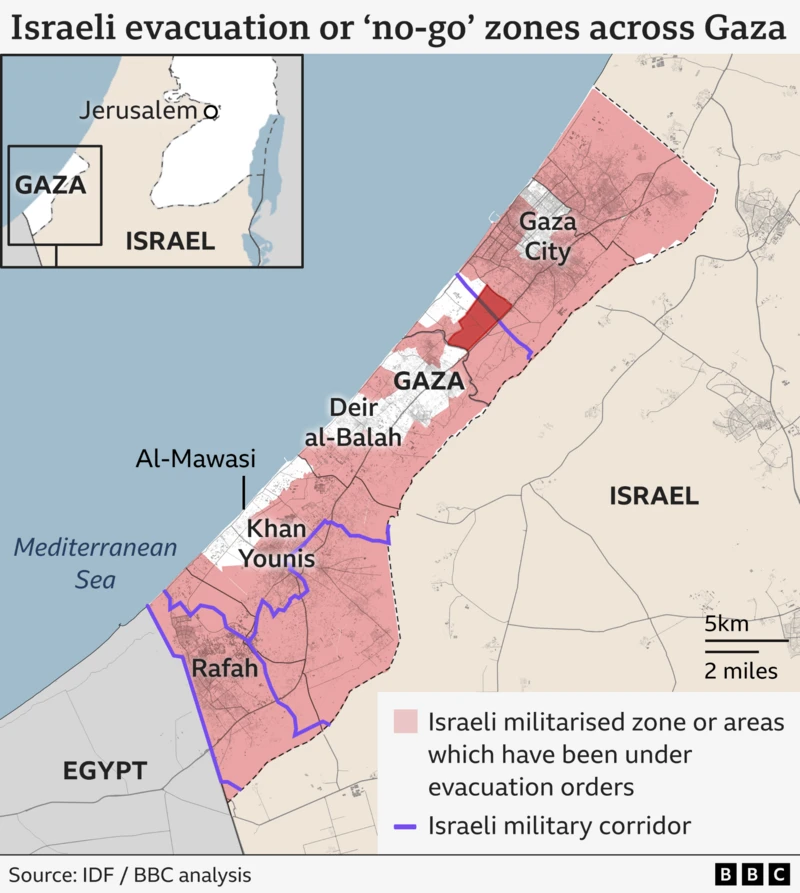
What's worse is I actually feel openly saying "I don't support this genocide and I'm critical of the state committing it" is a risky thing to say in public. I wouldn't say it not behind a pseudonymous account without some level of plausible deniability. Even peak cancel culture wasn't quite so chilling.
It's also the area with the most clear manipulation of information on social media. The downvotes and flagged comments in this post are clearly not "organic", and the same pattern can be seen all over the web.
We've truly entered a dystopian age that seems completely unfamiliar from the exciting world of tech I wanted to be a part of decades ago.