> You have to be careful of citing spec-sheet TDPs because AMD allows their CPUs to boost way above the configured TDP where for apple it’s normally obeyed
This is more Intel than AMD. AMD will generally stick to the rated TDP unless you manually reconfigure something.
> and usually not reached unless it’s a mixed cpu-gpu load like gaming.
For mobile chips you'll generally hit the rated TDP on anything compute-bound in any way, simply because the rated TDP is low enough for a single core at max boost to hit it. And you'll pretty much always hit the rated TDP on a multi-threaded workload regardless of if the GPU is involved because power/heat is the limit on how high the cores can clock in that context, outside of maybe some outliers like very low core count CPUs with relaxed (i.e. high) TDPs.
> you have to look at actual measurements from actual devices in a particular workload.
But then as you point out, nobody really does that. Combined with the relative scarcity of parts made on the same process, direct comparisons of that kind may not even exist. Implying that the people saying the Apple processors are more efficient on the same process are doing so with no real evidence.
> This is more Intel than AMD. AMD will generally stick to the rated TDP unless you manually reconfigure something.
no, it's generally the opposite. Intel tends to exceed TDP substantially due to boost, and AMD actually exceeds it by greater margins than Intel.
This is consistent across both desktop and laptop, but AMD's mobile SKUs are actually allowed to exceed TDP by even larger margins than the desktop stuff.
I've done the measurement myself with an AC watt meter and CPUs generally hew pretty close to their TDP. 65W CPU under load with a full-system power consumption around 70-75W, with the balance presumably being things like the chipset/SSD and power supply inefficiency.
But the TDP is also configurable. It's one of the main differences between different model numbers with the same number of cores which are actually based on the same silicon. The difference between the 4800U and the 4900H is only the TDP and the resulting increase in clock speed. But the TDP on the 4900H goes up to 54W.
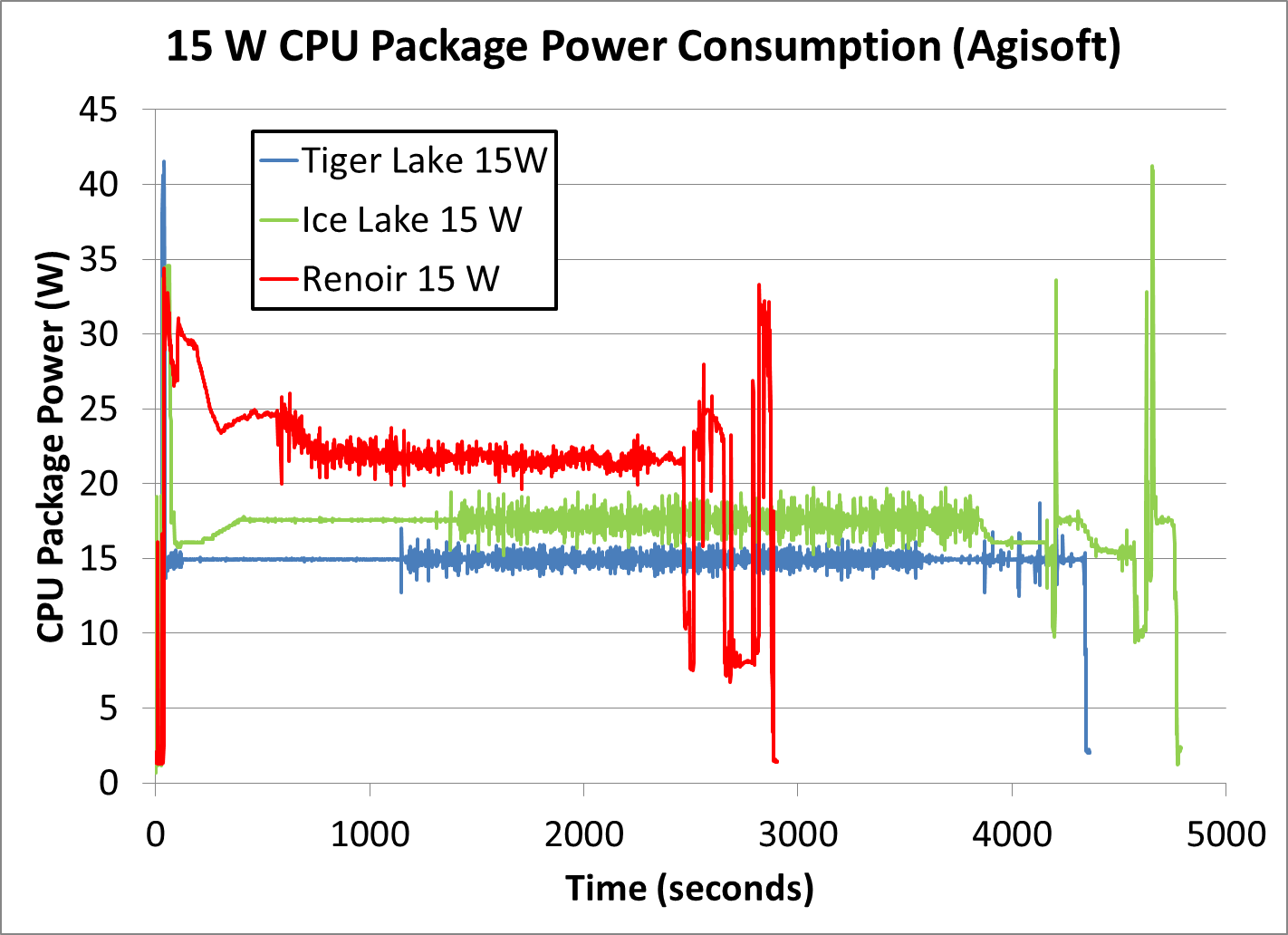
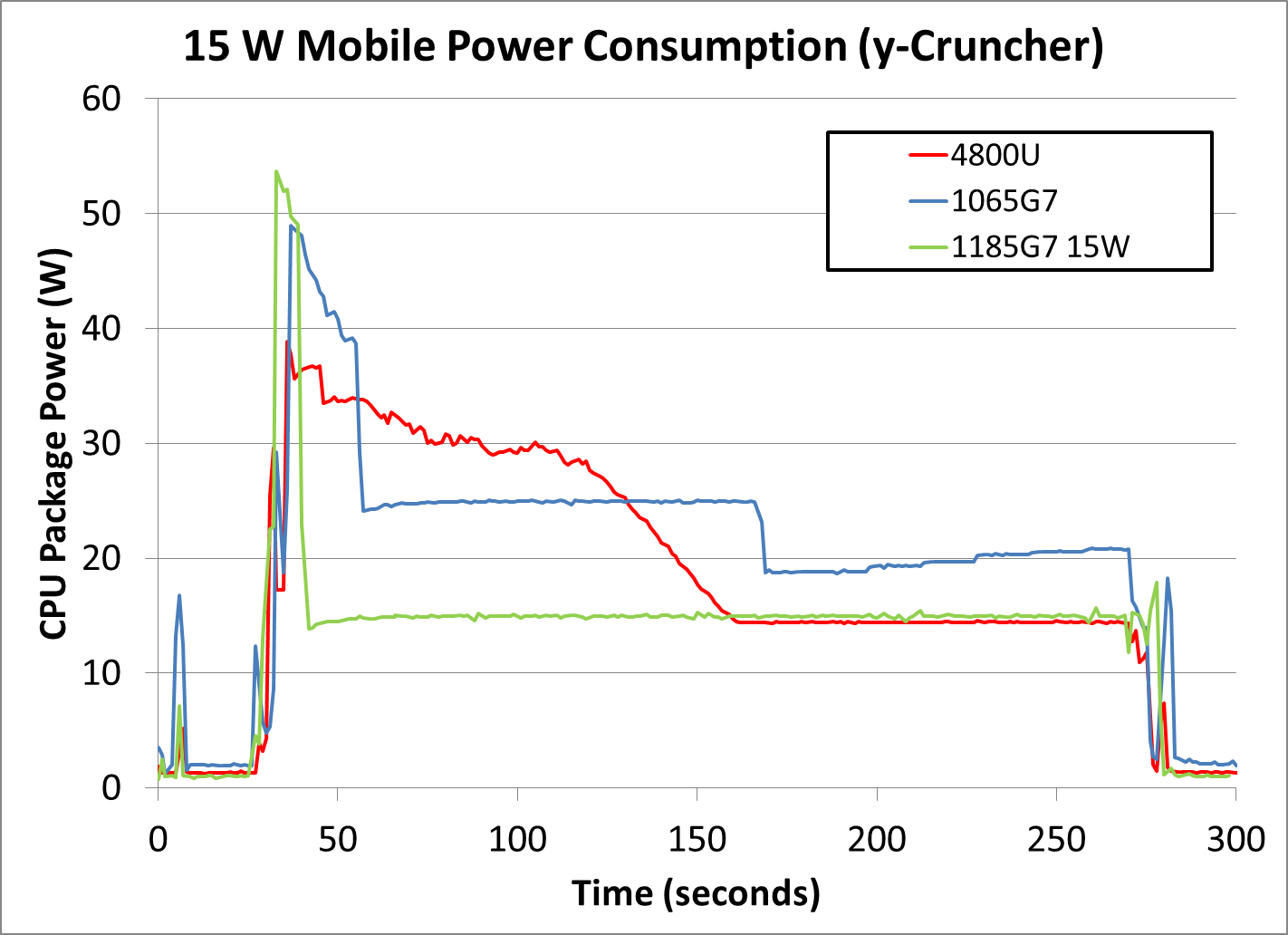
Whereas the TDP on the 4800U they tested there is configurable even within the same model, from 10-25W. And then we see it there using a sustained 20-25W, which is perfectly within spec depending on how the OEM configured it. And there is presumably a setting for "use up to max power as long as not thermally limited", which is apparently what they used, and then combined it with a 15W cooling solution. Which is what you see clearly in the first graph on the same page:
It uses more power until the thermal solution doesn't allow it to anymore.
In the second test it can sustain a higher power consumption, maybe because the test is using a different part of the chip which spreads the heat more evenly instead of creating a hot spot. But this is all down to how the OEM configured it, regardless of what they advertised. That CPU is rated for up to 25W and is only using 22. Obviously if the OEM configures it to use more, it will.


This is more Intel than AMD. AMD will generally stick to the rated TDP unless you manually reconfigure something.
> and usually not reached unless it’s a mixed cpu-gpu load like gaming.
For mobile chips you'll generally hit the rated TDP on anything compute-bound in any way, simply because the rated TDP is low enough for a single core at max boost to hit it. And you'll pretty much always hit the rated TDP on a multi-threaded workload regardless of if the GPU is involved because power/heat is the limit on how high the cores can clock in that context, outside of maybe some outliers like very low core count CPUs with relaxed (i.e. high) TDPs.
> you have to look at actual measurements from actual devices in a particular workload.
But then as you point out, nobody really does that. Combined with the relative scarcity of parts made on the same process, direct comparisons of that kind may not even exist. Implying that the people saying the Apple processors are more efficient on the same process are doing so with no real evidence.