I wish there was more awareness and concern about LED headlight PWM flicker.
PWM (Pulse Width Modulation) is a technique where the power to the output (bulb) is turned on and off at high frequencies in order to increase efficiency, power handling, and control of the output.
If this on/off switching is done fast enough, your eyes/brain will interpret it as a normal always on light source.
PWM is significantly cheaper and easier to implement vs current source LEDs, so it of course has become dominant in the industry.
When the PWM frequency drops below 120-240hz (cycles a second), some people can start to pick up a strobe like effect from the bulb. This flicker is known to cause additional eye fatigue and can trigger headaches in many.
What's worse is that many aftermarket LED headlights are now using PWM at 60hz. These cheap headlights are often bright blue in order to look modern and impressive. When a car with these installed is behind me at night I have to move my mirror away because the flicker is incredibly distracting and fatiguing.
Even at fairly high PWM frequencies, strobing can be visible when either the eyes or the source are moving. Which, in a car, they are! You don't need to have exceptional vision. Just glancing from left to right can be enough to leave a confusing and distracting trail of multiple images on your retina.
Motion must explain why I find these LCDs in my home office so offensive. Normally they're not a bother, but when my ceiling fan is on and I look at the lights (below the fan), I swear there is some strobing.
Ford's marker lights are an example of this. The huge consistently illuminated panels are simply amazing. The huge light source is perfect for maximum visibility without presenting a blinding spot source like the majority of automotive lights.
But that practically singular investment in automotive optical engineering and innovation is let down by the low frequency PWM driver baling wired into the final design to cut cost by perhaps a dollar or two.
I may be putting too fine a point on it, but I think that even something as perhaps seemingly trivial as being blinded by intense car headlights (these days in the U.S.) is another one of those things that fester in our subconscious building to a creeping sense of dread that the world is not how it should be — that somehow we're living in a modern society that no one would have ever designed, voted for, wished for, desired.
> somehow we're living in a modern society that no one would have ever designed, voted for, wished for, desired.
As mentioned elsewhere in this thread, the majority of the population doesn't seem to notice this crap, at least not in a way that affects their day-to-day happiness.
Why not vote for something that sounds good at surface level if you've never perceived that annoying sound or flicker? Why would you even think about it?
It took me awhile to figure out why the LED tail lights made me have a specific weird feeling.
If you're old enough, you may have seen the science fiction children's show "Captain Power." The LED tail lights remind me of the target strobe meant to trigger the accompanying toys.
Of course if you're old like me, you probably only watched an episode to see what Lightwave3d was capable of, but ..
Could you please stop posting unsubstantive and/or flamebait comments and otherwise breaking the site guidelines (e.g. https://news.ycombinator.com/item?id=34794878)? We ban accounts that do these things, and I don't want to ban you.
If you wouldn't mind reviewing https://news.ycombinator.com/newsguidelines.html and taking the intended spirit of the site more to heart, we'd be grateful. The idea is: if you have a substantive point, make it thoughtfully; if not, please don't comment until you do.
Wait, what? They are economizing on headlight LED power draw? LEDs are ridiculously efficient to begin with, and a rounding error against a car’s total energy usage. (And in gas cars, get the energy from the battery, which can be recharged off of otherwise-wasted energy from the engine idling.)
All on the basis that “lol humans don’t notice the flicker”? Uh, okay, but animals? The 99th percentile humans? Subconscious effects on fatigue (that you mention)?
Yes, this is the real answer. Most LEDs do not operate well at high temperature, unlike incandescent bulbs or HID bulbs (which can both operate inside ovens, if you need them to). A headlight designed for incandescent or HID will not provide enough cooling for LED lamps unless the LED lamps are efficient enough.
> Wait, what? They are economizing on headlight LED power draw?
Mass produced cars have reached the point that a $0.50 saving per vehicle is worth designing and building for. When you reduce the current draw from something that is always-on (like headlights) you increase the life of the LED, you can reduce the gauge (size) of the wires to the lights, you can reduce the size of the alternator, you can load the alternator less, which means increase the service life of the alternator belt and idlers, and (in theory, at least) decrease fuel consumption.
All of these are tiny, tiny efficiencies, but they do add up.
While it might seem penny-wise and pound-foolish, imagine following this same logic for all systems in a modern vehicle. This is why even such a "rugged offroad" vehicle as a Jeep Wrangler has a plastic clutch slave cylinder (weight and cost savings) and why the headlights will dim in virtually all vehicles if you turn on every single electrical device that draws current (the wires are not sufficient gauge for everything to draw max current at the same time).
They're saving actual money on every vehicle built, which is what they care about.
> which can be recharged off of otherwise-wasted energy from the engine idling
That’s not how it works. When charging, the alternator will put more load on the engine and that will increase fuel input to keep rpm up enough to keep the engine from stalling.
Overall, every vehicle designer will seek to minimize any and all loads (even small ones).
Worst is when they remove the spare tire, grrrrrr.
A lot of modern cars only have a single LED bulb that provides normal headlights and high beams. In the past with halogen headlights they'd either have two separate bulbs or a single complex bulb with two different filaments for normal and high beams. I would assume LED + PWM lets them have a single bulb whose brightness can be controlled by software, so the choice is probably more about cost savings and reducing complexity than energy usage.
I don't have a car with LED bulb so I can't check, but I wonder how would one bulb works when normal and high beams have different beam pattern. One might be able to accomplish that with one LED bulb if it switches on/off certain LEDs in the module or the bulb is movable, but then no PWM is required.
A typical pre-LED solution is a projector and a mechanical plate that moves (very quickly) to block or unblock the part of the light that makes up the high beam coverage.
LEDs can be done similarly, but an LED matrix headlight just controls which rows of LEDs are lit up (e.g. the Samsung PixCell light that Tesla uses on the Model 3/Y). This is where we'll maybe see adaptive headlights, too, though in the case of Tesla I don't believe they've ever been used anywhere in the world, legal or not. Just to write "TESLA" on the wall when you do the Light Show.
It does seem entirely overkill to not just install a second LED. That's how bulbs have worked for years. So instead of just adding _one_ additional LED we're going to oversize that LED and then use a high frequency driver to turn it on and off really fast?
All of the builder LED lights in my home had this issue. Very expensive to replace these.
Newer construction doesn't install proper fixtures anymore. No more user-replaceable bulbs. Everything is screwed directly into the box and you have to do a minor electrical job on every unit you want to replace.
A local business had installed some expensive LED lights and were having flickering issues. At the time I remembered seeing something about power supply design and how having no resistive load on the circuit would cause issues with the power supplies. I had them replace one bulb on one string of lights with an incandescent and they stopped flickering. Another one for the circuit on the other side of the room and the LED flickering was gone. The fluorescent bulb flicker was an entirely different issue, but they weren't nearly as obvious from a distance as the LEDs were.
I too strongly dislike the lack of replaceable bulbs in newer LED fixtures. It's outrageous how many things in modern construction shave a few cents here and there to get the initial cost down, and the long term costs are enormous. Once the house is sold it's someone else's problem and that mentality is disgusting.
That's interesting; I've been going the other direction. One by one I've been retrofitting my recessed can lights with fixed LED fixtures made by Cree. Because the LED floodlight bulbs fail relatively quickly, no matter which brand I buy, but I've never had a single one of the Cree fixed-LED fixtures go bad (and the oldest are pushing 10 years now). I figure the heat management is better on the purpose-built fixture, which explains why it lasts.
Agreed. I actually considered retrofitting the existing units with parts from digikey. I am 99% sure the issue is due to total absence of any electrolytic capacitors whatsoever on the PCB.
LEDs are a lemon market where the only people making profit are those who ship lemons, everyone else gets pushed out of the market.
The luxury days of installing an incandescent bulb that lasts for ten years are gone, lucky to get six months out of "contractor grade" LED products and consumer devices usually don't make it much over a year.
Sure, burns a little less coal, but its not like LED manufacture and shipping is as environmentally friendly as beewax candle production LOL. Overall we're probably worse off as a civilization with LED lighting.
> The luxury days of installing an incandescent bulb that lasts for ten years are gone, lucky to get six months out of "contractor grade" LED products and consumer devices usually don't make it much over a year.
I'm always surprised to read such comments, incandescent bulbs definitely burned out regularly, and the LEDs we have now are more or less as durable in my experience.
I still have a few CFL bulbs that are more than 10 years old (that I keep because their slow warm-up is actually desirable in some cases) and my Ikea LED bulbs are all between five and three years old. One of them (out of 12 I think?) did fail last year, it was four years old.
The bedroom, bathroom, toilets for example because it's not as jarring as when the light turns on at once at full power. And it's infinitely cheaper and easier than setting up dimming.
The terrible PWM drivers add another downside - At the frequencies in question the peaks are long enough to increase the retina-stabbing factor much higher than the average brightness, even if they're not long enough to cause noticable strobing. Smoothing capacitors as an aftermarket QOL option is a market that needs to exist.
However, poor (or nonexistent) light source shrouding is also a common factor. Bicycle headlights make a great lower-powered example. Cheap bicycle headlights throw much less light than a car headlight but are painfully blinding due to the exposed light source point. Bicycle headlights that meet StVZO regulations shroud the light source, have decent optical design, are far more effective as headlights, and don't make anyones eyes bleed even when they're flashing.
Early composite car headlights (post sealed beam) received significant design investment involving established headlight manufacturers and worked extremely well. Auto manufacturers brought headlight design in-house by the time xenon and HID headlights showed up in general use; inexperience and cost avoidance gave those lights an undeserved reputation. A lack of regulatory outcomes rewarded that strategy, leading even established composite headlight quality to decline. Light source shrouds disappeared or became ineffective due to poor reflector design.
Headlights on new cars in the US market have declined to the point that they're effectively overpowered cheap bicycle headlights plus extra PWM induced stabbiness, while costing orders of magnitude more as a result of cost cutting. The worst have returned to sealed beam levels of utility, but at least there were aftermarket options to improve sealed beams. Modern aftermarket lights are so bad that it's normal for drivers to install them for malice against other drivers with blinding stock headlights. There really aren't any optically well designed headlights on the US market any more, except for bicycles.
That term comes from EPA regulations about emissions, and led the entire aftermarket industry to figure if they put that on their parts, all was good. (The application here, applied to DOT lighting regulation, is likely bleed over)
A few years ago the EPA clarified that when they said “off road use only”, they meant in machines that were never intended to be on a road. So, aftermarket shit designed for a lawnmower, cool. But if you’re designing for a vehicle that was originally designed for the road, you have to stick to EPA regs. This killed a lot of those “off-road use only” disclaimers, but it also panicked the amateur racing community because they tend to use modified road cars. I’m not sure how they worked it out with the EPA, but I don’t hear them complaining any more, so I assume they did.
This happens even with cheap non-dimmable lights. If you skimp on filtering in the power supply the LEDs will flicker, but not in a way that's visible to the eye, but very noticeable with a rolling shutter.
Commercial LED PWM drivers for automotive applications are in the hundreds of kilohertz. If there are aftermarket modules that are only 100 Hz that’s a matter of regulation. It should just be outlawed.
Well I don't know the frequency, but it is easily noticeable to me on most modern cars when moving my eyes. It's definitely not a question of aftermarket modules.
The PWM I use at home on an ESP32 is supposed to be in the 1-10 kHz range and I don't see flicker when moving my eyes.
Yeah, you'd be superman if you thought you could see a khz flicker.
I associate flickering headlights with aftermarket because cars with halogen headlights use low-frequency PWM to regulate down high system voltages to 12V. So if you install aftermarket LED kits on those cars you are going to see a PWM of ~90Hz which is awful.
Actually I forgot to mention that is it mostly the case for taillights (the most noticeable since you're going to follow cars quite often) and accent lights (like the vertical strips on the front of recent Peugeot cars).
Not really on headlights I guess so I might be off-topic. And although I understand how some people can find it annoying, I don't really mind them. But I can definitely see the flicker and can compare the duty cycle between different cars.
System voltage when the engine is running are higher otherwise the 12V battery would never charge. Can be as high as 18V. So cars with halogen lights with just chop it down to 12V.
Interesting, so they're using PWM to hold the headlights at constant brightness when the alternator runs. Wiring a capacitor in parallel with the headlights should fix that.
The usual ~200kHz PWM is cheaper, more reliable, smaller, and usually more powerful than anything you can build on the ~100Hz. Besides everybody sells chips for ~200kHz, but finding anything that can operate at ~100Hz is a challenge.
I can understand cheap household ones using the mains frequency to avoid an AC/DC conversion. But AFAIK, using them on a car is stupid from every conceivable point of view.
There's an emergent interaction between PWM headlights and rear view mirror cameras(RVMC)[1]. The PWM headlight frequency and RVMCs frame rates are slightly different and phase in and out of each other resulting in a strobing effect. If RVMCs become more popular, eventually an accident will result in the way these two technologies interact. I found it an amusing interaction, but it also has serious safety implications that should be addressed.
1. I'm not sure if there's a better name, but the system where the rear view mirror is a display linked to a camera at the rear of the vehicle in some higher end cars and as an aftermarket addon.
As I remember PWM is to control the brightness of the LED. LEDs can only shine at one brightness, they're either on or off, so to dim them to half-brightness you need to have them on half the time, off half the time. That's how you get all the different colours from three LEDs.
But they can switch on and off very fast, so if 50Hz is flickery, you can use 500Hz, or 5000Hz. Most microcontrollers have circuitry for this built in, so you just literally write a different constant into the controller.
I once made an LED dashboard for use in police cars. After it was rolled out, it was discovered that the flicker frequency was interfering with the radio (the only bug ever found in my code!)
My client called me back in to fix it, so I added a zero in the relevant place, and recompiled the code.
> LEDs can only shine at one brightness, they're either on or off,
This is factually incorrect.
LEDs shine at a range of brightnesses. The amount of light emitted is related to the amount of current flowing through the LED, which you are free to control however you want. The cheapest way to do this is to use something like PWM and monitor the average current flowing through the LEDs. However, you can also just use a constant current source, and adjust it to provide the amount of current that you want.
I don't know where the idea comes from that LEDs are only on or off. There's no basis in fact here, as far as I can tell.
Truly sick of hearing about "misalignment" and other nonsense from LEDsplainers and apologists. No alignment is going to fix the issue of giant trucks and 4WDs tailgating other drivers and blasting thousands of lumens into the cabins of their cars. The fact that modern LED headlights need to be within a Goldilocks zone of multiple operating parameters simply to avoid blinding other drivers is an inherent problem of these headlights.
The amount of ink spilled over LEDs is incredible when you consider how simple the situation really is. For decades we managed to have cars with headlights that didn't constantly blind and dazzle other drivers. Now we don't. Regulators need to sort it out.
Yes, the size of those vehicles is definitely a factor. No alignment is going to account for the truck headlights being the same level as your eyes. Misalignment is definitely a thing though. Particularly with lifted trucks and the lack of auto-leveling when carrying a load. This affects halogens as well
But I think a lot of the blinding you see day to day is actually illegal HID/LED retrofits in reflector housings. Factory LEDs are not nearly as bad as those Amazon LEDs in reflectors.
It's not just retrofits. There are a headlights are much brighter stock than they were 10 years ago, and even where they're correctly aligned, they're assuming a perfectly flat road.
Unfortunately, perfectly flat roads are like spherical cows, so everyone is getting blinded by these newer, brighter headlights.
And now that active control is in play they're going to get even brighter and more blinding. YAY!
I constantly get flashed in my Kia Telluride. My headlights are stock and aligned (had them checked (supposedly)). If I'm cresting a hill it's way worse and I can expect at least one person to flash me.
The worst ones I face are the Acura MDX “jewel eye” LED headlights. They are terrible whether oncoming or following. I can tell from a long way away that it’s an MDX.
since forever we have had cars that did not need to beep when in reverse gear. Now, some mental damaged people think it is acceptable to live in an experimental industrial electronic concert. And there is now a market for "ringtones for cars". So the issue is, regulators must be sound minded and present and active... And be able to respond to instances of common sense...
Trucks have had reverse beepers for a very long time, because the drivers can't see behind them (though modern remote back-up cameras can fix this). Car drivers didn't need this because they had good visibility to the rear.
These days, everyone is driving around in a gigantic off-road vehicle with terrible rear visibility, though again the back-up cameras mitigate this.
As for common sense and regulators, decades ago it was considered perfectly fine and normal for people to not wear seatbelts, and to be regularly impaled on the steering column in a crash. Regulators eventually decided this wasn't good enough, but it took them a very long time. Seat belts were offered back in the early 60s I think, maybe 50s, but people didn't use them. Any idiot can tell that a seat belt keeps you from being impaled on the steering column, but obviously much of the population didn't have much common sense.
According to the weighs of some perspective, very little can be an excuse to turn all areas of anthropic presence into a gigantic constructions site. Because it makes it unlivable.
> off-road vehicle with terrible rear visibility
Save for the actually changed proportions, I know off-road vehicles with outstanding visibility, "normal roaders" with almost no rear visibility, and many vans have no rear windows at all (they only use side mirrors) since forever and still not having posed a problem. Is it possible that some measures follow the trend of "do something stupid to justify your salary by showing you have done something", in the intersection with "preserve life at all cost irregardless of the destruction of its quality"?
> Any idiot can tell
Although, an analysis cannot stop at "Points: pro" of the branch "case A", and a decisor (but not regulator) will only take guesses on the details unknown in the Cost/Risk/Benefit - he would be an idiot if he thought that from "A shows advantages" followed that A would be preferable. And the Issue is that there is an epidemic of unrestrained lack of good sense.
Worst of all is the Tesla backup sound. It's as if they hired some 20th century avant-garde musician to come up with the most jarring sound imaginable. That awful dystopian groan emanates through my house every day as my neighbors back into their driveway.
Just use a nice sounding V8 recording I say. I'd prefer that any day of the week, and it's immediately identifiable as a car noise.
I have a Model 3, and it's one of the ones that doesn't make sounds when backing up. Which also means no funny horn honk sounds and the like. At first I felt like I was missing out on a cool feature, but then heard the backup sound made by a newer Model 3 and felt like I got pretty lucky.
To be fair, I've noticed that I have to be a lot more careful in parking lots when driving the Tesla. People just don't hear it, and will happily walk right down the middle of the lot not realizing they're blocking a car. I can't blame them either.
I get to see a totally different kind of behavior when I drove my built-for-track-day STI. At low RPMs, its 430hp engine has you feeling the presence of the vehicle as much it has you hearing it. People are so obviously more aware of it than the Tesla when walking in parking lots.
Many cars have adaptive headlights, which can attenuate parts of the light field containing other cars ("matrix"/adaptive/glare-free etc lights). They have to be disabled in the US because it's against regulations. The hardware is there, it had been working in Europe for the past decade, it's just the regulators in the US don't care to update regulations from 1950s.
Last time somebody mentioned to me the "good times of the boundaries of good, common sense, largely represented in the Administration" - just nine hours ago.
I dislike bright LEDs at night, but not nearly as much as when people use terms like this as an insult. I'm sure you'll agree that people making poor choices isn't a sign of mental illness, and that by suggesting as such does harm to those who struggle with mental illness.
I shouldn't be surprised anymore that people on the internet would down vote a comment like this, but I am.
Seriously, what's the logic there? Someone has a problem with me taking issue with someone using "mental damaged people" as a way of describing people who make poor decisions? Try replacing "mental damaged people" with "gay people" or "brown people" or "millennials" or "old people" and see how you feel. Maybe it'll help make sense as to why "mental damaged people" is equally unacceptable.
Imagine if I'd suggested that the parent commenter was "mental damaged"? I think most people would agree that would be out of line, and it absolutely would be, yet do we feel the same way when the parent commenter calls other people the same thing? Is it more acceptable because they're some ambiguous and faceless group of people with terrible headlight etiquette?
People don't need to have a mental illness to make poor decisions. People do just fine without help.
Suggesting that people with disruptive high beams are "mental damaged people" is harmful because it reinforces views that people with mental illnesses are "less than", or are stupid or not trustworthy, or scary. They're not. They're people we know and love, and they're often struggling to even admit that they need help. It's hard enough without also feeling like society will look down on you for something you didn't ask for and have little control over.
It's also just incorrect. People who are not "mental damaged people" have headlights that are too bright and adjusted poorly.
Note the first HN guideline for commenting says "Be kind,", and I think calling out harmful behavior counts. My motivation isn't to fire of zingers and get points and show how virtuous I am. It's because I love, live with, am related to, work with, and care for people in my life who struggle with mental illness. Odds are the parent commenter does too. Odds are that other readers do too. Calling out bad behavior that harms marginalized people and people with similar challenges might not be fun to be called out on, especially if it wasn't the intention, but might change how you communicate on the internet.
That said, by calling out downvotes, I'm equally as guilty of not honoring the HN guidelines as the parent commenter. If readers choose to focus on that single violation, that's a choice they're free to make, though I'd encourage you to consider my arguments before making that choice.
I can't remember the last time I was blinded by a semi truck, and those are larger than anything else on the road. There must be some sort of solution for tall vehicles other than "don't be tall"
> For decades we managed to have cars with headlights that didn't constantly blind and dazzle other drivers. Now we don't.
That's some serious rose tinted glasses you're wearing there. This has been a problem for decades, regardless of the type of lightbulb. The number of cars with badly adjusted incandescent lightbulb fixtures is insane.
I found things to be better in the UK, where alignment was part of the annual MOT, but even there it was still a regular thing to find someone with lighbulbs adjusted so badly that the beam was shining on the inside roof of my car.
Halogen headlights were significantly lower lumens, lower color temperature and more diffuse. That's not rose tinted glasses. It's fact.
No one is forgetting that there were badly adjusted halogen headlights or misused high beams. The point is that despite this we didn't have anything close to the blinding landscape of the modern road.
If I'm going to be on 2-lane roads at night I wear lightly tinted sunglasses and even then the oncoming lights are a big problem. It's very scary to be driving a 2-ton piece of steel at 50-60 mph and then be intermittently blinded for 1-2 seconds at a time.
Curious if you're familiar with the anti-glare mode for your rear view mirror? The tab at the bottom you can flip up/down. I have electrochromatic rear view so never have any blinding problem, but I've been in friends cars that complain about headlights behind them and have no clue there's a switch to dim them!
Some car models even have dimming side mirrors these days!
...though, come to think of it, maybe the fact that manufacturers keep inventing new ways to combat extra bright lights is a sign that the problem is worsening.
I have these and auto dimming rearview mirror. It helps but there's a non dimmed frame around the edge which still gets me and often even the dimmed view is too bright with some trucks.
is there a dimmer available for when these lifted megalumen trucks blind my infant in her rear facing car seat? to hell with these people and the harm their insecurities cause others.
I know you're trying to make light of this and be funny, but this is not a joke and you come across as wanting to condone or enable selfish, harmful asinine behavior.
Wow. And you come across as someone with a stick somewhere you don't want it. Good day.
(for the record, my headlights are so dim even I can barely see them. and not a single person in the whole world will read my comment and proceed to buy super bright headlights. it's literally just a cute picute of a baby in sunglasses. just wow.)
I bought a totally stock boring crossover SUV new from the dealer in 2020 and I‘m sick of people constantly flashing their lights at me. Are my factory headlights illegal? It’s possible, but I doubt it. Is it illegal to flash your brights at someone when their own headlights are perfectly legal? I don’t know, but it’s certainly distracting and doesn’t seem safe in precisely the same way that excessively bright headlights are unsafe.
I just had to travel back to the UK. I rented a horrible car, some new MG 4x4/SUV, it was a great driver, but horrible UI. I landed at night and had to drive an hour or so, after having only driven in the USA for 4+ years. Almost as if it was a revelation, I realised I could see, and see far, even on 1x1 lane road, with small/medium/SUV/trucks passing me, their beams weren't shining directing into my eyes. I realised that my own beams were slightly different, the beam facing oncoming traffic was pointed much lower, then I remember all those times traveling to Europe, and having to attach those reflector stickers over my headlights, remembering why would would do it.
It wasn't until I left the US that I realised that I drive blind most nights, either because oncoming traffic is blinding, or, the roads have so little reflection (or the opposite, when wet, it's 100% reflection), and cannot see the yellow/white lines, even US cats eyes aren't that helpful/bright.
Also, I think every car I have driven in Europe has a knob to adjust the height of the headlights. It seems like it is a requirement, but it might not be. On the other hand, a 2007 entry-level Skoda Fabia would not have it unless forced by regulation.
Adjust the lights too high, and you will aggressively be flashed by the opposite traffics high beams.
> Also, I think every car I have driven in Europe has a knob to adjust the height of the headlights. It seems like it is a requirement, but it might not be.
It is and has been for 30 years (76/756/EEC).
> Adjust the lights too high, and you will aggressively be flashed by the opposite traffics high beams.
Usually you can't adjust it high, because the purpose is to lower the beams when the boot is loaded (and thus the car is not sitting level). "0" should be the standard / reg level for a level car.
IIRC, Xenon headlights are required to dynamically auto-level because mis-adjusted ones were considered too dangerous. I'm a bit surprised that's not the case for LED headlights. The issue with manual adjustment (or even semi-automatic) is an uphill or a bump in the road will flash whoever's driving the other way.
I think a few luxury models have a local dimming feature, so they automatically dim the section facing other cars when detecting them.
That dimming is only on when the high beams are on.
If you drive a BMW and have Adaptive LEDs and the right camera you can unlock that feature. When I drive with the high beams on and it detects oncoming traffic it turns of the left beam.
And LEDs and Xenons are auto-leveling. Fun fact, Xenons required washers, but LEDs don't.
Thanks for the reminder, there is that knob! Another thing that the MG had was automatic high beams when on a dark road, so it would pop on and off at the worst times. I think I had to fiddle with that same knob to turn that off, guess that knob has grown up a little
I also recently rented that MG SUV in the UK, although I didn't like how it drove. The steering wheel felt loose like it wasn't connected to the wheels enough (I know nothing about cars and can't describe this better). Agree the UI sucked. Couldn't figure out how to turn the radio off??!
Driving in the US at night SUCKS. No cats' eyes on the highways, poor lane markings, I might as well cross my fingers and close my eyes driving at night. And the bright headlights are beyond ridiculous.
I don't know what part of the country you were driving in, but I find here in the London area, that a lot of the cats eyes are either damaged or dirty and don't reflect at all.
However when you do get on a stretch of recently resurfaced road with new cats eyes, it's bliss.
Hah! I've driven Jeeps like that! I opted for the automatic version, and have only ever driven manual over there, so maybe just that alone made it smooth? It took me a good 10-15 minutes to figure out how to figure it all out, and then couldn't operate it once driving as it would require too much attention, so it's now the passenger who's in charge of changing the temp?
I feel the same way! Especially in a big city when it's raining at night, beautiful visuals as a passenger, but the worst thing as the driver.
Around here, many roads that will be plowed have cats eye reflectors, but they're installed in divots in the pavement rather than surface mounted. Makes the bumps from driving on the lines a bit more pronounced, but the sight lines on the reflectors are somewhat impeeded and they also collect road debris.
I remember having a similar feeling when I drove in Iceland. I think their roads were super helpful, even at night/snow. I forget why/how exactly, and they salt/plow, too. Maybe theirs are sunken, to allow for plows?
What part of the country are you in? There are cats’ eyes on every road except neighborhoods in my area. Especially on the highways. Lane markings are everywhere, we have major construction on one of our interchanges right now and they update the lines frequently as lanes close and shift, complete with cats’ eyes.
Some neighborhoods around me will have a cats’ eye marking where a fire hydrant is located.
the beam facing traffic points down, the one facing the side points up, which is of course an issue when you visit an island who decided to drive on the other side :D
If you take your car from the UK to mainland Europe (or vica versa) then you're required by law to fit headlamp beam adapters[0]. These essentially point both your headlights down to avoid blinding people who are now on the "wrong" side of the road. It does make it lightly harder to see forwards, but avoids blinding other drivers.
Yep, that's why it's a legal requirement that if you take a UK car to mainland Europe, you need to put some stickers over the edge of your headlights so you don't blind oncoming drivers: https://www.euromotoring.uk/beam-deflectors-GB-sticker
>and cannot see the yellow/white lines, even US cats eyes aren't that helpful/bright.
I'm not sure how cats' eyes are supposed to be related to driving cars, nor why US cats would be different biologically than cats in other countries. I hope you're not doing any weird scientific experiments with cat eyeballs.
I weep for the past when people talk about modern MGs. There’s literally nothing left of the heritage in that marque. Why couldn’t they let those quirky little sports cars have a quiet, respectful end?
The solution proposed in the article is a high tech one that might help, but the real solution should be that misaligned headlights fail inspection. Inspection needs to be updated to incorporate measurement standards, and the standards need to be followed.
If your headlights are at the same level as my car's roof, there is no alignment that will both a) not blind me, and b) actually illuminate the road in front of you. It is geometrically impossible.
But I agree to some extent that adaptive headlights are a band-aid. The real problem is the American auto market's fetish for ever-larger vehicles with ever-brighter headlights. We are a nation of adult children bereft of restraint, unable to grasp (or, alternately, unconcerned by) the fact that these vain indulgences are killing people.
> If your headlights are at the same level as my car's roof
That is the pain of driving a Miata :). For a regular car, for example a Toyota Camry, even the topmost headlight on a Super Duty FX4 is close to a foot below the roofline of the car.
Which is good for me, because nobody ever flashes me when I'm driving my pickup, but I do occasionally get flashed in my Model 3.
Where I am in Europe they will test and adjust them for you. My headlights can only be adjusted from behind, and I thought there was no way to do it without removing them. The inspector knew of a plastic gromit in the rain tray above the hood that can be removed to access the adjustment point.
Common issues are bulbs, tire inflation, tire wear, shock performance, and alignment.
Personally, with an old (2006, 200-300K km) car that we had to NCT every year, we would pass about half the time on the first time, and half of the failures were for BS reasons (e.g., one of the removable seats wasn't installed, it was in storage, or a tent peg dropped into one of the 3rd row seats when they opened it, and couldn't close it again).
Even with that NCT, when winter rolls around, 5-10% of cars have obviously broken headlights on any given dog walk.
I'm in BC, Canada and car inspections simply aren't a thing. In Germany where I grew up back in the day you had to get your car checked every 2 years or so and checking the alignment of headlights was one of the checks. Sure that would never fly in North America and it wouldn't help here anyway. Trucks are way too high by design.
As a European, this is yet another aspect of American life that surprises me... although perhaps it shouldn't be surprising.
British cars need to pass a yearly inspection (called the MOT) to be legally allowed on the road, and if you drive around with a failed or expired MOT then you WILL get caught and the punishment will hurt.
It's quick and easy to get the test done yearly and it's not a big deal; the system works well. You can even go online and look up the MOT history of any car, which is handy if you're about to buy the car as it'll let you know about any historical faults.
I assume there's something similar in most developed countries... why does America not do this?
Part of America doesn't have vehicle inspections, and in those places, the reason is often because it balances the ability of people to afford transportation in places where there are not alternatives.
It is worth noting that mechanical failure is not a leading cause of crashes, even in places without inspections.
This is the first time I have heard affordability of transportation as a reason. I am a 51 year lifelong Floridian. I remember sitting in the vehicle inspection line as a kid. When Florida discontinued the statewide inspections in 1981, it was pitched as being due to the costs of the tests and long wait times. I see it as more of a populist measure as most voters don't really care about safety or pollution. They just did not want the hassle.
Maybe poor people paying for an annual inspection is the affordability argument. But I cannot see it as anything other than typical myopia as I see many automobiles in Florida that should not be on the road.
(I vividly remember that we had to take a work truck to be inspected. It was a truck that rarely left the fish house where my father kept his commercial fishing boat. It mostly moved nets around the property. It had to be inspected and was going to fail because there was a crack in the windshield. As there was no requirement that a truck have a windshield, my father removed the windshield right there and allowed the truck to pass.)
>Maybe poor people paying for an annual inspection is the affordability argument
The affordability argument is that shops have an incentive to sell work and they have an incentive to not draw the ire of some capricious regulator by passing questionable cars so they sell all sorts of work that doesn't strictly need to be done and over the life of a car this amounts to thousands mostly concentrated toward end of life at which point the car will be owned by someone least able to afford it.
My state, Colorado, requires a annual or bi-annual emissions test. No inspection for safety/operability is required though there are a lot of laws on the books for things like good tires and functioning headlights.
You answered your own question. Snark aside, in the US, the idea of restricting yourself for the purpose of vague benefits to others is known as "Socialism" to at a minimum 60 million people.
Hilariously enough it can even vary within states. EG: AFAIK, only two counties in Washington state require emissions testing on a semi-regular basis, and nowhere requires safety inspections.
I got burned by this by moving to one of the two counties with an otherwise innocuous check engine light that would have failed the emissions test so I had to get it fixed.
By now I'd have expected most people on HN to understand the relative roles of the US federal and state governments, and not make gross generalizations that are easily disproven. But, you're a green account, maybe you really are new.
> I'd have expected most people on HN to understand the relative roles of the US federal and state governments
You probably didn’t mean it that way, but man, that’s some ‘Murica fuck yeah material.
I know that different US states have some degree of autonomy, and I think they have a similar system in Brazil, and I’m pretty sure Switzerland also does it. Why exactly do you expect me to know anything but the bare minimum about the different levels of government in a country seven thousand kilometers away?
Your car is only regulated by where you have it registered. So, if you are in Tennessee as an example, Davidson Co residents pay higher plate fee and also must pass inspection. Residents in Rutherford Co pay a slightly lower plate fee and no longer have to pass inspection. Inspections in the US are largely emissions. Some counties have dropped this because they found it ineffective or not cost efficient.
If your vehicle doesn't meet obvious road standards, you'll simply be pulled over and ticketed.
Interesting that it's done at the county level in TN. In my experience (which, to be fair, is mostly in the Northeast where counties are pretty much irrelevant) these laws are usually made at the state level, not the county level, though your point stands when comparing states.
Since cars typically drive on state funded highways it would make sense to package car inspections along with the "you better set your state drinking age to 21 or you'll lose all highway funding" bill.
I don't necessarily disagree. It is pretty wild if you think about how unregulated a vehicle is after the manufacturer hands it to the customer, but that's not how -most- states operate. I guess you could just focus on states that are higher population density and hope it just rolls downhill. However, a lot of people game the system by just registering in different states or counties...it's not new at all. That is very popular with plate fees, even in liberal states like California that use certain counties to avoid higher plate fees.
Yeah, I was going to mention this. Indiana for example does not require any inspection except maybe for some sort of VIN inspection for cars titled outside of the state. And I think there might be one or two counties that have some sort of emissions inspection (out of 92 total counties).
I haven't really looked into this for other states, but I suspect we're not alone.
Most cars are, but it’s generally not statewide and just focused on areas with high local pollution.
More to the point, it’s just an emissions test. It usually doesn’t test every car and (at least in the states I’ve done it) it’s just a computer checking that the cars computer is giving a normal report. There’s no safety inspection in most states and there’s no way to fail emissions for a safety issue if they did see something
You will theoretically fail an inspection in Massachusetts for misaligned headlights, but I've never once heard of anybody actually failing because of it.
It's typically a simple fix if it's just an alignment issue. That on most cars takes 5 minutes, pop the hood, grab the right screw driver and adjust the beams. A mechanics might charge $20 for this. Now in newer cars with active headlights this method probably won't work, but the active headlights most likely have self leveling and a test to see if they are within spec.
Yeah, as you say, the old "drive up to garage wall, mark centers of where lights hit the wall, pull back 25 feet and adjust the headlights to the center of the marks" doesn't work on most modern cars any longer.
I'd like to see traffic enforcement separated from crime enforcement, in the same way we do with parking enforcement, code enforcement, etc. No one really worries about these forms of law enforcement.
There's no reason a guy with a rifle in the trunk and a bullet proof vest needs to spend most of their day dealing with minor traffic code things on the highway.
I would much rather armed cops be much better trained, and much fewer in number, and only activated on the rare occasion that there is a need for them. Traffic cops should be better trained on things like headlight aiming, illegal lift kits and tire modifications, exhaust rules etc...
Most places already have plenty of laws around these things (many of them federal) but cops will never go after someone for having a dangerously lifted truck with illegal exhaust for some reason, even though they are happy to cite someone for a burnt out license plate bulb.
The worst part about this crap is that back in "the day" (so like 70yr ago and before) stops (both of pedestrians and motorists) were known to be discretionary and treated as such. If an officer exercised poor discretion that was a legitimate gripe you could air in court. Now with all the laws everyone violates all the time over the course of being a normal person and behaving normally they have a pretext with which to justify any stop they want.
Would they actually execute, though? They don't for speeders. And i define speeding here as ~4mph+-speed_limit. Not that i'm advocating pulling people over for "speeding" 5mph, but i often imagine cops allow 9mph without a glance because it allows them to pull over anyone for speeding.
I fear adding yet more rules they don't enforce just adds tools to a questionable toolbag.
I'd love for things like this to be enforced, though. Often feels like the roadways are a warzone heh.
Safety inspection will do zero to solve a problem that is dominated by new vehicles that are working as intended. Lights these days are just crazy bright yet within the current federal specs for where light can be shined and where on the vehicle it can be shined from. You might kick a few cars with shitty flickering bottom dollar LED bulbs off the road but that's a small slice of the overall problem pie.
was going to ask this. In France you fail inspection (4 years then every 2 years) if your headlights are misaligned, I guess it's the same the whole of Europe.
I expect inspection requirements to be eliminated going forward, rather than tightened, due to the standard government mantra: "This policy may disproportionately impact disadvantaged and minority communities". Personally I'm guessing that California has about another 5 years before smog testing goes away.
You think woke will beat corrupt/lobbying? I have an older car that needs the smog check every year, and for the last 5 years that's entailed paying a mechanic the better half of a thousand dollars to get the check engine light to go away (for the same issue) each time. The whole thing is an utter scam that only the poor people deal with.
I don't think being poor makes you a minority in this country, except in the offices where the laws are being made.
Washington state eliminated smog testing a couple years ago. I'm not sure how big the smog test station operator's lobby is, and if the state determines that having smog testing is a net drain on the budget, they'll eventually eliminate it. Whether they say "it's too expensive for us to run", "cars are way cleaner these days", or "we're doing this for poor people" remains to be seen.
Now, I don't know if California makes or loses money on smog testing (does the state get a cut?), but I'm still guessing it's going to go away at some point before too long.
> paying a mechanic the better half of a thousand dollars to get the check engine light to go away (for the same issue) each time. The whole thing is an utter scam that only the poor people deal with.
And a hell of a lot of people as well as the entire insurance industry want to economically incentivize those people to stop driving (for both good and bad reasons) so they're on the same side. Every dealer and manufacturer wants to sell cars so they'll also be on that side.
God bless my state of Michigan: zero inspections, no front license plates. I’ve lived in states with the opposite and it’s oppressive (as an automotive enthusiast)
There is a balance. I’ve lived all over the US and I appreciate the fact that MI is less user hostile than other states in this regard. We still have regulations. California and Virginia are oppressive.
Meanwhile I've seen people crash their cars every single week during my stay in the US because they drove on tires they should have replaced literal years earlier.
In SV as soon as it rain google maps becomes a Christmas tree because there are hundreds of red icons signalling accident, 10%+ of cars over there have diy slick tires
If any Europeans or Asians are wondering "why are America's vehicle standards so lax", here's your answer. There are a LOT of people that think the way this poster does.
And entirely corrupt and inconsistent. I know people who get the inspections stickers withheld so the shop can try to talk you into paying for maintenance or given out for free to friends.
In my state, shops have a strict 3 strikes policy for ANY inspection related infraction, including charging less than $12.50 (presumably to prevent shops from cutting corners to undercut the competition) and giving out stickers to failed vehicles. This can result in shops with two strikes being EXTREMELY conservative in their recommendations to not lose their license. I don't think that's a bad thing, because you have to be EXTREMELY sketchy to get those strikes in the first place. Many shops will give out stickers to people with mostly safe but maybe has a simple item kind of failing, but that likely depends on how "visible" the issue is because they have to sign their name on every single sticker.
It works really really well. I've been very buddy buddy with shops and they will still give me a thorough inspection. It's also a pretty basic inspection, meaning if you fail it you should probably not be on the road.
Yep - I have a mechanic I trust - he doesn't do inspections, asked him to check my tires before I brought it in to get inspected and he said they should pass - unless the place I bring it for the inspection, also sells tires.
Its mind boggling to me that the place the does the inspections, is also the same place that can sell you the repairs - repairs that you may or may not actually need.
Shops that also run small time (usually BHPH) dealerships or get a lot of income from tire sales are the worst about it due to the obvious conflict of interests.
In my state the emissions and safety inspections are combined under the same license. As recently as the 2010s the 3rd party that the training was contracted out to would straight up tell you in the PowerPoint slides that the state's #1 priority is emissions and that the point of the safety inspection was to make holding the license lucrative to remove incentive to circumvent emissions inspection process. At least they're honest...<sigh>
It was baffling to me when I was in Florida and rented a car. I was driving on the highways and no matter where I was, every highway was littered with abandoned cars. I had things fly off from a car into mine (splash shield). And then I realized its most likely because Florida has no safety inspections.
As a car enthusiast myself, I'm glad Mass has safety regulations and I don't have to jeopardize my safety or breathe pollution from cars rolling coal. Safety and car hobbies can go hand in hand.
GM and Ford have been trying to shed their dealer networks for the better part of a century, but even in Michigan, dealerships have more lobbying power than they do.
They're obviously not going to stand for Tesla doing what they're banned from doing. Even if they'd rather be doing it themselves.
I recently moved back to Colorado, where for many decades it's commonplace for people to drive everywhere with their high beams always on, a point of significant frustration. With modern headlights and the new proliferation of lifted trucks (I was hoping I'd leave that behind in Texas, unfortunately not) with improper leveling, it has become nearly impossible to drive at night. I have several thoughts as to how to handle this, but the biggest issue is all of them are meaningless if it doesn't force retrofit or repair of all the vehicles currently on the road.
What we need is real safety inspections in this country that actually look at safety critical items, rather than either phoning it in or obsessively trying to gum up people who modify their cars safely (looking at you California). The types of shit I see these days on American roadways is appalling, and significantly different than how things were 20ish years ago. I now see cars regularly that are on unsafe tires, either for the conditions or the tires themselves being bald or aged out, I see cars driving on 4 spares, I see cars with hanging partially detached body pieces, I see cars with improperly aimed or installed head lights, I see cars with massively incorrect alignment, I see cars with /obvious/ failed wheel bearings or ball joints just waiting for their wheel to fly off.
All of this is a massively worse situation than it was just 20 years ago. I don't know if it is primarily economic, or if it's that people these days don't know fuck all about how cars work or even have any clue as to what types of things they should be aware of on their own vehicle for basic maintenance, or a combination of things. I just know the situation is massively massively worse, and it's terribly unsafe. The American roadway has become a death wish, and it wasn't this way in the past.
I suspect a lot of it is economic. Cars are really really expensive -- the second priciest thing most people buy (after housing). Upkeep easily hits thousands of dollars per year for a vehicle above the 100,000 mile mark, especially if the car is stored outside exposed to the elements or has been in an accident. Insurance and gas makes this even worse of course.
With prices for everything rising, I suspect vehicle costs are the easiest for most households to cut (in the short term). Much easier than food, or housing, or heat, or the marginal cost of media subscriptions.
In the long term? I know a LOT of young people with cars that are basically falling apart. Bald tires, poor alignment, cracked windshields, broken climate control, overheating engines, faulty wipers, dangerous rusting, significant panel damage, 10s of thousands of miles between oil changes, and more. All to make up the cost of expensive housing, which of course is still too far away from work to get there in anything but a car. Many have stopped maintaining their cars entirely.
As someone who thinks the US is overdependent on cars: maybe this is a good thing long-term? I see a lot of people waking up to just how expensive car infrastructure is for everyone involved. In the short term, it's probably a serious issue for road safety and America's ability to travel anywhere -- even work.
That's the thing, I see new cars getting more and more expensive, but the cost of maintenance for existing cars hasn't really gone up significantly. It just seems like folks stopped doing it, or in some of the cases where I've actually interacted with folks, didn't even know it needed to be done. I feel like the average American does not know /anything/ about cars, how they work, or how they need to be cared for, and either simply take it to a dealership (most expensive option) or assume it'll be fine forever and do nothing.
I religiously maintain my vehicles, and I do it myself, and that is not something that comes out of privilege, it comes out of a rural blue-collar upbringing where people did this /for economic reasons/ because we could not afford to take a car to a mechanic or dealership. The price of 6 quarts of oil has not materially changed in the last 5 years, even though everything else has increased in price significantly. The cost of tires hasn't significantly changed in the last 5 years. Tires /are/ expensive, especially good tires, but it's always been so and any set of tires should last 4-5 years under normal driving conditions (tires age out after 5 years, regardless of tread depth). If anything, tires have gotten massively better, so while their price is still high and not going down, you get much more value for money today than 10 or 20 years ago.
When I see 90s era Japanese cars still on the road, /these are the easiest and cheapest to maintain/, which means that the folks who own them should be able to keep up with maintenance no problem. Even newer (but still old) Japanese cars are cheap and easy to mantain. I have a 2012 Honda Fit as a daily that's a bit beat up from various fender benders my wife has been in, but mechanically is in fantastic condition. Every single part or fluid I've ever needed has been available very inexpensively from any parts shop, because 2012 Hondas are exceptionally common and have a high number of shared parts between models. There's very little excuse in my book for folks letting their cars literally rot into the ground as they drive the wheels off (sometimes literally, as the marks on the highway can attest).
Is the claim that /other/ costs have risen enough people are sacrificing vehicle maintenance? I think that /might/ be a fair argument, but I feel like ignorance is a much bigger issue. We have effectively no standards for issuing drivers licenses in this country, and most people are terrible drivers (just watch them, seriously) that put little attention or thought into their behavior on the roadway, and even less into the maintenance of their cars. Based on informal surveys, I find most people have never even read the owners manual that comes with their car, much less done basic maintenance themselves.
To be clear, I agree cars are expensive, and in many ways are the primary asset for most people because many Americans don't own their home, they rent. That car is what gets them to work, so it's essential for their economic survival. This means it's something worth investing in, ensuring it's maintained well, so it lasts a long time and performs well. But I feel like most people simply don't know anything at all about cars, and really have no interest in learning. It's very disappointing.
I agree with pretty much everything you wrote here, but I would add one small caveat:
Cars are complicated. DIY requires time to learn, basic skills that not everyone has, and a number of tools that even I don't own, like blocks to lift your front end when you change your oil and the correct wrenches to swap out various components. If you've been raised in an environment that familiarizes you with those things, or teaches you those things, or even gives you access to some of those tools, you have a big leg up. The whole space is complicated and fucking up some small component could cost you thousands of dollars and weeks getting something repaired. It's scary!
I've gotten into bicycle maintenance, an order of magnitude simpler, in the last couple of years. I'm confident about most of the small stuff, and I've built a bit of a foundation of knowledge. But with so many confusing standards and tools an opinions, even that can be confusing. Cars up the ante even more.
I guess I'm just saying we should remember our privilege in this space. A lot of people don't have the time, money, or foundational knowledge to do this stuff. I really hope adult learning can expand in the USA eventually to make it easier to fill these gaps, because as you say, if you're forced to go to the dealer you're likely getting screwed on price.
I don't think framing growing up poor and rural as a privilege because out of necessity I was forced to learn mechanical knowledge is a reasonable direction. But let's set that aside for the moment.
Now, more than ever, it is accessible to learn these things. YouTube, in particular, is an amazing resource. There are numerous channels posting car repair tutorials to the point you can pretty much search <year> <make> <model> <thing> and get a step-by-step video walkthrough narrated by either a professional mechanic or a seasoned amateur on how to do that repair. I do the exact same thing myself, even though I'm well acquainted with working on cars, just to ensure I am not missing anything and to help plan what I need to bring with me in advance.
From a tools perspective, that I will grant, (good) tools are expensive. That said, for better or worse, Harbor Freight exists, and a set of basic hand tools will set someone back less than $100 and last most of their life (if not longer) and is sufficient for 70% or more of common car repairs.
For the price of two corner-shop oil changes, you can get everything needed to do it yourself the first time and then cut the ongoing cost of oil changes by 50% for the remainder of your life. That same initial investment then cuts the cost 30-60% for every other vehicle repair that doesn't require powertrain disassembly (which is now a pretty rare requirement under 300k miles). It's a huge economic incentive to learn, especially when the knowledge is available on the platform of your choice effectively for free. No more digging through a Chilton or Haynes manual and paying the retired neighbor in beer to show you how to do something.
When you combine this with the fact many budget vehicles now include 100k mile or more warranties that are transferable, there's very little excuse for folks not investing the effort to learn. I feel this way about a lot of things, and perhaps not coincidentally, I am much better off economically when problems come my way. There is so much anxiety and fear in our society, that people seem comfortable with a sort of intellectual laziness and general malaise where they stay inside and doom scroll when they're not at work and outsource all other forms of knowledge and labor to others, or just neglect it altogether if it's unaffordable, instead of learning to do it themselves. I'm doing very well for myself these days financially, but it's compounded by the fact I don't pay people a high cost to do simple things for me I can do myself, like cook at home, change my oil and other basic car maintenance, or do small home repairs, all of which you can get free instructional materials online on how to do.
I'm a DIY person. Alot of stuff is easy, but you know what wasn't easy? Finding a place to work on my car when I lived in an apartment. Alot of HOA's have rules as well, and landlords who rent houses.
I think this is the biggest problem.
It's also common that manufacturers make simple jobs harder, the engineers don't consider it. My Traverse needs lights changed through the wheel well, and it's a tight fit. The power steering fluid is hidden under a plastic shroud.
I also had the misfortune of trying to change spark plugs on a Ford Expedition. It was basically impossible since they had never been changed and they have a design failure that makes them break. I had to keep that car in a carport while I worked on it for afew months. I bought several tools to try and get the sparkplugs out, but eventually had to scrap it, all because of a badly designed spark plugs.
Agreed on this. Those Ford Triton 5.4L V8s are legendary for the spark plug issues. To be fair, I think about things mostly in terms of Japanese cars, I think American brand cars are less reliable, harder to work on, and generally worse in pretty much every way.
>> I recently moved back to Colorado, where for many decades it's commonplace for people to drive everywhere with their high beams always on
Don't they teach in the driving school that you should turn off the high beams when you see a car?
I remember I was taught to turn off the high beams when the car (doesn't matter if you are behind the card or it's coming from opposite direction) is approximately 300m away, or when our lights start to cross each other.
Also, forgetting to turn the beams on and off at night is a good indicator that you are slowly falling asleep behind the wheel.
> Don't they teach in the driving school that you should turn off the high beams when you see a car?
They do. They also teach you to not speed, to keep a safe distance, to signal lane changes, to stop at a red light, not to run a STOP sign, to yield at a YIELD sign, and generally speaking, to avoid dangerous things.
Sometimes people forget, sometimes people don't pay attention. and sometimes, people just don't care.
> Don't they teach in the driving school that you should turn off the high beams when you see a car?
Most Americans don't go to driving school. There are generally deeply lax requirements to be licensed to drive in the US. In Colorado, people are concerned with animal strikes on highways, so run high beams at night to see farther ahead rather than slowing down. It's dumb, but it is what happens.
I've almost given up on night driving. These super bright headlights really really messes with my astigmatisms (both eyes) with either my corrective contact or normal glasses.
Anyone else in a similar boat that's found relief? I haven't tried night driving glasses.
I haven't found a solution yet. But I find this especially crippling when our country also forces us to drive to do literally anything, even go for a walk. Particularly during the wintertime, it's crippling my ability to go anywhere or do anything.
The only solution I can think of is for myself to buy a lifted truck or other similar unnecessarily large vehicle. I haven't done this, of course, but if I did I'd then be part of the problem but at least my eye line would be above that of the majority of other drivers. We have a sedan and a small SUV - I don't drive the sedan at night ever because of the headlight problem. My eyes hurt just thinking about this.
Actually I made a personal decision to live in a walkable place. Repeatedly. But of course people still insist on driving their cars (often dangerously) in my area, regardless of how walkable that place is.
Please share some walkable, bikeable places in the USA here. I really want to live in one but my research reveals very few options where you aren't extremely likely to be run over by a vehicle if you dare to walk or bike exclusively, especially at night.
My criteria requires a grocery store, a coffee shop, and some kind of watering hole with food (brewery or pub) an easy walk from my door. It's amazing how few of those places exist in the USA, and how expensive they can be when you find one.
When arguing about societal/legal/political things that have anything to do with location, people frequently imply that there is no friction to picking where you live or moving. As if people are born into the world as adults and the first thing they do is pick from a list of every available home in the country in their price range, with infinite time and information to make their choice, and then they and their job and family and friends and possessions are all teleported there. And they can do this again as often as they want at any point. It's frankly nuts. "Uncharitable" and "oversimplified" are not really strong enough words for how dramatic the fallacy of "just live somewhere else" is.
It's not an honest consideration of the issue at hand, just a sneering dismissal of a real problem. You see the same sentiment whenever someone wants to seem like they're considering something intellectually when in reality they refuse to entertain the idea seriously at all. They just want you to shut up about it.
Mostly I just don't drive at night. I'll take my e-bike or moped instead if I need to grab groceries. Also I'm really good about keeping my windshield clean and polished. About to replace my 10 year old windshield with a new one soon to reduce pitting. I also bought a dash mat to reduce the internal glare.
But sometimes, you just can't do anything about taking 10_000 lumens to the retina except slow down and pull over.
I agree about keeping the windshield clean - that helps a lot.
I don't really have the option of not driving in the dark - for most of winter it's dark well past when I need to drive to the office, and too cold for me to want to take public transit (which would also require me to wake up an hour earlier).
I think it needs to be well regulated and well enforced by police. Nothing else will work.
I agree. Roadside inspections and fix-it tickets would make a lot of sense. Most people won't spend a cent on maintenance unless they absolutely have to.
I avoid driving at night because of other people's headlights. My wife as well, and we're in our 40s. We've just assumed it's because our eyes are getting old and tired, but reading comments in this thread suggest it has less to do with that and more to do with an actual universal problem.
I've often thought of how cool it'd be to have a transparent LCD windshield that could use an eye tracking camera and a forward facing camera to calculate where to best draw an opaque circle in your line of sight so that'd it block the most intense points of light.
Sort of like holding your thumb up to block the light, just automatically and for multiple points of light.
There doesn't exist an addressable transparent LCD yet in mass quantities. But I'm working on a dimmed piece of plastic moving around on a stage. The computer vision is sorta straightforward actually.
If possible, I avoid driving at night. Even if the article is focused on US status, also in Europe it's becoming a nightmare, especially if you see big trucks mounting also super-bright LEDs and everyone has Xenon/LEDs nowadays
I started driving cargo vans that both sit me up straight and put me higher than a lot of the traffic. Also the lack of rear windows is pretty nice for when you're in front of a new F350 riding your ass in the slow lane.
I've heard anecdotally to just get super bright headlights on your own vehicle. That way your eyes are already adjusted to the brightness. I don't know what to if you have a conscience, though.
Retroreflecting band covering upper side of your windshield? This way anyone who shines his lights too high will be blinded with his own reflected light. Doubly so if he tries flashing actual high beams.
That's not a good solution in my experience. I recently purchased a vehicle whose stock headlights (properly height adjusted) are overly bright, and when you're stopped in traffic right behind a vehicle with a white license plate, a significant portion of that light gets reflected right back into your eyes by the white plate. Basically it ends up punishing yourself too. These days I do all my city driving with headlights off (just the daytime running lights) for this reason.
Make sure your glasses and windscreen are very clean and free of stripes from wiping them. It'll not help with the astigmatism, but at least the glasses and the windscreen aren't making it worse.
Another thing to try is the various kinds of night glasses, My mom swears by those. As a last resort you can try untinted polarized sunglasses. While those do make your view less bright they also make it lower contrast which might help.
Have you tried yellow tinted glasses? I found it helped me a lot. I think night driving glasses are supposed to do the same, filter out the blue light but not sure if they do it as effectively as yellow lenses, maybe try both?
sadly no, I just had a pair lying around at home which I got for biking I believe, they are unbranded plastic ones. But I don't think it matters as long as they are yellow :-)
In the other thread someone mentioned that normal "blue light" glasses do not work which is too bad, so maybe just grab some cheap plastic yellow glasses and see if they help. If they don't I'd like to hear so I can update my recommendation and try to figure out why mine work so well.
Yep, no thanks. Not even for free when the military offered it to me as a carrot to reenlist. You only have one set of eyes. There are no guaranteed results. I have blue eyes and astigmatisms which I was told by multiple doctors could affect the results. I've met more than a couple people that have had chronic dry eye and other issues after their LASIK. I'm totally fine with my glasses and rare use of contacts. I'm not gambling my only set of eyes with perhaps half my life left on this planet.
LASIK is known for causing night vision difficulties e.g. bright lights causing starburst patterns or halos. This can happen when the pupil widens to the point where light is entering the eye from both the corrected and uncorrected areas of the cornea. I think the issue decreases over time as the eye heals but in some cases it can remain as a long-term side effect.
Not mentioned in the article; the people that have high beams on 24x7x365. What are they thinking?
Local issue; Carolina squat. Trucks lifted in the front only, back end winds up way lower than the front. Looks absolutely stupid to me but there's a lot of them out here and that puts them way out of the correctible range for headlight aiming. Seems NC is doing something about that legally, SC following soon?
I mentioned and complained about this issue about 5 months back. Going so far as to say maybe we should do away with high beams altogether because obviously we can't use the responsibly.
I got told since I'm being blinded by jackasses shining their brights in my mirror, I'm probably too old to drive and the apparently the number of people on HN who are driving in deer-infested wilderness is through the fucking roof.
But no, HN is the bastion of rationality and logic and there is no completely fucking stupid faction that dang just ignores.
A really bad one is the police lights at night. A police car on the side of the road with the lights on is so intense I can't look anywhere near it. I am convinced this is one of the reasons why those cars and officers get hit so much.
I had to look this up. Why would anyone do that? Not only does it look idiotic, but it probably messes with the crash safety technology of the car (in addition to the headlight problem).
Everyone in the car community not actively doing this also thinks it's stupid. It's objectively stupid and dangerous. The people doing it do it primarily because it's stupid and dangerous, similar to those in the "stance" community. They do it basically to get attention, even if that attention is negative, and to openly show that they have a disregard for others as for some reason American society rewards and uplifts anti-social behavior.
It's people who modify their cars to run as much camber as possible and run wide wheels with narrow tires stretched onto them so you're driving on a rubber-band width contact patch that is actually part of the tire's sidewall.
People who are into stance consider it an accolade if you can drive your car for some time and leave the stickers on the tires on (which are supposed to be removed during installation) and not have them rub off, because the contact patch is so narrow.
It's stupid, it's dangerous, and therefore it gets a lot of hate. Hate is attention, so insecure people who are afraid to actually get good at modifying and driving cars will do stance instead because it's formulaic and obvious what will get you accepted into the subcommunity and it gets lots of negative attention (which is still attention) everywhere else.
They do it for attention. Wearing a hat sideways looks stupid but for those who are addicted to attention, it is worthwhile. There's also a degree of chest thumping, showing that the attention seeker isn't afraid of defying society's expectations.
I think it's some combination of laziness or not knowing how their vehicle works. Some are coming equipped with auto high beams, but I'd wager those don't work on windy roads and therefore don't automatically dim.
On the other hand, I was driving at dusk last night to church and someone had his high beams on (still fairly light outside as the sun had only just set) and it was an older vehicle. So, I'm sure there's some laziness/ignorance to the high beam problem.
Wow - never seen a Carolina squat before - and certainly not here in the UK - how can you see anything close by in front of you? Must be hard to park in tight spaces.
I'd hate to have one of those driving around near kids or animals.
No problem! Just take up two spaces, or park in the way, if that what it takes.
On the one hand, parking is not a big issue in most places where this is a thing (though injuries resulting from vehicle collisions are.) On the other hand, this is the reaction of a culture that suspects it is being screwed out of something it thinks it is entitled to, but has no understanding of how or why it is happening, and responds through meaningless acts of somewhat aggressive defiance against responsible civil behavior. Yes, it is juvenile - welcome to the second millennium!
In the 24x7x365 case, it's basically "I want more light, so fuck you". It's the same principle for those who sit in the passing lane all the time and like to ride on the quarter of a car going at the same speed as they are, and I often meet people doing both.
I'm glad this is finally getting some news coverage, although the problem already existed for almost a decade (at least 5-6 years in my area).
There need to be fines/inspection for headlights, as they are safety-critical. Headlights that negate visibility of other drivers should be illegal.
Since COVID, I nearly eliminated my night-time driving for this reason. It is literally unsafe for me to drive on high-traffic roads, because I'm guessing where to go since I am blinded constantly by oncoming traffic. I can wear sunglasses, but they reduce peripheral vision, making it unsafe still, just in other aspects.
As a German, I can confirm it to be a problem here too. While we don't have as many trucks, misalignment is cancer. But even for cars with properly aligned headlights, all it needs is a slight hill to have this headlight blind me again. I think the real issue is lights getting (at least as percepted by the human eye) more and more bright.
I suspect that there is another issue beyond those given here. Today's beams seem much more tightly focused with a sharp cutoff, able to fill the allowed geometry at full intensity. As a result, it seems that cars on any sort of convex slope can project a beam with full intensity into the eyes of an oncoming driver, especially if there is also even a slight bend in the road.
For a while I thought people were flashing their highbeams at me on a particular stretch of road. Turns out there's this nice and smooth bump from a patch job that's causing it when people drive over.
The adaptive headlights can solve that by altering the projected shape in real time. It's neat to see what some of the EU cars do, I think they're standard on newer Teslas, and just require the right software in the US.
Just looked up the price of a headlight assembly for my Porsche Macan. $4K MSRP, ~$3.1 Street price. But it is pretty cool to see it adjust in real time when going around turns or up and down hills.
I can't help thinking repair parts should be (morally speaking) offered at a regulated cost+plus price. I really can't imagine that headlights are 5-10% of the value in a new car, and so this seems abusive.
I think I'd enjoy a world where the manufacturer needs to provide an accounting of new product value and justify the cost of replacement parts. The total cost of all parts of a complete product should not be more than 100% of the material value of the new car, as offered. And by material value, I mean a value less than the total sale price, after already subtracting logistics/labor value adds.
And, in my perfect world, I would mandate an open logistics chain. If Amazon can provide better worldwide logistics to deliver a genuine part from the OEM to me, then I should have that choice rather than being captive to some manufacturer/dealer network.
It doesn’t help that on a lot of Porsches from hot climates headlights’ protective coating deliminates/cracks. Repairs are in hundreds, but at least it’s a known and fixable problem. Still a pain considering how much these cars cost -_-
I drive a 1988 Suburban. It has 4 headlights, two on each side, one above the other. The lamps are identical. The top lights are for low and high beams, and the lower are for high beams only. My headlights were all over the place, and people were flashing their lights at me ("Hey buddy, turn off your brights, jerk!") with my LOW beams on, despite that I could barely even see the road!
To help solve this, I recently installed a relay kit to run them direct from the battery (for better brightness, bypassing 35 year old wiring) and it turns them ALL on all the time, which was unintended, and I'm too lazy to go fix it. So instead I just pointed them all down more, and now I can actually see the road. And, I'm not blinding anybody.
The point? Aiming is everything. If your car's head lamps are out of alignment, not only will they be far less effective, they'll blind other drivers. Youtube it. Easy fix.
This is why in some states, you are required to get an inspection of the vehicle and one of those items on that checklist is to ensure the headlights are aimed correctly. It's a massive problem.
Yeah, it's pretty weird to me. I used to live in Massachusetts and these inspections performed an important purpose in my eyes. Now I live in Georgia and you'll see people driving around on bald tires, frames that are falling apart, and headlights that are all messed up.
I'm all for freedom, but if you start doing something that potentially puts me at harms way on the road, it should be regulated.
Everyone knows that the vehicles in MA, (the northeast in general) despite your inspection program, are much rougher on average than in GA (the south in general) because you guys salt the roads.
It has 4 headlights, two on each side, one above the other. The lamps are identical.
Unless you've replaced them, I doubt that's true. Looking up headlamps on RockAuto shows 35w low beams and 50w high beams, with very different fluting patterns.
So instead I just pointed them all down more, and now I can actually see the road. And, I'm not blinding anybody.
You're blinding anyone who has to misfortune to be looking your way as you crest a hill. It's probably just noise, though, compared to the same experience with modern projector lamps.
Honestly, your vehicle sounds ridiculously messed up. You should take some responsibility for setting it up correctly, particularly if you're going to do modifications. Headlight harnesses and relays aren't difficult.
Because I bought a bag of headlights at a yard sale many years ago, full of all the same headlights, for $5. And the harness I put in left the brights on full time, and I haven't had the gumption to fix it. But, I like how bright it is and I'm not blinding anybody. So it's not ridiculously messed up. It works better than it has since I got it. It's customized.
High beams are called high beams because they’re aimed higher, not because they’re brighter. Low beams are aimed lower to not intersect the opposite drivers FOV.
You are partly correct, but partly not. In this case, having the low beams on = 4 lamps, high beams = 6 lamps. I compensated for the high beams being on full time by aiming my headlights lower.
Some vehicles turn the low beams off when engaging the high beams, in which case you'd be correct.
Things I wish cops would actually enforce:
-Loud modified exhaust
-Ultrabright misaligned headlights
-Speeding in neighborhood streets
-Tinted license plate covers
-Staying in the right lane except to pass
all of which combined make driving a misery
It has gotten pretty bad. I drive a Subaru Crosstrek and I'm routinely blinded by larger SUVs and trucks headlights literally filling my cabin with light. I'll continue slowing down until they pass me.
Imagine how bad it is for sedans and subcompacts. Hell, the Crosstrek is just an Impreza lifted a few extra inches. I drive a Crosstrek as well, and if it's bad for us, it must be next to impossible in lower cars.
Speaking of Imprezas, I bought an STI in 2006 that had very high intensity headlights. Not LED, but as intense as what you see in modern cars today.
That model year of the STI (and maybe others) had a little dial on the dash that would allow you to change the angle of the headlights up or down. The user manual doesn't describe the purpose of this feature, but my best guess is that it's for when you're driving on a lot of hills. Aiming down gives you better visibility and prevents blinding people.
Every other car I've owned hasn't had this feature. It's puzzling they don't, but also almost as puzzling that the STI does.
I often think about how it might be a fun project to introduce a micro controller and an IMU or similar so the headlights can automatically adjust themselves based on the angle of the car, but then I worry I'll be over working the existing components.
> my best guess is that it's for when you're driving on a lot of hills
It’s for when you have people or stuff in the back, so the car squats a little. I think it’s mandatory over here in Europe, at least I’ve never seen a car without it.
Auto leveling is also mandatory for headlights above a certain limit, at least in my country (not sure about LEDs, but e.g. my car has xenon headlights that are weaker on purpose, because if they were any brighter, they’d have to be able to auto-level and have a cleaning system).
I live in Montana where light pollution is minimal, so every time I drive home at night I have to use the Force several times and just clutch the wheel and hope I'm going straight while my eyes are scorched with LED headlights from trucks. I've noticed increasingly these also flicker in my peripheral vision as they pass, which is disorienting.
When I learned to drive my instructor taught us a trick for when you're on a narrow road and are being blinded by oncoming headlights.
In the US, most interstate highways, and often roads, will have a white line painted down the right side of the lane. Or you'll have barriers, or some other consistent delineator between road and not-road.
You can often focus on that line when headlights approach and not lose your bearing even while being blinded.
I've never forgotten that tip because it does work, and I use it almost every time I need to drive at night.
I have a Toyota Highlander 2021 and it is blinding people by design.
I can see it when I drive and it illuminates the inside of the car in front of me. I had to fight the Toyota dealer tooth and nail to get it adjusted down. They claimed it was in spec. At least it is ok now when it is unloaded.
I'm planning on making partial sunglasses out of neutral density filters that only shade the lower left quadrant of my vision, simply for driving at night.
I used to love driving at night but nowadays it's actively painful.
at night these days, I legit drive around with my left hand shielding my sideview mirror, and my rearview flipped up so it's on that light-cutting mode.
Was there a time in the past when you drove around at night with your rear view mirror not in night mode? I've been doing that since I started driving 40ish years ago. I didn't realize it was a thing to not do it.
I do miss the old floor mounted high beam switch on many older cars. It was very convenient to just tap your foot on the top of the dead pedal to turn them on/off. I don't know why that stopped being a thing.
With electric mirrors and longer highway drives, I often just adjust my side mirrors outwards so they don't reflect light into my eyes. Of course this also makes them not work for seeing cars around me, hence only doing it on longer highway drives with light traffic where I won't be changing lanes much, and when I do I can spend plenty of time turning my head or adjusting the mirrors back. (Adjusting them out in one direction only is key to getting them back to the right position easily).
In the EU headlights adjustment is a mandatory procedure with every vehicle check (generally 2 years after first sale, and then yearly afterwards).
I really dislike driving in the US at night, I think most people do not realize how bad things have gotten there (or, put differently, how much better they could be).
The worst part is these rednecks putting huge LED arrays on the front of their trucks. I had one pass me the other day and I could not see anything but his huge add on light. After he passed it left an imprint on my vision for several minutes.
I put most of the blame on projectors, to be honest. All the light is now coming from a small lens, which makes it much more intense. Even halogen headlights are glaringly bright when going through a projector.
Makes me wonder if we could design a headlight that used lower power emitters across the entire front of the vehicle, so you ended up with the same aggregate lumens hitting the road, but less of the blinding glare.
I don't discount aiming, though. Right from the factory, the headlights on my Model 3 are aimed pretty high. And I notice that when I see oncoming Model 3s and Ys coming at me, they have some of the most glaring headlights on the road.
Curiously, trucks aren't often the worst offenders IMO. My truck in particular has four enormous halogen reflector lights, which makes for very little glare, but it still does a respectable job of lighting up the road at night. Aimed correctly, it's better for oncoming drivers than any newer sedan with projectors.
Does this look terrible to anyone else? I can't imagine how it deals with rapidly changing bumpy roads. Based on the effectiveness of today's "automatic brights" that only detect other cars 80% of the time, I can imagine lots of nasty failure cases, especially as the computers and the sensors age.
Worst of all... how exactly does this tech deal with pedestrians? Perhaps by blinding them completely? Maybe it has some detection for movement, but what if I'm just standing by the side of the road, maybe waiting for a friend to pick me up?
I really wish regulators would stop this madness. Feels like an arms race out there on the road.
I have a car with a similar feature. It can be erratic (on/off a lot) in certain situations where there is a lot of lights/signs around. But typically I don't have brights on there. Haven't noticed any degradation with age, but certainly possible.
For context, this is demonstrating a more advanced "automatic brights" system albeit somewhat rudimentary compared to some of the newer LED projectors (e.g. Audi, Mercedes). Turning on your brights is still opt-in. Normal brights don't turn off automatically for pedestrians
Absolute garbage. It's completely unsafe to start changing headlight direction and brightness, because that's how other members of car traffic detect where you are.
If your brightness suddenly changes, people may assume you're further or closer than you actually are and if your headlight direction changes, they may assume you're on a collision course with them and in turn behave erratically.
I really did not expect this from Volvo. Tbh the person who suggested this needs to be fired immediately and barred from doing anything safety-related for the rest of their life.
I can only assume you've never travelled in one of these cars, or seen one on the road?
They are great - driving towards them you still see the headlights as a block of light either side of the car - you just aren't blinded by it.
As a driver of the volvo - you just drive and never need to think about your lights - you can see as well as in any car, and better infact as the sides are of the road are still well illuminated.
Working on a prototype for solving this, basically a smart small shade on the windshield that moves around and covers just the light that falls on the driver's eyes and gets out of the way if not needed. Busy due to FIRST robotics commitments right now, but hope to have a demo/pitch in the next few months!
The stressful steps required to take it to the finish line (product someone can buy on amazon) is demotivating though, if I'm being honest, especially compared to the pretty fun and well-paid job I currently have! Many of the typical motivators like money, prestige, etc don't work for me, I just want to invent useful stuff and to a lesser extent, have it help someone. Planning on iterating on prototypes and keeping the stakes low. Any other motivation advice?
I think you are correct. There is no limit that I've seen that restricts output. I have seen laws in multiple states that limit the number of lights in use while the vehicle is moving (typically 4) now wether these laws are actually enforced and have any teeth? Nah, they're typically "fix it" tickets. You _fix_ the issue, show up in court, have the ticket dropped, pay your court fees on the way out.
It's more akin to revenue generation rather than safety enforcement.
In England we have proper laws, so car headlights aren't so bad (even though they're still way brighter than they need to be, they point down).
Our problem is insanely bright LED lights on bicycles (and even joggers)!
I speak as a cyclist who no longer even owns a car.
I never thought I'd get more angry at people riding bikes than driving.....
In France when I was a boy, headlights needed to be yellow rather than white, exactly so they weren't blinding. And everyone did this. If you were visiting from abroad you had to put yellow cellophane over your lights. It was lovely.
> In England we have proper laws, so car headlights aren't so bad
I'm curious what the difference really is. AFAIK adaptive headlights are still somewhat of a niche feature, so most cars won't have it. I'd expect them to be largely similar to what we get in the US -- what laws are different that would change this?
In 1997 I attended an entrepreneur presentation about a newly patented technology where modulated headlights were a safety feature [0]. The inventor was an aging engineer and noticed he had a hard time seeing the road surface at night. Apparently a good fraction of the driving public, especially older people, have lost the ability to see the road surface well in the dark. He read about the scanning effects when a scene is illuminated from side to side, which interacts with the human visual system and makes the surface of the road rather more visible. He built a simple system to modulate his headlights side to side. He even took some people for a ride that night to demonstrate the effect. (I didn't go.) It seemed like a potentially great idea, and I would ping the inventor from time to time about his progress in getting his "Winkers" into production. He never seemed to be very focused on his invention, and finally explained he was busy "sending a letter to every member of Congress about the AIDS hoax"[1]. I didn't contact him after that...
>After installation, "there's no testing to make sure that it's still aimed properly or that it's putting out enough light on the road and it's not glaring other drivers," Brumbelow said.
Which is why WoF/MoTs/etc are super important in countries that are not America. Having to have your entire vehicle checked over once a year means that issues like this are solved relatively quickly/it breeds a culture of wanting to make sure your vehicle is in a good condition.
Used to be smaller cars in Europe/other countries as well, though unfortunately the big car/SUV trend is taking over everywhere now and tbh I think it's disgusting that governments have allowed it. They should've been banned 20 years ago. Why so many a-holes in London need to drive giant gas guzzling yet still somehow "ULEZ compliant" Range Rovers down narrow streets as if they're driving a small hatchback rather than an actual urban tank frustrates the hell out of me.
I just changed from a Mini to a Civic myself and I honestly see no need to go larger than that except if required for work (trade, etc). Even then, why tf you need a Ute in central London.
Not just lifted pickups. New ones are absolutely gigantic and when they pull up behind you at a stop, it's like a wall of floodlights parked behind you.
I just got a toyota corolla LE hybrid last weekend. Of course I test drove it during the day. The next night when I turned on the headlights I couldn't believe it -- it seems like the headlights cover a 160 degree sweep and are aimed much higher than than any car I've driven.
There hasn't been time to do it yet, but I need to contact the dealer and see what they can do about it. It makes me feel terrible for other drivers when driving at night.
Lights on older cars before halogen, etc. were a warmer color and less painful even when they were bright. Now everything is super bright white/bluish light.
They also had lower light output. Headlights today are significantly and measurably better at lighting the road. They just also happen to sometimes send that increased output in undesirable directions.
> In February 2022, after being required to by Congress' Bipartisan Infrastructure Law, the National Highway Traffic Safety Administration issued a rule officially allowing automakers to install adaptive driving beam headlights onto new vehicles.
> Adaptive driving beams automatically adjust the high beams
That's super strange. Many cars in USA today already advertise adaptive high beams, and have for years.
Anyway this completely misses the point. The problem we have is not due to high beams blinding you (that does happen, but it's just driver error and it's 5% of the time if that), it's due to general misalignment, as the article notes earlier. I'd love to say I'm surprised by this bad conclusion, but this is BI so it's just normal clickbait for them.
Annual, or maybe biannual, inspection that includes headlight aim is an obvious and easy fix. As well as enforcement and fines. If socal can have a roaming on-the-spot emissions testing unit, they can also have a unit that just tags people for bad headlights. they'd rake in dollars.
I don't drive much (and especially avoid doing it at night), but this is even a problem for me when I'm walking my dogs around the neighborhood at night. When a SUV is driving towards me I usually have to shield my eyes or else risk walking off the curb or tripping over branches because I can't see anything other than the glaring headlights. Really annoying. Don't remember ever having to do that prior to the last few years.
Drivers should keep in mind that they control their own mirrors. In most night driving situations, one doesn't need to see behind anyway. Rather than enduring a tall truck shining its super lights into one's eye via mirrors, just adjust the mirrors to point toward the lights back to their source, or even a couple feet above that source. Instant relief.
PSA, try yellow tinted glasses,they filters out a lot (all?) the blue light and it mostly solved the issue for me.
There are special "night driving glasses" also and it might be that "blue light glasses" also work, I haven't tried.
I just tried a pair of yellow tinted glasses I had lying around they improved things immensely.
So I have a 2022 Mazda CX-30 in the United States that will lower the headlights when the trunk is full. It will also lower the lights if I stop at a red light with my beams above their break lights.
If dynamic headlights were just made legal, how does my car have this feature? Does dynamic headlights in this context mean more than automatic up and down adjustment?
I imagine an AR solution for this. AR glasses (or better yet, an AR front windshield) could detect bright lights and dim them. Of course you could extrapolate that further and use some of the self driving tech to highlight/annotate road boundaries, potential road hazards, etc...
In Japan, headlights are carefully calibrated, included in mandatory annual car inspections, to radiate to the left slightly, to limit the impact on oncoming drivers (who approach on the right)
The other problem is driver education. Some people just drive around with their high beams on by default, either because their low beams are burned out, or they don’t know any better
Why isn't the intensity / color of the light regulated? It's really getting out of hand... do they have anything in place in the EU for this that we can adapt?
where its worst is in an urban environment where the margins are thin, kids are running around, etc. and its this exact environment where there is so much ambient light you don't even need headlights to see..
I have two theories about this, one is slightly less wild than the other.
1) As the population ages (boomers), they're losing their night vision and require these blinding floodlights to see the road.
2) It's a conspiracy to make driving unsuitable for humans and to encourage the adoption of self driving cars.


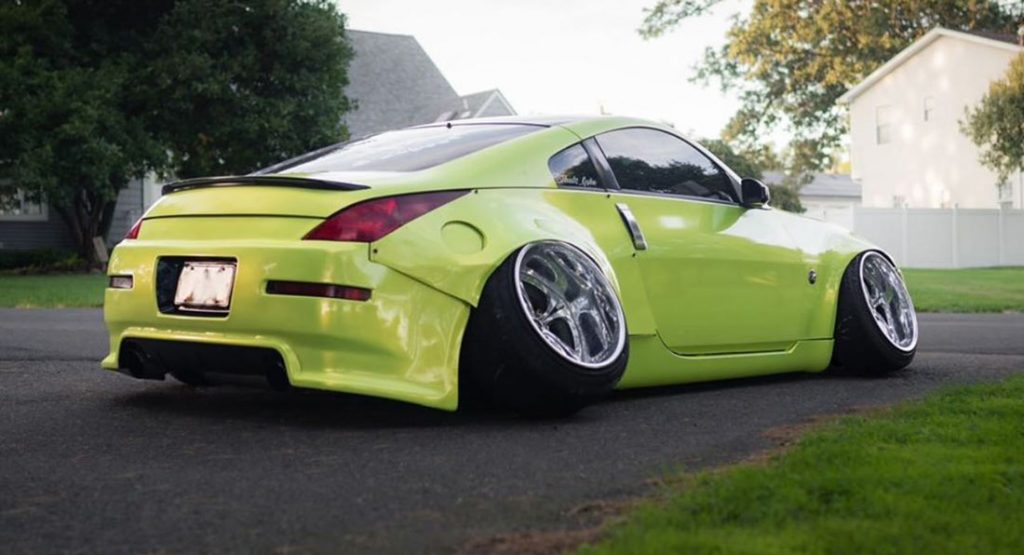
PWM (Pulse Width Modulation) is a technique where the power to the output (bulb) is turned on and off at high frequencies in order to increase efficiency, power handling, and control of the output.
If this on/off switching is done fast enough, your eyes/brain will interpret it as a normal always on light source.
PWM is significantly cheaper and easier to implement vs current source LEDs, so it of course has become dominant in the industry.
When the PWM frequency drops below 120-240hz (cycles a second), some people can start to pick up a strobe like effect from the bulb. This flicker is known to cause additional eye fatigue and can trigger headaches in many.
What's worse is that many aftermarket LED headlights are now using PWM at 60hz. These cheap headlights are often bright blue in order to look modern and impressive. When a car with these installed is behind me at night I have to move my mirror away because the flicker is incredibly distracting and fatiguing.