In reality, all-optical computing is mostly a terrible idea: fundamentally, it cannot reach the integration density of electronics. It boils down to the elementary differences between Fermions (electrons, neutrons, etc.) and Bosons (photons, etc.). Their intrinsic behavior determines the interaction with matter, i.e. conductive/absorptive properties. As a result, optical wires (waveguides) have to be sized roughly at a wavelength (hundreds of nm), whereas electrical wires can be much smaller (<30nm and below). Suppose you want to build an amplifier: all the claimed speed benefits of this optical device would vanish in the path delay of the feedback loop.
But just like graphene, carbon nanotubes, and other fads, you can publish fancy papers with it.
The keyword here is ‘all’. There are some things optical computing is bad at. However there are some things it is unparalleled at. For example, light can multiplex. It can have much lower energy losses. It can run at much higher frequencies. It is by far the best way to transmit information at extremely high data rates. Even within a chip, free space optical communication has massive theoretical potential.
Your comment would have been an excellent one without the last sentence.
But the whole wisdom of the parent comment is in the last sentence. This is mostly what is happening with such papers.
The keyword here might be "all", and there are some applications where optical computing is unparalled at. But research teams, vendors, and the media spin those things are a recplament for every application, not as some niche thing that's good at some niche applications that most people need not care about...
There seems to be an awfully large amount of projection here from people seemingly just reading the headline and not the article (much less the paper).
Even just the article's sub-title has tempered predictions: "“Optical accelerator” devices could one day soon turbocharge tailored applications"
And the research has immediate practical applications, again per the article:
> "The most surprising finding was that we could trigger the optical switch with the smallest amount of light, a single photon," says study senior author Pavlos Lagoudakis, [..] Lagoudakis says the super-sensitivity of the new optical switch to light suggests it could serve as a light detector that could find use in lidar scanners, such as those finding use in drones and autonomous vehicles.
To me it sounds like the counterargument nulls the wisdom. If you can only make 200nm optical nodes, but they could multiplex 1M signals, you'd win by 100x over 2nm electrical nodes. It will be 100_000x if you add 10THz vs 10GHz difference to the picture.
As a layperson I found this episode with Jeffrey Shainline an interesting discussion tangential to the topic of optoelectronic computing. The basic gist was that photons are good for communication, electrons are good for compute.
Not in the domain but as far as I understand from video for the counter argument: "Adding a matter of component and creating this kind of liquid of the light you add interactions in the system so practically light interacts more efficient with the light"
the hard part is that currently electrical to optical conversions take a fair amount of space which would make them hard to do on CPU. it might be practical for storage to ram though, which would be really cool.
Yes, signal (non-)interference is a big upside to optical communication. Photon streams don't interact even when passing through the same waveguide, so you can superimpose many bits/streams/connections in the same transmission channel at the same time (using varying wavelengths or polarisation), and two optical channels running side-by-side don't exert a magnetic force on each other either.
The main upside for optical processing (photonics) is in signal switching then, as in this case. Having to receive the multitude of optical signals, converting them to electrical, doing the signal routing and processing in the electrical domain, then converting back to optical for transmission is a lot of busywork.
We're in an interesting point: there is so much we don't know but in order to learn more everything we do must fit in the already immense amount of knowledge that we accumulated so far. In the vast majority of cases this requires that the people who want to nudge the frontier a bit further must first dedicate a good portion of their life's studying what we know, and as the result sounding a bit arrogant when they explain to a layperson that actually they know what they're talking about. Yes, in some cases, they may be erring on the side of too confidence, but in many many cases is the layperson who doesn't fully grasp the ramifications of the innocent looking alternatives.
That’s a pretty long way around to what is essentially an appeal to authority. You’re right about the knowledge and devotion required of frontier pushers. History is full of people who challenged this thinking and completely overhauled human understanding of a topic, though, often in the face of relentless ridicule.
The error (in your telling) is equating knowledge with confidence. Knowledge is knowing you might be wrong about it all. The advice to spend one’s life questioning isn’t a smarmy nothing; it’s the only truly sensible approach when you step back and think about it.
It's not actually an appeal to authority as such - authority implies (usually) institutional accreditation, whereas here we are pointing out the situation is so complex opinions without years of study are more or less pointless.
Then, when we have two e.g. physicists, who both know quite well what they are discussing, and one of them is more famous and potentially through their prestige succeed in ridiculing their less recognized colleague, we are at the "appeal to auhority" position.
One famous example is that of Ernst Mach who was was positivist (i.e. did not respect theory whose constituents you could not directly measure) and ridiculed Boltzmanns kinetic theory of gases because Mach did not believe in atom theory (!). Boltzmann's theory was effectively attacked precisely from position of authority.
So, if a layman and a physicist argue what is possible, it is very likely while both of them may be wrong, the layman likely does not have any understanding what their position implies.
So in my opinion, you can have a pathological appeal to authority sort of situation only when two equally skilled persons have an argument an the institutional prestige of one of them is used as an appeal for them.
> History is full of people who challenged this thinking and completely overhauled human understanding of a topic
At the risk of argumentum ad logicam, this is a textbook example of survivorship bias. History is also full of people who were adamant they were correct in the face of ridicule, and turned out to be wrong anyway.
Appeal to authority is only a fallacy when the authority is not an actual authority on the exact topic being mentioned.
Your broader point is right; obviously if we stop to poke at certain assumptions, the occasional one will collapse.
However, the pathway you’ve just suggested is less practical than you think. The GP is talking about a systematic, coordinated exploration effort of known unknowns.
Metaphorically - he/she is saying that there’s more likely to be gold at the unexplored end of gold mine, not in the excavated dirt.
What engineers work with is, maybe, 1/1000 of our physics knowledge (maybe 2/1000 for electronical engineers who need a solid basis of quantum mechanics).
Our physics knowledge is maybe 1/1000 of what we roughly know should be there but cannot be probed (quantum gravity, nonlinear field theories, dark stuff...).
The Universe is so huge that it is pretty impossible to descrive how much bigger than us it is - probably infinitely.
The point is, between the stuff that we know and the stuff that we roughly know but don't really know - we know a lot more than what we can use.
Saying that something is not so useful technologically, as OP stated, is rather a safe statement. We know a lot about fermions and bosons, light and electrons - and we know sufficient information to be able to state when something is overhyped and not really useful as it seems
Don't you need a certain amount of computing at each network node anyways to see what to do and where to send the optical signal next? In additional to error correction/amplifying the signal?
Generally you only need to read the 'header'. If that is little enough computation maybe that can be done optically, gaining the advantage of not needing to convert twice.
Often it might be as simple as routing right wavelength through right path, as in WDM systems. Optical amplifiers, such as EDFA [0] are interesting thing, too.
That's indeed done all the time in electronics: for example, RF CMOS usually trailing on a node three or four generations behind the bleeding edge.
However, all-optical/photonic computing is just intrinsically so much worse than electronics. On top of the issues that I touched on, there are also other fundamental problems, e.g. distribution of power: photons like to get absorbed by nearby electrons. How do you then supply all the active devices (switches/lasers/etc.) with power while maintaining some semblance of signal integrity and dense integration?
There is a special case: pumped laser amplification of signal in underwater fiber optic cables. That's all optical for the signal path as far as I know.
Could nonlinear wave interactions be applied in near vacuum, isolated from the lasers, amplifiers and counters? Think 100000*100000 imprecise loss-full tensor/matrix multiplications.
Exactly. While this speed vs space trade off makes less sense in mobiles, it might make perfect sense in industrial settings. Imagine 3D computers the size of a room (Craigh 2) but a 1000 times faster than any TPU only cluster.
Yes. IIRC, amd chips have been beating intel chips for a while now on transistor sizes but intel even with larger transistors still have a greater density on a chip (maybe it's changed in the latest gen).
You can't directly compare optical and electrical compute through looking at the difference in feature densities. Optical compute will most likely take the form of analog waveforms that contain many bits of information, whereas electronics for computing is inherently binary.
I'm afraid that's not even remotely true. Just two counterexamples:
- MLC flash storage devices use multiple levels to store/retrieve bits [1],
- Lots of control systems are implemented with analog PIDs [2]. A trivial example is a jellybean voltage regulator that computes the adjustments needed to maintain a stable output voltage independent of the load.
You can just choose to use light at a smaller wavelength.
Also, less density by itself doesn't mean less performance, the larger optical components can just run faster to end up with higher overal performance.
In principle, yes, but:
- lower wavelength light is harder to confine within waveguides (or transmissive optics), and messes up atoms when colliding (think of x-rays),
- finding an efficient source at lower wavelengths is one of the main struggles of the semiconductor industry.
1 GHz allows for photon to move 3 m per cycle in vacuum. 10 GHz is 30 cm. Even less in fiber cable. I think that's a fundamental restriction of a size of an individual computing module. Of course you can stack modules in entire buildings just like you can stack cpus in servers in data center now.
They're talking about wavelengths ("per cycle"). But I'm not sure it makes more sense knowing that, since there's a fundamental disconnect between the signal frequency and the carrier frequency. I think QAM can even be used on a signal rate that's higher than the carrier frequency (as long as the carrier frequency is known), but I'm not 100% sure.
If we take our definition of "individual computing module" to be that it has a defined state during every tick of the clock, then there is a hard physical limit of 30cm for a module that runs at 10ghz. Anything larger must be operating asynchronously, as a distributed system.
Point is that interconnect between floor 1 and 5 might pose considerable challenges, thus greatly minimizing the potential advantages of having massive building sized computers
Not true for plasmonic waveguides which can confine energy well beyond the diffraction limit.
But I agree that for now, photonics is just an academic wet dream.
If it is lower power, going 3d with it makes more sense though. Brain structures like synapses are ~2x smaller than UVC wavelengths or so (cubing that, ~10x smaller).
While for most things density is good. However if you can have a certain task take advantage of this insane switching frequency there could be reasons to build a room or multi-room sized specialized computer. Not everything needs to be tiny for every application.
Also path delay is not an issue if you have a task that can be pipelined for raw through put. Latency is less of issue in such scenarios.
So claiming there is no use for such things seems a stretch. It certainly can have niche uses. Bigger problem with a lot these papers is their tech needs to be at least reasonable to manufacture to have niche uses.
I think fermions vs bosons is irrelevant here - you can't build transistors out of neutrons. Sure, photons at these energies are larger, but still can be used for certain tasks, like quantum computers.
Couldn't this perhaps be useful for specialized compute problems that can be represented as a combinatorial system of optical gates/switches? It would be something useful for a specialized subset of problems, sort of like quantum computing.
QC is also not going to replace general purpose electronic computers but augment them for certain classes of problems.
Switching/routing usually requires significant information processing (e.g. decode packet header, match destination address against routing tables, etc.). This necessitates 10k or more gates. All-optical computing can't deliver this level of integration density, nor the performance at reasonable power levels.
Maybe there will be some smart way to pre-encode routing information onto packets to reduce processing requirements, but I doubt that such a network could scale.
> Maybe there will be some smart way to pre-encode routing information onto packets to reduce processing requirements, but I doubt that such a network could scale.
I was going to say "But wavelength/polarization multiplexing is the norm", but you have "fiber network design" in your about so I'm wondering what I'm missing - I guess you mean dynamic muxing, essentially routing? SerDes is of course annoying.
Yes, being able to do anything dynamically in the optical domain would improve things.
My main point is that to be able to do even the small stuff in the optical domain would be a big win. You don’t need to be able to achieve L2/L3 switching/routing to move the needle.
> In reality, all-optical computing is mostly a terrible idea: fundamentally, it cannot reach the integration density of electronics.
It doesn't need this density to be useful or better than electronics in many cases. For instance, photonic quantum computation happens at room temperature, but this doesn't seem like it will be feasible with any other method for long time, if ever.
I don't know anything about the topic, but it does make me wonder. Our problem does not seem to be a lack of transistors to make all manner of specialized single purpose logic. We do see to be stuck when it comes to single core performance. I wonder if a new technology like optical could be used to add a single core accelerator to supplement existing chips.
Well, good thing that the proposed application is about multiplexing/demultiplexing, and not about general computing.
Light has many inherent advantages over electricity for multiplexing/demultiplexing. Also, optical amplification works quite well too, and people use it on every long distance data cable nowadays.


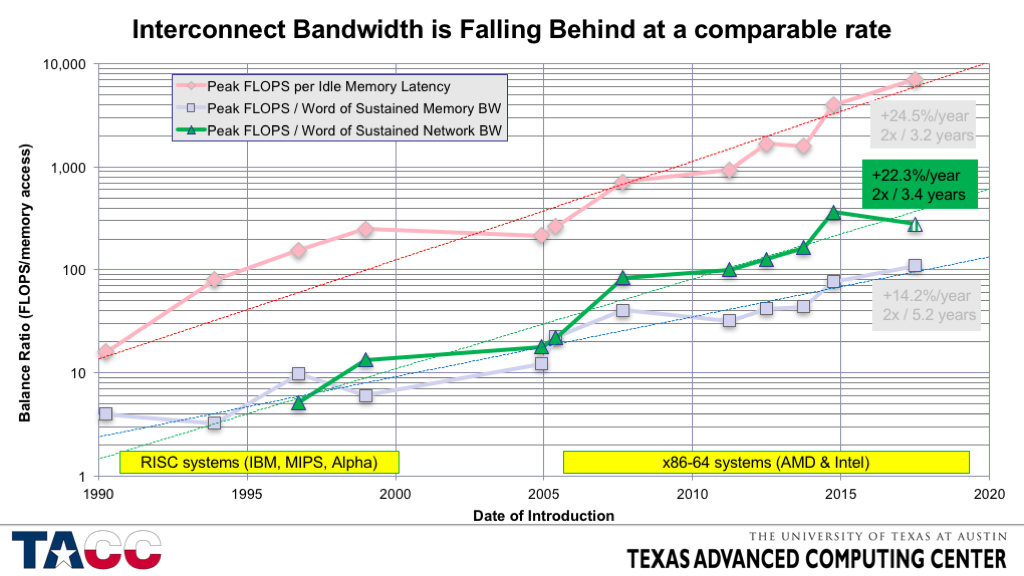
But just like graphene, carbon nanotubes, and other fads, you can publish fancy papers with it.