Here's another angle. The increasing censorship within China leaves less and less opportunity for the greater Chinese population to learn about the capabilities of other countries. A few examples of excellence that are still available to Chinese citizens are the NBA, Apple products, US education and Tesla cars. Most nations export excellence of some type to China.
Having these examples in their hands or on their screens likely initiates a mild cognitive dissonance: "The CCP news tells me how terrible the USA is, yet, these elements in my life are excellent beyond what is created by my own country." It's reminiscent of Russian defectors who couldn't rationalize the images they were shown of US poverty, illustrated by films from the Great Depression wherein the 1930s streets of New York were clogged with cars. Or, Boris Yeltzen visiting an American grocery store in 1989, and being overwhelmed at the variety of products and full shelves [0].
As the reins of censorship and propaganda tightens in China, there may be less and less of the world to pierce through and belie the narrative they are fed. Perhaps we should not abandon them any sooner than we must.
With that said, if it's a deliberate approach, we need to get the messaging right. The NBA should stick to 'we are ambassadors for the USA to the world' and leave any politics at that.
Your comment is about 15 years out of date. There isn’t much that is “excellent beyond what is available” in China anymore. This type of thinking is why western foreign policy continues to get China totally wrong. Chinese people who study abroad are more often confused by the things missing in the west than they are liberated in the way you describe, in my experience.
> There isn’t much that is “excellent beyond what is available” in China anymore.
Democracy and freedom of thought.
Despite your experience of Foreign Chinese Students being confused rather than liberated by the West...in my experience I’ve never met a Foreign Chinese Student that didn’t want to permanently relocate to Canada or the US.
For those in an (economic) position to emigrate, China lacks nothing in a material sense. Cars, electronics, clothes - they're not only available, they're well within the purchasing power of these people. In fact, what I dislike most about modern China is the endless gleaming shopping malls full of the same (mostly Western) brands.
But not everything is material, and creativity and freedom of expression definitely have an impact. I have a reasonably large circle of Chinese acquaintances via my wife, and anecdotally, I've never met a single emigrant who actually returned.
A lot of them definitely complain regularly about how much better China is, but none of them actually pack up and head back. I think that's telling.
Not sure how much of that is political rights, and how much of it is just less competitive pressure abroad because of lower population. Easier to get into colleges and find jobs. Might want to ask and confirm.
Or in other words, better quality of life? Yes, you can drive a new beemer, have a house with a pool and and 3 holidays abroad every year in China too -- if you are the one in a hundred to win the job lottery and work 60 hours a week not to get sacked (or if your daddy is a CCP aristocrat).
In the US/Western Europe/Japan at least half the people can affort that upper-middle class living standard, while only working 40 hours.
It's less competitive pressure because everyone can achieve it.
Never thought I would type these words but if you think half the people in any place can manage an upper middle class lifestyle, you need to check both your statistics and your privilege.
If you drop the 3 vacations abroad and the 'new' appellation to the car, then 1/2 of the people in the US can reasonably aspire to the rest of that with hard work and self discipline.
No idea why you think workers in Japan, as the general rule, are working 40 hour weeks when it's famously much more than that. For example[1]:
> Nearly one quarter of Japanese companies require employees to work more than 80 hours of overtime a month, according to a 2016 government survey. Those extra hours are often unpaid.
The article also mentions the lack of holiday or workers taking holiday, which the government tried to force happen via legislation[2]:
> Japanese workers are so reluctant to leave their offices that they took less than half their holiday entitlement in 2013. The government now wants to raise that total to 70 per cent by 2020, according to the Yomiuri newspaper.
> At present, employees are entitled to a minimum of 10 days paid leave annually, with the figure increasing one day for every year that they work to a maximum of 20 days a year.
A bit Survivor bias? Recent six years about half of my friends went back. I’m biased as well since many of them got green card and/or coming from Tier-1 city
I'm not sure how that figure is calculated, but I also wonder if it under-represents "pseudo-migrants" who claim to be living/holidaying temporarily in (say) Australia, but who seem to stay indefinitely.
Anecdotally, when I came back to my 1+ million people city in Europe from a vacation in China I immediately noticed the silence, the few people around, the short lines and the open sky. Of course my city is renowned /s in the rest of the country for the noise, the crowd, the long lines and the tall buildings covering the sky.
In fact, what I dislike most about modern China is the endless gleaming shopping malls full of the same (mostly Western) brands.
Isn't that the point the OP is making though? That China is full of western brands that seem to outcompete local brands, yet PRC propaganda keeps claiming the rest of the world is using the wrong economic model.
The comment I responded to was asking “what can Chinese people get in the West that they can’t get in China”.
My point is that whatever it is, it’s not material goods. It’s something more ephemeral. Whether that’s democracy, creativity, or simply a slower pace of life due to not competing with 1 billion other people - who knows.
They want to relocate not for the freedom and democracy, but for the advantages they can take out of it. If you actually get into the Chinese community, you can hear many of them happily bloat about how well they do in a free society, while criticising thngs being “too free” when the freedom causes them trouble. Freedom is good, as long as I get all the benefits and none of the responsibilities, is basically the mentality.
Source: I am Taiwanese. We get way too many of these people.
Some people don't miss that at all,as their personal views are so neatly aligned with the ruling regime that a) their thoughts are not constrained, thus free, and b) having any other form of government would represent a suboptimal solution dictated by a ignorant majority.
This has been observed in pretty much any totalitarian regime since ever in a fraction of the population that in some cases might be the majority.
From my direct experience from a 3 weeks journey 5 years ago:
A super app like WeChat. I'm happy we don't have one because super app == super control. (BTW WhatsApp was still legal back then.)
A ban on gas powered small motorcycles. All of them were electric, some with a retrofitted electric engine, some natively electric. I wish we did the same.
I can't think about other things that were or could look better. In most cases it was the same stuff / processes with a Chinese twist.
Here's one of the most important things I can think of that's pushing me back to China more and more each day:
I live in one of the major NA cities and I dont feel safe walking outside after dark (after 8pm).
I have a friend got robbed on knifepoint around 11pm this past March. The case hasn't been closed. Numerous friends' homes got broke in and stuff stolen and cases are all cold.
And I was almost hit by a left turning car on a quite street. The car sped away without checking if i'm ok.
Yes I miss getting my privacy striped away by all the CCTV cameras and feeling safe. I miss all the speed cameras and red light cameras. All the cameras that the existence of them having the deterrent effect for thieft and robberies and traffic violations.
I'm aware of the quote: Those who would give up essential Liberty, to purchase a little temporary Safety, deserve neither Liberty nor Safety. Because I've been telling that to my friends before I left China and live in NA. But now I think Maslow's Hierarchy of Needs more often than that. (https://www.simplypsychology.org/maslow.html#:~:text=Maslow'...)
Culturally I'm just used to a higher level of safety I guess. Japan, Singapore, Taiwan other than PRC are like that too. So it's more of an Asian thing.
And that heirarchy actually explain a lot why Chinese seems to be not on the same frequency with westerners on human right issues. Because I guess Chinese are still at a lower level of that hierarchy right now.
If your only examples are North America and China, it may feel like there is a direct tradeoff between safety and privacy. But that would be a false analysis: most Western nations have far lower rates of violent crime than the United States, without the need for omnipresent surveillance.
maybe. I've lived in Europe for a bit and it's a bit better but not to the point I feel safe everywhere during the night in cities(but at least I dont live in fear of getting hit by cars that much). And other than China I've mentioned I feel safe during night in Japan, Taiwan, or Singapore. Again I'm not sourcing any data here because it's just my personal experience of whether I'd feel safe in cities during night.
I'm often curious what makes someone feel safe or not. I've never felt unsafe wandering around (including in lots of "sketchy" places), but I suspect a lot of that is an accident of my genetics. I just don't look like an easy person to victimize.
From my perspective, a lot of that is simply busy areas. Areas with a lot of pepole moving around are safer in cities than areas without a lot of people.
In Asian cities, there is plenty of nightlife on the streets. In Europe, places outside the city centre seem to shut down after dinner.
The sense of social solidarity versus atomization plays a part, for me. Do I feel like my neighbors will look out for me or do I feel this is a "no snitching, mind your own business" culture?
> Yes I miss getting my privacy striped away by all the CCTV cameras and feeling safe.
I'm sorry to break it to you but that feeling is nothing more than a feeling. There is no assurance of safety from CCTV camera coverage. There is only the assurance that the ruling regime is spying on you. Case in point: I personally know of a case where a popular restaurant was robbed at gunpoint in a city area that was extensively covered by a network of CCTV cameras, and still the robbery was never solved.
And the robbery looked like an internal job.
So no, CCTV coverage does not mean safety. If it was, London would be crime-free, and it's one of Europe's capitals with he highest crime rate.
I didn't notice any difference in perceived safety. I routinely walk late in the night, even past midnight, but I live in Europe. North America might be different. I don't have any recent direct experience there. SF and NYC were ok about 20 years ago. Lot of people walking around in the night.
SF off of Market St at night is mostly overtaken by various night dwellers now. Certain areas and surrounding areas around Market you do not want to walk alone at night, or even during the day for some streets. However is too be expected when law abiding citizens are punished for defending, or trying to defend, themselves. People robbing others in this country are called the victim. Those attempting to reduce crime by carrying concealed are also punished, especially in California. The problem with the US is mostly political with one side wanting defense and the other anarchy.
You are misinformed. When people carry concealed crime numbers drop because criminals are also scared to die and only want easy targets. And you won’t see the gun if they’re carrying concealed so the class of people you’re talking about, open carrying and brandishing, are not the same people concealed carrying.
Well you can’t get a concealed carry permit in Europe, and you cant compare two countries like this, where one has extreme gun control and the other doesn’t and then further go on to compare crime rates. This doesn’t even fit into the proper definition of experiment, where’s the control?
> A ban on gas powered small motorcycles. All of them were electric, some with a retrofitted electric engine, some natively electric. I wish we did the same.
That doesn't take a totalitarian oppressive regime like the one forced into China by China's communist party. In some European cities old cars or diesel-powered cars are banned from city centers, and certain types of bikes are only allowed on some zones.
China's great if you have a decent amount of money -- labor's cheap, so all sorts of stuff (food prep, transportation, delivery services) that's heavy on labor is dirt cheap in China even if it's unaffordable in the West.
But racism... speaking as a rich white guy who was treated as nicely as you'd generally expect, even I could tell it wouldn't be fun to be an ethnic minority there. Chinese ethnic minorities visiting Beijing are themselves something of a tourist attraction; tour guides leading Westerners around point and stare and talk about those minorities sort of the way you'd point and stare and talk about a wild animal you found roaming the streets. Thing is, 95+ percent of China is a single (self-identified) ethnic group so there are just fewer encounters with minorities.
> Chinese ethnic minorities visiting Beijing are themselves something of a tourist attraction; tour guides leading Westerners around point and stare and talk about those minorities sort of the way you'd point and stare and talk about a wild animal you found roaming the streets.
On a related note, in the 2008 Olympics in Beijing, China saw fit to have the flag be brought in by 56 children wearing the traditional costumes of the 56 officially-recognized ethnic groups in China. They were all Han.
But you were an ethnic minority too when you were in China right?
I never understood this line of thinking though - the way you describe it sounds like it was out of pure curiosity rather than racism. It's interesting seeing the difference of how people define racism based on who they are and where they grew up.
For example - racism in Australia can be seen through racial slurs and physical violence from the moment they start interacting with others (preschool) up to adulthood. Or it can come in many subvert forms in the professional workspace. Contrast this to where I hear of racial minorities coming into Asia who for the most part get treated at best above everyone and at worst out of curiosity (e.g. staring)
I wasn't a local ethnic minority, which makes all the difference.
And "curiosity" doesn't quite explain it. It's curiosity plus lack of respect. Local political bosses are undoubtedly subjects of similar curiosity, but everyone respects (and/or fears) them enough to be courteous.
>China's great if you have a decent amount of money
Besides Scandinavian countries where the social security net is amazing comparably, isn't that the same in most of the world? I'm not sure being poor in China is worse than elsewhere?
In most of the developed world, even poor people's labor is expensive enough that it's rarely affordable to just pay someone else to do something for you exclusively (e.g., private chef, private driver). In China, to say nothing of India, that's another story. There, you have professional class types making Western salaries but also a billion-odd people living on dollars a day which allows an aristocratic lifestyle that would be unimaginable in the developed world.
We were talking about what Chinese emigrants can get inside China, so they probably mean that Chinese nationals (usually) wouldn't be subject to racism themselves.
I've only been to China once (Guanzhou), but it was very hard to find vegetarian food. Everything everywhere seems to have duck or pork in it. The variety is definitely lacking compared to Europe or North America.
The air quality has actually improved a lot in recent years, and I’d expect that trend to continue. The govt is putting a lot of emphasis on it recently. But yeah, it’s still pretty bad.
>Chinese people who study abroad are more often confused by the things missing in the west than they are liberated in the way you describe, in my experience.
As someone who has never been to China could you list some things the West is missing?
Transportation, not healthcare. High speed rail is ridiculously good, it connects just about every major Chinese city, it’s affordable, very comfortable and fast. I would consider healthcare an exception, it may be affordable but outside of a few expensive clinics in Beijing and Shanghai it’s really bad. Mobile payments are way ahead of other places (you can pay any random person you meet instantly with your phone, and that’s been the case for at least 5 years). Any kind of logistics/delivery (food, online shopping, post etc) is very fast and cheap and this has a lot of flow-on effects in terms of convenience and lifestyle.
Basic research in (for example) AI is probably on par with the west, I think it’s fair to say the engineering/applied side is ahead. This is helped by essentially zero concern for privacy = more data. WeChat translate CN-EN is miles ahead of Google. Any kind of large scale tech that has anything to do with surveillance, things like CV, deep-packet inspection, would be unmatched I’d say.
> WeChat translate CN-EN is miles ahead of Google.
That's interesting!
At the same time, deepl.com is also miles ahead of Google, so I'm not all that impressed by Google Translate anymore. (Deepl itself is impressive is heck!)
It may be a case of Google lagging behind others yeah, I’m not overly familiar with translators other than as a casual user. WeChat is very “smoothed” in that it gives you something that makes grammatical sense and sounds native, in preference to being a direct translation. Which usually works really well but occasionally gives hilarious results. It also seems to take the context of the conversation into account rather than just the message you’re translating.
For me it's absolutely night and day, the translations produced by Deepl feel like they could have been written by a real person. That real person wouldn't be a particularly good writer, but, still, it's highly readable.
I could see myself reading a whole book through Deepl if I had a reason.
The healthcare thing doesn't jive with what I've heard from my native Chinese friends; I've heard if you have the right connections (and by association, wealth) you can get exactly what you need, but without that you can't get anything.
On the contrary, I believe most people will be better off with the Chinese healthcare system than the U.S. one, because nobody go bankrupt from going to the doctor. Office visit cost at most $20 - that's without insurance. Every thing has a fixed price, so you will never get a surprise bill afterwards. If you insist on visiting the best doctor in the field, wait time can be long; but otherwise you can walk into the hospital and be seen pretty quickly. Meanwhile, in the U.S., I have good health insurance through my employer, yet I am still terrified of going to the doctors, especially, god forbid, the ER.
As for quality of care, obviously the facilities in the U.S. are nicer - they better be, you are paying 10x - 100x for that! For the treatment, most friends of mine from China complain the doctors in the U.S. don't do anything; they just give you some advil and send you home. However, antibiotics are probably prescribed too liberally in China, and IV injections used too much.
Of course there are some drawbacks too. First, the flip side of "no surprise bill" is everything is due upfront, so it's not unheard of that critical treatment is delayed because the patient is trying to find money. Second, since healthcare is so cheap, people usually don't carry health insurance other than the government provided one, which has a maximum payout amount per year. As a result, if you get rare / serious condition you can still get ruined financially. Nowadays more and more people begin to purchase commercial health insurance - which are still an order of magnitude cheaper than the U.S. ones.
Nobody will go bankrupt from going to the doctor, but no doctor will see you without cash-up-front. As a person coming from a western country with universal healthcare, it was very confronting navigating the Chinese hospital system. Every time we needed something we were first directed to an administrator who would take payment. eg, payment for initial consult, then payment for ultrasound, then payment for pharmacy services, etc.
Please don't take this the wrong way, but I felt kind of misled by your post by the time I finished reading it.
US healthcare is notorious for its problems so I was ready to believe your initial statement. But actually you say:
1. "Nobody goes bankrupt from going to the doctor", but "if you get rare / serious condition you can still get ruined financially". Those two statements are direct contradictions of each other.
2. "you can walk into the hospital and be seen pretty quickly" but also ... "it's not unheard of that critical treatment is delayed because the patient is trying to find money". Again, being seen pretty quickly and not being seen because you're trying to find money are in direct conflict.
Nowadays more and more people begin to purchase commercial health insurance - which are still an order of magnitude cheaper than the U.S. ones
Everything in China is cheaper than in the US. It's still a poor country.
Honestly both systems sound just as bad as each other, or rather, the Chinese system sounds far worse. I'd rather be alive and bankrupt, rather than refused treatment entirely, because I didn't have the cash at the exact moment I fell ill or there was some SNAFU with payment systems.
If more and more people choose to buy health insurance, that sounds like China is well on the way to a US style model as it develops.
I see on the internet, especially on reddit, where there's praise for healthcare in china. But I've never spoke to a person from china who likes it. But I've heard lots of horror stories.
I wouldn't want to end up in hospital in the US or china. Think the only countries I would feel at ease in are Singapore and Taiwan.
I can’t speak to healthcare generally but one of my college roommates was from China and she just could not wrap her head around the politicization of birth control in the US. I remember her asking us if Americans thought it was dangerous or addictive because she couldn’t understand why it was so controversial that the affordable care act required birth control to be covered.
A sibling comment has already mentioned the one-child issue, but I wanted to say... Chinese culture is so deeply different from American culture about all sorts of things about reproduction and fertility.
Chinese people's attitudes toward the one-child policy and also sex-selective abortion are complicated and varied, but they don't seem very similar to Americans' attitudes at all!
In the U.S. it's common for people's religions to completely formally proscribe some forms of birth control and/or abortion. This has led to a big political debate about what the scope of their legal rights to avoid subsidizing these things for other people should be. It's not surprising that that debate should exist, but also not surprising that it would be uncommon in China where (1) the most practiced religions largely don't have these teachings and (2) people don't have a common expectation that the state will give their religious practices and beliefs a considerable amount of deference.
I think a median American attitude is that nobody else should pressure you to have more or fewer children than you want to; if your religion encourages you to have children, other people are also largely supposed to respect that, and in modern times, if you just don't want children, other people are also largely supposed to respect that. (In blue tribe environments having many children is suspicious and in red tribe environments having no children is suspicious, but in both cases people are increasingly effective at pushing back socially against other people's scrutiny about this, and even at pushing back against their own families' judgments or preferences.) (These considerations don't necessarily apply the same way outside of opposite-sex monogamous married couples.)
I don't think these norms are common in the same way in China or in Chinese cultures elsewhere. In particular, I think even if Chinese people don't all think their parents, or governments, should get to decide how many children they have, it doesn't seem like many will reach U.S. levels of offense that prospective childbearing couples' parents, or governments, have an expressed preference and actively try to influence this.
The PRC perspective on birth control, specifically, is unique, since the CCP forced birth control and abortion on its population for decades as part of the "one child" policy.[0]
Let's not forget china has 1.4 billion people and a median income less than Mexico. As a westerner visiting China, one tends to stick to the places most similar and accessible to people from the west.
I doubt you'd want to trade your healthcare for what is available to the average Chinese person (as opposed to wealthy urban elites and expats). The public transportation really is extraordinary though.
A key difference is that PRISM was a scandal, a massive stain on the reputation of the NSA, and behavior that the majority of Americans condemned and will roundly condemn again if exposed. Can the same be said about China on such state surveillance behavior?
----
On an aside, but related to the broader conversation, the YouTube channel AsianBoss regularly visits China and conducts very revealing interviews with Chinese people on similar topics to those discussed in this thread: https://youtu.be/sTzgE1nvxZs
In China if you're discovered to have the wrong religion they'll put you in a concentration camp where they may or may not murder you and sell your parts. Don't worry about your family, they'll assign a rapist to your wife who will sleep in bed with her and reeducate your family.
There's literally a WWII scale Holocaust going on in China right now. You have a lot of nerve asking "what's the difference?"
> As someone who has never been to China could you list some things the West is missing?
It's been mentioned elsewhere in this thread, but it's worth reiterating - safety.
China is one of the safest places in the world. I literally never had a single concern for the physical well-being of my mother, my wife, anyone - no matter what part of the city they were in, or what time of the day.
Worth mentioning that I've found Singapore to be the same.
Contrast that with life in Australia (Melbourne), where I was constantly on edge even in the early evening, I'd worry every time my wife was out late, not to mention the instances where I was physically threatened or assaulted.
> It's been mentioned elsewhere in this thread, but it's worth reiterating - safety.
Maybe if you're Chinese. Right after college, a friend of mine (white American) worked in a job where he spent time at a factory in China, until he got stabbed in the lunch room by some older worker. He's fine, and while there is may be a degree of safe, it's definitely a question of safe for whom.
I won't pretend that violent crime doesn't exist, I've certainly witnessed it first hand.
I'm mainly talking random street violence, which is far, far rarer than somewhere like Australia. I'm fairly sure that applies to most of "the West", too.
I'm curious how you know this. Neither Chinese statistics nor news are reliable at all, and especially won't be reliable about basic quality of life issues like this where the government is highly incentivised to make their society seem really safe and controlled.
So that leaves anecdotes and personal experience. How many direct experiences of violent crime in both places have you had, and how do you know this generalises?
I live in Melbourne. Can I ask what parts of life here felt unsafe? I live out the suburbs in a moderately expensive area and not much happens here at night. Is it "youth gangs" in the city that caused the issue?
Mainly the CBD. The area around Elizabeth St/Flinders St is particularly rife (unsurprising that's where I had to defend myself from assault on a Tuesday evening at 8pm). Not youth gangs, but homeless and drug addicts. Constant incidents in Melbourne Central, too.
Not just the CBD though - almost every time I caught the 57 tram, there was some kind of screaming match or altercation (none involving me, thankfully). Visiting St Albans at night, I was treated to roving groups of young men smashing windows and helping themselves to whatever they felt like. Even the train back was really sketchy too.
That's without mentioning the Eurydice Dixon and Aiia Maasarwe cases, which were really unsettling.
I never worried about any of this stuff in China. There were literally zero occasions where I felt physically unsafe. Whereas Melbourne? Every time I was in the CBD after dark, I felt I needed to be on guard - and I'm a physically capable male.
I'm sorry you had to experience that. I hope you did get to experience some of the beauty of our country too. People are quick to bash China but there are some things they are doing well. I feel that Asian exchange students need to be warned about the danger of night time in Western cities.
I know the relations are strained between our countries but I hope they improve. Our government has "do not travel" recommendations in place for China due to the current political issues between our nations but I would love to visit one day.
American here. I spent a couple of months in China and have Chinese friends, so here are a few things off the top of my head (take with a grain of salt and consider talking with Chinese people for a more authentic perspective):
- Reliable high-speed railway.
- Night markets -- lots of people socializing in the street into the early hours of the morning, enjoying street food, beer, etc.
- A sense of shared experience that's difficult to find in hyper-individualistic societies.
The Chinese perspective, AFAICT, is that individual liberties are worth trading for prosperity and so-called "economic" liberties. I'm told that this is something that's difficult to understand unless you've experienced the sort of progress that China has observed firsthand.
There's nothing I am more jealous of than the night markets you see around the world. I'm sure there are downsides to them, and what I see on various travel shows are mainly the upside, but man the idea of being able to step out at 1 or 2 in the morning and get a beer and some tasty food seems pretty awesome.
They are a bit unregulated, and people warned me not to eat there too often. For example, I was told that people have died of rat poison after eating rat meat (for rats apparently captured from the street). Another issue is that the vendors would sometimes reuse their cooking oil (so-called "gutter oil"). That said, I got the impression that it was OK to indulge on the occasion, and it is true that the atmosphere is really great.
Ironically, these night markets are disappearing a bit as prosperity goes up. For example, in Shenzhen, a lot more roads were built to accommodate the huge increase in the number of automobiles, and it seems that many of these markets have succumbed to the concrete jungle.
I think that's a false dilemma. The Nordic states have roughly the same personal liberties as the US, but the welfare system means people are much more financially secure.
I probably should have phrased it differently. I think the attitude in China is that, if somehow forced to choose between individual liberties and economic prosperity, many will choose the latter -- because they see it as enabling the former more capably than any sort of constitutional rights.
Btw I'm intentionally trying to stay take a neutral stance on this topic when discussing my understanding of attitudes in China. In fact my personal viewpoint is that economic prosperity without a strong and healthy respect for human rights will have bounded lifetime, but that's a different discussion. Regardless I think it's important to understand all the viewpoints.
Pretty sure that's an outrageous exercise in false equivalence. What's happening in Portland isn't right, but it is an aberration, and it will be stopped. Nobody has "disappeared."
What is the mechanism for redressing grievances like this in China, exactly?
Sure, let’s point to a single, or two, case in one city in the US, in which case the DHS is being sued last I checked, to contrast a ground up system in the whole of China.
Just today, or yesterday, a respected prof got fired from Tsinghua for being critical of CCP and Xi in particular.
> Having these examples in their hands or on their screens likely initiates a mild cognitive dissonance
You’d be surprised, but no, it doesn’t. And from my experience, older people sometimes just kind of don’t like America, in the same way older Americans don’t like Cuba. Government says their government is bad, don’t really know the people but maybe they’re “brainwashed” unlike us, but the few I’ve met are okay so no reason to really do anything but ignore the country.
Younger people I’ve talked to seem to know a considerable amount about America, and quite a lot of bad. The idea seems to be that companies build things in China because their country can’t and companies like the NBA and so on focus on them because they’re more important now. Which, well, isn’t clearly wrong. If all those American things up and vanished, it’d be a topic for a week and people would stop caring. It’s more normal for products and media to just vanish.
The NBA isn’t an ambassador of anything. It’s a corporate sports team that knows China doesn’t really give a shit about them, but it’s a good chance to get money from what’s likely to be the largest economy in about a decade. That’s all any of these companies are doing, and their road of good intentions is just pumping money into China’s goal of being number 1.
I think it’s entirely fine for the NBA to decide that they want to decide they want to be friendly towards the Chinese market. I also think it’s fine for America to drop the NBA for being the weak, hypocritically “woke” corporation that it is. Either drop politics altogether and be a regular soulless corporation, or actually stand up for what’s right but not only in specific, comfy locations and with safe political statements.
>The increasing censorship within China leaves less and less opportunity for the greater Chinese population to learn about the capabilities of other countries.
Most of my friends back in China, especially devs, use VPN daily. Many Chinese learn English via English media or TV shows. check this out: https://en.wikipedia.org/wiki/List_of_countries_by_English-s...
>The CCP news tells me how terrible the USA is, yet, these elements in my life are excellent beyond what is created by my own country.
just not true. I was really shocked about the homeless situation in NA which was never really reported back in China.
and also from u/bpodgursky
>the Chinese students with the education and wealth to study abroad are already among the top 5% in China.
Not the case for most graduate students. Especially the ones received scholarships (such as me).
Please check your sources guys. Try learn a bit Mandarin if you could or at least talk to Chinese ppl living around you. China is sick yes. But imagine diagnosing the illness of a patient without looking or talking to them but only via a malicious translator.
> Most of my friends back in China, especially devs, use VPN daily
This is such a tired argument. You've got a tiny percent of the population with the ability to proxy out of China. You cannot easily share the information you find with non-VPN friends. Not even with VPN-enabled friends. Sharing any politically sensitive info under your identity is a big no-no.
I once did an experiment on Weibo and posted screenshots of an article about Xinjiang concentration camps. The original English version stayed up for quite a while. Then posted a google translated Chinese version and it was quickly taken down. After posting it again my account was banned.
That individuals can obtain certain information isn't a big threat to the government if you cannot effectively disseminate it in the general population and organize around it.
basically some guy got detained because he whistleblowed something food safety related. We talk politics, in ways you normally wont imagine. But not the politics you expect.
>Xinjiang concentration camps.
That's an interesting topic because most Chinese dont care when you shove it into their throats in one way or another. If you used Weibo, I wonder do you have Chinese friends? Have you asked their opinion about those camps?
According to this ZDNet article [0] 14% of Chinese internet users use a VPN daily. If you do the math that's roughly 7% of the Chinese population.
> We talk in person, during lunch or on dinner tables, in office. When we talk politics online we invent new words to avoid auto detection. The recent hot topic is this: ...
basically some guy got detained because he whistleblowed something food safety related. We talk politics, in ways you normally wont imagine. But not the politics you expect.
Right, so even to discuss local drama that doesn't even involve big politics you still have to use coded language and can get detained for it. That's not exactly an environment that fosters free spread of information.
> That's an interesting topic because most Chinese dont care
And that's the sad part. Chinese citizens are being detained often for years without any due process and people don't care. That's exactly what decades of government propaganda do to people. Not even going to mention the organ harvesting of Falun Gong practitioners which gets somewhat censored even in the Western media too. Most people in China (and the West) are simply unaware of it[1].
Please dont break my sentence half way. Western media has been doing that and they wonder why the Chinese ppl are not receptive of their messages or ideas. I feel it's too impolite so I will not follow up on the rest. Sorry.
I don't think any re-wording of your statement was intended by breaking up your sentence, it is pretty common to abbreviate when quoting, even mid-sentence. At least I hope it was not intended... I can see that the quoted part makes it into a different statement.
Personally I appreciate your insight on this topic, I feel it is difficult to have a good discussion on these sorts of topics with all the misinformation going around.
Thanks. I'll try give more info on the parent comment then. First 7% of the Chinese population is like 100 million people... Considering most of them cluster in tier 1 cities (beijing, shanghai, shenzhen)[1], I'd say there's density for certain things to happen if they want.
and I wont call food safety issues local drama. Now that people noticed the air quality is improving[2], food safety is probably the no.1 issue Chinese people care. Especially milk products for babies. Many chinese emigrated for food safety as one of the important reason and most chinese buy foreign milk for their babies. Shoot me email if you'd like to talk more :)
1. China's wealth distribution is really not great. We got tier1 cities like developped countries. then there's tier2, tier3, then east rural areas, and west rural areas.
This crosses into nationalistic and ideological flamebait as well as personal attack, none of which is allowed here. We ban accounts that do this. No, we're not party members. We're just trying to prevent this community from destroying itself, including from turning into an ugly mob.
not a party member btw. Am Chinese. I will follow up here on any questions you(qbaqbaqba or anyone else) have though. and if you are interested here's my thought on the whole topic in one piece:
https://medium.com/@theseadroid/the-china-problem-ce0c1a0e57...
I read and appreciate that blog post. Yet to address any China problems without recognizing any Chinese government fallacies means we're not even having a complete discussion here. I acknowledge the fear of including them, but one's stance on government policies is required to really get their thought on the whole topic.
Thanks. I dont fear Chinese government actually and I think it is bad. It's just we have a lot difference on where it is the worst part and how to make it better and by how much time. Truth to be told there are so many solutions proposed by smart ppl but I dont see many that wont hurt regular Chinese ppl more than what the current regime is doing :(
Please do not take HN threads into nationalistic and ideological flamewar like this. It's not allowed here because it leads to community-damaging discussion and, unfortunately, ugly mob behavior.
HN is supposed to be a place for people to exchange their views with openness and curiosity, regardless of how much distance separates us and/or how wrong we feel the other is. Comments like the one you posted here pour poison over all of that. Please don't.
While I think your point is mostly valid and benign, Your impression of China seems outdated and tone might seem a bit arrogant to a native Chinese. Chinese people recognize the gap and appreciate the excellence in their daily life. The CCP rarely censored in the way you described(e.g. it never says China’s education/manufacturing is the best, instead they call out the remaining gap constantly).
As a matter of fact, the biggest concern I have is the political climate in the US has done more harm than the CCP can even dream of with any propaganda. Overseas Chineses tell more and more story of how chaotic US is to their family in China and that spreads. Ten years ago it’s a no brainer to send you child to get US education but now many parents are reconsidering.
yes, seconded. China isn't North Korea or the USSR. Don't take for granted that the West is "better", at this point China is looking over and saying "prove it"
Can you blame Chinese citizens for preferring the stability and prosperity of their own regime, when they have the current disarray of American democracy to compare to?
Frankly I would argue that the Chinese have a much better understanding of the US than the other way around. They study English, they are exposed to Western cultural exports (we're in a thread about the NBA, for instance), heck the general populace looked up to the US for a long time (not anymore)
> Can you blame Chinese citizens for preferring the stability and prosperity of their own regime, when they have the current disarray of American democracy to compare to?
Let's ask the Chinese citizens in Hong Kong how they feel about the stability and prosperity of their regime, shall we?
You say this like it's supposed to be some kind of clever gotcha. Yes, the discontent there is real. But even if 100% of HKers are dissatisfied with the regime (which is not the case), they are a tiny fraction of the total population. Overall, I stand by my statement.
>A strike was intended to open a new arena of resistance, but organizers said only 8,943 union members participated in a city-wide poll, falling short of the 60,000 threshold to go ahead, even as 95% of the votes were in favor.
https://www.reuters.com/article/us-hongkong-protests/hong-ko...
HK protestors have failed to organize any long term strike for a while now. If the majority of HKers strike, that will deal a real blow to the government.
> preferring the stability and prosperity of their own regime
That's a bit of an unwarranted assumption. Even hinting that you have a different preference or questioning the reports of stability and prosperity (even privately among friends on WeChat, which is monitored and censored) can get you invited for a nice cup of tea with the local police.
Reports? They literally are experiencing stability and prosperity. People went from rural villages without electricity to towering megacities in a generation. Honestly I find it rather insulting that you'd rather believe they're all hiding their true preferences than try to see their perspective.
The point is that we don't know the degree of stability, prosperity and preference for the CCP because any data that contradicts this narrative is suppressed.
It's unfortunate that your comments are getting downvoted when they are filling in for a perspective that seems to be missing from the conversation. I hope some people can see value in your comments as data points from China, rather than a value judgment.
While there is some truth in what you say, many overseas Chinese get their news from Chinese sources even if they have access to better options. It creates a vicious cycle of cognitive dissonance.
Well I haven’t read Chinese news sources for many years. Speak of cognitive dissonance, Fox News and sometimes CNN are among the worst few media I’ve ever seen
whenever I see misinformation my blood boils. I thought moving out of China would help my anger management. But alas here we are. I have been wondering instead of wasting time telling HN or any community what China is like, maybe there's something I can do to help China become a better place where I wanna live in future, no matter how small I can contribute. Many westerners (government bodies excluded) are good intended, but the solution they got mostly will only get things worse.
It’s close to impossible to stop misinformation given most westerners Have a much higher trust level of their media E.g Fox News reporting hospitals are getting paid to attribute deaths to Covid-19 regardless of the cause. I’m sure many on the right-wing actually believes it. And also this forum is of western mainstream view and Values so bias is expected. dang teaches a good lesson in how to live here so nowadays I rarely get triggered
> Perhaps we should not abandon them any sooner than we must.
Who said anything about the NBA abandoning China? Their government is free to permit watching it or not.
> The NBA should stick to 'we are ambassadors for the USA to the world' and leave any politics at that.
Silence can also be a political viewpoint. If you don't stand up for what you believe in you may lose it. The NBA has done a balancing act for the Chinese government, and neither moneyed interests nor government politics dictates what will happen next.
> A few examples of excellence that are still available to Chinese citizens are the NBA, Apple products, US education and Tesla cars.
I disagree on NBA (sportsmen are not a sign of overall excellence in a country), and Apple (high-end Huawei phones are ridiculously more advanced than apple in hardware terms). USA Education still has a great reputation, and most Musk enterprises are awesome and inspiring.
I had a Huawei Mate 20X, back when apple still did single-camera flagships. Compared to my wife's iPhone XS Max, it beat it in many hardware metrics:
- Bigger screen
- More RAM
- 50% bigger battery
- 3 high quality cameras, with night mode and macro zoom (2020 iPhone still can't do macro, and night mode is improvable)
The iPhone still came ahead in overall performance, and the newer iPhones have addressed some of these disadvantages, at the cost of losing features like the fingerprint reader (Mate 20X had it in the back, very comfortable to use). Mate had face unlock, but it was 2D, not the more secure 3D map the iPhone does.
This claim is objectively false since Chinese people become more nationalistic after visiting western countries. The cognitive dissonance isn't that western countries are better than expected, it is that they are worse. Look no further than the political activities by Chinese students in western universities.
The Chinese students with the education and wealth to study abroad are already among the top 5% in China. Their families are wealthy and powerful to start with. It's not shocking that many of them see negatives to living in the west as compared to China (in the west, they are on a more level playing field with the "masses").
Their experience does not translate to the remaining 95% who work manual jobs, with highly filtered information coming in, with no real hope or means of ever traveling abroad.
From my experience there are two tiers of international student. There are the ones who emigrate in late middle school/early high school to get permanent residency before entering university (and thus paying domestic tuition) and those who come over right at the beginning of university. The latter category pay exorbitant tuition and, from what I’ve seen, drive fancy cars and wear luxury designer brands. These kids have more money than they know what to do with. Their parents are likely to be at least somewhat involved in the CCP and so it makes sense that they’d be unimpressed with their western peers.
For Urban Population I would argue the percentage is a bit higher. It’s not that uncommon for 3rd tier city children to go abroad nowadays.
If you are talking about the billions of rural area population, it’s a hard problem and I think they wouldn’t have the spare time to learn or think about democracy values until their lives get better. Their dream is still “get out of my village and find a spot in Tier-3/2/1 city”.
Its a bit “何不食肉糜” (let them eat cake) to Chinese people actually


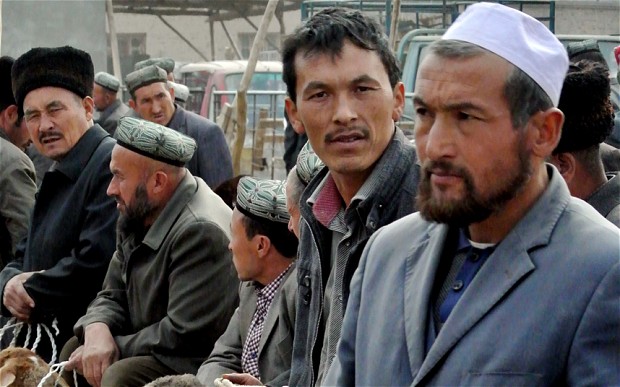
Having these examples in their hands or on their screens likely initiates a mild cognitive dissonance: "The CCP news tells me how terrible the USA is, yet, these elements in my life are excellent beyond what is created by my own country." It's reminiscent of Russian defectors who couldn't rationalize the images they were shown of US poverty, illustrated by films from the Great Depression wherein the 1930s streets of New York were clogged with cars. Or, Boris Yeltzen visiting an American grocery store in 1989, and being overwhelmed at the variety of products and full shelves [0].
As the reins of censorship and propaganda tightens in China, there may be less and less of the world to pierce through and belie the narrative they are fed. Perhaps we should not abandon them any sooner than we must.
With that said, if it's a deliberate approach, we need to get the messaging right. The NBA should stick to 'we are ambassadors for the USA to the world' and leave any politics at that.
[0] https://www.chron.com/neighborhood/bayarea/news/article/When...