> postmarketOS is a GNU/Linux distribution, so there's no problem in having multiple phone interfaces (just like KDE/Gnome/XFCE/...) and let the user choose.
IMO, there is a big problem with that. The WHOLE reason the smartphone space finally took off was because Apple came in and rationalized the interaction model and implemented a robust, responsive UI. Android is successful largely to the extent it faithfully aped that model. Treating this as a secondary thing your project doesn't need to be opinionated on is a recipe for failure.
But the whole point of this project is to appeal to the mass market, and give smartphones a ten-year life cycle. They're explicitly aiming at a much wider userbase than hackers alone.
No, the whole point of this project is to be able to use your 10 year old phone for other things, like a mini-computer, or a Pi.
You run a newer build of Lineage or CarbonRom or whatever on an old phone and it will most likely run like crap (current LineageOS on an old Sony Xperia Z 1st gen for example, is a terrible experience).
But that phone still has a ton of power. It's more than capable of being better than an early 2000s laptop. If you can stick Linux on it, it can be an embedded device. Get Wayland working and you get a little screen you can use for projects.
This has the potential to turn a lot of obsolete phones into powerful little hobby machines.
Do you think that hackers as a market aren't, by near definition, early adopters and want new technology? I don't know who else a 10 year old phone would appeal to but parts of the mass market?
(Some) Hackers are also the kind of people who keep their hardware around for ages and run strange OSes if it fits their needs, because they want daily tools to work, reliably and like they always did. Tinkering can happen on top of that or with less important things.
Yup. I'm running a four year old phone because it does what I want and newer phones don't. Money isn't even an issue, there just isn't choice out there today.
About the question whether Apple has invented a better UI and whether someone else did or could have done the same:
Regardless what you think about UI-paradigms or vendor lock-in, there is something that Apple spends far more time on than others to get right:
Papercuts [0]. Every interface comes with a thousand little annoyances that distract and increase cognitive load. Apple tries to bring this number to zero.
You have to find managers and developers willing to reserve a LOT of time for these "trivialities", but ultimately that summed-up effort is what makes their computers so convenient to use.
> The WHOLE reason the smartphone space finally took off was because Apple came in and rationalized the interaction model and implemented a robust, responsive UI.
I see this "fact" thrown about all the time by under-30s who only ever knew of the iPhone since they were teens.
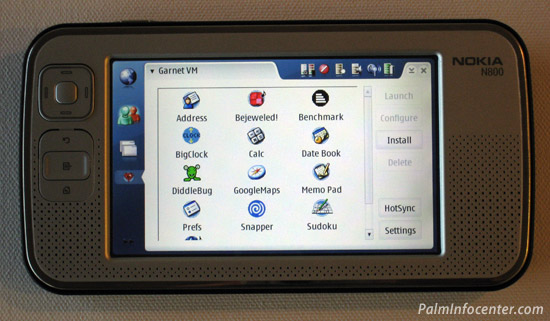
The iPhone OS interface, as it first existed, faithfully aped the Palm Garnet OS, which was the latest iteration of Palm's highly successful OS going all the way back to the late 90s. Before there were smartphones there were PDAs, and while it's debatable that Apple invented the PDA with the Newton, the platform didn't become a commercial success until US Robotics released the PalmPilot and PalmPilot Professional. When Handspring successfully melded the Palm OS with cellphone hardware creating the Treo, the touch controlled, icon based, modal fullscreen app "smartphone interface" as we know it was created. Palm bought Handspring and pivoted to improving the Treo line of smartphones, culminating in the Treo 600 and 700 series.
Speaking of responsiveness, while Palm's own devices were fairly standard and could be sluggish, Sony's Clie line made Palm OS feel almost as fast and fluid as the modern iOS interface. The hardware was expensive but it was the absolute best handheld computer you could buy in the early to mid 2000s. The first time I used the original iPhone I still owned a Clie NX70V, and the Clie was less jittery than the iPhone if I had a lot of apps open on both devices.
That's not even touching on Nokia's Symbian, arguably the best selling smartphone OS in history, but Symbian never resembled Palm OS, Android, or iPhone OS until after those systems became widespread.
So no, Apple never invented anything in this space; they took what already existed, polished the hardware, correctly implemented multitouch, and applied Jobs' marketing magic. I drank the Kool-aid and bought the original iPhone soon after its release. I ended up promptly selling it and going back to my Treo to get real work done when I realized the iPhone was nothing more than a (arguably excellent) mobile web browser. It wasn't until Apple finally started allowing apps (something Palm supported from the beginning) that the "modern" smartphone revolution really began. Even then, hardware improvements were driven by Android based devices, with Apple always playing catch-up.
Do you think that both interfaces are the same simply because they are "touch controlled" and "icon based"?
Also, saying there were other worse phones before the iPhone came out does not refute the point that the reason the space "finally took off" was because of Apple.
I feel its my duty to report that after looking at that image of Palm Garnet OS it shows an app called "DiddleBug", which is apparently a note taking app.
I am certainly glad Steve Jobs applied his sinister marketing magic to whatever this is so that no one has to be inserting IntelliBoogers into their DiddleBugs on their PalmPilots just to take a note.
Yes, things like these remind me to take our Product and Marketing guys more seriously, because, left alone in a cellar, I too probably would call things DiddleBugs and IntelliBoogers.
You can of course take notes out of the box with a more informatively named program. I'm sure there are apps with weird names in the iPhone app store as well.
It was single threaded with no memory protection either, so you could write into other programs memory space and easily crash your device. :)
I still loved PalmOS. I had two Visors, a Treo, a Centro and even a Palm Pre with WebOS. HP hasn't done anything with all their Palm IP for a while .. sad to see it totally gone now.
That's still plenty to spot major differences between the stylus-based PalmOS paradigm and modern touch-based smartphone interaction. There's a drop down menu on that PalmOS home screen, and the app launcher has to be scrolled by interacting with the scrollbar on the edge of the screen (or using the hardware scroll buttons). Looking at a screenshot of one of the applications would show even bigger differences. Really, the similarities don't go much further than a tile-based launcher and a status bar at the top of the screen. The PalmOS UI had more in common with the Newton UI than iOS.
I was under impression that Apple regularly beats Android with hardware. CPU, GPU, screen, touch hardware (not sure lately for these two) and others I'm sure.
Well, like any other group there are always outliers. :-)
I've heard many strange things from folks born in 1990 and later; I've actually been told by someone with a straight face that Apple invented the MP3 player as well as the first touchscreen.
Well that [mp3] is because they don't know much about anything techology wise :) not that many 90s kids remeber midi or MD players despite they were quite popular (lots of geocities sites would have a midi music playing in the background for example.) but I get your point, it is fair to say most people can hardly remember much anything they generally don't care.
The ability to choose between multiple desktops does not mean, that each desktop itself is inconsistent.
For example, you have the consistent Apple interface. And you have the consistent Android interface. If the user could choose between both on the same device, why would that be a problem?
Focus. Apple and Google have hundreds or thousands of engineers working on these operating systems, full time, for years. To get this project to even 1/10th of the quality would be a massive undertaking. Open source mobile OSes do not have a great track record right now. It'd be amazing to have a real option with a solid development and user base behind it.
Yep. I have not fully decided yet on which part I will work next (that sort of depends on the feedback by the community). But I definitely want a solid base.
>The WHOLE reason the smartphone space finally took off was because Apple came in and rationalized the interaction model and implemented a robust, responsive UI
I don't think that's the whole truth. Apple became successful because efficient and powerful mobile hardware arrived to support Apple.
Just because one paradigm worked, should we stop and treat it as gospel. Perhaps there might be others waiting to be discovered.
Apple waited to enter the market until it could practicably make a mobile device with a web browser that didn't require mobile versions of web sites. (Sure, mobile optimized is better, but the iPhone could at least load and zoom in on regular sites.)
Whether this was entirely intentional or not, I can't say for sure, but they certainly emphasized it at launch, and they designed a device with a screen that was huge enough, and it worked out great. Turns out the web was the killer app for the internet, and it was the killer app for smartphones too.
99% of the time when it's not a game a curses GUI or a readline UI is just fine.
Really, I'm tired of all this UI "inovation." just give me a TTY already, it works fine on my laptop and it would work fine on my phone if everything weren't all tied up in closed blobs.
This only works if other people can use KDE if they want all the flashy stuff.
My phone is basically just Termux at this point. I still use the gui for making and receiving calls and for web browsing but for all other purposes it is just a portable TTY.
lmao is this satire? how would you accurately type commands with such a tiny keyboard without tactile feedback? and how would that be faster than tapping on an icon?
Touch keyboards are quite good? I don't see what's even surprising about this. Yes, "tapping on an icon" is faster when the icon exists, but Android/iOS does not favor doing things nearly as powerful as a full Unix. Dumb example: file transfer. I have photos on my phone and don't want to go through a cloud service just to get them onto my laptop. I have yet to find an app that even comes close to rsync over SSH. Could that app exist? Sure. But until somebody writes it I'm going to keep using the last 20 years worth of good tools.
[CLARIFICATION EDIT: this places a FaceTime Audio call. The number you're calling would need to be a contact who can accept that call. Not exactly general-purpose.]
Hear, hear. I would add that Android has suffered to the extent it enabled OEMs to make choices and modify Android. There are plenty of places, like camera software, where OEMs should go crazy trying to make differentiation in their products. Core UI isn't one of them.



IMO, there is a big problem with that. The WHOLE reason the smartphone space finally took off was because Apple came in and rationalized the interaction model and implemented a robust, responsive UI. Android is successful largely to the extent it faithfully aped that model. Treating this as a secondary thing your project doesn't need to be opinionated on is a recipe for failure.