I sort of went down the rabbit hole in The Guardian's Generation Y coverage, and ended up in an article with Millennials confessing their greatest fears:
“I worry that I’m never going to live up to my own expectations. I live in terror that I will wake up on my 50th birthday in a perfectly ordinary house, with a perfectly ordinary family and unremarkable job – living an unremarkable, ordinary, average life.
If these are your biggest fears in life, take a step back to realize what you've got. Entitlement and bizarre expectations about what "life" is are to blame here. Not every one is above average.
My biggest fear in life is waking up on my 50th and not owning a house, not having a family, and not having a ordinary job... because so far is how my life is going.
I currently live with my parents, have negative net worth, have no friends, no girlfriend, no job, and can't afford to buy a new PC, and my current one is trying to die on me, and I need it to do the occasional odd-job that shows up.
Obviously if your life is not matching the expectations built into you from before you were aware it was happening it is because the expectations are bullshit. I am looking forward to a return to communal living and away from these ridiculous status markers being labeled independence and success.
Where do you get the idea that we'll return to communal living?
For hundreds of years, we've been taught that it is "I versus Everyone Else" in economically liberal societies. To think that will go away, and not go into hyperdrive, when people are desperate, cold and hungry seems unrealistic to me.
I truly want my assumption to be proven wrong, though.
Having a standard of living is a status marker? If you want to live in a commune, why don't you convince 10 other people to go live with you out on a farm?
I did not downvote, but I really disagree with this sentiment. Financial independence for young people is probably the most revolutionary concept in Western culture and is definitely the reason behind so much innovation not just in technology, but in society as well.
Based on his profile, he might live in Brazil which is now an economic basket case.
So that might be his biggest obstacle.
There are so many substandard developers making $100k in the u.s. that would never be able to find job elsewhere in the world, those of us who live in the U.S. should really be grateful despite all of its shortcomings.
The distribution of substandard developers making a purchasing-power equivalent of $100K (allowing for free healthcare, college education, lower housing costs) is probably similar in most countries with a well-developed IT sector.
What kind of tasks do you need a computer for? From that you could determine how much you need to spend on a replacement one (probably a free one or a cheap second-hand one).
My generations biggest fear was that there would be a global thermonuclear war that destroyed civilization, and those few that survived would have short miserable lives picking through the ashes ala 'the road'. Being 50 and renting a house instead of owning it doesn't sound that bad to me.
It was a much more real threat in the 80's and early 90's, though. I highly doubt students are still forced to watch bullshit educational "duck and cover" videos on how hiding under their desks will somehow save them from a nuclear explosion.
That being said, kids have something else to replace that fear with nowadays: the constant potential threat of a possible school shooter.
There is a considerable area that is far enough away from a nuclear explosion to not be obliterated, but close enough that buildings may collapse, windows may be converted into deadly projectiles, and so on. Duck and cover would in fact save many many lives in that area.
> "It was a much more real threat in the 80's and early 90's, though. I highly doubt students are still forced to watch bullshit educational "duck and cover" videos on how hiding under their desks will somehow save them from a nuclear explosion."
I agree that it was more prominent in the public imagination, and you're right that "duck and cover" videos and similar were part of what kept it there, but I would dispute that the threat is any less 'real' now than it was in the 80's.
Looking around the world, I'd say there are currently three regions of instability that could lead to nuclear weapons used in anger (I'd add a fourth one if Trump is elected US President, and I'm not joking about that, the guy has already called for killing innocent people to further his own goals (killing the families of terrorists), and I could see Trump and Putin being a toxic combination in terms of diplomatic action).
The three regions I'm referring to are:
1. North Korea.
2. Middle East.
3. India and Pakistan.
North Korea are clearly threatening to develop nuclear weapons, and have a powerful ally in China, which allows them to get away with it so far. Even if the weapons are developed as a form of self defence, the question is what the leadership sees as valid threats, and considering their somewhat ruthless approach to their own people, I wouldn't put it past the North Korean government to do something reckless beyond their own borders.
The Middle East appears to be a huge mess, I'm sure I don't need to explain how chaotic the region is. Isreal are the only country in the region with nuclear weapons at the moment, but with the activity in the region it never seems far from disaster. Even if Isreal didn't push the button themselves, other more radical groups may go down that route. Russia's support for Assad and Turkey's membership of NATO are a bit of a concern when viewed in combination.
India and Pakistan are both nuclear powers, engaged with a minor conflict with each other over their borders. Things appear to be settling down recently but if either side gets a war-hungry government then work on developing a peaceful resolution could be undone.
I don't dispute that nuclear weapons could come into play again in the future, just that a truly global thermonuclear war is much less likely now than in the past. Sure North Korea might try to launch a nuclear missile or two (coincidentally they just threatened to do so today) and get wiped out in the process, and yeah, some terrorists would probably love to detonate a suitcase nuke somewhere, but that's not the same thing as a truly global event that threatens all of humanity as we know it.
During the Cold War there was a really good chance of that happening, and there were several instances where equipment malfunctioned (and showed impending missile launches when where there was none) and the only thing that stopped it was the right general making a smart call that it wasn't real, or several other close calls, from global destruction.
North Korea isn't likely to bring that about. The Middle East isn't too likely to bring that about. India and Pakistan aren't going to bring that in either.
Russia is still capable to do that, but I think they're not too serious about their desire to actually go into war and are more taking advantage of NATO's unwillingness to go into war to make a few small land grabs (that was a little scary, though).
The tension and complex web of polar opposite alliances across the whole world just isn't there like it was in WWI, WWII, and Cold War days. It could still develop in the next decade or two, sure, but I really don't think we're there right now.
For all the ills that Capitalism might have, I do think it's helped tie all the countries that participate in it to each other's fates, to a certain extent, and they don't want to see the other countries fail (or attack them directly) since it will now affect their own economy, probably for the worst.
Trump is a wild card, but I think assuming he won the nomination he'll calm down his rhetoric, since he needs to in order to win the moderate vote anyway. If he actually made it into office, then that's admittedly a wild card. I'd like to think that he didn't actually believe that shit he said and will be more concerned with internal politics than foreign, and/or will head the advice of people who have been there a lot longer. Hopefully.
The danger of thermonuclear war is just as real (yet remote) today as the danger (and remoteness) of a school shooting in the 80s. The only difference is the popular perception of that threat as fueled by the media.
Some people might view your situation as very advantageous. No ties, no strings attached, nothing to hold you back. Your opportunity in life is a blank slate, in a good way.
Take every odd job that shows up, and amass some savings towards a long-term goal. Travel the US, or the world if you can manage.
Making friends is easy, keeping them can hard. Join some local clubs/organizations and put yourself out there.
Fear can be a motivator if you let it, use it to help you avoid the undesirable outcome.
Some of these sound like platitudes, but they do hold substance. It's easy to find yourself in a situation that seems hopeless. What you do from that place is important.
A rich man asked a Zen master to write something down that could encourage the prosperity of his family for years to come. It would be something that the family could cherish for generations. On a large piece of paper, the master wrote, "Father dies, son dies, grandson dies."
The rich man became angry when he saw the master's work. "I asked you to write something down that could bring happiness and prosperity to my family. Why do you give me something depressing like this?"
"If your son should die before you," the master answered, "this would bring unbearable grief to your family. If your grandson should die before your son, this also would bring great sorrow. If your family, generation after generation, disappears in the order I have described, it will be the natural course of life. This is true happiness and prosperity."
An executive from America was standing at the pier of a Mexican village, taking a much needed vacation. It was his first in more than 10 years. He noticed a small boat docked with just one fisherman on board. Inside the small boat were several large yellow fin tuna. The executive complimented the Mexican fisherman on the quality of his fish and asked how long it took to catch them.
The fisherman replied, only a little while.
The executive then asked, why didnt you stay out longer
and catch more fish?
The fisherman replied, I have enough to support my family for a little while.
The executive then asked, but what do you do with the rest of your time?
The Mexican fisherman said, I sleep late, fish a little, play with my children, take siesta with my wife, and stroll into the village each evening where I sip wine and play guitar with my amigos, I have a full and busy life.
The executive scoffed, I am a Harvard MBA and could help you. You should spend more time fishing and with the proceeds, buy a bigger boat. With the proceeds from the bigger boat you could buy several boats, eventually you would have a fleet of fishing boats. Instead of selling your catch to a middleman you would sell directly to the processor, eventually opening your own cannery. You would control the product, processing, and distribution. You would need to leave this small coastal fishing village and move to Mexico City, then LA and eventually NYC where you will run your expanding enterprise.
The Mexican fisherman asked, But, how long will this all take?
To which the American replied, 15-20 years.
But what then?
The American laughed and said thats the best part. When the time is right you would announce an IPO and sell your company stock to the public and become very rich, you would make millions.
Millions.. Then what?
The American said, Then you would retire. Move to a small coastal fishing village where you would sleep late, fish a little, play with your kids, take siesta with your wife, and stroll to the village in the evenings where you could sip wine and play your guitar with your amigos.
But at the same time this shouldn't preclude a conversation about why, given the massively increased pool of wealth that has been created in the last few decades, the poor and middle classes are expected not to share in it.
It's definitely healthy for me to recognise that I as a middle class westerner live better than almost everyone in a developing economy but if the answer to "where has all the new wealth gone?" is not "too the poorest economies!" then I think it's only natural to feel cheated if the answer is "be happy with what you have and stop asking questions!"
What specific goods and services do you believe have become available, but not for the poor and middle classes? Can you name a few?
It's definitely healthy for me to recognise that I as a middle class westerner live better than almost everyone in a developing economy but if the answer to "where has all the new wealth gone?" is not "too the poorest economies!"
Luckily, the answer is "to the poor and middle class".
Since the subject is "where does the money go", how does that graph look if the changes in income are absolute rather than percentage changes of a power-law shaped pre-existing income distribution?
As you would be the first to agree though, wealth increases need not be zero sum. For the most part, growth in developing and middle income countries isn't at the expense of wealthier countries at all.
On the other hand, rising costs of London property - referenced in the article as a key concern of "millenials" - is pretty close to a zero sum game, and it's generally not poor and middle class people, and certainly not the lower deciles of world income, that are winning it.
Actually I'm trying to change the subject from money. Who cares about green pieces of paper multiplied by chained CPI [1]? What matters is goods and services.
As noted above I don't think you can name a single good and service that the bottom has less of, beyond maybe obsolete goods like land lines or investments like "shares in BRK.A" or "land in central London".
The graph I link to demonstrates things are definitively not zero sum - virtually everyone has experienced gains.
[1] Chained CPI is meaningless over time, since the basket of goods changes every year. Not to mention the biggest contributors to CPI growth - health care and education - are not hedonically adjusted.
But the subject of the article is younger low/middle income people in wealthy countries like Britain now getting a raw deal relative to older asset-rich people because the young people spend most of their incomes on maintaining a level of property older people paid for at much lower cost (in terms of real goods or as a proportion of income), whilst simultaneously having more of their income diverted to the older, often asset-rich people's rising-in-real-terms public pensions. Your graph of world income changes does not demonstrate that British public policies aimed at boosting house prices and transferring a greater proportion of national income to today's pensioners aren't [close to] a zero sum game stacked against the young, or that the chief beneficiaries of this increase in economic rent captured by older generations and the asset-rich in Britain are the global poor, which obviously isn't true.
It might be open to question how many young people with much less living space than previous generations actually are worse off given that thanks to economic development they'll live longer and have access to digital goods that didn't exist and more opportunity to avoid expensive housing through increased relocation opportunity than their elders did at the same age. But then again, if I wanted a graph which indicates a large fraction of people in countries like Britain who would be considered low-mid income by national standards are actually worse off, I could always use yours...
If you scroll up, you'll see I was responding to a person who said there is a problem if the new wealth is not going to the poorest economies.
If you are simply advocating in favor of ending left wing policies like exclusionary zoning and buying elderly votes with cash taken from the young, I agree with you.
As I read their post, they were actually saying something more akin to "it's perfectly fair for low and middle income people in rich countries to complain about policy regimes limiting their ability to share in domestic productivity gains even though there are much poorer people overseas, since those policy regimes aren't actually anything to do with those poorer people"[1]
Which didn't strike me as the sort of sentiment you'd tend to disagree with either.
[1]by implication they're arguing they'd be less bothered if their purchasing power wasn't growing due to outsourcing competing with their job, since at least that'd be helping poorer people out.
I find it pretty hard to believe that the quoted fear is particular to millennials. The fear of not meeting life expectations, personal or otherwise, has been a worry for young people since forever. Millennials certainly aren't the first to "dream big".
Also important to remember that almost everyone on this site is going to be way above average income wise.
Sometimes I get the feeling like you were responding to, and then I remind myself that I grew up with next to nothing. I was lucky enough to realize in college (computers were just becoming ubiquitous when I started college) I had a knack for programming and it was the right time to have that knack. I have had experiences I never thought possible when I was a kid.
But there is a benefit to the feeling - the drive work hard.
Agreed. It is precisely because I found myself on a trundling career that had little in the way of prospects after graduation (and that job I found by literally showing up on doorsteps and being a general pain in the ass), no hope of ever owning property in London, being stuck in a squalid flatshare, and having nothing to lose that I gave it all up (not that there was much to give up), started a company, lived in a squat, and a decade on employ 50 people and own (well, the bank owns me) the roof over my head.
What was it Baldwin said? "The most dangerous creation in the world, in any society, is the man with nothing to lose."
This world is currently producing vast numbers of young people with nothing to lose. Some despair, others start businesses, others start criminal enterprises or join IS.
While there's something to be said for the motivation that the total absence of prospects can grant, it's a generally crappy situation which would better be served by reducing wealth inequality. Dare I say "Universal Income".
>But there is a benefit to the feeling - the drive work hard.
I agree with the sorts of benefits that this feeling can induce in the best of cases.
On the other hand, I don't think that everyone really understands what "hard work" means. To the self-entitled it means "got a college education" and "show up for work every day". Well so did everyone else.
I don't know, I have mixed feelings about this. I realize that this generation is getting stiffed in a sense, by circumstances beyond their control. But hey, we aren't growing up having to go to war in Europe, or during the Depression, or the Bubonic plague for that matter. So we've got that going for us, which is nice. Ever rising economic standards on a magnified level (meaning every generation is richer than the previous, not just by overall trend) doesn't seem plausible over the long-term. We need to get used to that.
2008 is 8 years ago right before that second dip. Clearly that chart is trying to sell you BS.
"From 1948 to 1979, productivity rose 108.1 percent, and hourly compensation increased 93.4 percent. From 1979 to 2013, productivity rose 64.9 percent, and hourly compensation rose 8.2 percent." http://www.epi.org/publication/raising-americas-pay/
Figure 3: (1979 - 2013) Top 1% up 138% Bottom 90% up 15%.
As far as I'm aware the World Bank doesn't collect this data very often. If you have more recent data feel free to post it.
The data you are citing is restricted to a slice of the top 20% of the world. Indians and Chinese (i.e. the bottom 50% or so) don't count?
Also note that you cite data on productivity for the economy as a whole, but hourly compensation only for "production and nonsupervisory workers". That's a weird comparison to make - what if the increase in productivity was caused primarily by people outside this narrow group?
It's not great for wealthy people who were enjoying economic rents by excluding desperately poor people from the global economy. So what? Do people earning $2,000/year (1/10 of what a poor American consumes) not count?
Helping the global poor is a great soundbite, but there are plenty of ways to do the same thing without harming the vast majority of Americans.
Of note the rich got a free ride while breaking the US middle class. That's actually bad for long term economic growth. It also entrenched and entrenched authoritarian governments around the world ex: China.
Improved per-worker productivity metrics down not mean workers are working harder. It means you can now Google something in 30 seconds instead of spending 2 hours at a library - and similar effects with other tasks.
The timers at grocery checkout does not 'aid' productivity. It sure does cause people to work harder. There are a lot of these computer based taskmasters out there for a huge range of jobs. Scheduling assistants very closely match number of workers with expected and observed demand. So, now every hour can be rush hour.
They mean different things. Productivity 'Aid' generally reduces effort required, such as google search or a nail gun. Playing music is a classic motivator that does not reduce effort.
PS: I am sure the company’s bottom line loved your metrics. But, again that’s just driving corporate profits not middle class incomes.
> On the other hand, I don't think that everyone really understands what "hard work" means. To the self-entitled it means "got a college education" and "show up for work every day". Well so did everyone else.
I agree. Going to college and showing up is baseline. I do think that kids today come across as entitled, but I'm sure I was the same way at 18 years old.
Having grown up helping my dad do labor type work for 2-3 jobs while trying to make ends meet, I know hard labor work. That is something I never want to have to do again.
Is this generation getting stiffed? There really are more opportunities now than ever before. College is simply not required for anything in IT. The rise of free online education is amazing. $5/month gets you a server on the internet that lets you start any business you can come up with. Many of the traditional barriers are gone. What has changed though is that people are required to be self reliant, which can be a tough thing for many.
IMO, the main people getting stiffed are the poor and blue collar workers. The people who would never have gone to college regardless of cost. The people who would have had great lives in a factory situation.
>Is this generation getting stiffed? There really are more opportunities now than ever before. College is simply not required for anything in IT. The rise of free online education is amazing. $5/month gets you a server on the internet that lets you start any business you can come up with. Many of the traditional barriers are gone.
This is fairly myopic and complements the common tech-centric sentiment seen around here of "Why don't you just teach yourself to program and pull in six figures? You can do it for free!"
> What has changed though is that people are required to be self reliant, which can be a tough thing for many.
Our current upheaval in economic relations makes it next to impossible for many to plan to make a living in the long-term. Pulling a jack-of-all-trades switch up every few years is less self-reliance and more desperation.
> IMO, the main people getting stiffed are the poor and blue collar workers.
This has always been the case. The problem now is that what were once secure, well-paying white collar jobs no longer are. As time marches on, these degree holders are not seeing fair compensation or opportunities for a career. These people are being driven into being the new poor and blue collar working classes.
But on the third hand, defining "hard work" relatively rather than absolutely is misleading. Sure, what you described might be the norm and not exceptional, but that should not mean that its value is lessened by relative comparison. If everyone works 40 hours a week for 50 years straight, do they not deserve at least some sense of economic viability and material success in a world that is literally teeming with economic riches? I think far fewer people would be upset with mediocrity if mediocrity were comfortable.
Yeah that is true, as a tech worker you have a good financial path ahead of you. But we have to remember that you can't build or maintain a society on software - people doing social work and working for non-profits need to be able to make ends meet just as we do. Not everyone can or even should be a dev, we need a large sum of people working on social programs and such to have a healthy society.
I can find someone out of touch with reality in Generation ___, as well.
Those are the fears of someone who has never had to worry about their next meal, a roof over their head, whether they can afford to see a doctor or if their kids will have a better life than they did.
There are plenty of people in Generation Y who would recognize that this person has been driven somewhat delusional through boredom and wealth.
I can empathize with that person's fear. I wouldn't say that is my "greatest" fear (being horribly crippled and disfigured by some kind of nasty accident, and living in pain and dependence takes that spot) but it is definitely something that I think about.
At least in my case, it isn't so much that an average life is "bad"; I am obsessive about personal development, and I push myself extremely hard. Ending up "normal" would basically mean my work had been futile, which would be pretty depressing.
To put this into context, the people around my age that I know are worried about being able to pay rent, having enough money to marry, paying off their student debt during their lifetime, and being so handicapped by a lack of money that they never get to retire, vacation, or travel.
I don't think it's about being "above average" or achievement, I think it's more about being railroaded into the bourgeoisie family ideal. Obviously this is a very middle class problem to have by definition, but I don't think that it's "entitled" or "bizarre" to feel stifled by social pressures. This anxiety is hardly specific to millennials.
> "If these are your biggest fears in life, take a step back to realize what you've got. Entitlement and bizarre expectations about what "life" is are to blame here. Not every one is above average."
That's not what it's about. I'm a Millennial and whilst I would never word it like the author did, I understand where they're coming from.
The issue is with one of courage vs. conformity. The author fears those things because they see the paths that are expected of them, and doesn't like where they lead. If they were happy to live a simple life (and there's nothing wrong with that, if that's what you want) then they wouldn't have those concerns.
Speaking as a Millennial in my 30s I've realised I'm prepared to give up on quite a lot in order to keep my own dreams alive. I'm not ready to 'settle down' into a life I do not want. My opinion may change as I get older, but for now I would rather avoid the trap of a huge mortgage and the lifestyle that must be maintained to support it (i.e. reduced career options, reduced travel options, etc...). It's not about entitlement, it's about recognising I have options.
I'm on the edge of this group (1980/1982-wife); living in the UK house prices were rising twice as fast as my wage. If I was just 2-3 years older I could have bought a house for 80k instead of the 250k I had to pay years later (two double-median incomes).
This has given my drive I didn't have before: I actively manage my career (next step being starting for myself) and have feeling for investments/planning that I wouldn't have otherwise had.
>If I was just 2-3 years older I could have bought a house for 80k instead of
Yeah, this stuff is frustrating in hindsight. But the economic tide ebbs and flows. It's important to be ready for the next opportunity; it's not always obvious in advance.
Personally, I believe ours will come as the Baby Boomers (who haven't saved enough) try to liquidate their McMansions to fund retirement and find no worthy buyers. We just have to stop them from voting themselves legislation to compensate.
> We just have to stop them from voting themselves legislation to compensate.
Too late. In the UK at least, the state pension is being increased from ~£110pw to ~£150pw, despite the fact that pension payments are among the government's biggest liability and we're apparently in a time of austerity so severe that we're required to starve disabled people by removing their living allowance unless they submit to humiliating tests.
Meanwhile, the chancellor is planning some more pension "reforms" later this month, which is most likely going to involve removing the deferral of tax on pension contributions, i.e. moving all the tax payments that were due to happen in fifty years' time to today. That means the current pensioners will benefit from tax paid on current pension payments as well as tax paid on current pension contribuitions. By the time millennials retire, the deferred payments will have expired, and only the current contributions will remain.
Add on to that the massive blackhole that will be the forgiving of student loan debt (which even by the government's own optimisitic predictions, 40% of which will be unpaid over its lifetime - many experts predict this will be higher), and you begin to see exactly how fucked millennials will be come retirement.
"We just have to stop them from voting themselves legislation to compensate."
It's become clear that the UK government (no matter which of the two parties are in power) will do whatever it takes to allow the young to take on enough debt to fund ever-increasing house prices. I genuinely expect to see some kind of scheme that either explicitly gives these people the money their house "should" be worth, or in some way tilts the field so that they make it up in other ways.
On the plus side, my shares in house builders have done really well, and some of them have got so much money they don't know what to do with it; big dividends and occasional special dividend payments ahoy.
That is a remarkable amount of wisdom packed into 2 brief sentences.
If you want some insight into what's going to happen politically and economically, remember this one fundamental fact: Baby boomers will never willingly pay for their stuff. They use their political might to ensure that future generations will pay the bills.
Social Security, Medicare, public pensions, infrastructure, college...
They key is to save madly and prepare for the downturns. One of my friends in SF bought his house in 2011 for 500k. The comps in the area 5 years later are 1.2-1.4m
He was prepared (waited 10 years).
You can do it, you just have to look at the past as a guide and when opportunities arise, strike. Also don't be afraid of leverage. Good luck :-)
I fear 2011 was a perfect-storm and a once in a lifetime fluke. Not only was there a lot of fear from the collapse of 2008, interest rates were lowered to a level that was never seen before.
Like many people on HN, this has hit us hard. I had just finished grad school in 2008 and was single - it was unclear if buying a house/condo made sense then. Fast forward 5 years ... married, jobs, ready to settle ... except now, everything seems pretty expensive. Okay .. lets wait it out. 2013-2016 ... prices keep increasing. Everyone and their uncle is investing in real-estate. REIT are scooping up properties and collatorizing the rent payment. If we had taken a mortgage, our monthly payment would have been fixed but with rents, it keeps going up. I also did the math ... I paid about 180K in rent (averaging between 2500 and 3K a month in places where I lived). I have nothing to show for that.
Of course, we all make our own decisions. We have decided to buy (at what may well be the top of the market). We had a need to buy in 2013 and I wish we had not let "expensive prices" deter us. The monthly payment argument was as valid then as it is today. If/when the market turns, we'll buy a bigger place. Right now, we're buying a small starter place and at take a stab at the American dream. That's the logic I'm using. I really wish real estate wasn't causing so much misery but it is... I can't outsmart the market :(
This appears to be correct based on everyone of my age sharing the same problems, but the article doesn't give any reasons on why it happens. Would be good to get some more information on causes as this is a rather very interesting topic. Any HN readers have good sources?
Profits from labor's vastly increased productivity over the 40 years have been captured almost entirely by employers/owners/shareholders.
Nothing ever trickled down. What power we had to recapture the gains you and your parents worked hard for has been whittled away by years of anti-labor legislation and rhetoric.
Negotiating for increased wage for the average laborer in a non-unicorn market is difficult. Without union representation, it is a solitary worker with little funds versus firms and industries made up thousands of well-moneyed and well-lawyered people who share the same interest in wanting to make sure you never see more money than they absolutely have to give you. Without solidarity, you can be fired and replaced without repercussions for your employer from your fellow workers, all of whom share the interest in seeing you get paid fairly so that one day they might, too.
Globalization has made it easy to avoid pesky things like fair compensation, hours, working conditions, benefits and taxes that we've come to take for granted in the US.
The world economy slowed in 1973. No one really knows why. Some books focus on the effects in the USA, some focus elsewhere. In the West this has been "The Great Stagnation" whereas in several countries in Asia this has been "The Great Bounce Back" as formerly wealthy civilizations, such as China, recovered some of the ground they lost in the 1800s.
Sad to say, I'm not aware of any books that tell the whole international story.
For the USA, there have been an abundance of books and articles showing the decline of the middle class:
Some writers focus on long-term factors that have little to do with politics. Robert Gordon got good reviews for his historical analysis of the specialness of the 2nd Industrial Revolution 1860-1940, and why the current era is not as robust:
1973 was the first oil crisis. Oil prices went up by 400% and there was a huge spike in inflation.(There's a book waiting to be written about the curiously close relationships between the Saudi and the US oil establishments, and the Saudi influence on US foreign policy since the 70s.)
The oil crisis gave the Right a convenient pretext to blame wage increases for inflation.
This became a standard element of economic orthodoxy, and ever since then increases in wages and salaries - which were a driver of post-war prosperity - have been labelled "inflationary', even though inflation is primarily caused by other factors.[1]
By a remarkable and unexpected coincidence, this was the moment when labour share of GDP and middle class prosperity both started to decline. See e.g.
[1] The Bank of England always plays on this. About a year ago there was talk of increasing interest rates to "head off inflationary pressure" just in case wages might have started rising in the future. Meanwhile asset inflation in the form of rising property prices is ignored, and more obvious drivers of increasing costs, like consumer energy prices, are downplayed.
No one knows why 1973 was the beginning of a long era of economic sluggishness. Oil prices crashed in the 1980s and again in 1990s and again after 2008, but none of these crashes restarted the post-war boom. Adjusting for inflation, oil achieved new lows in the 1990s, and again in recent years, but the very low prices that we see are not enough to bring back the years when the economy grew at 4% on a regular basis. Nothing has revived productivity growth to the 3% a year seen for most of the era 1945-1973. If the spike in oil prices in 1973 was enough to start an era of sluggish growth, then why didn't growth restart once the oil prices collapsed? There are many theories about this, and many brilliant people have written long books trying to explain the events of the last 40 years, but no one knows for sure, and there is nothing like a consensus on the issue, which is why I wrote "No one really knows why."
Consider reading this literature review from an MIT professor of 21 different texts that tackle the Great Recession and its causes if you're looking for more info on the subject:
Lo thinks that the Reinhart/Rogoff This Time is Different is among the best-researched texts with the most quantitative support and analysis while still maintaining its readability.
Seems obvious - economic turmoil and globalization has ravaged the job market, educational requirements have crept upwards, educational costs have climbed too, and housing prices went skyward.
Where a highschool-educated man once could get s factory job and buy a house on that salary, a modern young person gets a part-time job with an expensive degree and uses it to pay off a pile of student debt and while a house is completely out of reach.
Different countries have different problems which the article barely touches though the graph hints at.
The UK has a skills shortage, it's vacancy to applicants ratio is back to pre-recession levels despite huge levels of immigration from the EU. London is the 6th largest French city in terms of population, tens of thousands of millennials from Southern and Eastern Europe have migrated to the UK. This is brilliant because they are often well educated (by someone else) and motivated - we have several recently arrived European devs in our office.
However at the same time it takes people longer to get into jobs. Since the 90s the concept of a degree being a pre-requisite for professional jobs has been pushed and pushed. I remember at my grammar school it being assumed you were going to university. Combine this with the rise of the "gap year" and people are emerging into the job market years later than they used to, with different expectations about the kind of work they will do. The article (it is the Guardian after all) highlighted a charity sector employee - not a sector you traditionally associate with pay rises keeping up with the commercial sector. I know far too many acquaintances who emerged from university unwilling to work for a profit making enterprise.
Many European countries, especially in the south, have completely different issues - huge problems with youth unemployment which is driving emigration. A labour market which has two tiers of employees due to the difficulty of laying off permanent employees causing young people to disproportionately end up on casual contracts.
Someone much better placed will no doubt be able to explain the issues in the US and Canada, indeed I'd be unsurprised if there weren't different issues within the US.
It's clearly for the job market overall, there will be variation within sectors. Given over 2 million private sector jobs have been created over the past few years while the public sector has shed jobs I doubt workfare is involved.
I don't believe there's a skill shortage in the UK. Maybe for industries like banking and programming, but in general, it's really hard for a skilled (STEM, except programmer) graduates to get jobs paying more than 30k (in London).
Not even programming. CS has one of the worst employment rates of all degrees.
Admittedly a lot of arts grads don't get jobs as artists, where most CS grads are only really interested in a programming job.
But even so - the skills shortage is somewhat mythical.
As you say - the remuneration shortage is more obvious than the skill shortage.
Housing costs in London are in the same ballpark as SF, but £40k is considered a generous salary for permanent developers. £60k might be possible for seniors.
It isn't unusual to find web dev jobs offering <£20k.
Work in the City offers much better pay, but the culture can be pretty horrific for anyone who isn't suited to it.
CS is a crazy field. We pay insane salaries to people in their 20s (150K in the Bay area sees normal) but people in their 40s have a hard time finding any paid work. I'm trying to understand why this happens have a hypothesis:
Tech is a winner-take-all industry. You get nothing for being second place. This requires long-working hours (it needed to ship yesterday!) and people you can exploit (younger folks who don't know any better). Moreover, the ever changing nature of languages and tools makes it that on the surface, a young person in their mid to late 20s seems as much experience as an older person. When you combine this, you get shitty software that has shipped fast.
Can we do anything about it? Unionizing software or having some kind of guild membership is not going to happen in my lifetime. (we're all too libertarian). We can slow down the churn of tools (this is also hard and requires discipline ... if we all understood the damage caused by the new new thing, maybe we can do it but I doubt it - can you make a promise to NOT learn any new languages this year? I don't know if I can). We can do our own startups (this requires access to funds that not everyone has, and perhaps a particular lifestyle situation; also ... odds of me getting into something like YC are near 0 I feel). Or, we can change fields. As someone who loves tech and not much else, I have severe doubts I'll be able to find something I have as much passion for as tech. But hey ... who knows. Life is a new adventure everyday :)
The baby boomers and the hippie generation have sold out technology and thus jobs to overseas countries while holding and controlling real estate themselves.
[Disclaimer: somewhat of a hippie myself, but there's a lot of hypocrisy in that area.]
Deficit spending by governments creates a generational obligation wherein the future generations must pay for profligate spending in the past (which they cannot go back in time and vote against). The primary means of paying down this debt is through currency devaluation; note how the person in the article claims her pay raises have at best tracked her cost of living increases. This transfer of wealth across generations also hurts the poor the hardest; if inflation weren't so bad for the poor we wouldn't have to raise the minimum wage periodically.
I suggest reading "the great wave: price revolutions and the rhythm of history". I found it to be a surprisingly easy read.
I'm 35 and for the most part like many software engineers relatively well off so I'm probably myopic of the full situation but here is what I have noticed differently among peers 5 to 10 years younger than me (that are often developers as well)..... they don't seem to mind not having wealth.
When I was college as an intern I opened a Roth IRA and put my earnings into it (I was fortunate to go a relatively cost effective school). I was absolutely afraid I was going to retire with no money.
When I got out of college my first goal was to buy a two family or something I could rent and live in. Which I eventually did waiting for the market to tank. I negotiated for raises or position title changes as often as I could. I absolutely was completely focused on provincially building wealth... people of similar age to me were equally concerned.
I can't say the same for folks 5-10 years younger (I'm not saying there aren't wealth focused millennials.. I just haven't met many yet). For example one individual I know went to Europe out of college used some parents money for as long as possible and then eventually came back home (the thought of asking my parents for money makes me uncomfortable).
I somewhat admire the guts it takes to not worry about the future like that and live life (and this is coming from someone who left a job and started a company).
So Australia didn't get on the free trade agreement train. Could it be that decreased prices from outsourcing labor helps those who are already established and the poor in foreign countries, but at the expense of unskilled and new workers at home?
Wasn't sure at first why the title bugged me. I think it is the word 'betrayal'. Parents want their kids to do well. And what that means is likely evolving over time. But is it a right to do better than your parents? Is it an entitlement? I don't think so. Each generation has issues it needs to solve, and by definition those issues are left to them by prior generations. One generation had to survive the Great Depression. The next, World War II. Then, political upheaval of Vietnam. Then 'stagflation', Internet bubble bursting, mortgage crisis... Each person has their own set of opportunities that are influenced by both personal and national economic circumstances. But it is the personal circumstances that make the difference. More than ever, parents need to teach their kids to be resourceful and adaptable. Competition for jobs is more global than it has ever been. I once jokingly advised my kids to become dentists because that was one job that could not be off-shored. Then this whole robotics thing came along ...
What I find interesting are the opportunities for young people in 2016 that prior generations have not seen. First and foremost is the elective jobs that are available: Find something to sell on eBay, borrow your parent's car and drive for Lyft or Uber, build up a stake, rent an apartment and become a hotelier with AirBnb, or buy a car and rent it out through GetAround.com... These are jobs that you can do if you want to do them and can serve both as a place to start now and as a fall back if you find yourself unemployed in the future.
I am not saying it is easy. It wasn't easy for any generation.
And yet in Bulgaria you can live very well with $1000 per month. With $2000 you build enough savings in 30 years to leave well another 30 years without working.
The thing is, the biggest issue is not lack of jobs, it's mobility. If people could really easily move between countries, they could live much better lives. Of course, to do that we need to have many more remote jobs (hopefully this is coming), kill stupid cultural/political barriers (difficult), stop thinking people should remain in a 20km radius from were they were born.
Consider that a lot of this welt they talk about is in real estate. The moment you stop paying 50% of your income in rent, you become automatically richer than your parents.
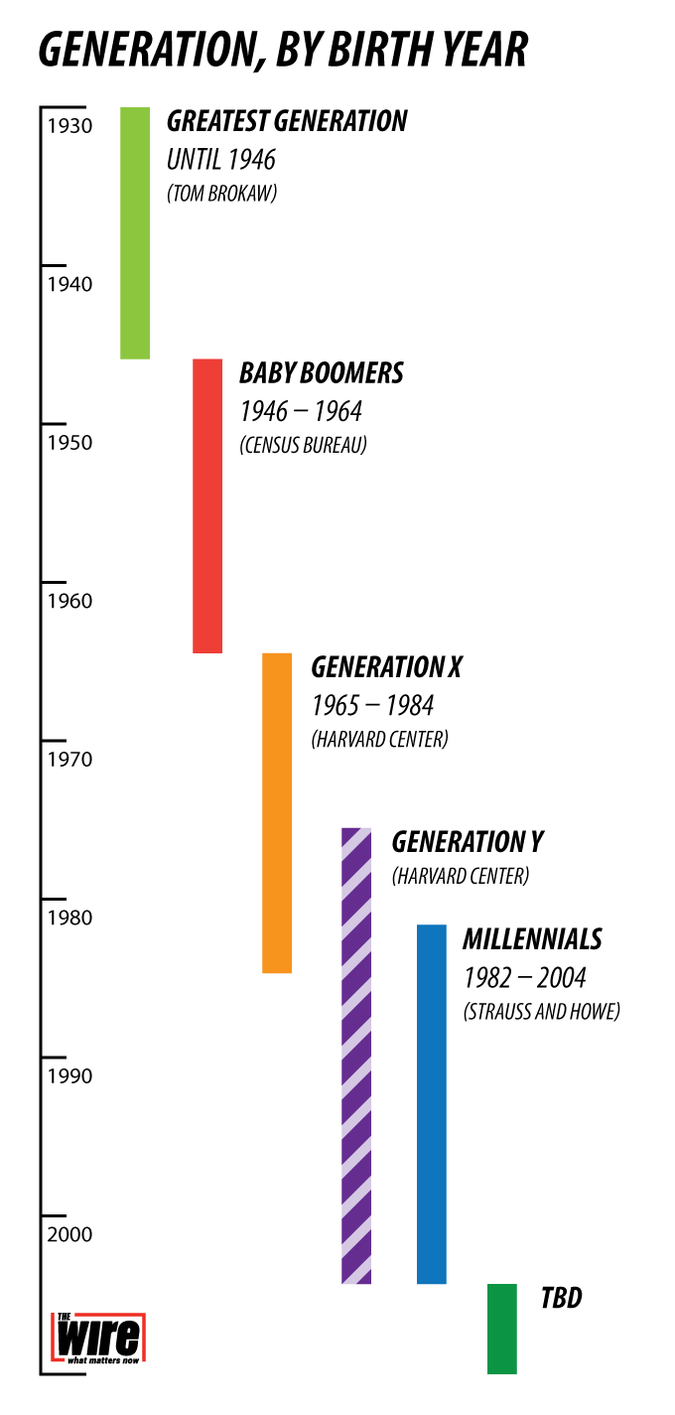
Being born in 1980 I think this is the first time I've seen myself included in the group millennials. I have always though of that group as those born after 1990.
My age group, at least in Norway, seems to be fully employed and own houses etc.
That's unsurprising. Norway and Sweden have had low headline inflation for the past few decades. Note how the person in the article complains that her cost of living scaled with her promotions and pay raises. Although there was a brief bout of deflation in 2008, one of the primary mechanisms of the generational theft is deficit spending y governments which perpetuates secular inflation and steals from the future to pay the present.
I think you might be interested to learn how severely leveraged Norwegian millenials are, and how much their economy depends on oil. Norway is economically a one-trick petroleum economy, and has more in common with Saudi Arabia than with the United States.
As @ModeledBehavior pointed out on Twitter, it's potentially misleading to compare median household income across generations when young people are increasingly delaying marriage.
How so? I mean being an unmarried couple isn't cheaper than being a married couple.
At least among everybody I know, the reason for delaying marriage is that marriage isn't seen as that important any more, especially before kids show up in the picture.
The only argument I could see is that falling median household income is the reason people are delaying having kids, which then makes getting married early less important.
For people who feel the weight of particular social expectations (which I agree they shouldn't but that's a separate discussion), weddings themselves are expensive.
I don't disagree that it's possible, but I'd like to find documentation. The income inequality analysis you linked to seems to be applying the equivalizing to produce a proxy for individual income.
EDIT: Here's more on the datasets the Guardian used:
A combination of debt, joblessness, globalisation, demographics and rising house prices* is depressing the incomes and prospects of millions of young people across the developed world, resulting in unprecedented inequality between generations.
* The question is if all the other factors are true, how can the prices continue to rise?
House prices continue to rise because it's how we print money. Govts want "growth" when this simply means printing more. So they let banks take more of our labour for the same pile of bricks and then tell us things are improving.
Of course we can't include house prices in inflation fully because that would short-circuit the soft default.
As a parent of young kids, the future really worries me. Unless there's a new industrial revolution in the next decade, my kids' generation is going to be the first in a very long time that will have a worse life than their parents.


“I worry that I’m never going to live up to my own expectations. I live in terror that I will wake up on my 50th birthday in a perfectly ordinary house, with a perfectly ordinary family and unremarkable job – living an unremarkable, ordinary, average life.
If these are your biggest fears in life, take a step back to realize what you've got. Entitlement and bizarre expectations about what "life" is are to blame here. Not every one is above average.