It's kinda weird to read commentators talking as if this was the end of a golden age of Apple.
From my perspective, their application software has always sucked. It was there because you need apps to bootstrap a platform and attract enough users to attract developers. But you can't really expect a consumer electronics company to have the best application for a given niche once the niche has been identified and attracted companies that really want to make it their bread-and-butter.
XCode and occasionally FaceTime & iMovie are the only bundled applications that I ever use on my Mac. When I get a new computer, the first things I do are usually download Chrome, MacVim, Google Photos, and VLC. I use Hangouts over iMessage, Google Calendar over the built-in calendar, and Google Docs over the office suite. On my iPhone, getting Google Maps and Yelp is a top priority, lest I end up navigating off a mountain. This is not a new habit; I've operated like this since getting a Mac in 2009 after a 10-year hiatus from Apple products.
Perhaps I was just less brainwashed than most Apple fans, and the end of the brainwashing may itself be news with big consequences for product adoption. But IMHO anyone who used the whole integrated Apple software suite and never looked elsewhere has been missing out on some seriously nice features this whole time.
> anyone who used the whole integrated Apple software suite and never looked elsewhere has been missing out on some seriously nice features this whole time
Ditto for anyone not using the Apple ecosystem. Better tested drivers installed by default, no OS license hassles, no issues created by malfunctioning (or maliciously functioning) antivirus, top download sites weren't infested with malware (no hunt for the real DL link), journaled FS in the consumer tier for instant fsck since 2002 (vs 2012), no-additional-cost professional-grade IDE since 2003 (vs 2015), one-click backup since 2007, decent integrated movie editing, some truly awesome platform-specific-at-first apps (subethaedit, quicksilver, textmate, coda), solid one-button-away desktop search years before it landed and stabilized in Windows, window navigation with expose (they've arguably been leapfrogged since then with window snapping), unix command line with a decent terminal emulator, emacs movement supported in every text field by default, built-in menu bar search, the list goes on.
I now have both feet in the Windows ecosystem but the transition was rough. If you have used Windows all your life, you have taught yourself to live with a lot of BS. Since you have made the investment it's now a sunk cost and no longer factors into your OS decision. Fair enough, but realize that wasn't the case for everyone. Also realize that you necessarily didn't miss what you never knew you could have.
I use the past tense because MS has caught up on most of these fronts, except for perhaps stable drivers and license hassles, where they are hobbled by their business model rather than technical shortcoming.
FWIW, there are more options than just Apple and Microsoft. I was on RedHat from 1998-1999, Mandrake in 2000, back to WinXP in 2001-2002, Mandrake again from 2003-2004, XP again in 2005 but with Ubuntu running under VMWare, switched to mostly web-based apps from 2005-2007, but ended up going back to OS X Leopard (but again, with mostly webapps) in 2009. I had a System76 laptop running Ubuntu from 2013-2015, and of course all my workstations have been Linux (usually Ubuntu) since 2005.
I still have a soft spot for KDE circa 2003. It was as pretty or prettier than OS X, and also featured "No malware", but even moreso. Amarok is still probably my favorite music player ever, much better than iTunes. People in this thread say that Safari was one of the best browsers available when it came out in 2003 - well, it got that way by forking KHTML. Stability kinda sucked, but it was very usable.
Twice a year (after finals each semester) I would make a ritual of spending a day or two trying to install and use linux because I believed in what they were trying to do (also, package manager!). Every single time, without fail, within those first couple days I hit some sort of show-stopping bug. Sometimes the installer wouldn't work and I'd spend that time cycling through different disk tools / CDR drives / images. Sometimes the installer would run but repeatedly lock up at a certain step. Some times it would corrupt the partition map and never boot into the new install. Some times the installed OS would freeze on boot. Some times it would boot but I could only use external keyboard and mice. Some times linux came up but wifi, sound, or sleep were broken. Or the screen was locked at full or zero brightness. Or the UI was dirt slow because the graphics drivers were crap. Or... the list goes on. I'd find threads in forums filled with dozens of people with the same issue, trying increasingly desperate measures to work around them, almost never with any sort of success or even conclusion.
I never managed to get a non-VM linux install fully functioning. Once I graduated the end-of-semester ritual faded into the past and I stopped trying. I've recently had good experiences with bootable USB images, maybe I should give it another chance one of these days.
> KDE circa 2003. It was as pretty or prettier than OS X
My usual counterpoint is, I've been installing Linux on a wide variety of hardware, desktops, random laptops, etc., for a long time with virtually no problems, but I'm a little particular about the distro I use...
Since Mageia broke off from Mandriva in 2011, I've used them exclusively (and I used Mandriva before that, since 2009).
I'm not sure how they do it, or what the magic is, but they have been absolutely flawless for me. The last several laptops I've bought, I've dropped a Mageia CD and everything just works. No futzing with command lines ever.
I've forgotten nearly all of my old arcane linux knowledge. I wouldn't know how, for example, to fix pulse if I had to, but you know, I've literally never had to!
If you are even a little curious about Linux anymore, I'd suggest downloading the Mageia KDE livedvd and giving it a go.
I have the same experience but with Bodhi Linux (starts as Ubuntu but with an E17 DE fork now called Moksha).
Old Thinkpad uses the legacy non-PAE version, no set-up or install problems, newer hardware uses the current release, VM in VB for server work at work, again no problems.
The Enlightenment/Moksha DE has a lot of the features OS X is praised for, like alt+esc to open a Spotlight type app, plus a lot of other features which are useful; click anywhere on the desktop for start menu, visual scaling of the entire desktop which is handy when using a laptop with a high-res screen, eepDater - a GUI updater etc.
To anyone looking for a stable OS X-like experience from Linux, without it feeling like a 2nd-rate OS X clone, give Bodhi Linux a try. Geoff Hoogeland has excelled himself with Moksha and Bodhi. As you can probably tell, it has turned me Linux-vigilante. My only regret is not being able to help the project more than I am able.
I bought an Intel NUC two years ago, and it refused to boot Linux without a firmware update, which was not easy to apply. After installation, its IR port didn't work, and its HDMI output had tearing, which I was able to fix by editing xorg.conf. Based on my experience, Linux still needs a lot of fiddling before it works properly.
I didn't try Mageia. Alt distros are intimidating since most technical advice is for mainstream distros, and it's unclear whether it applies.
Mageia is the best spin (it used to be redhat v5-based), but is not as stress-tested as others, and has (slightly) less support than you'd find for Fedora/Red Hat/SuSE.
Just run Redhat or Ubuntu. You are looking for a "just works" experience, so stick with the binary sandbox those distros give you. You can even pay them money in order to get the better support experience you definitely need.
If anyone tells you to switch to something different, know it will require you to hand-tweak scary text files. if that sounds fun, dive in. Otherwise, run away screaming. You want a stable (read: long-term support) release of software.
I've had the same thought in my head for a long time now but haven't been able to put it the way you did; completely agree. There was also a time when OSX supported things like .psd previews, built-in *.iso mounting, and unzipping capabilities right out of the box when Win XP didn't.
This is part of what initially got me to become a big Mac fan, but as time goes on it seems that there are fewer of these unique advantages as modern Windows becomes more competitive. This also makes me all the more disappointed to see Apple's apparent lack of OSX advancement and shortfalls in reliability/usability.
The interesting thing for me is that I never would have thought that Windows would ever be competitive with Mac again for my attention, but the feel of sloppiness in Apple software is slowly moving me back in the other direction. Once Windows has things you mentioned like better platform-first apps, emacs bindings, and a better shell, I think I might fully commit to that switch.
I recently got 2 boxes running Windows 10 after exclusively using Macs for a decade or so. One is an Alienware Alpha and has been a pleasure to use. Everything kind of "just worked" out of the box and didn't come with the typical bloatware one gets with a mass-consumer grade computer. Daily usability of the box was great as well.
With this positive experience in hand, I decided to build my own rig and many of the annoying memories of why I switched to Macs in the first place came back. Windows 7 on the Skylake box was a pain due to driver support. Windows 10 installed without much hassle, but there was a minor engineering effort tweaking the bios fan settings to be silent, installing low-noise fan adapters, collecting and installing drivers for the new chipset. Obviously, this comes with the territory of building a computer, but it was a small reminder of things dealt with.
Gotta say though, Ninite does make the initial installation of software a breeze.
Okay, so Windows sucks (big surprise). What about GNU/Linux? I've been using it for more than 5 years full-time and I've never had any show-stopping problems or problems that couldn't be solved with a 5-minute Google search.
Oh man... for the last 2 years I've been running Linux servers, I have tried and tried and tried to run Linux on my desktop, but... I have just never had a good experience.
For instance, when I tried Xubuntu, my GPU was running at a constant 90 degrees Celsius for no real reason. Found out it was because it was also rendering another 5 screens in the background. Deleted them, after 3-4 days they would come back. My screen was 1920x1080, but it liked to change my resolution to 1024x768 every 5 or so boots.
Tonnes of small problems, like the "settings" program emptied itself. Then the Windows key would stop bringing up the menu thing. And icons liked to disappear from my desktop.
Then when I tried Debian, I could install it fine, but couldn't boot. Pretty sure this was also to do with the GPU.
Then when I tried Linux Mint, it worked okay for a day, then apparently I didn't have permission to change wireless networks, and I had to plug in a PS2 keyboard to decrypt the volume on boot (though this was easy enough to fix, just had to find the right Logitech USB Keyboard module to put into the initramfs). Again, many small issues that escape me right now.
The only distro that has worked well, with no bugs (that I didn't introduce), was Arch, but Arch is a real mission. Only thing is my wifi speed is slower than it is on Windows/OS X (~600kB/s down from ~1000kB/s, not a huge deal). Arch is great as a project IMO, but if I have to write an email or do banking or something, I really don't want to have to mess around with config files.
I love Linux so much, but that's why I'm currently an OS X user.
thats lot of edges cases. Ubuntu has been main desktop OS for last 5 years. No issues till now. I even play Steam games.
But my MacBook Pro has been regressing. It used to be that evey install of Ubuntu i would need to tweak it. Now i do that on every install on Mac OSX. Ubuntu even runs faster on the laptop then El Captiano. If not for the touch pad issues Ubuntu would have been my default laptop OS.
That's exactly why I used the awkward phrase "no additional cost" rather than "free." Even if I hadn't chosen my words carefully, "delusion" would be a strong word for attacking something that I didn't explicitly claim.
Why compare it to windows ? Compare it to Ubuntu or Chrome OS. You have Aptana, textmate, emacs, and web based IDEs. Ubuntu's "one button search" works better, it's called /usr/bin/locate.
If you're buying hardware devices that linux can't support well then you're doing it wrong. Support open standards and eschew manfacturers that don't support open source.
Sorry, locate is not even comparable to what Spotlight does. Do a search for mdfind(1) to get an idea of what is does. Recoll is the only thing I found on Linux being actively developed that comes close, but it's definitely not as polished or flexible. I'm primarily running Arch these days, but there are some things that Linux just has no good equivalent for.
But the opportunity cost is never having a true enterprise class file-system. If you look at Linux, OpenSolaris (and it's derivatives), BSD and yes even modern Windows in terms of core technology and performance their file-systems are generations ahead of OSX. What shocks me is that given the BSD lineage of OSX that is hasn't switched to ZFS yet given how Apple prides itself on being the "best of the best" of computing world.
But you want your mdfind and Spotlight so you have to be okay with giving up ZFS or another enterprise-class Linux/UNIX file-system!
While that may be a valid point on some glasses-bridge-pushing technical level (certainly Linus has strong opinions on HFS), but so what? In practice, this hasn't been an issue (I spent about 15 years running OSX desktop workstations and laptops, and and also managed a fleet up to 50 OSX client machines in very shady power situations w/o problems) - sure ZFS is technically sweet but doesn't make sense on a laptop (OpenSolaris, BSD on the go? please) and has historically been a PITA on Linux (CDDL).
What other enterprise-class file system are you talking about? btrfs is still immature, anytime I've strayed from ext, I regret it. And NTFS? I've had lots of more problems w/ that than anything else (admittedly, probably due to poor interactions between Windows and ntfs-3g on Linux).
In any case, since OSX isn't a data-center OS, I don't see what "enterprise-class" storage has to do with it anyway.
But at what cost ? What about the mdworker slowdown effect which can quite arbitrarily bring your workflow to a standstill ? On your hardware does mdworker increase the probability of experiencing a "beachball of doom" depending on what else you have running ?
I think I only had a noticeable mdworker problem (stuck process) once in my nine years of using Macs. Maybe I'm lucky to have had SSDs for a long time, but mdworker is something I rarely notice (in contrast to storedownloadd and others).
I think I use Spotlight almost a couple of dozen times each day to find documents, applications, and sometimes e-mails. So the productivity gains outnumber the marginal cost enormously.
Also, there is a healthy ecosystem around Spotlight. E.g., I use Alfred, which allows you to define use/custom workflows.
Yeah, I've had occasional mdworker issues, which was much more of an issue on battery-life than anything else. I had a bunch of launchctl shortcuts to disable a number of things when in battery mode (especially since Yosemite seemed like a big regression). What finally got me to switch, however, was mostly the out of control explosion network usage. I made a list of the network services that would run unbidden on my system: https://randomfoo.hackpad.com/OS-X-vs-Linux-JlyTLOwSWOG
(Ironically, by far the worst offender was Google's ksfetch - it had a psychic ability to know when I was on an airplane, and start its unkill9able update process (again, launchctl)).
Of course, there are costs for running Linux on the desktop as well. My original Ubuntu setup had many problems (its kernels were not Skylake friendly last year) and eventually apt got into a crazy situation with some ppa's (never a problem on my servers, since I run LTS exclusively). I ended up switching to Arch, and got it working how I liked, but not without a literal month of yak-shaving. I documented it here: https://paper.dropbox.com/doc/Arch-Linux-Install-Uf1RAzNYBU3 I've been poking around with Linux since the mid-90s, but even I can't help but shake my head at some of these things.
A lot of what you're saying is true, but arguing that MFS and later HFS is better than NTFS is just plain wrong. NTFS was a part of Windows XP (i.e. since 2001), and it was, and still is, vastly superiour to HFS.
> It was there because you need apps to bootstrap a platform and attract enough users to attract developers. But you can't really expect a consumer electronics company to have the best application for a given niche once the niche has been identified and attracted companies that really want to make it their bread-and-butter.
I have a hard time with this. Apple products tend to lock you into apple software. If you want to develop software, then you are pretty much stuck with XCode. If you want to send email on iOS, then you are stuck with the built in mail app (at least if you click an address from Safari, or Contacts). If I ask Siri to play some music, it launches the built in Music player. So if what you say is true, then why can't I set a default app made by a third party company?
Oh, I certainly wish Apple would allow you to set third-party programs as defaults for integration. But unfortunately that's not my call. I just suck it up and manually launch the programs I want to use, because I like using them better.
Also try clicking a mailto link. I'm sure that about once a day I see the dialog asking me to add an account into the default mail app.
Basic integrations between MS Office apps also seem to be missing, I'll be damned if I can find the menu to send a copy of the document I'm working on in Word to a contact in outlook.
I just successfully changed it, but it was a janky experience. Until I added an account to the mail app, the preference used to change the default email reader remained greyed out because I was being prompted to add an email account. Only once I added a fake account did the preference option become available and let me change the default mailto handler. Removing the fake email account caused the preference to become greyed out (but it retained Outlook as the default).
Here's another example: Try and change the right click -> search with google menu option to 1) not open in Safari and 2) search using another search engine.
I did it this way by accident : I installed chrome and logged into gmail. Chrome asked me if I wanted to make gmail the default mail app and I said yes.
I would have NEVER discovered that this would be even possible any other way. I don't know if it works on other browsers but it's cool that it works.
On right click in chrome I have two "search with DuckDuckGo" options and one searches on a new tab and another on the same tab. I don't know why.
This kind of thing has actually improved over time, though. It used to be (back in 10.6, at least) that the play/pause buttons always affected iTunes, even if you had, say, VLC running. It would just also affect VLC.
I use Bowtie for a few things, but haven't really tried it for this purpose as I pretty much just use iTunes as I have several decades worth of music I've bought in it.
For a long time, me neither. Didn't trust those weird "media keys" and indeed expected them to just pop up some default app I never use. Until I accidentally hit them on Linux and it turned out they do exactly what you'd expect. Now I use them all the time :) In particular the play/pause and volume buttons.
In Windows you can change the setting quite easily using a first party settings dialog. Or were you talking about having a 3rd party application as an option in that dialog? Or the part where some applications let you associate the file type when you install the application, or in some cases the settings pages inside the application?
Android lets you do that as well. There are loads of third-party launchers for Android; one of my former coworkers made several million selling one of them to Yahoo.
I don't have any experience developing iOS or Cocoa applications, but I imagine that you need to use at least some of the XCode toolchain to make those things happen.
You need the compilers/toolchain from Xcode, but there are third-party build tools, such as e.g. Buck[1] that combined with an decent editor, let you pretty much avoid the Xcode GUI for a lot of the development cycle.
you said "a lot of the development cycle", as someone who hates Xcode I worry that won't be enough (not making anything requiring compilation on mac at moment, so not particularly worried)
I made an iOS app using vim and Lua (via wax - https://github.com/alibaba/wax). Obviously needed the xcode toolchain for compilation and libraries but always from the CLI / scripts.
Intellij is amazing. Note that jetbrains built resharper to de-suckify Visual Studio. And many of the refactorings that we all take for granted were invented by Jetbrains.
No one is stopping 'in theory', but may be because there's no IDE close enough to Visual Studio for making something close enough to Visual Studio stopping people? ;)
Tried to buy a Visual Studio license for porting our game to Windows Phone last year.
Ended up paying $2K for a version that was able to build WP apps, but not allowed to release them.
VS + VA used to be fantastic, today it's just a piece of ... overpriced crap.
But maybe expecting more from $2K+ software (VS) than from FREE software (xcode) is wrong.
Not sure what you are talking about. Visual Studio Express allows Windows phone development for free. Of course, for releasing they charge money (much lesser than what Apple charges).
No, you're not locked in to using the default Mail app anymore. Since iOS 8, mail app developers can write a share sheet extension and you can access their mailer wherever you can access system share sheets.
And you're not really stuck with Xcode anymore than you're stuck with Visual Studio on Windows. You can use the command line tools to do everything yourself, it's just more difficult. You can also obviously write apps in Java or even Electron, which is very popular these days.
As for Siri not using your custom music player, that's unfortunate. But integration often comes at the cost of extensibility, and while Apple has the former nailed, they are still clearly working on the latter.
Note that iOS and OS X are very different systems. On OS X, you can replace everything with your preferred software just as easily as you could in Windows or Linux.
Apple Maps' reputation is much worse than it deserves. These days it is better than Google Maps, in my opinion: Better map pins, better graphical performance, better rendering style, better search.
Someone clearly lives in the US... Probably in the Bay Area.
edit: just tested Apple Maps with a couple searches I did in Google Maps yesterday. Searched for the carrier shops for the two biggest carriers in my country. First search took me to Australia. The other ones found nothing in my city (there are probably at least 10-20 of each carrier in this town) and zoomed out to country level. Still completely and utterly useless.
That said, I'm no big Google Maps fan either, they have a lot of data issues as well. I tend to use a local app which works much better for public transit and car navigation, and has a nice category drill-down for POIs which works around a lot of the issues with free-text search
Hardly surprising, given it's installed by default. And that clicking on an address (say, on a website or a text message) leads up Apple's Maps by default.
> Apple Maps' reputation is much worse than it deserves
I haven't used it since launch, so can't comment on its current performance, but AFAICT its reputation is due to how poor it was at launch. I tried it with three locations that Google Maps handled fine (small sample I know, but enough to put me off trying it further), and had problems with all three results (my house: low-res satellite imagery; my College: wrong website address; Cambridge Union Society: correct details, but location was about 50mi out).
Hopefully its now better, but that initial impression is hard to shake.
It's not that hard to shake your initial impression, actually. It's called actually using the product at any time in the last 3 years, for 10 minutes or so. Try it. You might be surprised.
Yes, that's what I was referring to — the launch was terrible, but it has now been improved to the point were it's surpassed Google Maps in usability. I use it every day on my phone.
Apple Maps, in many ways, is more usable than Google Maps when it comes to directions / heads up on turns and such. Unfortunately, it's still missing a glaring feature for me where I can't get it to ignore toll roads or highways when calculating directions. Even if I manually jigger it to avoid the road I want to avoid, it still "corrects" and tries to send me on that road.
They need to get some more of the driving GPS features figured out and I'll switch over entirely.
I agree that Apple Maps is currently better, but I attribute that mostly to the quality of Google Maps severely degrading in recent years.
It has gotten so bad, that I've dusted off my old stand-alone GPS and keep it in my car's center console. Google Maps no longer has reliability that I can count on for a road trip.
"I attribute that mostly to the quality of Google Maps severely degrading in recent years."
Seriously? I can't see how that would happen unless you're living somewhere prone to dramatic road rebuilding. Or do you mean the quality of the Google Maps interface?
FWIW for Berlin, Apple Maps draws the transport lines and stations far better and nicer. Google draws the lines very imprecisely and doesn't show you tram lines, for example.
In my city, Google Maps has NO transit, NO satellite images since 2004, NO map data since 2010. Here maps has satellite and transit, and Apple Maps even has full 3D buildings.
Following is a set of complaints I compiled last year when a Google employee asked me on reddit to post them more detail about my maps complaints.
The usability of any Google product outside the US is a total disaster, and it’s a wonder how Google is able to keep any market share with their quality of service.
NONE of this has been addressed since we started complaining in 2005 (!), except for one thing: that connection between two streets, which is closed with a fence, has been marked as closed. So now we have less people standing there trying to get through.
> The map data on top is from the municipality, the map data on bottom from Google.
> As you see, the street "Beim Bauernhaus" is completely missing, the "Kellerkate" is missing half the street, the connection between "Beim Bauernhaus" and "Kellerkate" is missing, the "Kl. Koppel" is missing parts of the street.
> You currently have data from 2010 for this specific area.
> At least the connection between Steinberg and Nienbrügger Weg is now marked as service path, until recently it was marked as street and people tried to get through there (there’s a fence making that impossible).
> I won’t get too much into satellite data either, because yours is from 2004, too:
> And the unavailability of Public Transit data for busses, etc. on Google Maps – which is available on Here.com – makes it unlikely that I, as a student using public transit all the time – am going to switch back.
"Google started automatically blurring faces and number plates, it was forced to give Germans the option of having their houses blurred out as well – something hundreds of thousands of people took the firm up on.
However, this was a costly business, with Google needing to hire temporary workers to manually blur out selected buildings. It also didn’t stop people trying to sue the U.S. company over alleged privacy infringement. So, in 2011, Google said it was giving up on Street View in Germany – the pre-existing images remain online, but they haven’t been updated in three years."
I know that google uses street view to determine street addresses by OCRing the numbers on the side of houses. Maybe even more of their mapping relies on it?
I visited a dozen+ countries in 4 continents last year - GMaps did a pretty decent (often great) job with public transit. In the cases where there was no/bad data, it usually had more to do with the transit authorities being jackasses than anything in Google's control (Melbourne in particular stuck out as being just terrible).
Well, that doesn't solve the question with the cities where here.com and bing maps have full transit data, and where the data is available via simple REST APIs, but where Google still doesn't have data.
BTW, the Android-App "Öffi" has full support for Melbourne, as Melbourne provides a simple to use API, and has for the past years.
I was involved in a lot of (too many) geo/transit/open data conversations in the late 2000s, and sadly, this kind of short-sighted/nonsensical thinking was all too common, and I'm sure persists in many of the places where people lay the blame on GMaps, when it's actually due to stonewalling bureaucrats.
And? I use it on a daily basis and I have no problems with it whatsoever. Sure, some people had issues with it when it launched, but like anything else in tech, those issues were way overblown.
Apple Maps performs much worse for me on tmobile network in minneapolis. It takes me to wrong locations, locks up frequently, etc. I only use google maps now - much more stable and always takes me to the right place.
Could you please express your opinions without using the term "brainwashing"? I think Safari and iMessages are vastly superior to Chrome and Hangouts and that doesn't make me an idiot.
Well, one thing about Safari is that upgrades seem to be tied to the OS. As a web developer, this makes testing things on different versions of Safari a bit difficult. Also, you have to upgrade the entire OS to get a new version of Safari, so if you were holding out on an OS upgrade you might be forced to upgrade if you need to test things on the latest version of Safari.
Well, Chrome tends to be ahead of the curve on a lot of things. For example, you need to upgrade to El Capitan to get true flexbox support in Safari (or iOS9 on iOS devices). This coupled with the fact that Chrome users don't need to do an OS upgrade to get the latest version means that you don't need to do as much heavy testing on various versions of Chrome (in my experience... though it's not in a locked-down corporate environment).
> Well, Chrome tends to be ahead of the curve on a lot of things
True. Memory/CPU/Battery-usage ist painfully high.
Better Performance? Even scrolling on bigger websites is sluggish at best. The only point of having chrome installed on my machine is because of it's DevTools... but I'm playing a lot with firefox Dev-Edition lately which seems to be superior here.
Mobile chrome users are almost exclusively on the latest chrome. There are a lot of other chromium-based Android browsers using out of date chromium, but if you touch a chrome icon to get to the internet its probably real, up to date chrome.
And at least on my site, most android users do seem to be using chrome rather than an OEM browser.
I have a three year old MacBook. I would like to use Chrome, but it brings my laptop to a crawl. Almost unusuable. I just figured it was my 4 gigs of RAM, and everyone was having a problem with Chrome?
You guys run Chrome with no problems? You must have more ram?
I have an old MacBook 4,1 (w/ Core 2 Duo), 4 GB RAM, lying around with the latest version of Chrome on it. It's usable, but not snappy, and you can't have dozens of tabs open or it will get sluggish fast. You have to clear the cache and restart Chrome too often.
My MacBook Pro is from 2012, but I have 16GB of RAM in it. I regularly have something like 10 windows with about 15 or so tabs in each. It can get bogged down at times, but generally works fine.
Chrome wants RAM, so I think that's the real blocker in your case.
The extension "The Great Suspender" works wonders here; suspends tabs in the background when they've been idle, but you don't lose your place. It has singlehandedly made Chrome usable again for me, while simultaneously enabling my 40+ tab habit. 90% of the time you don't need the tab to be active, you just want it there so you can revisit later. (For me anyway.)
General computer buying rule: always buy as much ram as you can afford even if it seems like an insane amount at the time! One thing that drives me nuts about phones and tablets. I want to pay more money for more, more ram. Nothing impacts your devices life span more than the amount of ram.
I'm not an Apple user myself, but isn't what you describe something good for web developers as it ensures that your users can only have one version of Safari, as opposite to lots of older versions of Chrome, Firefox and IE?
No it's pretty bad for web developers - everyone stuck on old versions of Safari just since they don't want the new os (or sometimes are on services that aren't supported any more). Whereas there's not much difference between someone on chrome 43 and 46, and chrome auto updates aggressively so we can ignore anything < 40 easily.
Safari and IE are basically in the same boat of users being on old oses also being stuck on aging browsers. It's just that IE has been so much worse that we haven't had time to start complaining about Safari, but don't worry, that's coming very soon.
I hate ios safari with passion. Last release crashes a lot and it has the balls to blame the web page, so I have to run trough a lot of bogus crash bugs from users instead on working on real things.
I'm aware of all those things. I have different priorities than you. This does not mean that I’m worshipping at the altar of Jim Steve Jones Jobs and lost the ability to think for myself.
As for FaceTime I think you're SOL. As for iMessage, you can just SMS/MMS text and it's well integrated into the Messages app on both my phone and Mac. My messages to you just appear green instead of blue.
I'm assuming you'd like me to reply. That reply will cost money. Checking AT&T they want a extra $10 a month to send 100 International SMS messages or $0.25 a message
> From my perspective, their application software has always sucked.
I think the main problem is not the application software (aside from iTunes and Apple Maps) - the main problem is the OS level software.
During the "golden age" of apple, apps would just work. Didn't matter if it you were using Apple-provided software or "better" 3rd party stuff - crashing, lagging, stuttering was minimal.
Now, many users are seeing much more lag, beach balling, and kernel panicking than before, across all of their applications. [1] Combine this with some poor decision making in the UX/UI department of certain Apple apps and you get a lot of people who are unhappy with their entire software stack.
But the app is the closest piece of software to them, so instinctively it makes more sense to blame declining app quality, when it's actually more a function of OS stability.
I've been a Mac user for about 10 years and it was never better than now, probably the opposite. Every edition had bunch of bugs I hated. Before then I regularly tested Mac for local computer magazine and it didn't look better either. I even managed to freeze Mac OSX 10.1 with first mouse click when it arrived in our lab.
Before then we had lots of fun looking at ways you could hang by that time absurdly obsolete old Mac OS....
My experience with the MBP + iPod Touch/iPhone since 2009. Using apps like iTunes, Final Cut Pro, iMovie, Garage Band, and Logic Pro.
So the golden age for me has been 2009-2015 from Snow Leopard -> Mountain Lion (trailing off steeply w/ El Capitan) and from iOS 1 - 7, w/ iOS 8, 9 introducing issues.
I'll second this. I started with the beta of OS X (2000?) after several years with Red Hat, and the period of Snow Leopard through Mountain Lion was the best. Especially Snow Leopard. I recently reinstalled it on an old Mac Mini and a 2006 MacBook Pro and was amazed how fast it was compared to Mountain Lion on a 2011 MBP.
I rue the days I upgraded my iPhone and iPad to ios9. Both are slugs now and they don't sync with Messages on the MBP anymore.
I have a three year old MacBook, and I believe, a four year old Ipad2. I want to believe it was just the iPad and too much JavaScript, but my laptop is not what I expect from a three year laptop. That wheel is spinning way too much.
Chrome brings it to unusuable, but figured it was my fault. I only have 4 gigs. Actually, I though 4 gigs would be enough?
I do not believe in buying a new computer every two years.
I always though if an evil dictator ran Apple, they could force us to by new product, but they would have to do it sly. Just enough wheel spinning, to make us buy. If Apple does that; I'm gone forever.
Actually, I've been done with new Apple products for awhile. I will just repair my older products. I still believe in the company though. I hope they don't get cute?
Interestingly, I have an MBP that's eight years old now. It has maxed out RAM about where you're at (4GB) and an SSD... and it's running Snow Leopard. And I get beachballs less often than I do on some newer machines running higher releases.
This is one of the things that makes me think the OS is declining.
> I do not believe in buying a new computer every two years.
It wouldn't help anyway, because that damn ball spins even on new computers.
I keep getting told I'm "doing too much". Apparently a $2500 laptop should be confined to no more than a handful of concurrent Apple-approved applications and nothing more... ? (and even then, you'll still get those beach balls).
I have a 2014 retina MBP and I run VMWare daily with Windows 7 and allotted 8 cores and 8 GB of RAM, leaving the same amount for the Mac side, and I never see a beachball. I always have at least two browsers with a few dozen Windows, outlook, slack, and a ton of software in the VM, and still don't have an issue. YMMV.
that's the danger in posting this sort of ancedote. there's always someone who's "never seen a beachball". It's not that I truly don't believe you, but I think you're in the minority. I see beach ball behaviour on pretty much every mac user in my coworking space daily.
Personally, I'm on my fourth mac over the last 8 years, various models, had both spinning disk and SSD, 4, 8 and 16gigs of ram. Wife has had various macs going back to ... 2002?
I can't recall a working day go by without pauses, hangs and beachballs. And... I've had the equivalent behaviour on Windows models and Linux machines going back to at least the late 90s. :(
The last 2 versions are the worst for old systems. Before Yosemite beach ball was a rarity. Now its a daily occurrence.I have tested El Captiano on newer systems and its silky smooth. They are kind of forcing me to upgrade. But this experience has made be wary of buying Apple products.
There was a time during Windows XP when apple software was very well done. They were on a roll. OS X was a lot more stable, safari was introduced and was one of the best browsers at the time, etc. The 64-bit transition was flawless, the ppc to x86 was flawless. Safari was an excellent browser when it was first introduced. Mail.app used to be just as good as thunderbird (if not slicker). Itunes was THE app that everyone finally started using to organize their music in a proper database.
It's only since the "App-store" that apple seemed to screw things up. It's quite amazing that so did microsoft and so did linux desktops. I feel like the golden age of desktop computing ended with the dawn of the iphone.
Agreed. I don't think Apple creates their applications for power users though. We switch to VLC because we handle a wide range of file formats, QuickTime is "good enough" for the average user (perhaps not anymore considering MKV files are very popular amongst pirated videos). Photos, Calendar and Safari are "good enough" for users who don't use a lot of third-party extensions/Developer Tools, or sync their Calendars across multiple non-Apple services.
XCode is a necessary evil for a lot of developers, FaceTime depending on your situation is also a necessary evil for users. iMovie is the best of a bad bunch for the average user.
However the OSX interface is still very slick in comparison to *nix, requires hardly any maintenance and still supports "all the things" because developers love the hardware and the UX and have built the applications needed for it.
I've always turned away from Apple because "you are paying for a brand" - however since being given a Macbook to play with I've really enjoyed using it for dev and personal use. I've uninstalled and removed pretty much all the "bloat" that people like us have a preferred alternative for, but the average user simply doesn't give a damn.
I still run away from iOS however. The requirement to find an exploit in the firmware to do what I want is a PITA.
There are some Google products that I like, but I don't think I've ever had a good experience with Hangouts. Maybe it's rose tinted lenses, but it seems like multi-person video chatting with screen sharing has been getting uniformly worse ever since iChat AV.
More recently, there are online alternatives like https://appear.in/ that I've been happy with, and which don't require you to install a browser plugin like Hangouts.
The primary feature of messaging software is "all my friends are on it". As an ex-Googler, all my friends are on Hangouts.
I think that on a technical level, WhatsApp is the best messaging software on the market. It at least features reliable message delivery, something that both Hangouts and iMessage have yet to get down. But its usage is largely limited to my Indian friends here in the U.S, which makes it of limited use to me.
Agreed. I'm unfortunately forced to use the Hangouts app on android since Google Voice was smushed into it (losing 90% of its best features in the process, like being able to mark voicemails as spam). So now I'm stuck doing my texting shoehorned alongside this other chat app that none of my friends use except by accident when they meant to send a text.
Now Google's decided to split SMS back out into a separate SMS app, so god only knows what's going to happen to Google Voice texting in that transition. I think the Voice team got merged into the hangouts team and shortly reassigned, and then everyone who was left on the hangouts team was moved a month or two after that.
Next time I replace my phone I'm just going to bite the bullet and port my phone number back out to a real carrier. It's a bummer, since this is the only Google product that I've ever paid them actual money for.
> Agreed. I'm unfortunately forced to use the Hangouts app on android since Google Voice was smushed into it (losing 90% of its best features in the process, like being able to mark voicemails as spam). So now I'm stuck doing my texting shoehorned alongside this other chat app that none of my friends use except by accident when they meant to send a text.
You can go into hangouts settings and turn off google voice handling.
The problem was actually that once you'd migrated a GV account to using hangouts, there was no way to go back. Did a bit of looking and this is no longer the case: http://i.imgur.com/qtxfYGP.png
So I guess I can go back. I'd miss the better voice calling integration (the one improvement that "hangouts dialer" brought) and I'm not sure how well maintained the GV app is these days, but I may give it a go.
For a data point of one: I refused the popup and never switched and things work the same as ever for me. The only annoying thing is that you get that dialog every single time you visit the website. The app is virtually the same as it's been for years, for better or worse.
Western messaging apps are a joke compared to their international counterparts. If you want to see some fierce competition and cutting edge features, you need to look towards LINE and WeChat. (For US messenger apps, I actually like FB Messenger the best but it might just be because the Pusheen stickers are so damn amazing.)
The whole point of buying an Apple device was that it was an alternative to Microsoft Windows PCs. It was supposed to be better and easier to use.
When iOS got invented Apple got into mobile devices. Microsoft has been making Windows Phones (way back to Windows CE) longer than Apple has been making iPhones, but the iPhone sells better.
Apple has sort of gotten into a trap they got into before bringing Jobs back, problems with software quality. Jobs solved it by merging MacOS and NextOS together to make OSX. Then OSX spawned iOS.
Apple got focused on bringing out new hardware, to have users upgrade every once in a while to keep the profits going. They focused on the hardware more than the software. That is the mistake that Apple once made during the PowerMac Era before Jobs came back to fix it. They were working on project Copland to fix it, but never finished that project.
It is not that Apple Fans are brainwashed, they like Apple because it is not Microsoft. They've been burned by Microsoft too many times and went to Apple as an alternative. But now Apple is starting to make mistakes like Microsoft did in their software. Apple Fans are starting to take notice of that.
Apple just needs to focus on software quality for a while, fix the bugs and CVS exploits. Instead of releasing new features, just fix the bugs and make the OS and apps stable. They've done it before and they can do it again.
> But IMHO anyone who used the whole integrated Apple software suite and never looked elsewhere has been missing out on some seriously nice features this whole time.
I've looked elsewhere but I stick with Apple's software because I like the simplicity and privacy it offers. I don't want more than a handful of basic functions in my calendar app. I don't want a half a dozen new features to help me avoid reading e-mails. I don't need to install Google Maps to avoid driving off a mountain because Apple Maps works fine for me. I don't want to type the wrong thing into a Google app and see ads about it for the next 3 months.
While on OS X you can replace everything easily to craft the experience you need, on iOS, it's not as much of an option, sadly.
Also, I don't really like Google's desktop offerings - or the lack of them - everything is a webapp, and they just don't work as well as proper desktop software would have. I am so annoyed by the random reloads Chrome apps do, and the utter disrespect they have for multiple desktops.
The most frustrating part for me is that CMD-Tab'ing to, say, Hangouts will show me the Hangouts window. Now if I try to CMD-Tab to Chrome, it stays on the Hangouts window even though they are trying to treat them as separate applications (it's own application icon in the CMD-Tab bar, and a separate application menu from Chrome). This frustrates me on a daily basis.
But Hangouts injects its own icon in the CMD-Tab bar and the Dock. I feel like it this really shouldn't happen unless the app can truly be treated separately or else things start breaking or behaving in ways that the user does not expect ("it doesn't work like everything else" as does in this case).
You make a fair point, you can mostly avoid bad Apple software.
The one choice you can't make is iTunes. Being forced to use that dreadful piece of software is why I gave my first iPhone away after little less than one week. It's abysmally incompetent as a music player. You could probably count the number of codecs it supports on one hand - a core feature of a music player is, well, playing your music. Last time I used it, it still didn't have a media library and dumped tens of thousands of songs into a flat list. You have to have that garbage installed on your machine if you own an iPhone. Not interested.
"Last time I used it, it still didn't have a media library and dumped tens of thousands of songs into a flat list."
In the "Advanced" tab, which I'd expect any self-respecting HN denizen to go to first, there's a checkbox for "Keep iTunes Media folder organized" which explains that it will "[place] files into album and artist folders, and [name] the files based on the disc number, track number and song title". Mine is a very hierarchical structure - and I've had it for a decade. No flat list here.
"You have to have that garbage installed on your machine if you own an iPhone. Not interested."
Not true, either - hasn't been true since the advent of iCloud in 2011.
As to the codecs - it does do MP3 and AAC, which probably covers 95% of available content, though it doesn't do Ogg Vorbis, Quo Vadis, or various others. For that sort of thing there's VLC.
> hasn't been true since the advent of iCloud in 2011.
Assuming I'm using AIMP3 as my media player of choice, how would iCloud play into getting my song library onto an iPhone? Like Winamp and Foobar2000, it allows you to treat a removable drive as a media player.
> For that sort of thing there's VLC.
That's a non-starter. Even Windows Media Player, which is probably used by a total of three people, can be extended to support any arbitrary audio codec using a documented API. I don't get phone calls from my 90y/o father asking how to get media to work, the codec pack that I installed guarantees that almost any codec under the sun will work with almost any Windows application (notably excluding iTunes).
iTunes has had a media browser since I started using it in the 10.3 days.
You haven't needed iTunes to use an iPhone for several years now. I still plug mine in once in a while for a local backup but I can't tell you the last time I've needed it. Apple's cloud backup is pretty good in my experience.
Don't get me wrong... iTunes is definitely getting worse. The media browser is too hard to find in the new version and the new default views don't handle large libraries very well.
The first version of iMovie was brilliant. Sublime, and easy to use. I used it on a Mac Cube and loved it. It has gotten worse with every new iteration.
I figure I have none anyway. My working assumption is that every major government on earth could access all of my net activity with a few keystrokes, my devices are already pwned, all of my credit card numbers have already been stolen, and pretty much anyone could pretend to be me with little trouble.
The only thing that prevents this from being a massive pain in the butt is that they have also stolen the personal data of 300 million other Americans, and by the time they work their way down the list (my last name starts with 'T', after all), all that information - credit card numbers, operating system installs, addresses on file, net habits - will have changed anyway.
However, I guess that as Apple grows and attracts more customers outside of tech (especially as they have done with the iPhone), they will have also picked up a much larger share of customers who will use the built-in apps. If it's true that the quality is gong down as they say, well those people will form the opinion that you would expect them too which happens to be the one written about here.
Let's also not forget that the operating system itself has a huge impact on the experience. The difference between the OS and the apps is that problems in the OS don't just affect end users, they often affect app developers too. So regardless of how their apps are, they could easily get themselves into trouble here.
It's all about churn. It's new and shiny. Oh you actually depended on those features? You want document format portability? Those questions don't enter the equation. Eventually they dump everything and replace it with something else. The quality varies from useful to bad, but ultimately it doesn't matter to them, it all gets replaced eventually. Because new is better. Stability, backward compatibility, support for open document formats - these things don't sell in Apple's world view.
An issue might be that many never used pre-Mac OS X software stack.
I loved the fact that they used Pascal as system programming language, but the mixture of Pascal, followed by C and eventually C++ with Powerplant wasn't that nice if I recall correctly from Mac programming manuals.
Also the fact that up NeXT's acquisition Apple's engineering failed to deliver a new OS.
Their software tends to be intuitive sometimes ago, around OSX Lion and iOS 6, which should be a much more important priority than just flashy and shiny.
A lot of 'improvements' made after that, comes with little or none consideration to make things more useful. Rather it seems to focus more on atheistic, which, as a developer, I couldn't care less.
It's not just you. I've been an Apple fan for a long time, but the only Apple app I regularly use is Keynote. For everything else I use alternatives, and that has never been any different.
With the occasional exception, Apple has never been very good at application software.
Plus using third party services is just smart in that it avoids vendor lock-in and makes it easier to switch out of the platform(s) should you choose to do so.
Even ignoring the ad-hominen, your comment is basically pointless, because people who have been complaining about Apple Software usually compare the software to the period before 2009 (whether true or not, Snow Leopard is considered the pinnacle of OSX and so you basically entered once the software got bad).
Since you weren't even using Apple Software at the time, your judgment of whether Apple software used to be good or not is kind of meaningless.
My 2009 MBP shipped with Leopard and I upgraded it to Snow Leopard within a few months. It was on there for a couple years.
My first computer was a Mac LC in 1991, and I was a die-hard Macintosh fan all throughout adolescence. I learned to program with Think Pascal on a Centris 660AV. My whole family continued to use Macs after I gave them up in 1998, so I certainly used them during that decade, I just didn't like using them.
I wasn't talking about the 90s (And I don't think any mac fans complaining about the dropoff in quality are talking about pre-OSX Macs either, other than Siracusa and the Finder). You basically missed the entire era where OSX was really good on its own, improving rapidly, and next-generation when compared to the competition in Windows and Linux. This period was basically (Again, according to the mac fans complaining about Apple's declining software) bookended by Panther and Snow Leopard, so you essentially came in right towards the end.
To be honest, I can only think of 1 feature that was added post-Snow Leopard that I use regularly. Being able to receive/send messages from my mac and that isn't available to non-iPhone users. And better trackpad gestures, but that's closer to hardware (although it requires OS support) than software.
a lot of Snow Leopard's good reputation was about the fixes and about how bad Lion was. The whole "Save As" and alter documents not expressly saved (a behavior Preview continues) screws up a lot of use cases.
That being said, I remember Panther and Snow Leopard after the .0.3 updates to be the best versions.
It's quite presumptious to assume people who don't care about their apps as much as you are all brainwashed. I've always found many of the default apps to be "good enough" that I didn't mind using them, and I know I'm not the only person who thought so. Lately they've degraded to the point people are complaining.
Besides that, the software problems affect their entire software base, including parts that can't (easily) be turned off or removed, like iCloud, Music, the iOs task switcher, etc.
LOL you first download chrome, Dude In my experience of Mozilla and Chrome. Chrome is a memory hogger even if you have 1 tab open it eats the memory and drains the battery read about it its all over the internet. While mozilla can't handle lot of multiple windows and tabs. The only browser i have seen which is rock solid and power efficient is Safari. Also the mail app won't be having much advanced features like other mail apps but it certainly does the Job for people who don't want advanced apps. And i use Fantastical over the calendar app but only because of the UI and AI but also the calendar app on apple is decent and it used to do the job for me before i moved to third party app. Also if you use Pages it is way too much better than Google Docs and Microsoft Word. I don't understand what you like in Google Docs any ways i feel Microsoft Word is much better than Google docs. I used to be a Windows Power user from past 20 years and from last 2 years i have been using Mac and it is amazing. Try to use the Mac apps again i don't know what they used to make in 2009 but certainly they have improved the quality of apps in mac in 2014


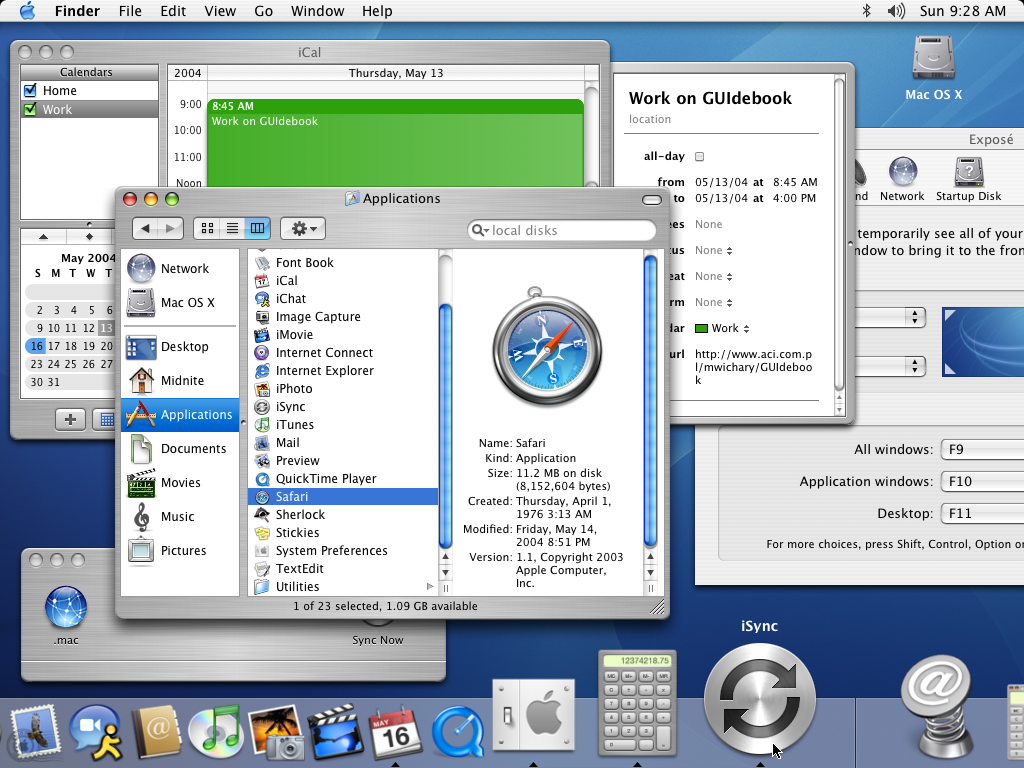



From my perspective, their application software has always sucked. It was there because you need apps to bootstrap a platform and attract enough users to attract developers. But you can't really expect a consumer electronics company to have the best application for a given niche once the niche has been identified and attracted companies that really want to make it their bread-and-butter.
XCode and occasionally FaceTime & iMovie are the only bundled applications that I ever use on my Mac. When I get a new computer, the first things I do are usually download Chrome, MacVim, Google Photos, and VLC. I use Hangouts over iMessage, Google Calendar over the built-in calendar, and Google Docs over the office suite. On my iPhone, getting Google Maps and Yelp is a top priority, lest I end up navigating off a mountain. This is not a new habit; I've operated like this since getting a Mac in 2009 after a 10-year hiatus from Apple products.
Perhaps I was just less brainwashed than most Apple fans, and the end of the brainwashing may itself be news with big consequences for product adoption. But IMHO anyone who used the whole integrated Apple software suite and never looked elsewhere has been missing out on some seriously nice features this whole time.