Right. The change has come from how willing the internet's gatekeepers (primarily, Google) have been willing play ball with SEO. Enshittification is just them becoming more amenable to it over time.
You're not well-meaning if your concern is that other people getting a chance at what you took for granted (and you did, or else you would have understood that it wasn't a given and would have looked at making sure others weren't left out) will shut you out.
I was watching an interview of one of the white parents who opposed bussing in Boston in the 70s. He said something along the lines of, "We worked hard for new neighborhood schools and facilities, it was unfair that our kids couldn't go to them." Well, didn't the black parents work hard to get their kids access to a quality education? Of course. The next person interviewed was a black mother who quit her job so that she could work at the school her children attended, to make sure that they were safe.
It turns out that she opposed bussing, too; the goal of the black parents' lawsuits hadn't been bussing per se, but equitable access to resources. The government had engaged in malicious compliance: rather than keep all kids, regardless of race, at newly-improved neighborhood schools, they opted for a "solution" that only solved the problem on a surface level, and which was sure to draw ire, knowing that this rage could eventually justify walking back the changes. Look at Boston school demographics today; they achieved their aim.
To your "well-meaning" friends - and to everyone caught up in this type of situation - I ask you to think deeply about who is the actual bad actor. It's usually not the person that the wealthy or powerful or influential or "professional" are telling you want to take something from you. You have to actually be well-meaning to see through that smokescreen, though, and not just zealously self-interested.
It comes down to Google's failure. Rather than outright defeating the SEO eldridge abomination by adopting a zero-tolerance policy to those tactics, Google made a mutually advantageous bargain with them of - course, leaving out a third party: us. They could do this because they had no competition. Now, the culture of enabling bad actors is, unfortunately, set.
Google did all the innovation it needed to and ever is going to. It needed to be broken up a decade ago. We can still do it now. Though I don't know how much it will save, especially if we don't also go after Apple, and Meta, and Microsoft.
It would be in Google's ultimate interest to label AI-generated websites and potentially rank them lower in search results.
AI needs to be kept up to date with training data. But that same training data is now poisoned with AI hallucination. Labelling AI generated media helps reduce the amount of AI poison in the training set, and keeps the AI more useful.
It also simply undermines the quality of search, both for human users and for AI tool use.
SEO is a slippery slope on both sides because a little bit is good for everyone. Google wanted pages it could easily extract meaning from, publishers wanted traffic, and users wanted relevant search results. Now there's a prisoners dilemma where once someone starts abusing SEO, it's a race to the bottom.
>SEO is a slippery slope on both sides because a little bit is good for everyone
I reject this emphatically. Google should never have been in the business of shaping internet content. Perhaps they should have even gone out of their way to avoid doing so. Without Google (or a better-performing competitor) acquiescing to the game, there is no SEO market.
I'm feeling it. Addressing the other reply: zero moderation or curation, and zero shielding from the crawler, if what you've posted is on a public network. Yes, users will be able to access anything they can think of. And the government will know. I think you don't have to worry about them censoring content; they'll be perfectly happy to know who's searching for CSAM or bomb-making materials. And if people have an issue with what the government does with this information (for example, charging people who search for things the Tangerine-in-Chief doesn't want you to see), you stop it at the point of prosecution, not data access. (This does only work in a society with a functioning democracy... but free information access is also what enables that. As Americans, with our red-hot American blood, do we dare?)
>Look where everyone is looking and you'll find your answer there. It may not be in the same form as Google adwords, but the game is the same. Leveraging attention.
The chill that ran down my spine when I realized that you and TFA think that the part people care about is Google as an ad platform, and not as a way to access websites.
I actually don't care. Most people don't. We care about the quality of service. Aside from Google employees and shareholders, I assume that most users would prefer a useful service that barely makes the company any money, versus a money-printer that's useless and a PITA to use.
Neither of those are topics that are particularly complex, though.
And I realize that I'm taking the bait, but it's worth noting that the flip-side of the oversimplification of complex topics in modern news media is the affordance of notions of complexity to issues that are fairly cut-and-dry, when applying known and well-accepted standards to them. Solving housing issues in the US? Complex, though news media would have you believe that the answer is simply, "Build more." Is Israel committing genocide in Gaza? Simple, though biased experts spend enormous amounts of energy spinning extant circumstances that are readily accounted for in most definitions of genocide. Tariffs? Very well understood. Ending Russia's invasion of Ukraine? Apparently a bit more difficult than flooding the country with weapons and finger-wagging at Vladimir Putin until he stops being bad.
Note also that this isn't predicated on the existence or non-existence of social media as an influential force. It's simply a matter of whether or not the corporate and political interests that steer public discourse find it useful to complicate or simplify a news story.
Obviously it's not instantaneous, and you still have imports wanting to fill the vacuum, but a collapse of the US auto industry means 1) lower replacement rate in the near term as the remainders try to ramp up production, 2) difficulty servicing the legacy fleet, and 3) a massive blow in terms of sentiment and outlook. In this hypothetical, an American institution blew itself up and made a lot of people's lives more difficult. Do you think they earn that trust back easily? Or is it a post-bust clarity moment, where people finally have a moment to think about how much money is poured into their personal cars and auto infrastructure writ large?
Because, I mean, we did see something similar to that with the pandemic and a mass shift in perspectives on work culture, which corporations had to fight mightily to hobble. You also saw a similar shift during the Great Depression, and it took banks literal generations to rebuild their reputation with the public. In both cases, you saw massive ramifications for the way in which people lived.
I do think that no auto bailouts in 2008 ends America's love affair with the car as we knew it. So, yes, fewer cars. Or maybe, at least, different cars.
I already addressed that. It takes time to ramp up production. In the meantime, Americans would have wanted action on the part of their political reps. The obvious out for those reps would have been expanded mass transit, as production costs and timing for a bus or train are going to be more advantageous than the amount required to put the equivalent number of people in cars.
If you want to pass judgment, please try to understand the argument first.
It seems extremely presumptive to think the thousands of jurisdictions across the US would somehow bid out, contract, receive, and begin operating fleets before Toyota et al simply scaled up or redirected shipments.
The much more specialized, lower scale, less adaptive manufacturers of public transit vehicles would face an even more severe form of the same problem Toyota would have, except they'd encounter it after years of normal procurement slowness.
That seems very unlikely to me. I think these car companies would all have been purchased for pennies on the dollar, likely by foreign companies in part, and would be making just as many cars today.
It depends. Part of the calculus for the original bailout was the homeland security aspect of potentially turning over companies and the market to foreign competitors, which doesn't go away just because the federal government misses its window to save GM et al. I don't know that such a purchase is a quick process. Either way, it's disruptive to production.
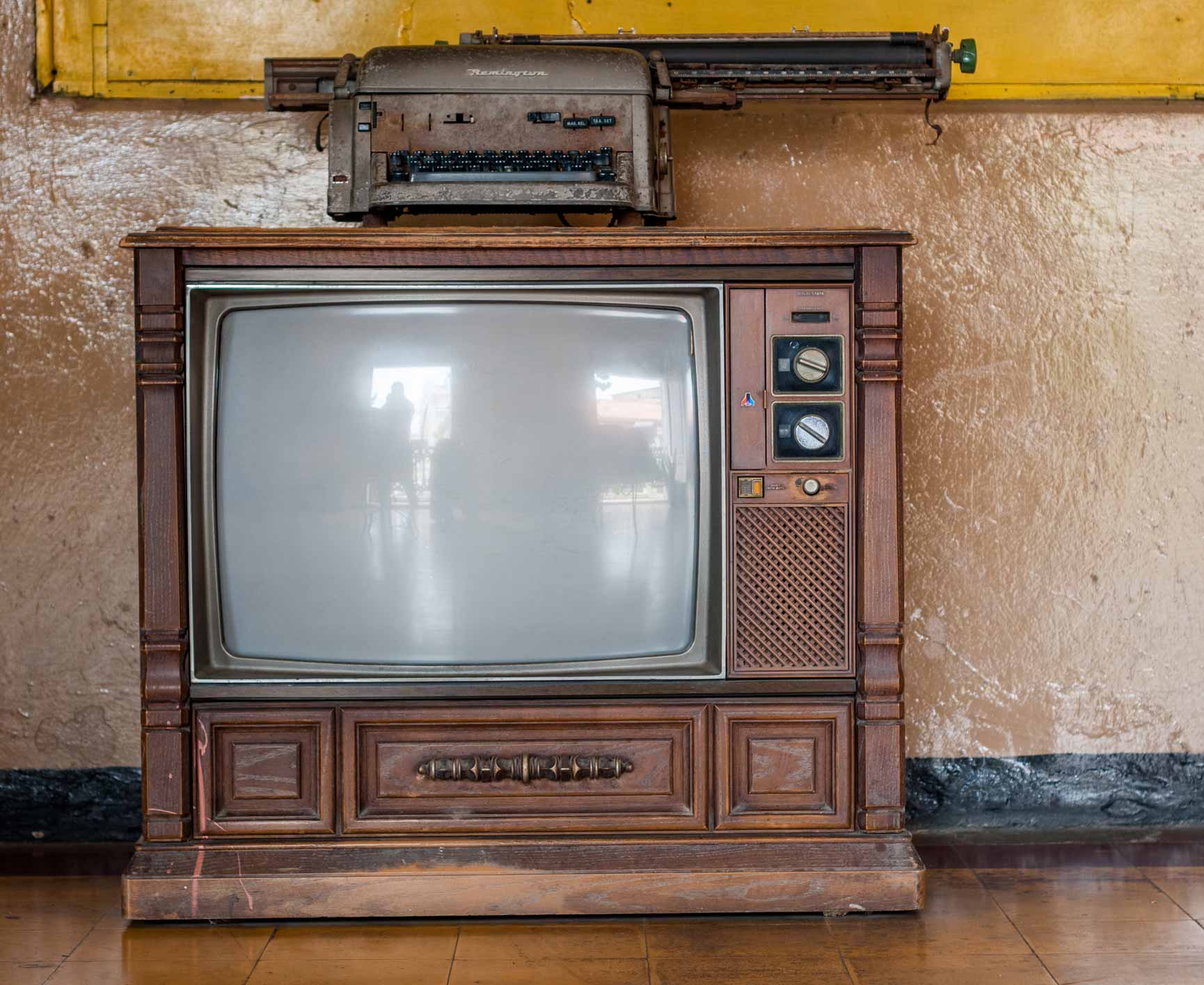
Zero incorporation of externalities. Food is less nutritious and raises healthcare costs. Clothing is less durable and has to be re-bought more often, and also sheds microplastics, which raises healthcare costs. Decent TVs are still big-ticket items, and you have to buy a separate sound system to meet the same sonic fidelity as old CRT TVs, and you HAVE to pay for internet (if not for content, often just to set up the device), AND everything you do on the device is sent to the manufacturer to sell (this is the actual subsidy driving down prices), which contributes to tech/social media engagement-driven, addiction-oriented, psychology-destroying panopticon, which... raises healthcare costs.
>Prices for LLM tokens has also dramatically dropped.
buzzer sound is an incredibly obnoxious way to start a comment and all you did after that is present yourself with exactly as much dignity as you deserve in return.
"Reminder" is just as patronizing and probably the cue I was responding to. I don't regret it, because on top of meeting his "obnoxious" framing with my own, the substance of my reply was also more correct. Your busy-body response was even less necessary and I hope that my refusal to take a conciliatory tone vexes you further. Have a nice day.
>When you see a device like this does the term 'sonic fidelity' come to mind?
Your straw man is funny, because yes, actually. Certainly when it was new. Vintage speakers are sought-after; well-maintained, and driven by modern sound processing, they sound great. Let alone that I was personally speaking of the types of sets that flat-panel TVs supplanted, the late 90s/early 2000s CRTs.
There is a certain class of American that rides the knife edge between credulity and contempt in supporting and accepting the activities and intent of bad actors who pledge to get rid of the things they don't like and they people they detest. They're ever-ready to believe the barest of excuses and to hand-wave the worst excesses in this regard. Today's anti-woke are yesterday's McCarthyists, and history will note the echo.
The selfish kind. Unfortunately that seems to be the end goal of the American dream: "I got mine, fuck you." I can't tell you how many times I heard the "protect my family" argument from people I never thought would vote for that clown.
But people do come here specifically to be selfish. They like that they can be selfish here in ways that are socialized away in other countries. They like that they can even socialize their selfishness, forcing poor people to subsidize the rich.
They are typically uneducated victims of the largest and most well funded mass propaganda brainwashing campaigns in the history of mankind, to be fair. Forgive them, for they know not what they do. The perpetrators of the misinformation, however, know exactly what they’re doing.
I think this misrepresents the situation. Many of these people are well-educated and affluent. In fact, such efforts wouldn't be possible without the support of the wealthy and academic elite, including on the left. Stooge-of-the-month Ezra Klein is decried as a woke liberal by certain segments of the political sphere, and yet he's running interference against those who support forcing the affluent to give back some of their recent outsize gains (through his "abundance" tripe). It's not poor, rural red-staters listening to his message.
> Many of these people are well-educated and affluent.
That does not preclude them from being uneducated and gullible to brainwashing. In fact, there is a strong case to be made that being well-educated and affluent primes one to become more likely to be uneducated/brainwashed. When you are well-educated and affluent, the "yes men" show up and start to make you feel like you know everything, and it becomes really easy to lose the skepticism and awareness that one normally has.
> It's not poor, rural red-staters listening to his message.
Was there something to suggest that it was? I see no mention of this group anywhere.


reply