Based on what i read it seems a lot of algorithmic work is required to even make them useful. New algorithms have to be discovered and still they will only solve only a special class of problems. They cant do classical computing so your NVIDIA GPU probably may never be replaced by a Quantum GPU.
I wouldn't worry too much about finding new algorithms. The sheer power of QC parallelism will attract enough talent to convert any useful classical algorithm to QC.
It's a bit similar to the invention of fast Fourier transform (was reinvented several times...), O(n log n) is so much better than O(n*2) that many problems in science and technology use FFT somewhere in their pipeline, just because it's so powerful, even if unrelated to signal processing. For example, multiplication of very large numbers use FFT (?!).
Quantum computing is a generalization of classical computing. Thus, they CAN do classical computing. But, in practice, it'll be not as fast, more error prone and at a bigger cost.
Any basic operation you can do with reversible computing on bits, can be done with qubits.
Any basic operation you can do with normal computing on bits can be done with reversible computing on bits provided that you have enough ancillary bits to store the information that would normally be deleted in the irreversible normal operation on bits.
What realmode in DOS offered was a boon for beginner programmers, i wonder has anyone done something similar in linux framebuffer without using X server. Perhaps a game in /dev/fb0 ?
Others have pointed out DirectFB and SVGALib. Both very interesting. SVGALib was supported by a lot of commercial Linux game ports in the earlier days, whereas DirectFB was possibly one of the most serious alternatives to X11, although I think like most such projects it mainly found use in embedded devices (Coincidentally, Wayland seems to have finally unified some of the "embedded" and desktop use cases.)
These days SVGALib doesn't work and fbdev is deprecated. However, the "next-generation" Linux graphics stack can achieve a fairly similar goal using the DRM/KMS APIs, albeit it's definitely a lot more work if you just want a framebuffer. On the other hand, though, it's relatively straight-forward to get an EGL context and start doing hardware accelerated things. Maybe that takes some of the fun out of it, but I think it's pretty cool.
It is full of fascinating and somewhat horrible advice. For rendering text-mode user interfaces the author recommends having a ~4000 bytes binary file saved that is just BLOADed straight from disk into graphics RAM (in text-mode that sets all the text and attributes/colors for the screen). Tricks like that would probably never cross my mind, being used to having to load some library to draw anything to a screen.
I discovered just some day ago pc-basic is a really impressive project. pip install pcbasic gives you a portable python-implementation of essentially GW-BASIC, running in a terminal or graphics window. But you can of course also grab the MIT-licensed GW-BASIC 1.0 that Microsoft released a few years ago (and that TK Chia modified to make it possible to build) and run that in DOSBox. I am having a lot of fun with both of those.
Doing graphics via the framebuffer is really slow on modern hardware. Even if you want true pixel-perfect graphics (something that modern 3D-rendering API's aren't easy to use for, hence where simply relying on the framebuffer is the most obvious approach) it's just far better to use GPU compute.
Actually even simple GPU compositing (which can be feasibly made pixel-perfect, as shown by its routine use w/ modern desktop environments) gives you an unlimited amount of arbitrarily-large "sprites" - way better than what you get with pure CPU rendering on a framebuffer, and something which can be quite useful in a real program.
Yeah, I think it should be emphasized that the framebuffer (in this sense) is actually an outdated abstraction and not the "low-level" or "raw" access to the hardware that one might naively expect it to be.
The X server is mostly irrelevant, these days you'd use something like SDL for a simple 2D game, which abstracts it away entirely and works just the same on the framebuffer and under X.
So no reason not to use X/Wayland since it's just more comfortable to develop for.
One of the original Quake I implementations — as in authored by Carmack and Taylor themselves — used SVGAlib as a backend. I remember this because of having to configure my mouse to co-exist with GPM in some file in /etc for svgalib.
Yes, in the early days, as many others have replied.
What most have missed is that those libraries usually required root access, or setuid, unless you want to go clever with group permissions, which no one did.
How do these Nintendo handhelds work? i thought they use some kind of framebuffer for such great performance for the substandard quality hardware they use. Every generation of Nintendo chip is way behind Apple and Android systems yet they achieve remarkable performance.
Yes they use some kind of framebuffer, just like 8 and 16 bit home consoles.
They also used plenty of Assembly programmer and special graphics units, the console percursors of GPUs.
However since the N64 that they use graphics APIs like everyone else, GBI, GX, GX2 and nowadays NVN. For porting purposes, the Switch also supports GL 4.6 and Vulkan.
Other than that, there is also a performance culture, and not using generic game engines.
The 8 and 16 bit home consoles did not use a frame buffer. The NES had 2KB of VRAM and an output resolution of 256x240 - even if you only had 1bpp it wouldn’t fit.
These consoles - along with everything handheld up until the 3DS - create images out of scrolling layers of background tiles and freely positionable sprites. You don’t have any kind of per pixel access, although you can manipulate the state of the hardware as the screen is being drawn to get unorthodox effects.
Even if i try to avoid the hyperbole by saying by the time SiFive nodes will reach maturity with the current cortex, GPT-30 will be out etc ...
The fact is that the node difference (7nm vs. 10nm) is critical here, SiFive’s area/power efficiency gains aren’t purely architectural but partly process-driven. Even with that advantage, matching a 2018 A75 (designed for mobile thermal/power limits) in 2024 feels like catching up to ARM’s rearview mirror. ARM’s A720 today benefits from years of iterative refinement (cache hierarchies, branch predictors, memory subsystems) that aren’t easily replicated overnight.
Scaling beyond cores is another hurdle, interconnects, memory controllers, and accelerators matter just as much as raw IPC. RISC-V’s ecosystem (tools, firmware, software optimization) also lags ARM’s, which could limit adoption even if the P550 were competitive.
SiFive’s claims highlight RISC-V’s potential, but until they benchmark against modern cores on the same node and demonstrate system-level competitiveness (not just microarchitecture wins), the gap will persist. That said, disruption takes time—ARM wasn’t born polished either. The real test is whether SiFive can close the maturity deficit before ARM’s roadmap (and AI-driven heterogeneity) leaves them behind. I doubt it, the GAP in GPU cores alone between Cortex and M Series is so huge, and then there are accelerators like NPU cores, which SiFive havent even started working on yet.
Even Cortex NPU's are behind Apple M Series, and if a large companies liek Samsung, Qualcomm, Mediatek lag behind Apple is Quality ARM chips with Decent GPU, NPU on Board memory, what hope does SiFive Have? At Worse Burn Investor money and die. At Best supply chips for your remote control, washing machine etc ... competing with mainstream applications would not be wise by any standards.
It's also worth noting that they're claiming a high perf/GHz, not a high perf. It's easy to shrink a chip by using slower but more compact libraries that don't increase gate size as much for larger fanout at the cost of a lower maximum frequency, like AMD's compact cores do. And lowering clock speeds mean that your main memory latency, measured in clock cycles, goes down increasing perf/GHz too.
This is a similar problem to what was observed in Diffusion models going "MAD" when trained on synthetic data. https://arxiv.org/abs/2307.01850 . Therefore, going forward AI companies will find it increasingly difficult to get their data by scraping the. web, because web will be full of synthetically generated data.
The underlying baked assumption is chromium as a rendering engine is better than Safari. How is chromium rendering engine better than safari ? Quality wise they both are same Safari actually consumes way less memory.
Bogus article, if Guptas were so called hindu why were they not building any Brahmanical Temple or University? Why not a single Brahman University ever been found. There are several such gaps in Indian history, it needs to be relooked at with evidence.
Brahmin education system was exclusive to Brahmin and Kshatriyas.
Vedas were taught only to Brahmin males for most of history. And higher philosophy such as Advaita Vedanta were taught only to Brahmins.
There exist many Brahminical schools in India even today where you can gain admission only if you are born to a Brahmin family.
Buddhists paid no attention to caste, and after long interview and/or written tests, people from any caste could gain entrance to Buddhist higher education institutions.
And many Hindu kings, not only Guptas, nurtured and sponsored Buddhist higher ed. institutes and higher officials of their administrations almost always were exclusively gradutes of such institutions.
2. The Hindu-Buddhist schism is a recent one and partly enlarged due to political reasons. Buddhism was considered another atheist school within Sanatana Dharma.
What is Hindu Buddhist? Why does Brahman seek evidence for its existence in Buddhist Evidence? This happens only when the other is the illegal occupier such as Hagia Sophia.
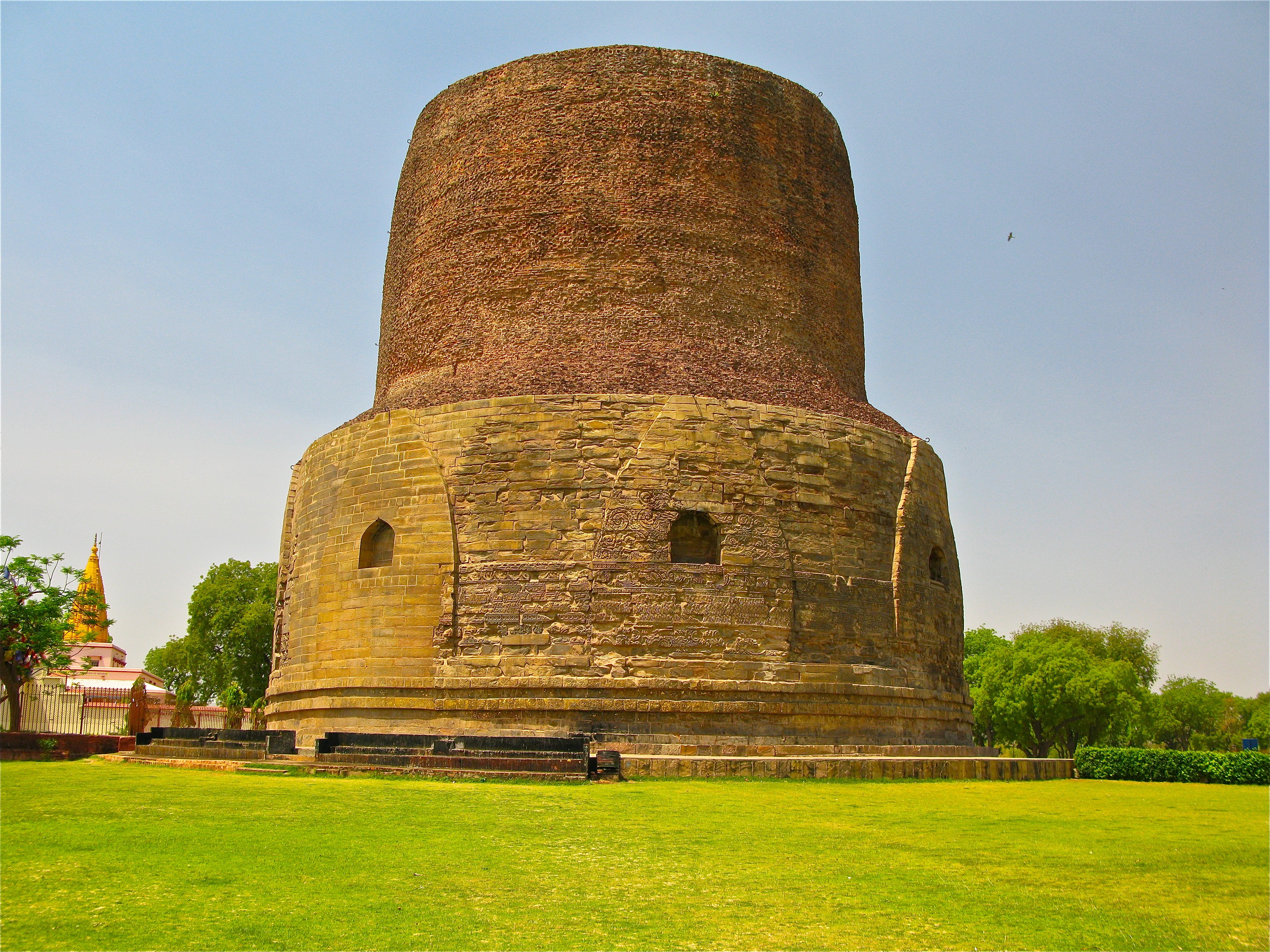
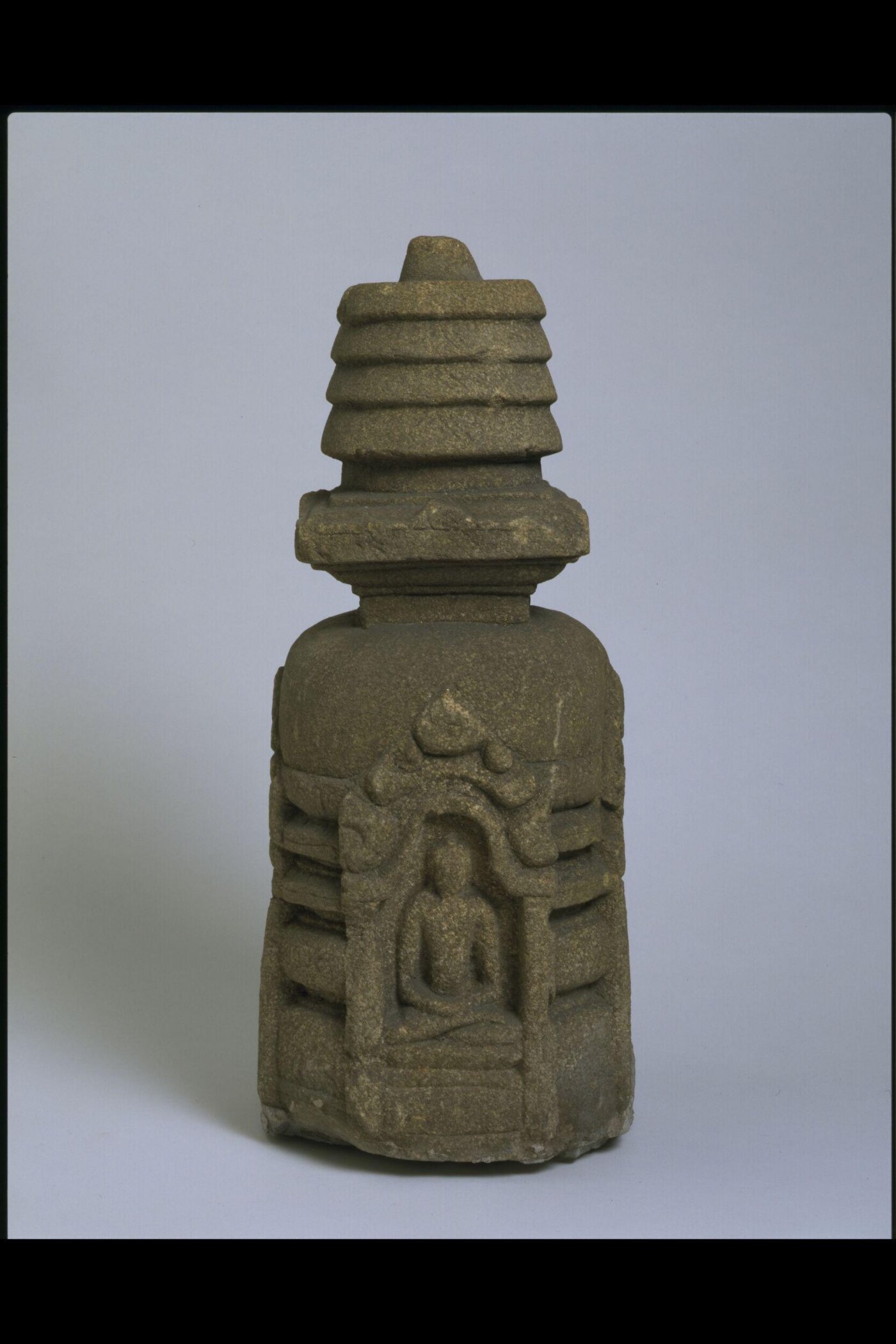
Over 100 Buddhist universities have been found across India Pakistan Bangladesh Afghanistan etc .. How many do you think they should cover? Also several Mahaviharas exist which are now serving as X-ishwara temples, where votive stupas are being worshipped as Shivas ling (phallus). The whole of India was a major buddhist educational hub. Nalanda was the most famous because several chinese travellers have studied in it, which makes it very important. As there notes is our source to determine Indias Buddhist past.
Like we can save data on a SD card, people tried to save positivity in a object, so that it can be shared with everyone, ling/lingam is made from a particular material and have a particular shape, the shape its just an oval, like a planets orbit around its star, even if you observe Buddhist stupa is bigger version of the same..
There are elaborate processes of how to install positivity in that, prana pratista or mantra pratista
I have no scientific data on how to save positivity in an object , As a Vipassana meditator I feel my meditation session is very smooth when sitting around few Linga
Ling in Sanskrit refers to a thing, like female and male are referred to as Stri-Ling (woman kind, not women phallus) and Purusha-Ling(man kind)...
So Shiv-Ling mean It is representation of Shiva or what ever
Lingam is not a representation it is indeed the phallus or penis that was severed by Indra. According to Brahminical stories. Please educate yourself. Multiple jyotirling apparently are the various fallen pieces of the penis of Shiva according to the Brahman.
As you may know the story Shivas Phallus was cut by Indra, and now Hindus Worship the fallen penis of their deity from puranas being cut by another deity of the vedas. What kind of person would write such stories and then go ahead and worship the fallen penis of its god? No respect for its own deity? Because its not their deity. Brahman exist purely for the donations to temples. If people stop giving donations Brahman will occupy something else for donations.
The list goes on and on because brahman Dharma (Hinduism) had no sculpture art, it is banned in it.
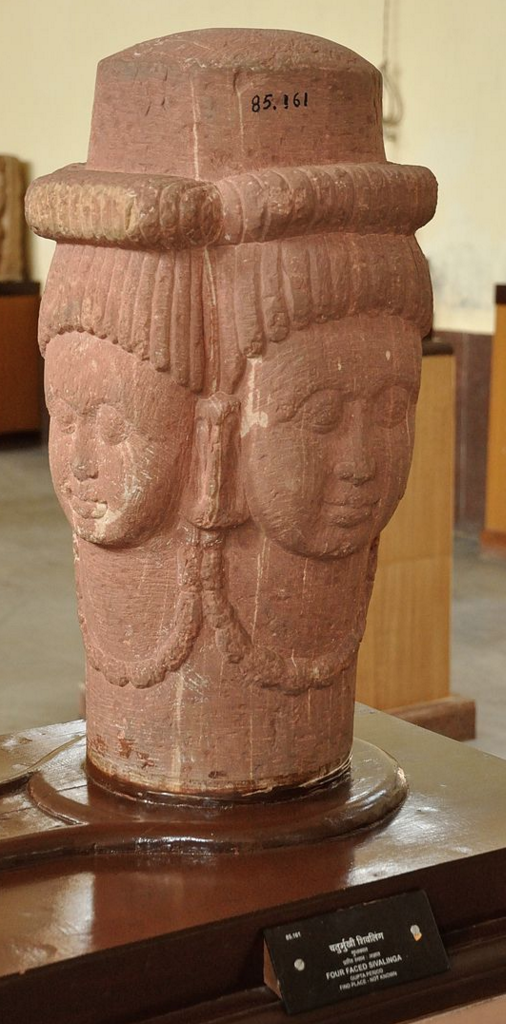
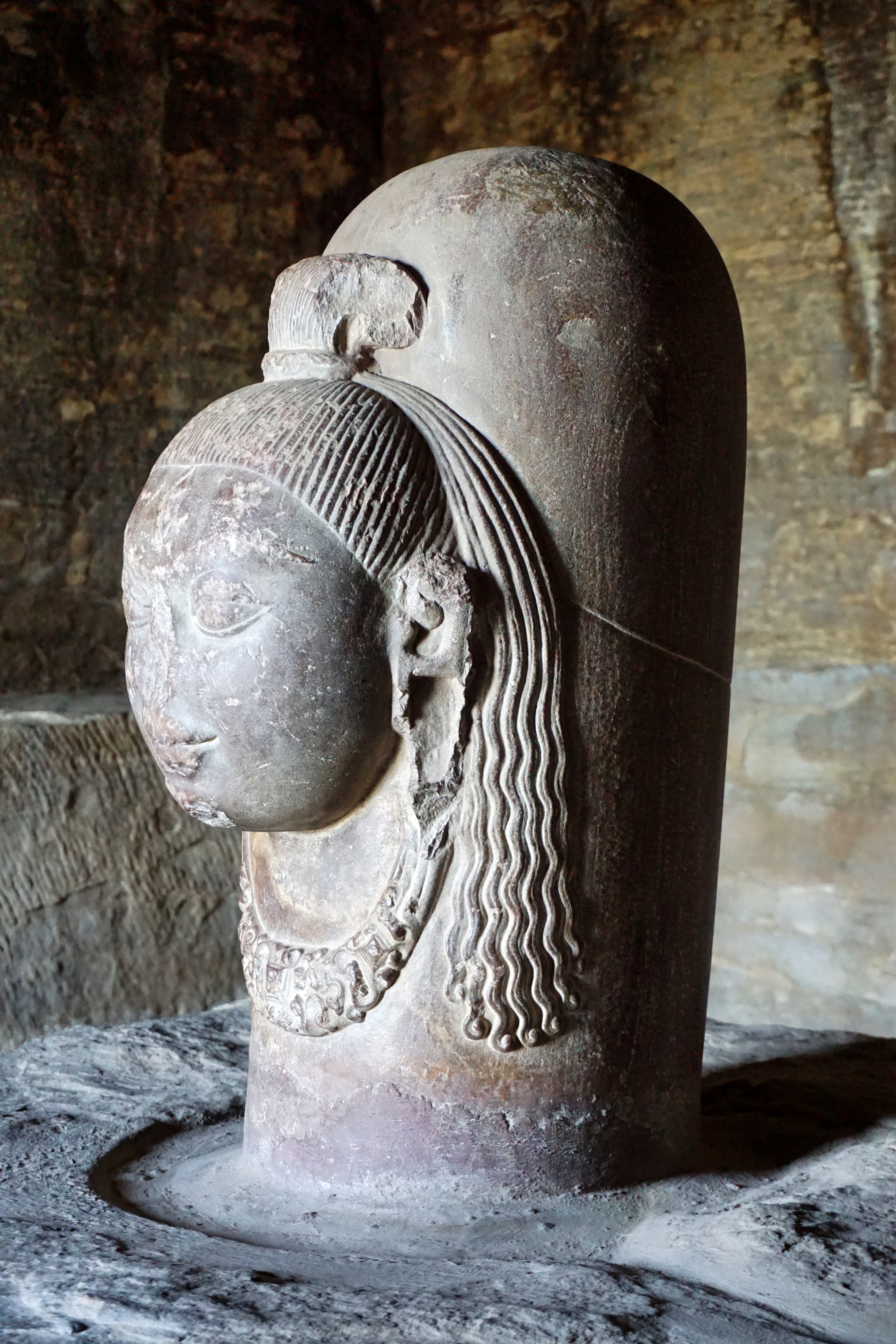
India is full of buddhist art with votive stupas having multiple faces of either Buddha or Bodhisattvas. Brahminism doesnt have sculpture infact it is banned in many texts, nor do they have any description of their gods. Shiva doesnt even exist in Vedas. The character Rudra being claimed as Shiva in Vedas is the god of Thunder storms in vedas. Most of all if it is such an important god why cut write a story of its penis cut by another lowly god of the vedas? The sculpture speaks for itself.
This is a list of disrespectful, disconnected mix of facts and fictions which has flimsy grounding in reality and doesn’t address the main question I was asking, but I will engage in good faith.
> As you may know the story Shivas Phallus was cut by Indra, and now Hindus Worship the fallen penis of their deity from puranas being cut by another deity of the vedas. What kind of person would write such stories and then go ahead and worship the fallen penis of its god?
No normal Hindu knows or believes in this story. This is the first I have heard of it. Remember, only Vedas/Upanishads/Gita count as core scripture. Also, any religion will have a lot of conflicting stories that neither the lay populace nor scholars consider seriously.
> Why Buddhas face on this claimed shivalinga
How? I didn't know you had a photo of Buddha to say that is Buddha's face. Also, why does Buddha have three faces? Wasn't he human? (Tip: most ancient statues look alike facially)
> Claimed as shivalinga, can you explain why the buddhas hand mudra
No, Hindu considers the lingam to be a real phallus. I guess the mind sees what it wants to see. I don't understand how you went to eating a phallus from the image. Not every cylinder is a phallus.
Hinduism is fluid due to accommodating scientific inquiry, I will let Sagan and Schopenhauer do the talking here. Because of this scientific/open nature, it has to be fluid. You will see names and stories change depending on current culture, language, events as stories and names are merely symbolic (Rudra -> Shiva is not the damning attack you think it is).
> “The Hindu religion is the only one of the world’s great faiths dedicated to the idea that the Cosmos itself undergoes an immense, indeed an infinite, number of deaths and rebirths.
It is the only religion in which the time scales correspond to those of modern scientific cosmology. Its cycles run from our ordinary day and night to a day and night of Brahma, 8.64 billion years long. Longer than the age of the Earth or the Sun and about half the time since the Big Bang.”
― Carl Sagan, Cosmos
> "Thus originated in the primitive ancestors of the Brahmans, the Rishis, the almost superhuman conceptions which were afterwards set down in the Upanishads of the Vedas."
Also, I am not going to respond to YouTube videos by cranks.
I was hoping someone will respond with at least one peer reviewed article but ha ha I was being too optimistic lol.