I understand it's free to set up the business but iCloud, AppleCare and Email/Calendar storage past the free (I suppose tiny) allowance are paid. As Apple loves, freemium with in-app purchases!
Email, Calendar and company directory built in, custom domains in emails I think... It's more like a MS365 basic version. Which for most small teams is more than enough
Microsoft is a giant enterprise software company that also publishes Candy Crush and Call of Duty.
Intune and Windows are 'nice to have' but are not the business-business. The business is 365 (which runs on Macs and is worlds better than Apple's office suite + Apple's hosted email is god awful) and Azure.
Apple's office suite is my favorite I've ever used, and it's not close.
After that, old copies of MSOffice.
Next-best would be a hodgepodge of the lighter options on Linux and such. Gnumeric, Abiword, that sort of thing. Not great, but at least they're light on resources and easy to use.
Distantly after that, LibreOffice.
Then, modern MSOffice in last place.
The only reason I'd count any of them as "worse" than modern MSOffice is that ~perfect office compatibility and a bulletproof excuse when things go wrong ("I'm also using MSOffice, don't know why your document isn't working") is non-negotiable in any business context.
[EDIT] Oh I forgot about Google. That's actually the true last-place. Modern MSOffice isn't worse than that. Christ the performance is awful.
I value performance and stability highly, and Apple's productivity programs are so light I can leave them open in the background and forget they're running for months at a time even on fairly old, weak machines. And I'm not sure I've ever seen any of them crash (I can't say the same about, say, LibreOffice or pretty much any other Linux-associated productivity software). That they're a ton more polished and stable than things like Abiword or Gnumeric, and have most modern features I'd expect (even live collaborative editing) puts them solidly above those other light options.
I hate modern MSOffice's UI, plus it's full of slow, heavy webtech which deducts a lot of points from basically anything for me. Google's leaks memory (like most of their software... so do Gmail tabs) and is so slow that it introduces a ton of input latency, which drives me nuts, I hate to type in it, aside from my experience with most of its formatting and editing features being that they're very janky even by the standards of GUI word processors. Both are very heavy on resources, which means they have a huge hurdle to overcome on the feature side before I'd consider them anything but extremely-unpleasant.
Old (like... '00s) MSOffice is pretty good because it's not such a resource hog, and the UI used to be really good.
I have a google sheet with less than 200 rows in it. Not exactly Big Data. When I load it, the first 100 rows appear pretty much instantly, but the following <100 rows take 9 seconds to load! WTF? I don't know any other spreadsheet that takes that long to load more than 100 rows.
Google does essentially everything I need. If I were more of a spreadsheet power user these days, Excel. And maybe other Office apps as needed for compatibility.
> Apple's office suite is my favorite I've ever used, and it's not close.
I’ve written many comments criticizing this. Do you use a lot of keyboard shortcuts when you use Numbers or Pages or Keynote or do you use the trackpad/mouse a lot? I generally find these apps and others lacking on the keyboard front, by which I mean that it’s almost impossible to use them without a trackpad or a mouse. I can completely live with just a keyboard on Excel or LibreOffice Calc.
BTW, I hate all the MS Office applications (and find them quite buggy and annoying) except for Excel. Maybe I’m just a lot more used to using Excel.
You may want to look into Karabiner Elements. Understandable if one doesn't want to have to allow a privileged daemon access to key inputs, but it allows for complex, application-focus-aware shortcuts. In the past I used a "Windows on MacOS" config preset because it allowed for my 60~70 key keyboard to operate similarly across win/linux/macos. Finally killed my last windows boot drive and main linux... but I do have a ritualistic annual step into a windows vm to file taxes on crack err with a crakced turbotax hehehe. In-tooits lobbying malpractice is deserving of petty flippancy
Numbers has a lot of keyboard shortcuts [1]. Are there particular ones you're missing? Or is your issue that Numbers has different keyboard shortcuts from the ones you're used to in Excel?
A lot of menu options don’t seem to have keyboard shortcuts. I know I can assign them, but defaults should be better.
But the second one hits harder for me: “Or is your issue that Numbers has different keyboard shortcuts from the ones you're used to in Excel?” Considering that Numbers came much later than Excel, some of the common ones could’ve been directly adapted with Mac specific substitutions (like using Cmd instead of Ctrl).
It's not pretty, but both Pages and Numbers are pretty powerful in their modern incarnations. If you actually need Microsoft Office, then you need it, but a lot of people who don't think they could get away with just Apple's freebies probably could.
(Disclosure: I write 99% of my stuff in Emacs now, so I'm not going to go that far out on a limb for iWork. It's just that it's the best "Works"-style suite that I've used.)
I also like Apple's office suite, the problem is network effects. I'd even argue most people don't actually need MS Office. The amount of people using PowerQuery, VBA, etc. is probably less than 2% of users.
The problem is, because everyone else (in business) already has and uses office, if you want to collaborate, that's what you have to use. Open file formats didn't win out in the end.
This is absolutely the problem - with the added issue of platform support.
I’m the only Mac user in our company of 15, which means I’m also the only person that can open a .pages file. Anyone can read a .docx, and if authored in word it will actually look the same on both computers.
Is it 2% who author content using those tools, or are you also including anyone who might need to open and use a spreadsheet using one of those technologies?
It's not "the end" yet. Many governments and sufficiently motivated orgs are switching to ODF - it's only over for proprietary file formats that pretend they can stand toe-to-toe with docx. By eschewing open formats you're making all the mistakes of .docx with none of the upsides of the network effect.
Personally, I like Apple's iWork. Keynote is slightly less fiddly than Powerpoint. I like that in Numbers you can have multiple movable tables on one screen without constraining column widths etc to each other. I also like that Pages is simpler than word with much more manageable styles, especially when copy and pasting from multiple other documents. But lots of people don't have Macs or like iWork, and in most businesses you eventually need MS Office to work with outside parties so for work the choice is really iWork plus MS Office vs MS Office.
MS Office collaboration features work well these days but when you are using Office 365 for work, it's almost inevitable that different files get saved locally, on MS teams, Sharepoint, and OneDrive. It's a version control nightmare.
I really like google's suite for work because it nudges everyone towards using only one location for all files, without a other places to save a copy. And it's good enough with Office files that you might only need a few roles to also need MS Office.
You can drag a pdf into Keynote, and get a vector quality image. This feature is great for science when a plot is made elsewhere (R or matplotlib). Or you can even drag in an SVG, even from something you find in a browser. Drag, drop.
Why in heaven's name is it nearly impossible to do the same with Powerpoint is a mystery. You still have to paste a bit image.
I used word for windows 2.0 well into the early 2000s. My needs aren't crazy and I don't think word has added a single feature I've cared about since. Pages is my current go-to.
This line right he is where I will always stop reading any reply, and block any YouTube channel that uses it in a title. Mind numbingly overused. It's literally verbal clickbait.
A lot of new businesses are going the Notion/Google Drive route for docs, tables and knowledge, plus Canva for presentations and more visual work. It's not the majority, but the market is there.
That might be true for tech startups, but many businesses (even "new" ones) go with Microsoft 365 as a default, especially outside of the west coast or NYC.
Europe here. I disagree. Many SMEs are totally happy with Google Workspace and Canva, as GP mentioned. I know people using just that. And they don't understand why there are people suffering from the Microsoft-Stockholm syndrome.
The market may not yet be 365-sized but as GP mentioned: it's there.
And there are young people arriving at an age to open a business who have never used a Windows computer in their entire life. To them Microsoft is the company that make the virus-infested, slow, computers full of ads they see at their grandparents' house. That cohort ain't buying Windows / buying Office / using Azure.
Exactly. 365 gets you perfect compatibility and the 'real tools that professionals use'. Not Google Docs or some weird Apple thing - the tools that always will read the document.
If you can navigate the terrible UI enough to find the open button on the proper 'ribbon', that is. The ribbon makeover should have textbooks written about it so we can teach our future UI designers not to make the same mistakes again.
I don't see why the ribbon would be inherently worse than a menu. It's still hierarchical, everything is labeled and has an icon and it's bigger. Oh, and everything has a shortcut that's highlighted...
On the contrary, nobody here is suggesting Microsoft isn't really diverse. They're suggesting that Apple is going to start to eat into their SMB market.
Nobody at Microsoft is saying, "we don't care if Apple chips away at SMB because we have Call of Duty"
Microsoft offers Office for Mac. It's a thing they do. It's the full fledged Office suite. They see a Mac user the same way they see a Windows user - a source of revenue.
Not always. There's no Minecraft for Mac, they even prohibited Macs running the iPad version. It's essentially been ported to Apples APIs but purposely withheld from macOS.
Anyone on Bedrock Minecraft is probably there for the cross-platform multiplayer. The Java version doesn't substitute for that. (MS made Bedrock and Java incompatible so they can rent-seek on closed mod and server-hosting "marketplaces"; can't let people share things and have fun without paying a middleman after all, think of the wasted "productivity"!)
Everything is half-hearted from Apple since Steve died. He was the beating heart. Who has stepped into that role? Like for real? Anyone? I’m just not seeing it
I think the average idiot can take a really strong business and weaken the bones for some quarters or years of extra profit, possibly insane profit, before lack of focus on what really made the company strong starts to erode the fundamentals. I think we’re seeing that with Apple personally. It’s just colossal though so there’s a lot of squeezing and a lot of profit before it really catches up. And they don’t even disappear. They just become lumbering monsters like Microsoft, IBM, and HP that people don’t use because they want to. HP was legitimately a great company.
But this isn’t some quarters or years, it’s been _fifteen_ years. I think we’ve seen enough genuine innovation (Apple silicon, to name the major one) that it’s clear Apple isn’t shutting down the innovation pipeline to squeeze margin out of revenue.
Apple Silicon started under Steve didn't it? He died in 2011, first A4 was out in 2010 IIRC? That implies to me that Steve had a hand in it -- because he reputedly had a hand in everything.
But that's it, thats the innovation. The singular one since he died. I think my point stands tbh: everything is half-hearted since Steve died.
Only looking at these numbers and not the general sentiment around the company, I'd say yes, it matters. Myopically focusing on profits and assuming profit = good is, well, its super common but also pretty nutty.
At this point to take part in modern life a smart phone is required. Having captured a market for an essential "luxury good" doesn't mean they're doing something right. It just means we have no other choices.
$599 per device? Redmond will make more profit the first year selling a 365 subscription than Apple does on the Neo.
The real competition is going to come from companies using the $599 Neo + Google Workgroups or whatever they're calling it - now Microsoft is cut out entirely.
> The real competition is going to come from companies using the $599 Neo + Google Workgroups or whatever they're calling it - now Microsoft is cut out entirely.
The companies doing that are cut in two groups. The one that don't fully plan it and they need to do with complex excel or whatever files here and there and they're still in microsoft's grasp, or those that fully do and move to disposable chromebook.
>I'd be scared if I was certain Redmond corporation who makes their money on 365 and Intune.
scared of what? microsoft doesnt need to care about new businesses with under 50 employees at all. they have governments, banks, universities, colleges, and large non-tech enterprises completely locked down. small business with 10-50 devices are a drop in the ocean.
>New businesses under 50 employees are going to eat this up like there's no tomorrow.
i seriously doubt people outside of the tech or design spheres (i.e. most people) are going to go with apple for their businesses. when you are starting a business, you dont want to also have to teach all of your employees (and possibly yourself) how to use a new operating system.
you are going to look up "local IT company" or "local MSP", ask them to set you up, and they will integrate you into their existing microsoft ecosystem and send over some thinkpads, while you focus on your business.
It really depends on the context and the context within the context.
I used to manage a medium sized IT firm in Colombia on a hybrid manner.
One of our biggest clients had a sort of high end boutique set of businesses and two bigger businesses that interacted quite more with the regular public.
For the high end boutiques he asked us ONLY and ONLY to use mac's both because down there they are synonym of "prestige and class" and because the (very attractive) women that he hired for most roles were only familiar, or preferred mac's and were consumer's exclusively of apple's walled garden.
We had a bunch of customers like that, the real issue is that if this were on place I would have made it an option for my clients, eventually some things like security or software may move a significant number of users there, specially after the new mac mini, the neo and the ma air become budget options compared to a lot of what microsoft is offering in latam and some parts of Europe.
Apple would be near the top of my list of companies incapable of building software that will do this. I cannot believe anyone who has tried Mail.app would be interested in using that for their business. I tried it for 3-ish months and had immense trouble reliably threading, seeing responses, with search, etc.
There's 0 way they have competent, reliable, working group calendaring.
I have had plenty of issues with outlook, I had to force close it at least once per day. Macos mail app was very good for my business need, it was a small one but had to deal with hundreds of mails everyday.
Plus you don't get that proprietary format pst when you backup the mails.
Are you talking Mac or iOS? I have never had an issue on iPhone’s mail app, though my desktop is Linux so I don’t know? Hence the question. I’ve never experienced any of that. Thanks
Weird, never had an issue getting my hands on an Apple laptop of any desired configuration, even odd keyboard layouts for the region (UK and Sweden).
Had plenty of issues getting specific specification Thinkpads: because they are largely sold through resellers and they don’t stock all SKUs I suppose.
I don’t buy this reasoning until there is evidence of orders going unfulfilled.
I could make 20M units of something and leave my resellers as bagholders who then have to sell years old hardware at a discount- and by the internal consistency of your logic: I would have the volumes.
Isn't this an artifact of the demand side and not the supply side?
Yes, apple shipped fewer laptops than dell in 2025. That's because Apple laptops started at $1100 in 2025.
They won't have a problem securing the chips for Mac Neo's, they're the same SOC as the iPhone. What, Apple is going to have an issue manufacturing a few million motherboards?
Does it matter if the main difference is the OS? Chromebooks are way worse spec wise, and they’re still “phones with big screens” and a different OS. If someone made a windows laptop that was actually good without compromises in an ARM SoC, I’m sure it’d sell well too. The Qualcomm ones seem to have too many compromises today with the OS/driver layer unfortunately.
That last part is the stumbling block for sure - the Microsoft Surface Laptops are nice machines but damn if the driver thing doesn't continually piss me off.
https://www.microsoft.com/en-us/surface/devices/surface-lapt... but at $900, and the Neo literally just being a Mac and doing everything any other Mac does (except some hardware related limitations like driving a 6k monitor, but doing 4k is "enough for most") means you save $300 and don't run into annoyances like "can't install my printer driver".
The companies I know of that would be most likely to do this would never buy these because of the integrated webcams, and no "you can disconnect them easily" is not acceptable, as a matter of policy.
I keep shouting from the rooftops the fact that the Neo is really not that disruptive or even necessarily that good of a deal.
Like, have any of you actually looked at street prices at Micro Center or Best Buy recently? In the price range of the higher model Neo you can get a Yoga 7 with an OLED convertible touch screen, 1TB storage, 16GB of RAM, along with a processor with better multicore and iGPU performance (Ryzen 7 AI 350) in a 2-in-1 convertible package that has better battery life doing office tasks.
Yes, the Neo is a cheap machine, with a lot of the exact same cheap machine compromises that are all over the $500-800 laptop market. Not really the best CPU, extremely cut-down battery, missing features, etc.
It even loses keyboard backlighting which is such a standard feature that it might be the only laptop on sale without it.
Losing the haptic trackpad means that the Acer you can buy at Micro Center for $530 with double the RAM and way better I/O (USB4, USB-A 3.0, microSD, and HDMI) has a pretty similar quality of trackpad experience. Yes, I tried both in store, the MacBook Neo's trackpad is really at the same level of all the PC competition.
MacBook Pro/Air Trackpad: 10/10
Best PC haptic trackpads available: 8/10
MacBook Neo trackpad: 7/10
Typical PC mechanical trackpads: 6 or 7/10
Hell, the older generation HP EliteBook 840 G10 that Micro Center sells as a business laptop makes a bunch more sense in a lot of ways. It's also an all-aluminum build thin and light system, comes with more RAM, which is upgradable, has a fingerprint reader, backlit keyboard, etc.
The trackpad on the Neo is at the level of a Surface trackpad, which is to say it is worlds better than the typical budget junk you can pick up from Acer.
I disagree strongly. Again, I tried it in store at the exact same time as trying other laptops.
Yes, it's a little bit better than the alternatives, but, critically, not by much. Not by enough to sway a purchase decision.
It's not better than diving board mechanical trackpads by enough of a margin for most consumers to notice.
Also, macOS over-relies on trackpad gestures. You don't really need them anywhere near as much in Windows or Linux. This is Apple's intention: to try and sell more proprietary trackpads, because they know if their OS was optimized for normal mice consumers would just buy the cheap $20 mice that are better than their $100+ accessories.
The PC industry barely has to adapt to compete with the Neo. I think we'll start seeing that in late 2026 and 2027 when competitors arrive on Apple's doorstep.
I will be absolutely shocked if any current pc company can even approach the neos build quality/performance/price combo. See you next year, happy to wait .
I think we’ll actually see some serious responses from PC manufacturers. They basically have to.
They really aren’t that far off as it is. I’ve brought up a number of similarly priced models in my other comments on this thread.
Even on the premium end, the surface laptop really isn’t that far off on pricing. It was priced and specced to essentially match the Air. I think there’s no reason a cut down model couldn’t match the Neo.
I think the most important thing is for Microsoft to crack down more on OEMs’ use of third party junkware like McAfee. They need to just disallow it as a hard policy. Hopefully the Neo is also a wake up call to Microsoft.
I also think that an x86 processor that performs 20-40% slower really isn’t a big deal in the context of the Neo’s competitors. They mostly need to match the pricing and build quality. Nobody cares that the hybrid Toyota Corolla is slower than the hybrid Honda Civic when they go buy the car. They care that it has the attributes they’re looking for (packaging, reliability, quality, price). And I think the Neo’s great chip is hampered by RAM anyway. The SoC package was designed for a mobile system that only has partial multitasking.
One of the things is an Acer. The other is a Mac. That sways purchase decisoons - one is a nice thing, the other one is a low end PC.
I have used countless modern PC devices, including some from Acer. Few PCs have a trackpad of the level of the Neo and none from Acer.
Your logic with "Apple's intentions" reveals a person who is incapable of decent analysis; macOS relies on gestures a lot because the vast majority of macOS devices are laptops. The desktop market is an after thought because the people keep buying laptops. That's it. There's no conspiracy, just a focus on the devices that the users choose to buy.
The PC industry has almost no shot of competing with the Neo. You have to spend much more than $1000 to get a nice object that looks and feels nice. Right now, the PC industry is selling Old Navy products when Hermès is the same price. That is a real problem.
Microsoft is going to be fine. Companies that rely on selling low end devices to consumers are going to suffer.
My point is that Apple is in many ways joining Acer, not bringing their luxury product down to the masses.
Yes, in many ways they’re bringing a very polished product to the space. But in many other ways, look closely and you’ll see the cut corners.
Again, I’ve felt the Neo in person. The chassis feels nice, sure. It’s not built to the same level as Apple’s other products, though.
The bottom plate is not CNCed, it’s a stamped aluminum plate. That means there is variation in the gap along the bottom of the laptop between the man case and the bottom plate that doesn’t exist on the Air or Pro.
Again, the trackpad is good but is worse than many haptic trackpads offered by PC manufacturers like Lenovo.
Again, if you think the PC industry has no chance of competing, go to your retailer website and look at street prices. Look at laptop reviews from places like Just Josh Tech on YouTube. PC manufacturers aren’t making trash.
Acer is actually a great example of a really solid PC. I felt the $530 model Micro Center is selling and it seemed to do the job: thin and light enough, felt sturdy, similar trackpad to the Neo, better specs and I/O. I’d say I only wanted the display to be a little better, though on the plus side it was bigger than the Neo’s cramped 13”.
This isn’t 2005. There is a misguided assumption to assume that PCs are still trash like they were 10 years ago. They just aren’t.
One little random bit to point out: there are 100 million Mac users globally as of 2024. There are more than 900 million PC gamers globally.
So, if I’m a high school student or college student who has money for one computer and I am a member of that group of 900 million PC gamers, I might just go get a last gen Lenovo LOQ with the RTX 4050 or something similar in the current gen from someone like MSI with an RTX 5050.
I would deal with a chunkier plastickier laptop but it would get similar battery life to the Neo for office tasks and I could actually play games. 16GB RAM. Modular storage. Price is around $700.
And I’ll be honest, that trackpad ain’t gonna be much worse than the Neo. And I’ll get to keep my backlit keyboard and have some I/O.
You are deeply confused (you do not understand public perception/you do not understand how choosing a ''good pc'' is hard for most people/you don't grasp that a luxury brand versus Acer for the same price is a no brainer for most people, regardless of I/O or whatever) and - frankly - you are not worth discussing anything with. Have a good rest of your day.
Agreed. I'd love to see what prices companies get for volume purchases. I'm the IT Manager in a small team and if the Neo and this was available last year when we set up MDM/Exchange/SharePoint I would have considered it. Specially on the hardware side, ROI/longevity on an Apple Silicon Macbook is times higher than any given Windows laptop.
> Theirs simply no reason for any normal person to buy anything else.
My wife currently has an old MacBook with 8GB of memory, and she hits the memory limit somewhat regularly just from web browsing and light productivity work. But whether more breathing room in terms of memory is worth almost double the price...
So many people are going to get burned by the hypnotism of these Neos. They're going to be gateways into being traded in within 2-3 years to get something with more RAM and storage when their owners find out how much they struggle with basic tasks due to insufficient RAM and storage.
If you actually go on Best Buy or Micro Center websites and look at street prices you'll realize that the Neo isn't actually that disruptive.
The trackpad is mid. I've tried it. It's mid enough that basically any PC can compete with the trackpad experience. There are multiple $500-800 PCs that are easy recommendations as alternatives, all with 16GB of RAM, all with modular storage.
The battery in the Neo is so small that even with the extremely efficient iPhone processor inside, basic Windows laptops can beat the Neo in battery life. Grab a Yoga 7 and you've got double the RAM, 2-in-1 convertible touch screen, and better battery life. Oh yeah, and you get a better OLED panel, too.
I think you might be very surprised by what you can do with eight gigs of RAM on Apple Silicon. Apple does hardware compression into memory - it performs as well as a 16 GB machine did with an Intel chip.
I don't know where this myth has come from that macOS magically uses less RAM even though you are using the same applications as everyone else.
The Just Josh Tech review of the MacBook Neo demonstrated that the Neo cannot do a fractional resolution playback of a very simple Adobe Premiere project. We are not even talking about doing any editing work, simply playing back the project in the timeline.
The ~$500 Acer loaded with 16GB of RAM performed much better on that workflow.
I think it's worth pointing out that the base RAM on a MacBook Air was 8GB six years ago.
The Neo is a low end machine that trades RAM, storage, keyboard backlight, I/O and battery capacity for fit and finish and aesthetics.
It is a machine that will introduce many people to the Mac, and it will be very successful, but I also think it is a machine that for many people will not last them a very long time. And who knows, that might have the same negative impact that cheap Windows PCs have had for Microsoft in the long run, which was the whole reason they started their premium Surface brand.
> I don't know where this myth has come from that macOS magically uses less RAM even though you are using the same applications as everyone else.
Well, you're certainly not running the same code on both systems. Some applications absolutely use less RAM on MacOS... some use less on Windows.
Some of this is due to the various builds of the software itself, some of it is due to architectural differences in memory management, CPU instructions, differing memory access capabilities, etc.
8GB is tight for power users, definitely. But it is certainly very usable for on a Mac for the average person.
I agree that it’s usable, but I think it’s still worth pointing out that it was the base configuration of the M1 Air almost 6 full years ago.
It feels to me a lot like past cut down systems such as the eMac or that horrendous 21” 1080p Intel iMac that sort of make sense by being cheap but don’t make as much sense in wider context of available choices.
Of course, I think the Neo will be a huge success and is a good product overall, but a product where an informed buyer can do better.
It is potentially a purchase decision that really won’t last as long as a cheap Acer with 16GB of memory, even though the Neo is built better.
In the last six years, the memory footprint of most Mac apps I use has decreased. When Apple Silicon was new, a lot of apps were still running Intel binaries. Now they almost all have native binaries and memory footprint has shrunk quite a bit!
8gb on a apple is not enough and its not surprising at all.
Source: dealing with dozens of Mac devices with 8gb memory that clients had which all can't handle their workloads. I've switched whole companies from Mac back to pcs. And I've watched companies try switch to Apple and go from reasonably problem free operations to a nightmare of broken systems. Want to use apples data transfer to migrate from windows to Mac? Good luck it just plain doesn't work.
Device management on macs is an absolute nightmare along with the hell hole that is apple ID and the app store. Not to mention their absolutely abysmal performance with rmm. You can literally configure a machines permissions to allow remote access apps to work then a week later they just break the software and your access to manage the device is broken too.
Apple products are absolutely terrible for business from phones to laptops to their entire office suite.
The computer is $600. It’s only $500 on the education store. Many Apple customers will not have access. Anyone who walks into a physical Apple Store will have to prove their eduction status.
I am not sure why it’s eating competitors lunch when many very well-regarded competitors are in the price range available at stores.
What’s better about a Neo than a Yoga 7? Same price range.
Aside from the pitiful screen resolution for a 14-inch screen and the fact that the Lenovo has a fan, they are indeed similar.
But I don't know why you cannot see it as terrible for the PC makers that Apple finally has entered the sub-1000$ market. Since Apple has existed they've been in the high-end of the market, and now they're not. The Lenovo I'm sure is fine, but what it doesn't have is clarity of purpose. The Neo is a laptop and nothing else. Which leads me to question whether that very complicated Lenovo hinge will survive the 7 years my Mac laptops give me.
160 ppi is not pitiful, it's the same as a 27" 4K monitor.
Is "clarity of purpose" ghost of Steve Jobs speak for refusing features to customers?
Why is it so hard to conceive of a student wanting to write hand-written notes on a 2-in-1 laptop? Apple would rather sell you a second device.
Why are we assuming the hinge on 2-in-1 laptops can't survive? These are not new products. These are well-regarded, highly reviewed products from the #1 PC manufacturer in the world (Apple is #4).
If you already have an iPhone, there are lovely little integration things that sound like small beans but are really valuable over time, eg.:
- copy-paste text between devices
- get verification codes from text messages to auto-fill in Safari on Mac
I don't know if Yoga 7 is good in this regard, but when you open the lid on a Macbook, it's awake and interactive before you've finished swinging it open. And battery life is outstanding. I'd miss things like that.
So the Apple advantage is, essentially, the evasion of antitrust rules. Nice. In any event, I use KDE Connect to send my clipboard around between iOS, Windows, Android, and Linux.
The whole "instant on when you open the lid" thing is not impressive in 2026. Even with Linux my laptop is instant-on from sleep in a very similar fashion.
And, again, here I am as a broken record repeating this since nobody is listening because they've been indoctrinated by Apple marketing:
The MacBook Neo does not have as good battery life as the more expensive models! In comparison testing with other similar PC laptops the battery life is very middle of the road!
Millions and millions of normal people have used 8GB M-series Macbooks for the past 5 years, and nobody has those problems you describe. In fact, everybody is happy to have machines which don't have the usual problems that PCs have.
Computing tasks related to real world scenarios don't need giant RAM repositories, as evident in that people could do these tasks just fine when 32 megabytes of RAM was enough.
So what you're saying is that the same 8GB of RAM that MacBook Air M1 had 6 years ago is a good idea for a brand new laptop?
Like I said, the MacBook Neo is squarely a low-end device. Make excuses all you want, it trades RAM, storage, keyboard backlight, and battery size for a nice chassis and portability.
Yes, it's an excellent idea. For normal people a computer is a tool to get things done, and any 8GB Apple Silicon machine will serve them very well.
Think about it this way: If you loose 5 days of productivity then you have lost $500. A Windows or Linux machine is guaranteed to cause many more days than that of productivity loss per year.
And with "normal people" I mean everybody who is not a developer or hacker, including millions and millions of people who work professionally with computers.
The RAM doesn't matter as much as people here insist. What do I care that my computer has half the RAM, when it completes any and every task blazingly fast and never freezes up or crashes? RAM turns into an abstract.
Look at it this way: You're arguing that a diesel truck is always better than a motorcycle because it has more horsepowers. Okay, but the motorcycle gets me where I want twice as fast and is more comfortable, and doesn't break down all the time. That's what I care about.
I don’t understand why there’s a strange assumption that Windows or Linux users are just burning productivity all the time and macOS users are the only ones where “everything just works.” Heck leave Linux out of it for all I care: Windows isn’t some kind of immature OS that that requires tons of fiddling. It’s basically the same thing as macOS when it comes down to non-technical users. They open up the windows store or Mac app
Store click a button and get their apps and they’re on their way.
It’s just a biased take that is 100% subjective.
I think this narrative comes from the Windows XP user experience from 30 years ago that no longer exists.
Yeah, the RAM fucking matters because Google Chrome has 90% browser marketshare, because Spotify is the market leader, not Apple Music, because more people use Microsoft Outlook than Apple Mail, more people use Slack than…well, Apple doesn’t have a workplace chat program. These are big memory-sucking apps.
8GB of RAM is great for Apple native optimized apps but regular users run many more things than that.
Linux is too complicated for a normal person to use productively, and it doesn't have the productivity software needed by non-hackers.
Windows: Yes, the user experience is that bad. My observations of Windows users is that it's hard for them to get things done effectively because of the faults of the system. Talking about non-hacker people, who might be very proficient in photo editing or spreadsheets or word processing.
Just booting a Windows machine is a chore. These have the same specs or better specs than Macs, but how come you can instantly use a Mac by opening the lid, and Windows PCs take their merry minutes to be ready?
I won't even mention malware and such.
For a normal, non-technical person, there isn't any problem in using stock Mac Mail, Safari, and native productivity tools. And honestly, those memory hogs you mention aren't a problem either on Apple silicon. It's still faster to use than on a PC with double the RAM.
Can you go into more specific details about these observations you made? Which people were they?
Do you have any benchmarks that show this “faster than a PC with double the RAM” claim?
Because when I saw real world tests on the Neo versus the Acer Aspire AI 14, the Acer machine was faster at video playback in Adobe Premiere (as an example) due to the lack of memory pressure.
I can tell you at work we have a mixed environment and the Windows users and Mac users don’t seem to have any difference in difficulty doing things like showing their work in presentations. Our company metrics show zero difference in employee productivity based on what operating system they use (I’m a manager and can see these things).
Well, just about everyone I know who uses Windows machines. The most common problem is that the laptop starts downloading and installing Windows updates as soon as it boots up. This hogs all of the CPU and all of the internet bandwidth. And there's no way for non-technical users to understand what's going on. They just say "Well, my computer is slow because it's old. Better go and buy a new one soon, what has the most RAM per dollar spent?" Because their techie friends told them that this is the only thing which matters on a computer.
Or there's a ton of pop-ups of every kind when they're using the machine. Most people just click the biggest button on any popup appearing, without even looking at what it says.
And these are people who work professionally with their computers, but they're not sysadmins or operating system experts.
I don't doubt what you say about Adobe Premiere playback speed. That might be an exception where more RAM does actually matter. But that's hardly a reason to dismiss the 8GB Macbooks. They are great for most users and most professional users.
My last Windows laptop was a 2-in-1 Yoga. It was the reason I switched to Macs.
Sure, the specs were good... on paper. But all of the little firmware bugs really destroyed the experience. Mine had both throttling and display output issues, which really suck for a development machine. Also Windows kind of sucks in general these days -- and when I installed Linux on the thing, then I got the classic lackluster power management issue where it would slowly discharge in my backpack. So there goes the battery life advantages.
Apple benefits from great vertical integration so their damn firmware usually works, and if there are issues, they tend to fix them, where as Lenovo and most PC integrators seem to be happy just abandoning products from last quarter and releasing fifteen new models instead. And it's posix and doesn't put ads in my start menu, right out of the box.
Even a simple quiet and mostly-off fan would have been a $5 addition to the system that would have boosted performance by ~10%. But Apple wanted to make an iPad computer.
Apple advertises their subscription services directly in the system settings when you buy the system (they give you a trial that is shown as a system settings notification and when you refer it they do the thing where you have to cancel on the last day or else forfeit the remaining trial term before it’s over; accidental subscription dark pattern where you can’t turn off auto-renew without forfeiting remaining time) and also advertises apple subs via toast notifications.
As far as device firmware, I dunno, I felt like my Intel MacBook Pro 16” had pretty shit firmware that ended up abandoned because Apple went straight to M1 and the whole T2 thing where they tried to customize Intel’s stack never really worked all that well. Apple almost certainly half-assed that machine knowing their next platform was on the way.
Like the whole “instant open lid wake from sleep” that was great in the past but turned into crazy lag on those late Intel machines.
Oh yeah and I just got my last settlement check for my 2016 butterfly keyboard. That machine was a lovely ownership experience.
So this idea that only PC laptops have firmware issues and bad long term support…idk man, I just don’t fully buy that. I’m sure Apple is mostly better but I’ve had enough bad experiences that I don’t consider them to be anything wildly special.
Tomato, tomato. I would consider removing a basic feature like a small and quiet fan as “throttling when it wasn’t even hot.”
Sorry in advance to continue ranting about this, but the consumer-hostile bit is it’s used as a price segmentation strategy. Consumers don’t care if their laptop has a modest quiet cooling fan, but Apple acts like customers hate them. The cooling fan inside the Nintendo Switch has alienated zero potential customers, is basically inaudible, and it’s still an extremely portable device.
The only reason the MacBook Air M5 is slower than the MacBook Pro M5 is the lack of cooling. It’s done on purpose. It’s not “save costs and offer a cheaper product,” it’s “purposefully remove a ‘free’ benefit to push you up the product lineup.”
Similarly, it would have cost Apple almost nothing to bump the Neo to 12GB of memory but they’re going to hold back that upgrade so that first gen buyers buy their next system sooner.
I think I got the settlement email because I took my system in to Apple to get the keyboard fixed and the lawyers for the class action had my contact info as a result.
My phone costs twice as much and I replace it every 2-3 years.
You know what people who outgrow their applebooks are going to do? Buy a macbook air or pro. They aren't going to buy a windows machine. Some might buy a linux machine.
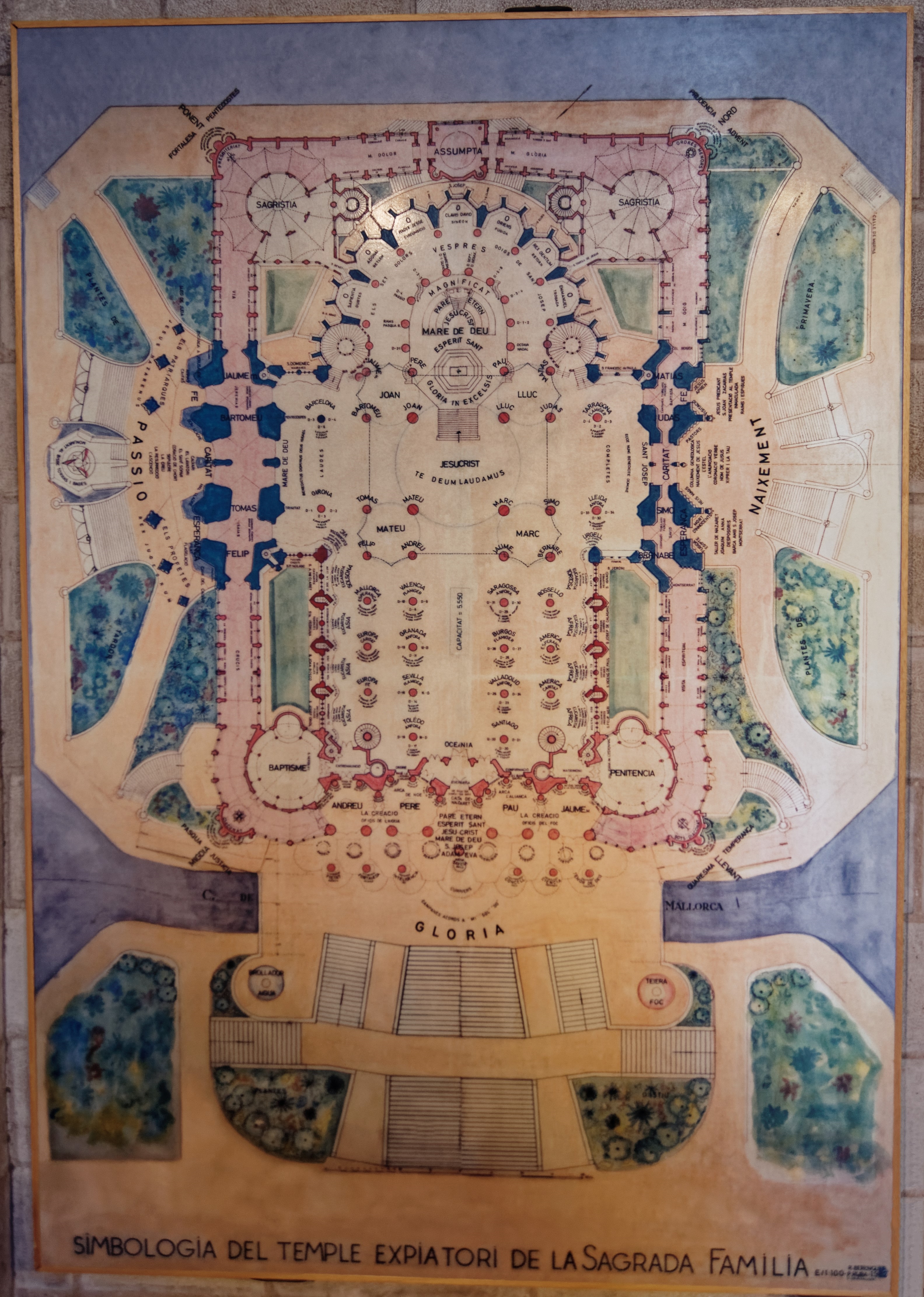
It won't. Gaudí's plan was to build a big staircase in front of it creating a new public square next to the temple, replacing some apartment buildings currently being used. Gaudí's project won't be finished until then.
There's some pushback from the neighbors because finishing it all means bulldozing hundreds of apartments, although those apartments were bought at a discounted price decades ago because everyone knew they had an expiration date. And now that it's here, they want to keep their apartments even though they were told about the Sagrada Família from the start.
PS: Gaudí's name is Antoni, in Catalan. Not Antonio. He was a proud Catalan, he was arrested for talking in Catalan.
It is incredibly rare for a large cathedral to be completed just like the original architect envisioned it, without any compromises made along the way*. It may even be said that a large cathedral is never finished - all the large cathedrals have a standing team of builders, usually with a tradition going back to the middle ages, and require constant maintenance work. "Finished" is thus a difficult term for such a building. But if major construction will stop in 2026, with the building no longer having any obvious large missing parts, I am totally fine with calling it "finished", even if the original plans were different. My understanding is that they already deviated from the original plans decades ago.
* I think Cologne cathedral was completed more or less according to the original plan, but only because historism was en vogue and they found the original medieval plans by chance in the 19th century. Strasbourg cathedral is a good example for a cathedral which doesn't look at all like the original architect envisioned it, with a long history of re-planning and some aesthetically botched construction works.
> My understanding is that they already deviated from the original plans decades ago.
Yes, a lot of models and plans Gaudi created for Sagrada Familia were incomplete when he died. It didn't help either that his studio(s) were ransacked during the civil war, so even if he had a 100% vision, the war would ensure those plans didn't survive.
Quite understandable as well. The thing is big enough as it is. Bought at a discount or not, bulldozing that many homes in an overpopulated city that already struggles for space due to its geography is a little ludicrous.
As someone from Barcelona, I really wanna see it finished completely. Those apartments had an expiration date the moment they were built in the 60s. Everyone who bought them at a discount knew that they were going to be torn down when the temple itself was finished.
I feel it's like those people that buy a house near an airport, they pay pennies for it, and then start lobbying the government for a change in air traffic routes.
Exactly. Nimbyism at its finest: all gains are mine; all losses should be covered.
It's bizarre that at the same time, real estate investors think all value increases are rightfully theirs, but they should be protected from any decrease in value.
You can hardly call it 'investing' if you're protected from the downsides.
I don't oppose destruction of housing because of people losing their investment - expropriate it for all I care. But reducing the housing supply is bad for everyone. That's the important problem with nimbyism: it's not that it demands unfair advantages for homeowners as investors, it's that it prevents development that is needed for a better world.
There's definitely an argument to be made that globally iconic feats of architecture have intrinsic value that's more important than a bit of housing. But you do need to account for the social impact of aggravating housing scarcity to make that argument.
We need to build more housing, but that doesn't mean we need to keep existing housing. Most old buildings should be replaced - they were not built with modern codes in mind and so are expensive to heat, dangerous in fire, have not accessible bathrooms, or other such things wrong that are difficult to correct.
> bulldozing that many homes in an overpopulated city
As far as I understand, only one building (many flats though) would have to be removed in order to fit the staircase.
Problem is that there isn't a lot of space available to put the people whose home you just removed, so seems unlikely to happen unless our local government suddenly solves some really hard problems.
We build and build depressing neighborhoods in cities for us to all flee to historical centres to experience beauty for a minute.
I mean if you are in the US you are lost anyway, but the Europe has some beautiful cities (Amsterdam, Venice, Palma, Rome, Vienna the list continues), but none of them are modern.
The citizens should be helped to find replacement, but please let's put some beauty back in our cities and give prominence to Gaudi's architecture (although maybe it's not the prettiest it's at least fun)
Yeah modern in the historic classification of the term, not in the way of speaking. Most people normally consider modern housing last decades. Lots of building up untill the second world ware are gorgous, but not considered modern by most people.
For instance Berlage in Amsterdam is modern in your classifcation. And his buildings grace Amsterdam, but most people would consider them "older", he was living around the same time of Gaudi.
>Lots of building up untill the second world ware are gorgous
I think you may have severely underestimated the population growth and need for housing after WWII. The world had not seen population growth like that before. The US and Europe cast away their ornate designs and focused on a burgeoning population in the US and rebuilding quickly in Europe.
I'm mostly stating an observation. But even so, that excuse would not hold up for the last decades. Architects still keep going to produce hideous things; and not at all being introspective about it.
Probably has to do with utilitarian and post-modernism; and a general deconstructionism of beauty; which is nice as a philosophy but just not inline with the general experience of a human. On top of that, architectural ego's make it worse.
Let alone Canada & Northern US, they combine it with a terrible city planning strategy, moving most utitilities such as shopping, entertainment & parcs, to a mall only reachable with car. Calgary must the most depressive unlivable city I've ever visited.
It was modern at the time, same as Art Nouveau and Art Deco, but then those were (unfortunately) pushed aside by Bauhaus, Le Corbusier and post-WW2 concrete brutalist architecture.
I mean, it lacks most of the defining characteristics of modern architecture. It is highly ornate, for one. I would not put it in the category of modern, aside from describing the time period which it came to be. Art noveau seems more appropriate a description.
> I mean if you are in the US you are lost anyway, but the Europe has some beautiful cities, but none of them are modern.
stop treating us like some kind of zoo animals. The reason why the old tenaments were demolished is because their living conditions brought fire, disease, and discomfort with them.
I mean, most of them are hosting "locals" as in residents who live in Barcelona. I just took a look now and there are at least 90 apartments available on Idealista for rent in just the ~3 surrounding blocks around Sagrada Familia.
So while in general the whole "touristic flat rentals" stuff is clearly hurting the city, maybe over-dramatizing the impact isn't super useful. Overall the situation sucks though, as prices seems to still go up :/
That's a whole other thread. The new Rent Control law has hurt (a lot) long-term rental for locals and long-term residents. All offers on Idealista and other portals are for contracts of up to 12 months, short term rentals under Spanish Law. Those are not rent-controlled contracts.
In my part of Eixample there aren't any long term units available.
Ignore what it says in the listings, even if they say "maximum 11 months contract", once you speak with them and indicate you know the situation and regulations, they'll be open to sign proper contracts, unless the owner is a huge asshole (which, many are, sadly). And yes, this works even in Eixample.
> There's some pushback from the neighbors because finishing it all means bulldozing hundreds of apartments, although those apartments were bought at a discounted price decades ago because everyone knew they had an expiration date. And now that it's here, they want to keep their apartments even though they were told about the Sagrada Família from the start.
Well, I would say this point becomes moot if they didn't have a permit for it from a start.
Also there are laws that are likely to supersede any expiration date that was set by who knows who in a different era.
I read that and saw a lot of other articles about this controversial stairway, but I haven’t been able to find any actually plans or renderings about what it would look like, particularly in context to the existing neighborhood. Do you know of any?
That's a funny inversion of the usual NIMBY logic, where some space is set aside to build apartments but then kids start to play on it or whatever, and then there's no way apartments can be built there.
I assume in this case they're defining finished as within the realms of the possible; kind of seems improbable that the staircase thing will ever happen?