This is a nice example/re-stating of what the heritability % "means" here.
I'm curious, with something like smoking/drinking, how you can be confident that you've untangled genetic predispositions to addiction or overconsumption from those "modifiable factors". I guess that's just captured within the 50% heritability? And if you could confidently untangle them, you might find heritability is higher than 50%?
Heritability is a pretty funky concept because it's contextual to a certain point in time, environment, and population, effectively.
An example I like is that if you measured the heritability of depression in 2015, and then you measured the heritability of depression in 2021, you would likely see changes due to environmental effects (namely, there's the pandemic/lockdowns and this could conceivably cause more people to experience depressive symptoms). Let's assume we make those measurements and the rate of depression did increase, and we could tie it causally to the pandemic or related events.
In that scenario, the heritability of depression would have decreased. I don't think anyone would argue there were massive genetic changes in that 6 year time period on a population scale, but the environment changed in a way that affected the population as a whole, so the proportion of the effect on the trait which is genetically explained decreased.
For something like lifespan in the above example, you can imagine that in a period of wartime, famine, or widespread disease the heritability would also decrease in many scenarios (if random chance is ending a lot of lives early, how long the tail of lifespan is influenced genetically is much less important).
Given that note, it's generally tricky to talk about whether heritability increases or decreases, but with more accurate estimates of how genetic predispositions form you could see the heritability of certain traits increase with the environment held stable, as there's certainly ones that may be underestimated or genetic factors that aren't currently accounted for in many traits.
*edit: I realized I never mentioned the other thing I wanted to mention writing this! since you mentioned what the percent heritability means here, I think the best way to think of it is just "the proportion of phenotypic variation for this trait in a measured population which is explained by genetic variation." So it's dependent on the amount of variation in several aspects (environmental, genetic, phenotypic).
Some epigenetic effects are semi-heritable too, eg maternal exposure can be transmitted. That's in addition to environmental effects like you mentioned. Two otherwise identical cohorts can inherit the same genetic predisposition for depression where one manifests and another does not entirely due to their circumstances.
What is it that you're arguing for then? That there be some entity that gets to decide what is and isn't a productive use of all of our excess money? Who gets to decide what's excess? Who gets to decide what is and isn't a productive use of the money?
How is this any different than buying a house? Buying a house that's already been built is pretty damn close to the same thing as buying gold. No new "work" is being done into the economy, you're just exchanging dollars for an asset that will likely appreciate a bit faster than inflation but less than $SPY.
The person you bought it from can do something else with that money, sure, but that's also true of the other person in your transaction to buy gold.
Maybe you'll say a house has more utility than bars of gold, but all of this at the end of the day, seems to come down to your specific views and judgements of what it means for capital to be used productively. So to circle back to the beginning, what is it you're advocating for here? That because you don't see gold as a low risk hedge against inflation as being "productive" it should face more taxes to incentivize it not happening?
> Buying a house that's already been built is pretty damn close to the same thing as buying gold. No new "work" is being done into the economy, you're just exchanging dollars for an asset that will likely appreciate a bit faster than inflation but less than $SPY.
I mostly agree with you, but I don't think the house comparison is good. Houses require lots of maintenance, and to hold their value (comparable to other houses) they often need remodeling every decade or so. If instead of houses we just said "land" then I think the comparison would hold up more.
You are forgetting the opportunity cost. The gold does not generate wealth it just stores value, like a mattress stuffed with bills. It has become a dead, stagnant, and unproductive thing and by doing that it has removed value from the overall economy that was previously there.
In this case 1/2 of the trade is a dead end. In another hypothetical transaction we might see that the money was instead used to pay for services, and that profit was then spent on food, and then it was spent on fertilizer, and then it was spent on chemicals, and then it was spent on mining, and then it was spent on energy, and then it was invested in.... You get the idea. You can follow a single dollar around the world for years. The money is exchanged, and then exchanged again and again generating profits and adding value to the economy with every exchange.
With the purchase of gold that half of the transaction is instead just... dead. The money is no longer in the economy, it's locked in some dudes junk drawer or a safe instead. Worse, it's not being used to generate excess returns like all of the items above are.
Gold is just... useless. Except of course as a store of value, but even then it's only good if you think the dollars value will decrease and don't care that it's not great for the world around you to extract money from the economy and render it effectively dead.
So before, person A has the dead thing, and after, person B has the dead thing. The result for the economy is exactly the same as if the transaction didn't occur, except the people have switched places.
In economics this is often referred to as a "sterile asset". Buffet called it an "unprodcutive asset". The terms "Zero Coupon" or "Non Yielding Asset" might also apply. You should be able to google any of them to learn more about why they're not good for the economy or for the 'investor'.
The TLDR being that the money exchanged for that useless rock is now wasted. It could have been used to provide genuine economic value, instead it was used to participate in another silly, wasteful, "greater fool" game.
Well it's more like a currency than any other object because it has been used historically to either a) be the currency, or b) back the currency. Sure that's not true today in the United States, but like, it's obviously different than frozen concentrated orange juice... can we not at least agree on that pretty tame assumption? Or is this just some semantics race to non-meaning?
Iron ore is similar physically, but it's really just a raw input material/ingredient used for heavy industrial manufacturing and production, it's never been intended to be an appreciating asset/hedge against inflation.
I'm unfamiliar with whatever tax is being referred to in this specific comment thread, but I'd be curious how something like $SIVR is handled, considering it's backed by actual silver in vaults. That could lead to some unintended consequences if the investment plans of a lot of money suddenly changes how it's being allocated.
> Iron ore is similar physically, but it's really just a raw input material/ingredient used for heavy industrial manufacturing and production, it's never been intended to be an appreciating asset/hedge against inflation, not any intrinsic property of gold itself.
Gold is not intended to be an asset/hedge against inflation either. Market participants believe that gold has value and that it can hedge against inflation. The belief is what gives life to gold being as a hedge against inflation.
Gold is not an asset, it’s a commodity, an industrial input, and material for jewelry, and for some reason I fail to understand, people buy and hold it because they believe it is an asset that will appreciate in value, but it’s just an elementary metal that is useful for being easy to work with (jewelry) and because it doesn’t oxidize. It does not generate income, you can’t eat it, and in a post-apocalyptic scenario, it’s useless. I suppose the density of gold would allow some very small, very high mass slingshot balls you could defend yourself against people with?
A system is what it does, and gold is popular for jewelry because it’s a useful way to wear money.
Off topic and this might be apocryphal, but I heard on the internet a good reason to keep “money” in the form of gold chains and other jewelry, is that it counts as personal property, so if you’re arrested during a drug bust or trafficking women, your cash and bank accounts may be seized, but whatever you wear to prison gets put in a ziplock bag and returned to you when you leave :)
There's a pretty clear expected transformation here though? It takes an image and then reduces the "shiny-ness" of it by giving it the same transformation: change the sky to overcast, add material degradation like rust, reduce the landscaping by adding weeds/puddles, and remove the happy looking people.
I'd also chime in that the presence of a datacenter in a smaller community can also help through the increased tax revenue the town/county gets.
Likely there's some kind of tax incentive for the datacenter to be built in one place over another, but I have to imagine that the local county is going to net some sort of increase to it's revenue, which can be used to then support the town.
There's also the benefit of the land the datacenter is on being developed. Even if that is done in financial isolation from the town/county, a pretty fancy new building designed for tech is being built. Should the datacenter go belly up, that's still a useable building/development that has some value.
Its not as much as you'd expect and the townsfolk often get saddled with higher utility costs, among other things.
When the tax incentive timelines runs out, the data centers just claim they'll move away and the tax cuts get renewed.
Its happening in Hillsboro, Oregon right now. The city promised some land just outside of the boundary would stay farm land until 2030 or later. The city reneged on that already. The utility rates have also doubled in recent years thanks to datacenters. The roads are destroyed from construction which damages cars, further increasing the burden on everyone else.
Sure, but that's to my second point of if they pick up camp and leave, that's still developed property that has potential to be more useful than it had been.
And in the same way that construction-damaged roads can lead to costs on everyone else - the development of that land employed people, and that is a positive thing for construction workers and their families (more than just financially).
Just because you can point at negative consequences doesn't mean positive ones don't exist as well. It's rarely black and white as to the net effects of things like this. You could/should even be considering what doing a build-out like this does for the reputation of a city, and the sense of optimism it can bring to a local community that might otherwise be left behind, completely out of the picture. There's another world where a small town appears not in an article about a new datacenter (or the possible ensuing city renege boondoggle) but as a small blip in a story about how small towns in this country have decayed as a result of being passed by during the current tech "boom".
It's also not all that trivial (or cheap) to just transport a datacenter to another state, or even county. You'd have to be pretty sure that whatever tax you're trying to now avoid is more than the (potentially) zero-tax new build or relocation you'd have to do to "escape".
At the end of the day, it's the responsibility of the local government to make sure that the deal is a net benefit to the community. Maybe that is too much to expect lol
> Due to the United States Supreme Court ruling in Wisconsin v. Illinois, the State of Illinois is not subject to certain provisions of the compact pertaining to new or increased withdrawals or diversions from the Great Lakes.
I mean it seems like there's already avenues to skirt around this compact?
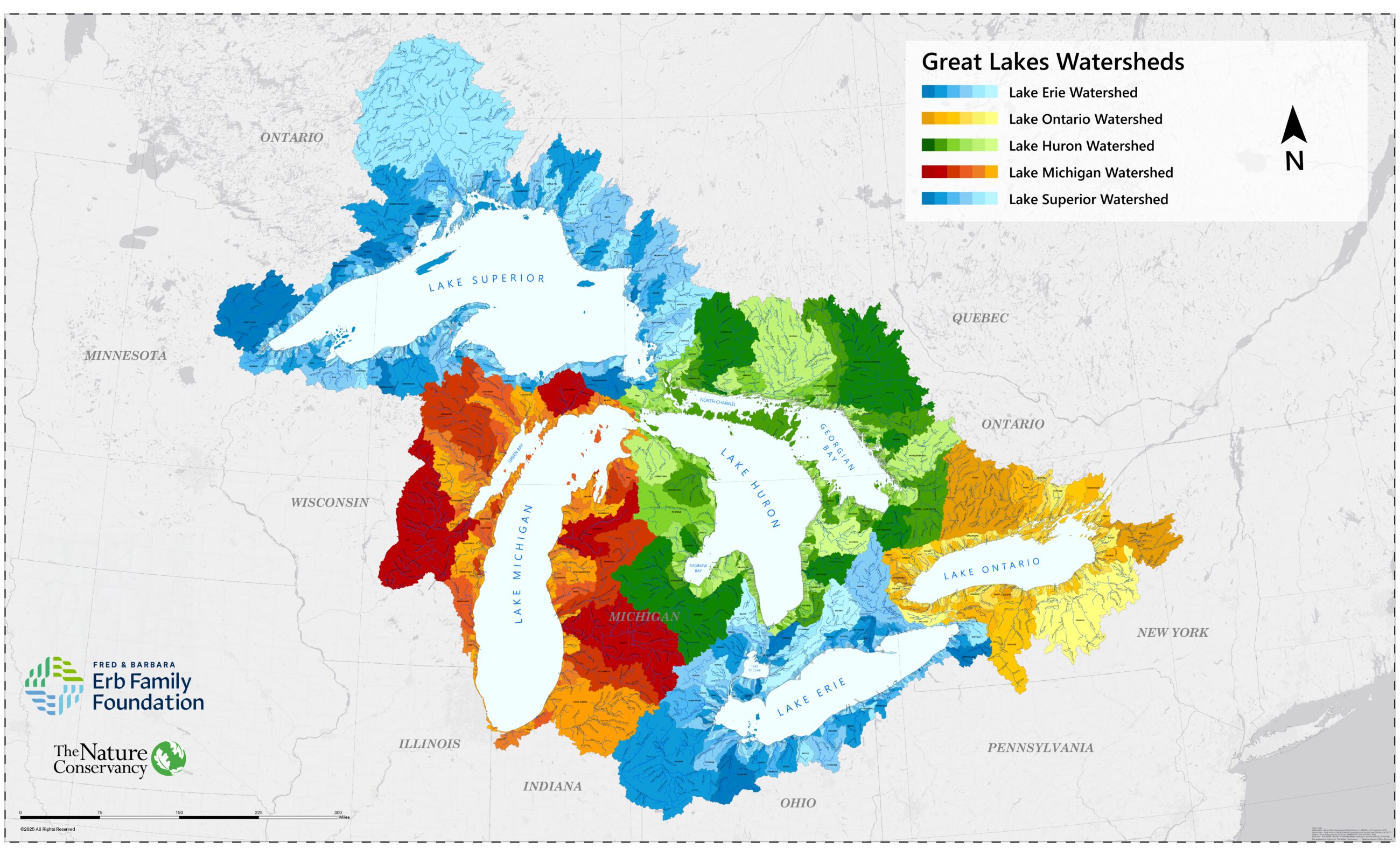
Also, from what I can tell, this isn't some sort of ban on using water from the Great Lakes basin, it's just a framework for how the states are to manage it. It is entirely believable to me that this compact would actually support water being used for developing tech in the surrounding communities (like using it in data centers).
I can understand concerns about moving thousands of acre-feet of water into the desert for cooling, or pumping your aquifer dry for the same thing. But moving water from the Great Lakes a few miles inland? How much water evaporates out of the Great Lakes every day, and what is the percentage increase when used for cooling?
I don't recall the exact specifics, but I do remember a while ago there was some outrage that Nestle was bottling some really large sounding amount of water (think ~millions of gallons a day?) from a Great Lake. The math behind how much was being used as a % of lake volume was negligible (it would take ~3,500,000 years to "drain" Michigan at that rate).
In my mind this is partly due to people not understanding large numbers, and also not understanding just how much water is actually in the Great Lakes. It's a huge amount - Lake Michigan has 1,288,000,000,000,000 gallons in it. Every human on earth could use close to 10gal of water per day for the next 50 years before Lake Michigan would be "dry", assuming it was never replenished. And that's just Lake Michigan. (Obviously environmental systems are more complicated than the simple division I did, and individual water usage isn't simply 10gal a day - it's just to demonstrate a point).
Now, someone else pointed out that the tragedy of the commons is a sort of death by a thousand cuts. And if anyone who shows up is allowed to draw millions of gallons a day, that can add up and certainly have negative effects. It's just important to actually understand the scale of the numbers involved, and to not let legitimate environmental concerns be cross-contaminated with just anti-tech-of-the-year sentiment, or political motivations, or whatever else might cloud the waters (pun unintended).
It's which side of the drainage basin is the water moved to? When the water is flushed back into the system, does it drain back into the Great Lakes? or down to the Gulf of Mexico?
On the southern shore of Lake Michigan, that "few miles" changes the watershed that its part of.
As for diversions that go to evaporative cooling, that's a big question for the data center itself and there are many designs. https://www.nrel.gov/computational-science/data-center-cooli... has some cutting edge designs, but they're more expensive to use for pumping waste heat elsewhere.
While the Great Lakes are coming off of wet years ( https://water.usace.army.mil/office/lre/docs/waterleveldata/... ) that shouldn't be used as long term prediction of what will be available in another 10 years lest it becomes another Colorado river problem. Currently, the water levels for Lake Michigan are lower than average and not predicted to return to average in the model range. https://water.usace.army.mil/office/lre/docs/mboglwl/MBOGLWL... . You'll note that this isn't at the minimums from the 1960s... and the Great Lakes Compact was signed in 2008.
But where do we stop with all of this endless expansion? Do the great lakes have to go through an Aral Sea type of situation before we decide it's time to stop? It's not like these AI ghouls are shy about wanting infinite expansion and an ever-growing number of data centers to feed their word generators, do we really think that if we just let them have the water now they're not going to abuse that and that they won't start draining the lakes for all the water they can manage? I'm not so optimistic, myself.
Water levels have been down for years as-is. It may not seem like much now, but I think it's important to avoid a "tragedy of the commons" scenario in the future.
Those are typically things you are familiar with or can easily check.
Fake references are more common in the introduction where you list relevant material to strengthen your results. They often don't change the validity of the claim, but the potential impact or value.
0 degrees F is a cold winter day, 100 degrees F is a hot summer day
0 degrees C is a cold winter day, 100 degrees C means you're dead
I think he's suggesting that a 0-100 scale for temperature/"relative warmth outside" is more intuitive than a 0-37 scale. It's easier to to place 73 degrees on a 0-100 relative warmth scale than it is to place 18 degrees on a 0-37 scale (unless of course you grew up calibrated to the 0-37 scale and know that 18degrees means you maybe need a light jacket or whatever).
I think it's funny that one of the main benefits of metric is its base-10-ness where things scale so nicely from 1-10-100-1000 etc. but then for temperature we're supposed to be fine with a 0-37? Fahrenheit is basically the 1-100 version of temperature (when it comes to weather).
Hi, so I generally actually agree with you and your criticisms of this blog post (in your thread with the author). I think there's something pretty true in the blog post you shared from Joel (true in that it applies to more than just the software world) and looked at some of his more recent posts.
This one in particular reads similar to what this comment section is about, it looks like Joel is basically becoming an architecture astronaut himself? Not sure if that's actually an accurate understanding of what his "block protocol" is, but I'm curious to hear from you what you think of that? In the 25 years since that post, has he basically become the thing he once criticized, and is that the result of just becoming a more and more senior/thinker within the industry?


I'm curious, with something like smoking/drinking, how you can be confident that you've untangled genetic predispositions to addiction or overconsumption from those "modifiable factors". I guess that's just captured within the 50% heritability? And if you could confidently untangle them, you might find heritability is higher than 50%?
reply