I’d been feeling this until quite literally yesterday, where I sort of just forced myself to not touch an AI and grappled with the problem for hours. Got myself all mixed up with trig and angles until I got a headache and decided to back off a lot of the complexity. I doubt I got everything right, I’m sure I could’ve had a solution with near identical outputs using an AI in a fraction of the time.
But I feel better for not taking the efficient way. Having to be the one to make a decision at every step of the way, choosing the constraints and where I cut my losses on accuracy, I think has taught me more about the subject than even reading literature would’ve directly stated.
I think the heart of the matter is this section in the blog:
> Yes, I blame AI for this.
> I am currently writing much more, and more complicated software than ever, yet I feel I am not growing as an engineer at all. [...] (emphasis added by me)
Been using YouTube recommendation blockers for a while. Personally I’ve never gone, “oh man I could go for some binge watching!” as much as something piques my interest and I get drawn down video after video of nothing. So removing any sort of advert for a video means it never even crosses my mind to turn off the blocker.
I couldn’t believe how pervasive their recommendations are. We’ve got a little one and he recently developed a plane obsession so I try and watch a few YouTube videos of float planes or biplanes before bed when he’s restless and demanding ‘vrrooom’. You literally can’t use shorts to do it (which they make nearly
Impossible to avoid by putting them at the top of the search results and then interspersing them with the normal videos) because after 3 or 4 plane videos they start playing some maga bro science diet video or some AI voiceover video game trash.
I can’t believe how little moral responsibility the employees and management at these companies feel.
“Some of the instruments fall below the human hearing range, only the vibrations can be felt,” feels unreal to me for some reason. I can’t imagine a vibration rattling through me without hearing something at that power.
It's used to rattle more than just humans with processes like DFAT [0]. Here's the NASA handbook on their use [1].
For experiences that are a little more human friendly, subsonic audio is something that's also explored more commonly in the noise art. Stefanie Egedy [2] is one artist that's been working in that space lately.
Apparently this is a thing that was used in old horror movies.
Subsonic music would play just before a scary encounter, creating a feeling of uneasiness to the audience without any consciously perceptible stimulous, and thus priming the audience for the horror to come.
The CAFE standards were introduced in 1975[1]. I’m on my phone so investigating links properly is awkward, but it appears the footprint legislation was brought into effect in 2008[2]. Or in other words, before Obama.
I had to go and double check because a fact I was certain of was the PT Cruiser was designed to be classified as a light truck in order to require a lower CAFE standard, far before the 2008 reform. I’m sure there are many examples of this. The system in general is gamed aggressively. I can give a recent example:
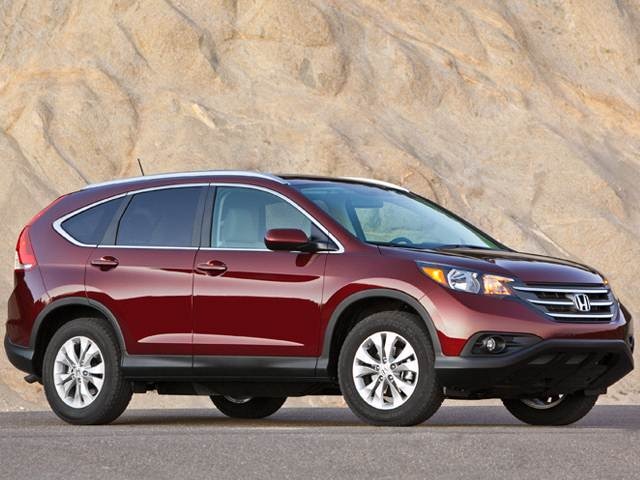
The Honda CR-V. Look at the front bumpers of a European and US spec car
The difference in front bumpers is due to a front approach angle requirement in CAFE’s regulations (18 degrees, off the top of my head?) to get a light truck classification.
Footprint isn’t really the issue. It’s related, and certainly why cars are getting bigger than they once were, but to my understanding the bounds of footprint for each classification hasn’t changed since the legislation was brought in, while cars are ballooning regardless. I think part of it is just consumer preference for more car.
Can agree that it’s good at finding books. I was trying to find a book (Titanic 2020) I vaguely remembered from a couple plot points and the fact a ship called Titanic was invoked. ChatGPT figured it out pretty much instantly, after floundering through book sites and Google for a while.
Wonder if books are inherently easier because their content is purely written language? Whereas movies and art tend to have less point by point descriptions of what they are.
> Wonder if books are inherently easier because their content is purely written language? Whereas movies and art tend to have less point by point descriptions of what they are.
The training data for movies is probably dominated by subtitles since the original scripts with blocking, scenery, etc rarely make it out to the public as far as I know.
I must be tired. The thing you remembered was the name of a boat in the book and any web search engine and Wikipedia would probably give you the correct answer?
Toyota meanwhile have made a point that all the front styling grilles in the Mk5 Supra can be opened up and used to house heat exchangers for tuners.
Nissan simply could’ve never acknowledged it. Instead made a point that the GT-R was untuneable, which to my knowledge, is the only time a car company has claimed such a thing.
> Toyota meanwhile have made a point that all the front styling grilles in the Mk5 Supra can be opened up and used to house heat exchangers for tuners.
Toyota has actually gone to extremes to lock down the Supra ECU to prevent tuning. Last I checked, only one company in the world had figured out how to unlock the ECU and you have to ship your ECU around the world to have them unlock it.
Do any countries' emissions regulations require manufacturers to actively try to prevent illegal modifications? It seems to me that wouldn't be the manufacturer's problem, and I can't recall hearing of a legal case where it was.
This seems more likely to be warranty-related since it's very easy to break mechanical parts by adjusting things like boost pressure and ignition timing.
Modifying modern cars for high performance impacts the emissions systems. In many cases the ECU modifications will actively defeat certain emission control measures to allow the higher power output without check engine lights, for example.
Showing a good faith effort that you've designed the emission compliance systems to be reliable and hard to defeat is part of the process.
There's a similar thing that happens with WiFi access points: You have to show that you've made an effort to prevent the end user from trivially modifying it for higher power output or other changes that would deviate from the way it was compliance tested.
GM also claimed that with the (I think) C7 corvette. “Encrypted” PCM programming meant it wasn’t possible to reflash, you could only go piggyback, or full standalone (or engine swap obviously) but you’d lose connectivity with a bunch of other modules. Got worked around relatively quickly, but still.
That’s if you view cars as boxes that go from A to B judged exclusively by their spec sheet. But if you viewed them as such, why would you have a Plaid instead of a basic long range S?
Maybe if the driver cares about performance, but is only capable of using their right foot. The only enthusiasm is being pushed into the seat at the peak of the traction of the tyres, for all of a moment before the speed limit restricts them again. All without any other theatre. I can see the appeal of being able to have that performance without drawing attention to yourself, but then you specifically clarify your statement by excluding tracks or technical (fun) roads.
…Strangely, I thought I liked the Plaid until writing this. I’m enthusiastic for what Tesla has done to the EV market, and the Model S appears to generally be a good car (all my experience is in the Model 3 my Dad has. I’d assume the experience is similar) but I can’t help but feel like they’ve made something so utterly uninteresting as their top of the line halo model. What could’ve been the GT-R of this era seems to have barely grazed the automotive community.
I don't think it could have been the GT-R of this era, because there is not going to be a GT-R of this era once R35 is gone.
To paraphrase one of my favourite motoring journalists (translated):
"Will EVs kill motoring? No, but only because it's already dead - tuning died several years earlier. EVs are only a transition technology. In 30 years driving will be this lame thing that only old people do."
I find it hard to seriously disagree with him on that.
The problem here is that the Plaid is not the fastest car. On Nürburgring Nordschleife, GT-R (2013) is faster than the latest Plaid record(2023) by 6 seconds, top trim Taycan by 18 seconds, slower than the fastest on Wikipedia by 56 seconds, etc etc.
It's just not that fast. Most people here wouldn't know that, after hearing 2.1 seconds 0-60, "the fastest production EV", so on. No, Elon just never made that work. literally couldn't beat 10 years old car.
You can buy the cheapest R35 used, and theoretically faster on the ring than ANY Tesla.
My girlfriend's car is currently awaiting a new engine at the dealership. It'd take about 30 years to build up the infrastructure in my city (a major one in the Lower Midwest) to get to where it would need to be for her to not need anything other than public transit, and that's assuming nothing else changes (like even further urban sprawl) and that we had the political will to start today - we don't.
Maybe in Europe, Asia, and a select few North American cities it'll be dead, but there will still be plenty of places where it's necessary.
I can't say I know exactly what that journalist had in mind, but my understanding is that he was referring to the fact that younger generations (in the geopolitical west) aren't that interested in cars and both the market and legislation are responding to this shift.
It’s difficult to argue against that, and I think I agree. A part of me considers it the right way for the world, considering that driving is one of the most dangerous things we partake in regularly, that it should be demoted to just a hobby. But I have reservations about that too. I’m trying to stay (maybe out of delusion) hopeful that driving will still matter and be enjoyable.
I think tuning needs a readjustment in perception. We’ve removed one way to tune, power, and I guess it’s more difficult to get excited about suspension geometry or alignment or handling balance vs a big shiny Garrett turbo, but the fact is we’re still talking about boxes with four wheels at the bottom. Tuning is, and always has been, about how to make a car use those tyres to their full effect.
The GT-R, as impressive as it was, also had its detractors for being a computer on wheels. Car lovers have always disliked techy cars and longed for simpler driving experiences. I know people who still insist carbs are better. I don’t see why the Plaid couldn’t have made Porsche miserable in all the same ways the GT-R did.
> Car lovers have always disliked techy cars and longed for simpler driving experiences.
I consider myself a car enthusiast, but can't relate to this. I was always into cars for all the clever ways humanity made things on four wheels go, not the stuff that was associated with it.
Like, I still can't stand driving a regular automatic, but mainly due to how badly it translates my intent into motion. Well, except for CVTs, but they in turn are to me an inelegant and over complicated solution.
Through the first half of 2024 I tried learning to drive, and my instructor drilled this mindset into me through how he spoke and reacted to errors. It’s taken me a long time to untangle that attitude out of my head, where I can think clearly, judging myself on my own standards for acceptable errors, and not the hypothetical standards of voices that don’t care about me. Being unable to do anything without doubting or questioning myself was soul destroying.
People like him are horrid traps for optimisers. They’re pointing out errors, and being so desperate to improve you’re encouraged to keep listening and value them greater instead of tuning their overeagerness out.
There’s an irony that actually getting hung up on minor comments and suggestions is in itself poor optimisation since the error becomes a distraction instead of a learning point.
OpenFOAM I think is the go to for open source CFD, although I’ve never tried it myself. There’s also XFOIL which, since you’re talking about a flying wing, might be enough for your use case.
Even for a finicky flying wing, I think if you keep an eye on the way the pitching moment shifts with pitch, I don’t see why picking an airfoil shape for the frame and hand calcs couldn’t get you to a design that flies reasonably.


But I feel better for not taking the efficient way. Having to be the one to make a decision at every step of the way, choosing the constraints and where I cut my losses on accuracy, I think has taught me more about the subject than even reading literature would’ve directly stated.
reply